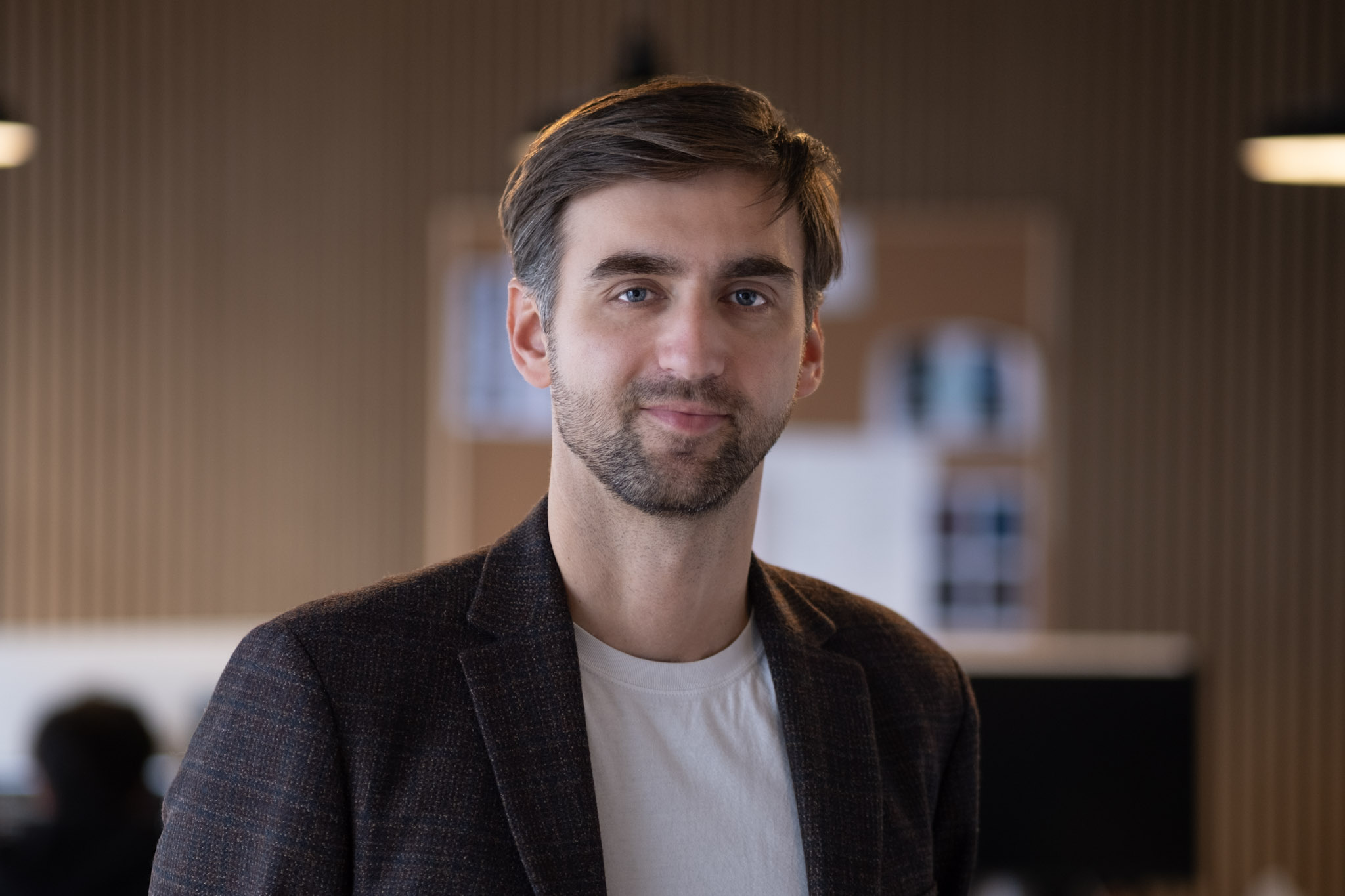
The Attention Architect
Some founders spot a trend and race to build. Kenneth Schlenker spotted a problem in 2008, wrote a business plan, filed it away, and spent the next eleven years watching the world slowly confirm his thesis. That kind of patience is either stubbornness or wisdom. In his case, it was both.
Working at Google across New York and Paris, Schlenker sat inside the machine that was remaking human attention. He helped ship Maps, YouTube, AdWords - tools that millions used, and couldn't stop using. While his colleagues celebrated engagement metrics, he was writing a different kind of memo. The world, he thought, was building systems designed to exploit human focus. Someone needed to build the antidote.
It took another decade to get there. First came Gertrude, an art salon community named after Gertrude Stein, which grew to 25,000 members across seven cities. Then ArtList, a marketplace for contemporary art with a transparent 10% fee - a radical idea in an industry famous for opacity. That sold to artnet in 2017. Then Bird, where Schlenker built the company's largest global market from scratch in Paris. He was moving fast, learning everything. He was also spending an awful lot of time on his phone.
In January 2020, he founded Opal. The app became the #1 screen time and focus tool on iOS. He raised $4.3 million in seed funding. Then, without paid advertising, he hit $1 million in annual recurring revenue in four months. Then $5 million. Then $10 million. With eleven people.
"In 2008, working at Google, I wrote the first business plan for a focus app to counter this problem. I knew even then that what we were building wasn't designed for human wellbeing. It took 11 years to build it."
Kenneth SchlenkerThe numbers are unusual. Most $10M ARR companies have 50+ people. Opal has 11. Schlenker treats capital efficiency like an art form. He ran 121 A/B tests to understand exactly which subscription flow converts, exactly which onboarding moment makes someone stay. He made a deliberate choice to stay iOS-only - no Android - while other apps spread thin chasing bigger addressable markets. The focus he sells, he applies to how he builds.
But Schlenker's story isn't just a startup story. It's a story about a particular theory of the world. He believes - and has believed since he was at Google - that attention is the defining resource of our era. More valuable than money. More contested than land. The modern economy runs on capturing it. He thinks that's wrong. Not wrong like a business mistake. Wrong like a moral problem.
In November 2025, he wrote an op-ed for Fortune that started: "I helped build the architecture of addiction for social media." He wasn't being metaphorical. He worked at the company whose products - YouTube, Google Search, AdWords - trained a generation to scroll. His piece called for warning labels on social media. He also warned that AI is making the problem worse. "Social media hooked us," he wrote. "AI is perfecting the addiction."
"Social media hooked us. AI is perfecting the addiction."
Kenneth Schlenker, Fortune, November 2025This is not a founder who built a screen time app because the market was there. This is someone who spent his career inside the attention economy, watched what it did to people, and decided the only honest move was to build the exit ramp.
Alongside Opal, Schlenker runs Open Scout, a weekly newsletter that tracks early-stage startups. It's read by investors at Sequoia, Y Combinator, Andreessen Horowitz, Accel, Amazon, Google, Stripe, Meta, and Klarna. Every edition is designed to be read in three minutes. The format is deliberate - a man who builds tools against doomscrolling runs a newsletter that respects your time.
Open Scout's recurring "Investor Day" section profiles startups that are still very early - sometimes pre-traction, sometimes actively fundraising. It's the kind of curation that takes judgment: Schlenker knows what good early-stage looks like because he's been building early-stage things for fifteen years.
He grew up in France, went to Sciences Po Paris, moved to New York for Google, moved back to Paris for Bird, and now splits time between both cities. In 2025, he became a US citizen. His online store sells merchandise from all his ventures - Opal, ArtList, Gertrude, Stellar Base. Not many founders archive their entire career in cotton and cardboard, but Schlenker does.
He also co-directs the French chapter of the Global Day of Unplugging, an annual 24-hour digital detox event. There is something quietly funny about the founder of a screen time app also organizing a day when everyone stops using apps. He would probably say that's exactly the point.
His aspiration is to make "attention sovereignty" a recognized category in technology - not just a feature or a niche app, but an infrastructure layer, a right, a thing people understand they are fighting for. He is building the toolkit for that fight.
The man who wrote his first business plan at Google in 2008 is still working on the same problem. He just found a better answer.