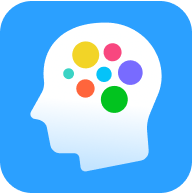
On the third floor of a building on Folsom Street, a designer is staring at a brain. Not a real one - an abstract one, rendered in a soft yellow curve, the kind of shape a child might draw if you handed them a crayon and said "head." This is, as of October 2025, the official mark of The Mind Company. It used to be Elevate Labs. Before that, MindSnacks. The name keeps changing. The thesis hasn't.
01 / Who they are nowThe studio that builds gyms for your head
The Mind Company is not a meditation app. It is not a brain trainer. It is not a puzzle game. It is, somewhat inconveniently for headline writers, all three - a small San Francisco portfolio company that makes the apps you use when you suspect your phone is making you dumber and want to do something about it.
Three products live under the new roof. Elevate, the cognitive trainer that won Apple's iPhone App of the Year in 2014. Balance, the personalized meditation app that won Google Play's App of the Year in 2021. And Spark, a daily puzzle app launched in November 2025, which assumes you are curious and tries to keep it that way. Together they have crossed 80 million downloads, which is more humans than live in Germany. The company has about 110 employees. The math is flattering.
02 / The problem they sawThe most ignored muscle you own
In 2011, people bought treadmills, ran half-marathons, drank green things in a Vitamix, and tracked their sleep with rubber wristbands. They did not, generally, do anything intentional about their attention, their memory, or their ability to sit alone in a room without panicking. The mind was the last unoptimized organ. Founder Jesse Pickard, like a small number of slightly stubborn product people at the time, found this offensive.
The early version of the problem was small and concrete: most adults stop learning, in any structured way, the day they leave school. The early version of the solution was equally small: short daily exercises, dressed up as games, that nudged you to read better, write tighter, and do arithmetic without the calculator. That product, eventually called Elevate, did the unfashionable thing of getting people to open the same app, every day, for years.
03 / The founders' betOne studio, three habits, a long horizon
Pickard's bet has always been less about any single app and more about a category. The category, eventually labeled mental fitness, is the idea that your mind benefits from short, repeated, intentional reps in the same way your hamstrings do. Elevate Labs spent a decade building a track record around that idea before anyone besides the App Store editors fully bought it.
The 2025 rebrand is the bet, made literal. Elevate Labs sounded like a company that made an app called Elevate. The Mind Company sounds like a place that takes the whole mind seriously, in a portfolio sort of way, with room for a meditation tool, a puzzle game, and presumably whatever comes next. The new name is not a flex. It is a permission slip for the next ten years of product launches.
// A 14-Year Mind, In Stages
04 / The productThree apps, one underlying argument
Looked at separately, the apps seem unrelated. Elevate is bright and gamey, the kind of thing you keep open during a slow meeting. Balance is calm and voice-led, somewhere between a yoga teacher and a sleep podcast. Spark is colorful and chunky, designed to be the thing you open instead of doomscrolling at the bus stop. Looked at together, they are the same product: a five-minute daily ritual that returns more attention to you than it took.
There is a particular discipline in not bolting these together into one super-app. The Mind Company has explicitly kept them separate, with their own brands and rituals, on the theory that a meditation moment and a math drill should not feel like they live in the same room. Goodside Studio, the design partner behind the 2025 identity, described the new brand mark as a "framing device" that unifies the apps without flattening them. It is, charitably, the design problem of a parent who has three very different children and refuses to dress them in matching outfits.
05 / The proofWhat the numbers say
If you want to know whether a consumer app actually works, you do not ask the company. You look at how many people downloaded it, how long they stuck around, and whether anyone with a stage and a microphone gave it an award. By all three measures, The Mind Company is in a quietly absurd position - independent, profitable enough to keep going, and still adding products in year fourteen.
// The Portfolio, By Cultural Footprint
Source: Apple App of the Year 2014; Google Play App of the Year 2021; Spark launch Nov 2025. Bars indicate relative time-in-market and recognition, not active users.
06 / The missionMental fitness as a daily habit, not a destination
The official mission statement, in the company's own words, is to "set the global standard for mental fitness in the digital age." Translated out of press release: get more people to do five minutes a day of something deliberate with their attention. Read a sentence carefully. Sit with a breath. Solve a small puzzle. The company is not allergic to therapy or to neuroscience, but its products live in the much smaller, much harder real estate of an unprompted morning habit.
There is a polite, unspoken disagreement here with the broader wellness industry, which often sells transformation. The Mind Company sells repetition. Showing up is the product. The apps are merely the excuse.
07 / Why it matters tomorrowThe next category to grow up
Physical fitness took about thirty years to go from oddball subculture to default expectation. Therapy and mental health, prodded along by a pandemic and an honest generation of young adults, took roughly the same trip in a fraction of the time. Mental fitness - the cheerful middle ground between "I'm fine" and "I need a clinician" - is the next category in line. The Mind Company has been camped out on the runway since before there was a runway.
The interesting thing about the rebrand is that it is not really aimed at users. Users do not care what the parent company is called. The new name is a message to future products, future hires, and future partners: the studio is bigger than any one app, and it intends to stay around. In a venture market that prizes velocity over endurance, fourteen consecutive years of shipping under three names is a credential. Quietly, almost embarrassingly so.
Back on Folsom Street, the designer steps away from the screen. The brain mark looks like a brain, more or less. It looks, more importantly, like a logo that can sit next to a meditation app, a math game, and a puzzle - and not feel like any of them are visiting. The name on the building changed last month. The thing the building has been doing since 2011 did not change at all. Which, in mental fitness as in life, is more or less the entire point.