Profile / Founder & CEO
Benjamin
Encz
CEO & Co-Founder of Ashby, the AI-native recruiting platform trusted by OpenAI, Shopify, and Snowflake. The engineer who got so deep into hiring that he had no choice but to rebuild it.
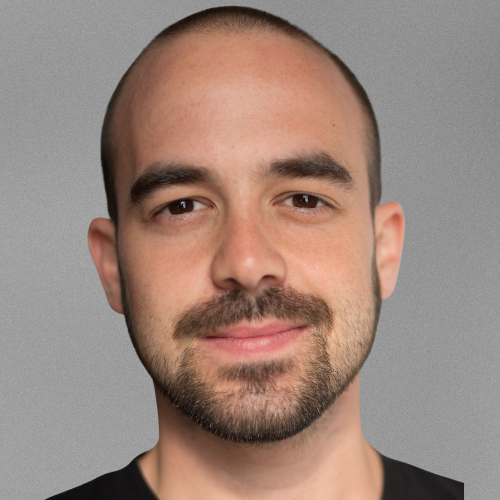
CEO & Co-Founder of Ashby, the AI-native recruiting platform trusted by OpenAI, Shopify, and Snowflake. The engineer who got so deep into hiring that he had no choice but to rebuild it.
There is a specific kind of frustration that only an engineer-turned-recruiter can feel - watching great candidates leak out of a broken process while the tools meant to catch them do the opposite. Benjamin Encz felt it deeply at PlanGrid. He was, in title, Director of Engineering. In practice, he was spending 80% of his time on recruiting operations, patching together workflows from software that was never designed for the speed or the rigor that fast-moving engineering teams actually need.
PlanGrid, the construction-tech darling that Autodesk acquired for $875 million in 2018, gave Benjamin an unusual perch. He ran engineering teams, and he ran the systems that staffed those teams. He saw both sides of the coordination problem. The tools on the market - built for HR administrators, not engineering leaders - treated hiring as a filing cabinet. He wanted a command center.
So in October 2018, he and Abhik Pramanik - his co-founder and former PlanGrid colleague - left to build one. The idea was simple enough to write on a napkin: an applicant tracking system that actually respected how recruiting teams think. The execution, as always, was the hard part.
We could spend time recruiting or we could spend time building.
- Benjamin Encz on Ashby's early days
They chose to build. In Ashby's first few years, the company stayed at three people. That's not a typo. They had raised $3.5M in seed funding - enough to hire aggressively - and they sat on most of it. The result: $2M in ARR within year one. A 10x growth rate produced by a team that fit into a single Lyft.
The lean-team philosophy wasn't frugality for its own sake. It was a deliberate bet that the right kind of compounding - deep product thinking, architecture decisions made slowly enough to get right - would outlast anyone who hired their way to growth. The bet has held. Ashby launched publicly in September 2022 after spending nearly four years in stealth, emerged with 6x revenue growth, and has not stopped since.
By 2025, the numbers had become a different kind of story: $50M Series D, led by Alkeon Capital with co-lead from Lachy Groom, and participation from F-Prime, Elad Gil, and Gaingels. Total funding hit $142.5 million. The customer list - OpenAI, Shopify, Snowflake, Ramp, Harvey.ai, Notion, Cursor - reads like a who's who of companies that care deeply about who they hire.
Benjamin describes Ashby's ambition as building a "generational company" in HR Tech - rare words in a category usually dismissed as stodgy enterprise software. He means something specific by it: recruiting is not a peripheral function, it's the mechanism by which every other bet a company makes gets staffed. Getting it right isn't a nice-to-have. It compounds.
Before Ashby existed, before PlanGrid, before Make School - Benjamin Encz was writing code in Germany. He studied Applied Computer Science at DHBW, Baden-Württemberg's cooperative state university, where learning alternated between classrooms and corporate placements. His placement: IBM. Three years of co-op experience in one of tech's most famous names, giving him a foundation that was both theoretical and unromantically practical.
He moved through DATAGROUP SE as a software engineer and project lead, then spent over a year as a lecturer at DHBW - teaching, presumably, what he'd spent years learning. The pattern of making knowledge accessible would follow him: his blog, his open-source projects, his conference talks all carry the same quality of a person who has thought carefully about how ideas transfer between people.
He arrived in San Francisco in 2013, joining Make School - an educational startup aimed at training software developers - as an early engineer. It was a soft landing in the Bay Area startup world before he found his footing in the more consequential challenge of PlanGrid.
At PlanGrid, something shifted. Benjamin joined as an iOS engineer, moved into an engineering management role, then into managing managers. The company was scaling fast - construction blueprints on iPads, a product that actually worked in the field. Engineering recruitment became his obsession-by-necessity. He wasn't just hiring; he was architecting the process of hiring, trying to bring the same rigor to talent acquisition that he brought to code.
That experience seeded a parallel project: ReSwift. A Redux-like state management library for Swift, it brought the functional unidirectional data flow pattern from web development into iOS. The project hit 10 years with 435+ commits and 17+ releases - maintained with the kind of quiet discipline that doesn't make headlines but earns deep respect in developer communities. His GitHub handle, Ben-G, became a trusted name in iOS architecture circles.
When he left PlanGrid to start Ashby, he didn't abandon the engineer identity. He picked it up and pointed it at a different problem - what happens when the people responsible for recruiting are also the people who can build better tools for it?
Recruiting is a complex coordination problem requiring sophisticated tools. We recognized that existing ATS solutions were not designed for the speed and rigor that modern teams need.
- Benjamin Encz, on Ashby's founding thesis
Ashby's pitch is deceptively simple: recruiting software designed around how recruiting actually works, not how an HR administrator imagined it might work in 1999. The platform combines applicant tracking, scheduling, CRM, analytics, and AI-powered features into a single interface. For teams that used to manage hiring across four different tools, the consolidation alone is a revelation.
But what Benjamin built isn't a swiss-army-knife cobbled from acquisitions. It's an architecture. Data flows through Ashby the way it flows through good software - with real-time reporting, customizable workflows, and automation that doesn't require a consultant to configure. When OpenAI's recruiting team chooses Ashby, it's because they need something that scales with them and doesn't break under complexity.
The AI layer in Ashby reflects the same philosophy Benjamin applied to ReSwift: principled, not bolted on. AI-powered candidate summaries, bias mitigation tools, intelligent candidate matching - each feature maps to a real friction point in the recruiting process that Benjamin watched from the inside at PlanGrid. There's no feature on Ashby's roadmap that didn't come from someone's genuine frustration.
The result is a company with 2,700+ customers, growing faster than the market around it. In a category where legacy players like Greenhouse and Lever have comfortable incumbent advantages, Ashby has taken a category-defining piece of the enterprise market by moving both faster and more deliberately than its competitors - a combination most companies find impossible to sustain.
He left Germany for San Francisco with an engineering degree and a co-op stint at IBM under his belt. It was not the most obvious path to HR Tech CEO - but in retrospect, spending years learning to build reliable systems before building a system for hiring might have been exactly the preparation required.
His personal blog is titled "[Thinking inside a large box]" - a deliberate inversion of the corporate-speak cliche. It's a minor detail that says something about how he thinks: precise, a little wry, allergic to empty framing. The posts are technical. The personality leaks through anyway.
His co-founder Abhik Pramanik worked at DreamWorks Animation and Industrial Light & Magic before switching to software. His credits include "Transformers" and "How to Train Your Dragon." The path from VFX to co-founding an ATS is unusual enough that it says something about the kind of people Benjamin tends to build with.
Ashby spent nearly four years in stealth - an eternity in startup time. No press releases, no product launches, no fundraising announcements. Just three people building something they believed in, watching the ARR climb, and waiting until the product was ready to hold up under scrutiny. The public launch in September 2022 arrived already compounded.