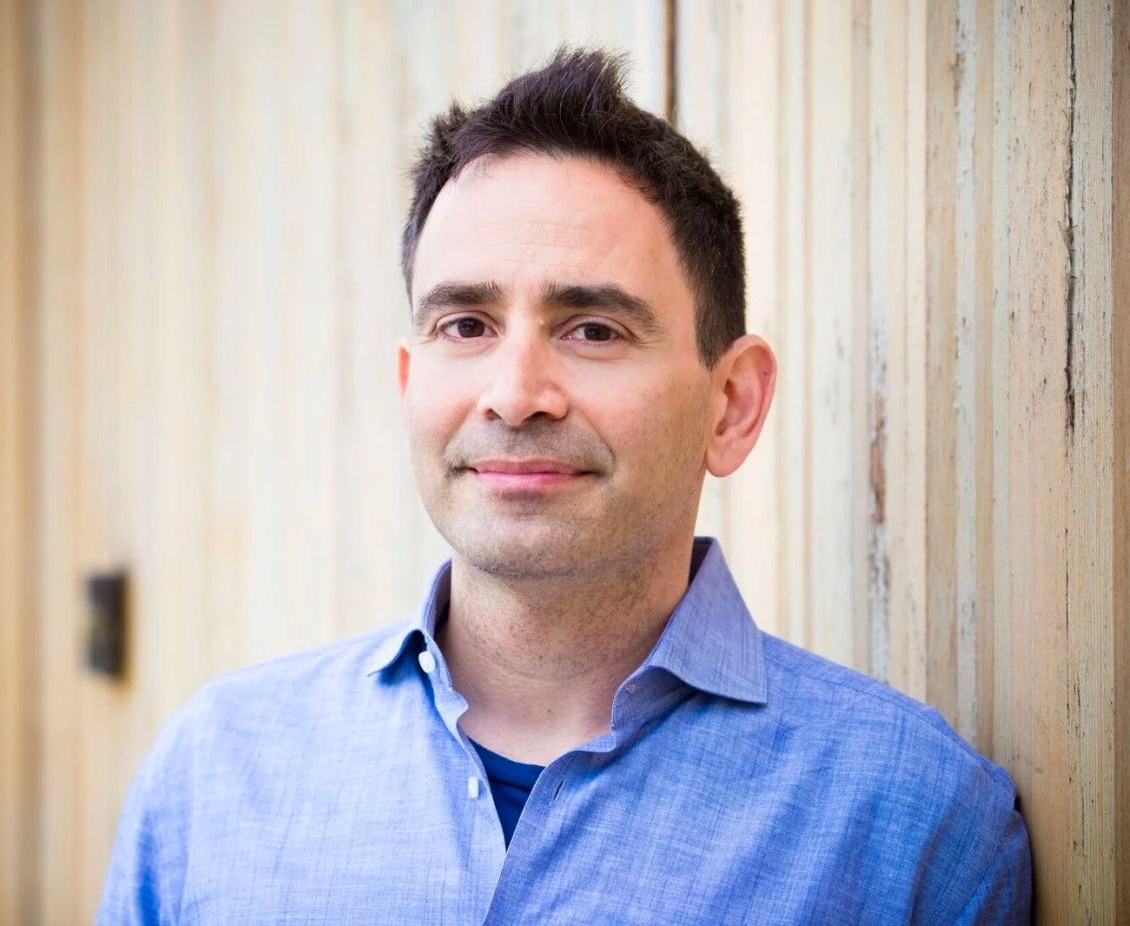
The One-Man Unicorn Factory
Most venture capital firms have dozens of partners, armies of analysts, weekly partner meetings, and elaborate decision committees. Elad Gil has a desk. And somehow, he has backed more billion-dollar companies than most of those firms combined - Airbnb, Stripe, Coinbase, Pinterest, OpenAI, Figma, Notion, Anduril, Instacart, and 30+ more. The math doesn't add up. That's because Elad Gil isn't playing the same game.
Gil is what Silicon Valley calls a "solo GP" - a general partner running a venture fund with no partners. But that label doesn't quite capture the scale. His latest fund, Cosmic - Aleph 3, closed at $1.77 billion in 2025. His total assets under management exceed $3 billion. He manages it all with a lean operation that would make any institutional investor's head spin. The man has built one of the largest solo GP funds in the history of venture capital - and done it while co-founding a company, writing a book, co-hosting a podcast, and somehow publishing a blog that tens of thousands of startup founders read religiously.
What makes Gil's story genuinely strange is where it started. Not in a business school, not at a consulting firm, not at Goldman Sachs. It started in a MIT biology lab.
If there is a doubt, there is no doubt.
- Elad Gil, on hiring and decision-makingThe Biologist Who Hacked His Way Into Tech
Elad Gil earned dual bachelor's degrees from UC San Diego - one in mathematics, one in molecular biology - before heading to MIT for a PhD in biology. At MIT, he published research identifying a gene involved in lifespan. Yes, before he was finding the next Stripe, he was searching for the genetic keys to longer life. That's not a digression. That's a foreshadowing.
The biology PhD didn't lead to a career in academia. Gil had caught the startup bug. In 2004, he joined Google as a product manager - not in some obscure corner, but right at the heart of mobile. He built Google's mobile team from scratch. He was the original product manager for Google Mobile Maps and Mobile Gmail, two products that quietly changed how billions of people navigate and communicate. During his time at Google, the company grew from 1,500 to 15,000 employees. He was there for the whole ride, steering some of its most consequential bets.
By 2007, Gil had learned enough to try it himself. He founded Mixer Labs, a geolocation startup. Two years later, Twitter acquired it. Suddenly, he was VP of Corporate Development and Strategy at one of the fastest-growing social platforms on earth. He ran Twitter's M&A, oversaw Geo and Search product teams, and helped shape the company's strategy during its most explosive growth era. By 2012, he had seen hyper-growth from the inside at three different organizations. That vantage point - operator at Google, founder at Mixer Labs, strategic executive at Twitter - is what makes Gil different from the average venture capitalist who only ever watched companies from the outside.
Gil's MIT biology research on longevity genes wasn't just an academic footnote. It planted a seed that grew into one of Silicon Valley's most serious longevity investment portfolios - decades before "lifespan extension" became a fashionable theme.
$3 Billion, No Partners, Zero Apologies
After leaving Twitter in 2012, Gil faced a choice that most people in his position don't face: join an established VC firm as a partner (and split economics, decisions, and attention with a roomful of colleagues), or go solo. He went solo.
The bet was audacious. Institutional investors - the university endowments, pension funds, and family offices that provide venture capital - typically don't write large checks to solo operators. The argument against it is rational: what happens if the investor gets sick? Who backs them up in partner meetings? Who manages the portfolio while they're on vacation?
Gil's argument against that argument: focus. When a traditional VC partner has to attend committee meetings, manage junior staff, build consensus, and justify every investment to five other partners, they spend enormous energy on process rather than on finding and backing great founders. Gil just finds and backs great founders. The results, measured over 40+ unicorns and $3+ billion in assets, are difficult to argue with.
His investment philosophy is straightforward enough to write on a napkin: exceptional founders, in huge markets, at optimal inflection points. The execution of that philosophy is what takes decades to develop. Gil spots platform shifts early - he was in AI before it was fashionable, in crypto infrastructure before it crashed and recovered, in defense tech before it was acceptable in polite Silicon Valley company. He invested in both OpenAI and Mistral, betting on multiple foundation model winners rather than picking one horse. He backed Anduril when the defense tech company was still a contrarian bet. He was in Airbnb when it was still "that weird air mattress thing."
The Roster
The companies Gil has backed read like a syllabus for a course on how the internet economy was built. Tier 1 represents the most prominent unicorns in the portfolio:
Where He Bets
Color Health: Genomics for Everyone
Gil isn't just a check-writer. In 2015, he co-founded Color Genomics - now Color Health - with Nish Bhat, Taylor Sittler, and Othman Laraki. The company started with a simple, bold premise: genetic testing for hereditary cancer risk should cost $249, not $4,000. At the time, comprehensive genomic testing was reserved for the wealthy or the already-sick. Color's mission was to bring it to everyone.
Gil served as CEO through 2016, helping build Color into a legitimate force in consumer genomics. The company has since expanded to public health programs, COVID testing infrastructure, and population-scale genomic screening. Gil stepped down from the CEO role but stayed on as Co-Founder and Chairman. The company is still running, still expanding, and still pursuing the original mission of making genomics accessible.
For someone who spends most of his time investing, the Color story matters. It demonstrates that Gil isn't just pattern-matching on founders - he knows what it feels like to be one. He has recruited executives, navigated board dynamics, made the hard call to hire (and fire), built product roadmaps, and managed the peculiar psychological pressure of being a CEO. That experience is not transferable through reading case studies.
A CEO's energy levels dictate those of the team.
- Elad Gil, High Growth HandbookHigh Growth Handbook: The Startup Bible Nobody Asked For (But Everyone Needed)
In 2018, Stripe Press published Gil's "High Growth Handbook: Scaling Startups From 10 to 10,000 People." The title is technically accurate and completely undersells what's inside. This is not a book full of motivational platitudes about believing in yourself and hiring great people. It's a dense, operational manual for navigating the specific chaos of rapid company growth - written by someone who has lived it at Google, Twitter, and Color Genomics, and watched it up close at dozens of portfolio companies.
The book covers topics that business school textbooks routinely skip: how to run effective board meetings without them becoming theater, when to hire a COO (and what to do if you hire the wrong one), how to think about acquisitions as a growth tool, what the CEO job actually is at different stages of scale, and how to manage the morale of an organization that's doubling headcount every six months. Gil pulled in interviews with Reid Hoffman, Marc Andreessen, Aaron Levie, and others to supplement his own operational experience.
What makes the book unusual - and durable - is its refusal to be aspirational. Gil is relentlessly practical. He explains what actually happens in these situations, not what should theoretically happen. The result is something that founders repeatedly cite as the one book they wish they'd had earlier. Stripe Press, characteristically, made the full text available for free at growth.eladgil.com. The paperback still sells.
AI, Longevity, and the Schools of Ancient Greece
Gil's investment thesis has always been about platform shifts - moments when the fundamental rules of building software (or biology, or physics) change, and the companies that understand the shift first build enduring advantages. He was early to mobile, early to cloud infrastructure, early to crypto infrastructure, and early to AI. In each case, he invested before the consensus formed.
On AI, Gil is both a practitioner (via No Priors, the weekly podcast he co-hosts with Sarah Guo) and an active investor. His portfolio includes foundational model companies (OpenAI, Mistral) and application-layer plays (Harvey for legal, Perplexity for search, Character.ai for consumer AI). His public commentary on AI is unusually specific: he distinguishes between AI markets that already have clear winners and categories still wide open, a nuance most commentary ignores.
On longevity, Gil is even more personal. His MIT biology research was about lifespan. His investment in BioAge Labs, NewLimit, and related companies is an extension of a scientific conviction he formed in a lab - not a trend he noticed in a newsletter. He's said plainly: "In 10 to 20 years, you could have really good drugs for life extension." For most investors, that's a futurist's fantasy. For Gil, it's a thesis backed by decades of reading primary research.
And then there's Monumental - the strangest project Gil has discussed publicly. Announced in 2024, it's described as a "SpaceX for education," with a vision of building K-12 schools inspired by ancient Greece, complete with architecture, monuments, and civic spaces designed to inspire future builders. The ambition is enormous. The details remain sparse. What's clear is that Gil isn't done building things.
Quotable Gil
Tenacity is the sheer unwillingness to take no for an answer.
If there is a doubt, there is no doubt.
Many great entrepreneurs just keep pushing.
In 10 to 20 years, you could have really good drugs for life extension.
A CEO's energy levels dictate those of the team.
You know why playing a game is fun? Because it has rules, and you have a way to win.