unicorn
(161)
Cart.com Wants To Be The Operating System Behind Everything You Buy Online
Founded in 2020, the Houston company stitched together software and a warehouse network to sell brands one thing they rarely get: their orders, inventory and shipping in a single place.

Aircall
The Paris-born company turned the office phone into a line of software - and is now teaching it to answer calls on its own.
Gupshup
It spent nearly two decades sending text messages nobody thought about. Now Gupshup wants those same pipes to carry AI agents that sell, support and close - one conversation at a time.

Aaron Schumm
He built the plumbing behind America's savings accounts - the 401(k)s, 529s and state programs most people never think about - by betting that the boring middle of finance was the biggest opportunity nobody wanted.
Patsnap
Patsnap is a Singapore-founded innovation intelligence company whose AI-native platform helps R&D and IP teams search, analyze, and act on the world's patents, scientific literature, and market data. Used by more than 10,000 organizations across 50-plus countries, its flagship Eureka platform applies large language models and specialized AI agents to compress labor-intensive tasks - prior art search, freedom-to-operate analysis, patent landscaping, and drug-discovery intelligence - from weeks into minutes.
Daragh Murphy
Daragh Murphy is the Irish-born co-founder and CEO of Imprint, a New York fintech that builds co-branded credit card and loyalty programs for consumer brands like Rakuten, Booking.com, Turkish Airlines and H-E-B. A former corporate lawyer and WeWork operator, he started Imprint in 2020 and grew it to unicorn status, reaching a $1.2 billion valuation in a $150 million Series D in December 2025.

Celonis
Celonis is a German-American enterprise software company that pioneered the process mining market. Its Process Intelligence platform reconstructs how a company's work actually flows by reading event logs from systems like SAP, Oracle, Salesforce and ServiceNow, then surfaces bottlenecks, rework and hidden inefficiencies and helps fix them through automation, simulation and, increasingly, AI agents. Founded in 2011 by three Technical University of Munich graduates, Celonis serves more than 1,500 enterprise customers and was last valued at roughly $13 billion.

EliseAI
EliseAI is a New York-based artificial intelligence company that builds conversational and agentic AI to automate the routine, high-volume communication work of two administratively heavy industries: rental housing and healthcare. Its assistants answer calls, emails, texts and chats around the clock - scheduling tours, handling maintenance and renewals, collecting rent, and booking patient appointments - so property and clinic teams can focus on people rather than paperwork. Founded in 2017 as MeetElise, the company crossed $100M in annual recurring revenue, serves roughly 70% of the 50 largest U.S. rental housing operators, and reached a $2.2 billion valuation with its 2025 Series E led by Andreessen Horowitz.

Forus
Forus is a New York-based healthtech company (formerly Tandem Technology, Inc.) that runs an AI-powered network connecting doctors, pharmacies, payers, and biopharma to get prescribed medications to patients faster. Its software embeds in physician workflows and automates the administrative steps between a clinical decision and a patient starting treatment - prior authorization, benefit verification, financial assistance, and pharmacy routing. Free for doctors and patients, Forus earns revenue through pharmaceutical partnerships. Founded in 2023 by former Oscar Health product leader Sahir Jaggi, the company reached a reported $1 billion valuation in May 2026 with backing from Thrive Capital, General Catalyst, and Accel.

NotCo
NotCo is a Chilean food-tech company that uses a proprietary artificial intelligence platform called Giuseppe to reverse-engineer animal-based foods and recreate them from plants. Founded in 2015 in Santiago, it makes consumer brands such as NotMilk, NotBurger, NotMayo and NotIceCream, sold across the Americas, and licenses its AI to other food companies. NotCo became Chile's first unicorn in 2021 and runs a plant-based joint venture with Kraft Heinz in North America.

Prajit Nanu
Prajit Nanu is the co-founder and CEO of Nium, the Singapore-born fintech unicorn that has quietly become the plumbing behind global money movement for banks, airlines, and digital platforms. Starting with a frustrating attempt to wire INR 40,000 for a friend's bachelor party in Phuket, he built what is now a $1.4 billion payments infrastructure company processing over $8 billion annually across 190+ countries in 100 currencies. A commerce graduate from Mumbai with a sales background rather than a fintech pedigree, Nanu turned that outsider status into competitive advantage - building what incumbents told him was impossible.
Whop
Whop is a New York-based social commerce platform and marketplace where creators, influencers, and small businesses sell digital products, memberships, online courses, software, and access to private communities. Founded in 2021 by three friends who grew up building sneaker bots, Whop bundles storefront building, payments, community tools, and marketplace discovery into one no-code product. By early 2026 it had processed billions in cumulative sales, powered tens of thousands of sellers, and raised a $200M investment from Tether at a $1.6 billion valuation.

Jessica Reeves
Jessica Reeves is the CEO and a board member of AxonIQ, the Utrecht-based company behind the Axon Framework and a unified platform for building event-driven, AI-native applications. She came up through HR and operations rather than engineering, spent roughly eight years at Anaconda where she rose to COO and helped scale the company into a $1.5B unicorn with $150M+ in ARR, and now argues that AI's lasting value will sit in its infrastructure layer - specifically in explainability, the ability to trace exactly why an intelligent system did what it did. Based in Austin, Texas, she frames event sourcing as the memory foundation that AI agents need to be auditable and trustworthy in the enterprise.

Amperity
Amperity is a Seattle-based enterprise software company that builds an AI-powered customer data platform. Its patented machine-learning identity resolution engine, Stitch, unifies fragmented customer records from disparate sources - email, phone, address, loyalty and device IDs - into a single, accurate view of each customer. Founded in 2016 by Kabir Shahani and Derek Slager, Amperity helps global consumer brands like Alaska Airlines, DICK'S Sporting Goods, and Wyndham turn messy data into reliable profiles, predictive insights, and activation across marketing, analytics, and AI. The company reached unicorn status in 2021 with a $100M Series D and has since pivoted toward an AI-first, lakehouse-native architecture that runs directly inside Databricks and Snowflake.

Enveda
Enveda is a clinical-stage biotech that uses artificial intelligence to read the chemistry of the natural world and turn it into new medicines. Founded in 2019 by Viswa Colluru, the company built PRISM, a foundation model trained on more than a billion mass spectra, to decode the structure of natural molecules that traditional methods leave invisible. That platform has produced a pipeline of small-molecule drug candidates - led by ENV-294, an oral anti-inflammatory now in Phase 2 trials for atopic dermatitis and asthma. Backed by more than $700M in funding and valued as a unicorn, Enveda operates out of Boulder, Colorado and Hyderabad, India.

Frore Systems
Frore Systems is a Silicon Valley thermal-technology company that builds AirJet, the world's first solid-state active cooling chip, and LiquidJet, a direct-liquid coldplate for AI data centers. Founded in 2018 by two former Qualcomm engineers, Frore uses ultrasonic membranes to move air at over 100 mph with no visible moving parts, letting thin fanless devices and dense AI servers run cooler, quieter, and faster. In March 2026 it raised a $143M Series D at a $1.64B valuation, positioning its 'Thermal Stack' as foundational infrastructure for the AI era.

Matias Muchnick
Matias Muchnick is the Chilean co-founder and CEO of NotCo, a food-tech company that uses a proprietary AI system called Giuseppe to design plant-based versions of dairy and meat products. Founded in 2015, NotCo became Chile's first unicorn in 2021, formed a joint venture with Kraft Heinz, and counts Bezos Expeditions among its investors.

Sal Sferlazza
Sal Sferlazza is the co-founder and CEO of NinjaOne, the Austin-based IT and endpoint management platform valued at $12.3 billion in June 2026. A serial entrepreneur, he built and sold four previous companies (Realm Interactive, Lasso Logic, PacketTrap, Anchor) before launching what was originally NinjaRMM in 2013 with his childhood-camp friend Chris Matarese. NinjaOne is profitable, debt-free, and still majority-controlled by its founders.
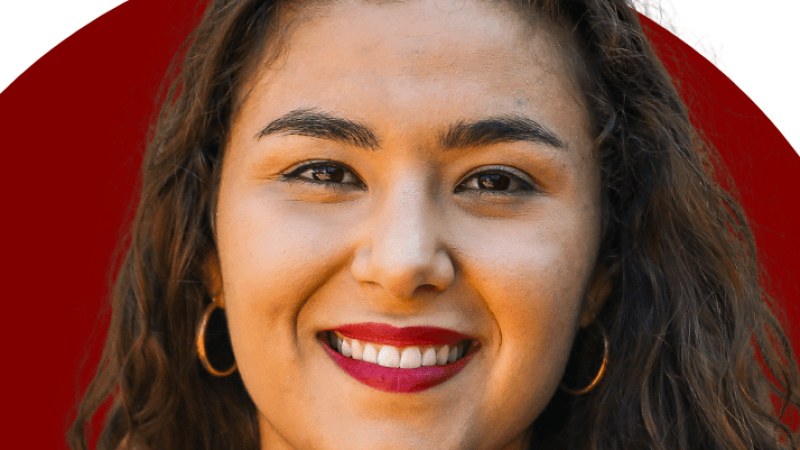
Samantha Malone
Samantha Malone is Chief of Staff to the CEO at Farther, the New York-based wealthtech that turned unicorn in early 2026 on the back of a $150M Series D led by General Atlantic. She joined roughly five months before the round closed - her first startup - after an MBA at Chicago Booth and stints at McKinsey, Skydio, GoDaddy, and Apple's global finance projects. A Bay Area kid who commuted through Santa Clara's business school a year early, she is the person building the deck, running the room, and stitching the operating rhythm as Farther scales past $23B in recruited assets.
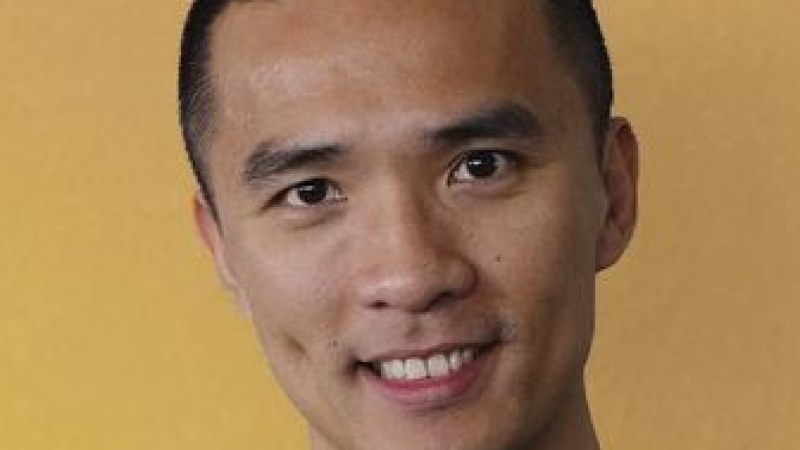
Teddy Chan
Teddy Chan is the CEO and co-founder of AfterShip, the shipment-tracking and post-purchase platform he started in 2012 after building a package-tracking script for his own online toy store cut customer emails by more than half. A self-described software engineer who says he wants to write code forever, Chan grew AfterShip from a Startup Weekend Hong Kong hackathon win into a company handling billions of shipments a year for tens of thousands of merchants, profitable long before Tiger Global led a $66M Series B in 2021 that valued it above $1 billion.

Fireflies.ai
Fireflies.ai is a San Francisco-based AI meeting assistant that joins video and phone calls across Zoom, Google Meet and Microsoft Teams to record, transcribe, summarize and analyze conversations. Its bot captures speaker-labeled notes and action items, its AskFred assistant answers questions about past meetings, and its Perplexity-powered Live Assist offers real-time web answers during calls. Founded in 2016 by Krish Ramineni and Sam Udotong, the company reached a $1 billion valuation in 2025 while staying profitable and is used by teams across more than a million organizations.

Augury
Augury is an industrial AI company that helps manufacturers hear what their machines are trying to say. By bolting IoT sensors onto pumps, motors and fans and feeding their vibration, temperature and magnetic data to machine-learning models, Augury predicts and prevents mechanical failures before they cause unplanned downtime. Founded in 2011 in Israel and now headquartered in New York, the company pioneered the 'Machine Health' category, expanded into 'Process Health' for production-line optimization, and serves 500+ manufacturers including PepsiCo, Colgate-Palmolive, Hershey, DuPont and Heineken. It reached unicorn status in 2021 and maintained a $1B+ valuation with a $75M Series F in 2025.

GlossGenius
GlossGenius is a New York-based vertical SaaS and fintech platform that gives independent beauty and wellness professionals - hair stylists, nail techs, estheticians, spas and medspas - one app to run the whole business. It combines online booking, a built-in card-processing POS, client CRM, marketing automation, payroll, inventory and AI agents, replacing the patchwork of spreadsheets, paper books and generic tools that solo operators and small salons relied on. Founded in 2016 by Danielle Cohen-Shohet, it crossed roughly $100M in revenue, serves tens of thousands of businesses, and reached unicorn status with a reported $1.12B valuation after its January 2026 Series D.
NinjaOne
NinjaOne is an Austin-based software company that makes an automated, cloud-native endpoint management platform used by IT teams and managed service providers to monitor, secure, patch, back up and control laptops, servers, mobile devices and SaaS data from a single console. Founded in 2013 as NinjaRMM, it now serves more than 30,000 customers and manages over 5 million endpoints, and in 2025 raised $500 million in Series C extensions at a $5 billion valuation while remaining founder-led and debt-free.

James Hawkins
James Hawkins is the co-founder and co-CEO of PostHog, the open-source product analytics platform built for engineers. He pivoted five times inside Y Combinator's W20 batch before landing on PostHog, then turned a Hacker News launch and a single tweet into a developer cult following and a $1.4 billion valuation. A former marketing operator and self-described 'very bad developer,' Hawkins runs PostHog on radical transparency, tiny autonomous teams, and a refusal to be boring.
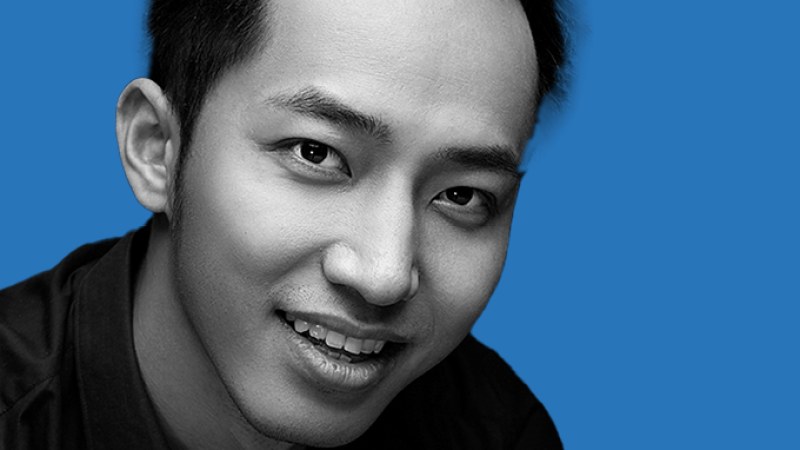
Michael Wang
Michael Wang is the cofounder and CEO of Cider, a Gen Z fashion brand he started in September 2020 during the pandemic and grew into a billion-dollar, social-first company selling trend-driven womenswear to more than 100 countries. A UC Berkeley applied-math graduate and former KKR and IDG Capital investor, Wang built and ran market strategy for YCloset (often called the Rent the Runway of China) before founding Cider. He installs his own software inside factories, releases new styles daily on a near-zero-inventory model, and treats Instagram and TikTok as the storefront. He was named to Forbes 30 Under 30 in 2018.

Zerohash
Zerohash is a Chicago-based crypto and stablecoin infrastructure provider that lets banks, brokerages, fintechs and marketplaces embed digital-asset products - trading, payments, stablecoins and tokenization - through a single regulated API. Rather than building blockchain rails, custody and compliance themselves, clients like Stripe, Interactive Brokers, Morgan Stanley and Franklin Templeton plug into Zerohash's licensed, end-to-end platform. Founded in 2017 by Edward Woodford, the company reached unicorn status in 2025 and has settled tens of billions of dollars in volume for millions of end users across nearly 200 jurisdictions.

Caribou Financial, Inc.
Caribou is a Denver-based auto fintech that helps drivers cut the cost of owning their car. Through a digital platform, it connects car owners with a network of credit unions and community banks to refinance their auto loans, typically saving customers over $100 a month, and pairs that with an auto insurance marketplace and vehicle protection products. Founded in 2016 as MotoRefi and rebranded to Caribou in 2021, the company reached unicorn status with a $1.1 billion valuation after a $115 million Series C round led by Goldman Sachs in 2022.

Avoca
Avoca is a New York-based AI platform for America's services economy. It builds AI agents that answer calls, texts, chats and emails, book jobs, follow up on estimates and coach human reps for HVAC, plumbing, electrical, roofing, pest control and other trades. Founded in 2022 by Tyson Chen and Apurva Shrivastava after a chance encounter with a Dallas HVAC company, Avoca pivoted from restaurants to the trades when it realized a missed call could mean losing a $30,000 install. In April 2026 it raised $125M+ across Seed, Series A and Series B at a $1 billion valuation, and is on track to book $1 billion in jobs in a single year.

ShopMy
ShopMy is a New York-based creator commerce platform that turns trusted recommendations into a shoppable business. Creators build curated digital storefronts, link to products from tens of thousands of brands, and earn commissions, while brands run gifting, collaborations, and paid campaigns with measurable performance. Founded in 2020, the company reached a $1.5B valuation in 2025 on the back of more than 240,000 creators, 1,600+ brand partners, and roughly $1 billion in annual platform sales.