The Story
Five months, one unicorn, one deck
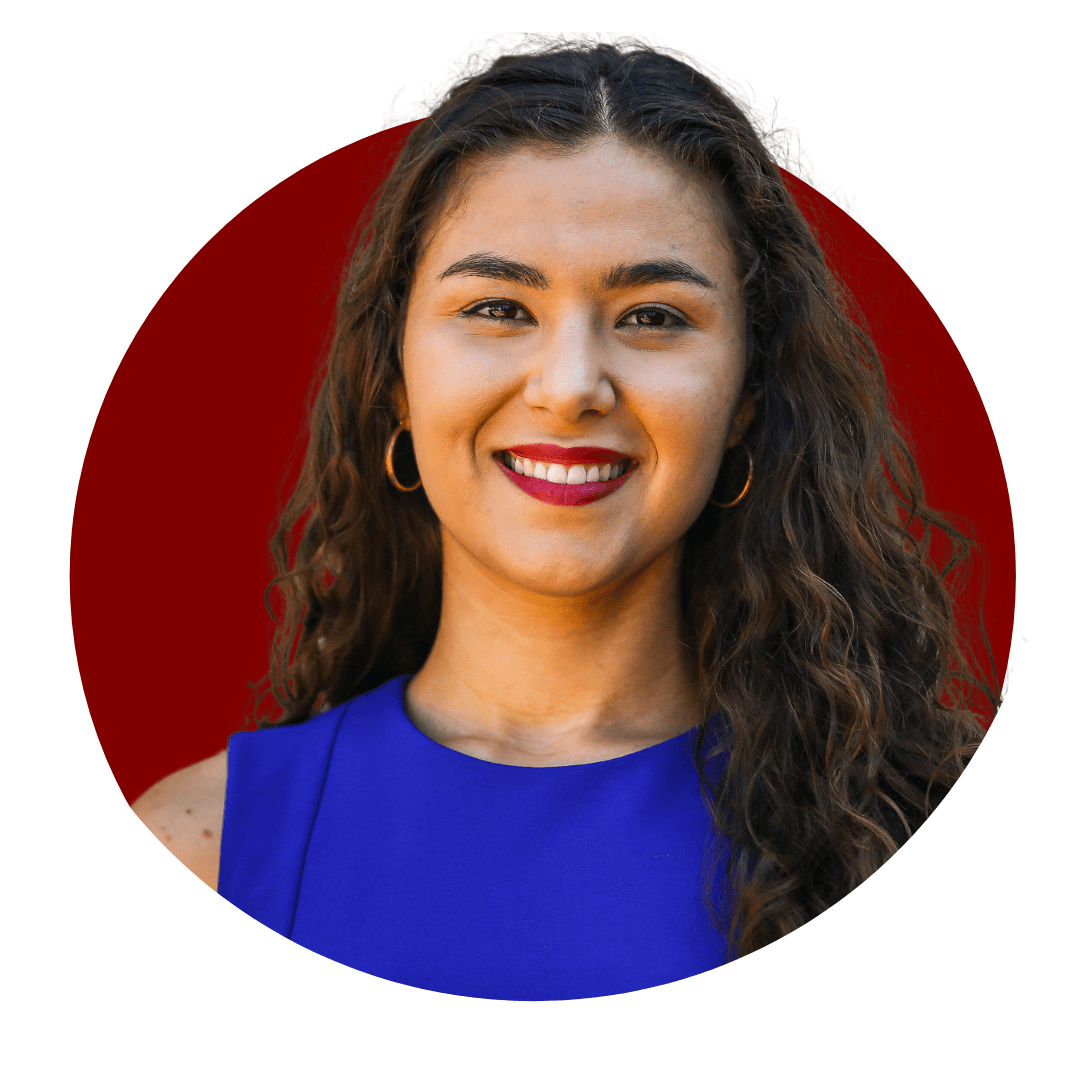
In late 2025, Samantha Malone left a McKinsey Associate seat for a job title that is not really a job. Chief of Staff to the CEO is the job of making the CEO's job work - part strategist, part scheduler, part sanity check, part deck author, part person who quietly closes the loop on the thirty things nobody else remembered to close. She took the seat at Farther, a New York-based wealth management firm run out of 4 World Trade Center that had been growing in the way certain fintech companies grow when nobody outside the industry is watching. Roughly five months later, in February 2026, Farther announced a $150 million Series D led by General Atlantic. Total funding hit $275 million. Recruited assets crossed $23 billion. The company became a unicorn. Malone's own LinkedIn description of the interval - "an absolute whirlwind" - is, if anything, undercooked.
The interesting thing about Chief of Staff jobs is that when they work, they are invisible, and when they fail, they are catastrophic. The person in the seat sees every strategic bet, every people problem, every board update draft, every rounding error in the operating rhythm. They are also, by design, hard to describe at parties. Malone described her contribution to the Series D publicly, in one line: she helped build the pitch deck. General Atlantic wrote a check with a nine-figure comma in it. Cause and effect are murky at that altitude, but the deck existed, the round closed, and someone had to write the deck.
Farther calls itself an "Intelligent Wealth" firm and, on paper, does what a lot of wealthtech firms do - portfolio management, tax-loss harvesting, alternative investments, estate planning, generational transfer, the standard menu. What separates it from a Schwab or an Edelman is the operating theory: it is a technology company that also happens to be a registered investment advisor, rather than an RIA that also happens to have a website. The pitch to advisors is that they can bring their book of business and stop paying the technology tax; the pitch to clients is that the tech does the boring parts. The company has 620 employees, over 100 wealth managers, 4,000 clients, and a valuation now measured in the letter B. Someone has to keep all of that pointed in one direction. That is the job.
The résumé, read backwards
The way to understand Malone's career is to read it in reverse. Chief of Staff at a wealthtech unicorn is the destination. One stop back: McKinsey Associate, starting September 2022 - the standard post-Booth stopover, which she left to go to Farther. One stop before that: Chicago Booth MBA, class of 2022. Before Booth, GoDaddy - specifically, she followed a senior director there to help build out a new project management organization, a formation exercise that is a lot harder than it sounds when the sponsor is one person and the political capital is finite. Before GoDaddy, Apple, where she did change management for the Global Finance Projects group. And before Apple, Santa Clara University, which she finished a year early while working and commuting, an act of self-inflicted efficiency that reads, in retrospect, like a preview of the pace to come.
None of those stops is random. Each one is either an operational role or an operations-adjacent role. She has never held a job that did not involve managing something with moving parts. The move to Farther is, in a certain light, the first time she has been in charge of the whole engine.
How you know a place is scaling
Farther's growth curve is the kind of chart that makes existing wealth managers uncomfortable. $23 billion in recruited assets is, roughly, the assets Edelman Financial had in 2007. It took Edelman thirty years to get there. Farther has been around for less than a decade. General Atlantic writes Series D checks for a living and has seen every version of "the numbers are up and to the right"; the fact that they led the round is a decent proxy for the underlying trajectory being real.
Somebody on the inside is running the meeting where the sales pipeline is discussed, the meeting where the advisor recruiting funnel is discussed, the meeting where the product roadmap is prioritized, and, importantly, the meeting where the CEO decides which of those meetings he still needs to be in. This is the Chief of Staff's real job. Malone joined at exactly the point in a company's life when the founder needs another brain, but doesn't yet need a COO. That gap is the seat.
Five months ago, I made the leap into my first startup experience and it has been an absolute whirlwind.
Samantha Malone · LinkedIn, Feb 2026
Booth, Barcelona, and the winter she wasn't ready for
Malone grew up in Fremont, California, and calls herself, without apology, a "shameless Californian." She went to Santa Clara for undergrad, majored in business, and did the thing where you finish a year early because you have already decided a semester is a unit of time you would prefer to compress. She did not know many working professionals outside Bay Area tech, which is a very specific limitation - one that Chicago Booth, more or less by design, tries to break in students.
She arrived at Booth in fall 2020, which is not the fall you want to arrive anywhere. She wrote publicly about the pandemic, the recruiting stress, the surprise trip home, the general feeling of doing a top-tier MBA under conditions nobody had designed the program for. She joined HABSA (Hispanic American Business Student Association) and became a co-chair, facilitated LEAD (Booth's required leadership course, taught by second-years), and represented the Stuart cohort on the Graduate Business Council. She also wrote for The Booth Experience, the school's admissions-adjacent blog - which is where most of what is public about her personality comes from. She was, by her own account, a nerd and a planner who "struggles with relinquishing control," which is the correct temperamental starting point for a Chief of Staff and, arguably, the exact set of traits that get promoted for it.
She spent a summer as a marketing production intern at Skydio, the drone company, which is a genuinely odd rotation for a career mostly built around operations and change management. It is also a good tell: she was willing to zag when it made her more useful.
What the Chief of Staff seat actually looks like
The chief of staff economy is now large enough to have its own conferences, its own Substack ecosystem, and its own slightly self-serious LinkedIn discourse about what the role really is. The honest answer is that it varies by CEO. At Farther, Taylor Matthews is the founder-CEO, and the company is at a stage where the CEO's calendar is the single most valuable resource in the building. If the CEO spends an hour on the wrong meeting, that is not an hour lost - that is a decision not made, a hire not closed, a customer not talked to. Chief of Staff work is, at its core, calendar arbitrage against opportunity cost. You do it well by understanding the strategy well enough to know which meetings do not need the CEO. You do it badly by turning into a gatekeeper.
The other job is the deck. Big fundraising rounds and big board meetings are, functionally, writing exercises. Somebody has to sit at a laptop and decide which chart goes on slide 8, which cohort you show and which you don't, which words describe the market in a way that is both true and interesting. Malone said she helped build the Series D deck. Anyone who has done that work knows the sentence "helped build the deck" is doing a lot of load-bearing.