privacy
(51)
Sera wants to make speaking up feel safe.
An AI proxy between employees and HR. A simple idea with a difficult assignment: make the first conversation feel safe enough to start.

Minds wants you to own the room
Minds learned the cost of letting another platform control its audience. Now the open-source social network sells tools that let communities build a home of their own.

Garrett Langley and the trouble with a useful camera
A neighborhood break-in gave the Atlanta engineer a problem to solve. Building Flock Safety gave him a harder one: earning the trust of people on both sides of the lens.

Will Smith and the things a spreadsheet misses
Euclid’s co-founder wanted to give physical places the feedback of a website. An unexpected iPad bill, a privacy reckoning and a second career in venture capital taught him how much else there was to notice.

Robin Tombs and the question a passport answers too well
A queue at a California obstacle race helped set Robin Tombs on a twelve-year pursuit: proving who we are, while giving less of ourselves away.

Dennis van der Heijden and the art of becoming less necessary
A $50 WordPress plugin helped start Convert.com. A purchase request for less than $50 helped its co-founder question what a CEO was for.

Malwarebytes wants to catch the click.
It earned its reputation cleaning up infected computers. Now Malwarebytes is moving closer to the moment things go wrong: the message, the link, and the split-second decision to trust them.

Adam Back put a price on junk mail. Bitcoin found another use.
In 1997, Adam Back asked computers to do a little work before sending an email. His Hashcash experiment became a building block of Bitcoin - and set the course for a career spent asking who gets to control the network.

DuckDuckGo sells the search. Keeps you out of it.
A search for a car can pay for a search engine. Does it really need to become a dossier on the driver? DuckDuckGo has built its business around that question.
George Wrenn and the art of making risk visible
Before co-founding CyberSaint, George Wrenn took executives out of the office to show them what cyber risk meant. His career kept returning to that problem: making complicated things clear enough for people to act.

Dan Jaye and the cost of knowing
He helped bring behavioral advertising to the early web. Three decades later, Aqfer co-founder Dan Jaye is back in the CTO chair, working on the data problems that clever software keeps leaving behind.
AnthologyAI wants your data. It offers to pay.
Through its Caden app, AnthologyAI turns permission into consumer intelligence. The interesting question is whether paying people can produce a better picture of how they live.
SpruceID wants your ID to keep a secret
The company behind California’s digital DMV wallet is tackling a peculiar problem: proving who you are without telling everyone more than they need to know.

The Company That Tried to Put One Lock on Every Data Door
Okera sold a deceptively simple idea: write the rule for sensitive data once, then make it follow the data everywhere. Databricks bought the company in 2023, just as AI made the old permission problem larger and stranger.
PeopleConnect Helps You Find People - and Hide Your Own Report
TruthFinder, Intelius and Classmates sit inside a company that turns personal history into a consumer product. With free report suppression and OmniWatch identity protection, PeopleConnect also serves the person who would rather stay out of the search results.

Seth Knox Has Spent a Career Giving Security’s Next Problem a Name
From endpoint security to email identity, confidential computing and AI data governance, Seth Knox’s career follows a useful pattern: arrive while the category is still foggy, then give customers a map.

Apple Sells You a Smaller World, and You Keep Buying It
It started in a garage and now runs on custom silicon, a services machine, and a billion-plus devices that all talk to each other. Here is how the walled garden actually works - and why leaving it feels like moving countries.

Zoho Corporation
How a bootstrapped software company from small-town India built 55+ business apps, signed up 130 million users, and refused to take a single dollar of venture capital.

Cactus
Cactus is a cross-platform, open-source AI inference engine built in C/C++ to run language, speech, and vision models directly on smartphones, laptops, wearables, and other low-power edge hardware. It gives mobile developers Flutter, React Native, Kotlin, and Swift SDKs to deploy quantized models on-device - cutting latency to under 100ms, keeping data private, working offline, and avoiding cloud API bills - with automatic cloud fallback for heavier tasks. A YC Summer 2025 company, Cactus already powers production apps serving 500,000+ weekly inference tasks.

jo
jo is a voice-first personal AI agent for macOS that runs on your Mac and a private, per-user cloud machine. Rather than waiting to be asked, it proactively summarizes what is on your screen, drafts emails, manages your calendar, clips relevant content, and keeps up with the loose ends of work and life. Built natively in Swift for Apple Silicon and backed by Y Combinator (W24), jo reaches users across Mac, web, iMessage, Telegram, and WhatsApp while keeping personal data local and out of model training.
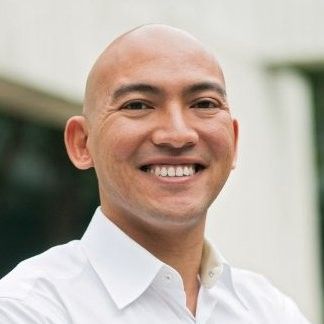
Zouhair Belkoura
Zouhair Belkoura is the founder and CEO of Keepsafe, a San Francisco company that builds a family of consumer privacy apps used by tens of millions of people worldwide. A former electrical engineering PhD who researched mobile video coding, he has built Keepsafe around the idea that privacy is a form of freedom and that ordinary people deserve simple tools to control their personal photos, messages, and browsing. He is a frequent writer and speaker on the difference between abstract data privacy and the content privacy that actually matters to people's daily lives.
BreachRx
BreachRx is a San Francisco-based SaaS company that pioneered Cybersecurity Incident Response Management (CIRM) - treating a breach as an enterprise-wide business crisis rather than a purely technical problem. Its Rex Platform gives security, legal, communications, and executive teams a single secure workspace to coordinate response, automatically track regulatory reporting obligations, and preserve a defensible audit trail. Founded in 2017 by Andy Lunsford and Matt Hartley, the company raised a $15M Series A in 2025 and serves 100+ customers including Coinbase, American Express, and Commvault.

Thesis*
Thesis* is a Bitcoin-focused venture production studio founded in 2014 that builds companies and protocols in-house rather than investing in outside teams. Operating under the banner "Money is power, Bitcoin is empowerment," it has incubated a portfolio spanning Bitcoin infrastructure and consumer finance - including tBTC (a decentralized, trust-minimized bridge that tokenizes Bitcoin on Ethereum), Mezo (an on-chain Bitcoin banking layer backed by the MUSD stablecoin), Fold (a Bitcoin rewards app), Acre (Bitcoin staking), and Taho (a community-owned web3 wallet). Led by CEO Matt Luongo, Thesis raised a $21 million Series A in 2021 and has become one of the most prolific studios building Bitcoin-native financial products.

Shane Curran
Shane Curran is the founder and CEO of Evervault, an encryption infrastructure company he started in 2018 after dropping out of University College Dublin three days into a business and law degree. A year earlier, at 16, he had won the BT Young Scientist and Technology Exhibition with a post-quantum encrypted storage project called qCrypt. Evervault sells developer-facing tools that keep sensitive data - card numbers, health records, keys - encrypted while still being processed, running inside AWS Nitro Enclaves. The company has raised $46 million from Sequoia, Kleiner Perkins, Index Ventures and Ribbit Capital, most recently a $25M Series B in March 2026.

Ad Hoc Labs (makers of Burner + Dialed)
Ad Hoc Labs is a Los Angeles-based independent mobile software company that builds communication tools giving people control over how they can be reached. Its flagship app, Burner, launched in 2012 as the original disposable second phone number - a privacy layer that lets users spin up, use, and delete alias numbers on demand. Its second product, Dialed, packages a business phone line, contact management, and marketing tools into one app for solopreneurs and micro-businesses. Founded by Greg Cohn and Will Carter, the company remains independent and remote, focused on utility and reliability over feature volume.
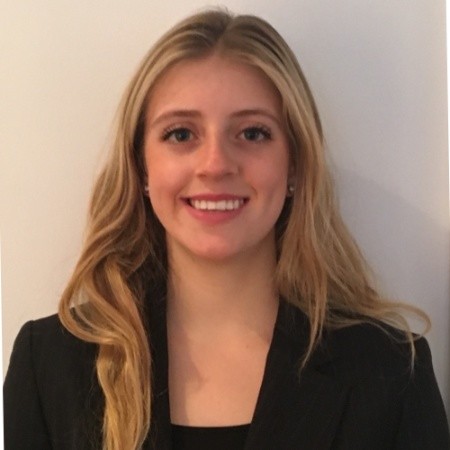
Brittainy Lovett
Brittainy Lovett is a Meta operator who works inside the Office of the CEO, one of the highest-trust seats in a 77,000-person company. A Northwestern-trained mechanical engineer who started in consulting at Deloitte, she has built a career on privacy critical incident response - the unglamorous, high-stakes work of keeping user data safe when something goes wrong. Based in New York, she is the kind of behind-the-scenes operator who makes very large machines run quietly.

Hayden AI
This video profiles Hayden AI, a company building an AI-powered platform that automates the enforcement of bus lanes on public transit systems. Cameras mounted behind a bus windshield feed an onboard compute box that detects when a parked or stopped vehicle is illegally blocking a bus lane. The system processes footage on the bus itself, blurring license plates and faces and transmitting only the clip tied to an actual violation to the cloud. Framed as a low-cost path to smarter cities, Hayden AI argues that one blocked bus lane impedes 50 to 60 riders at once, and that automating enforcement reduces collisions, improves on-time arrivals, lowers greenhouse gas emissions, and grows ridership.
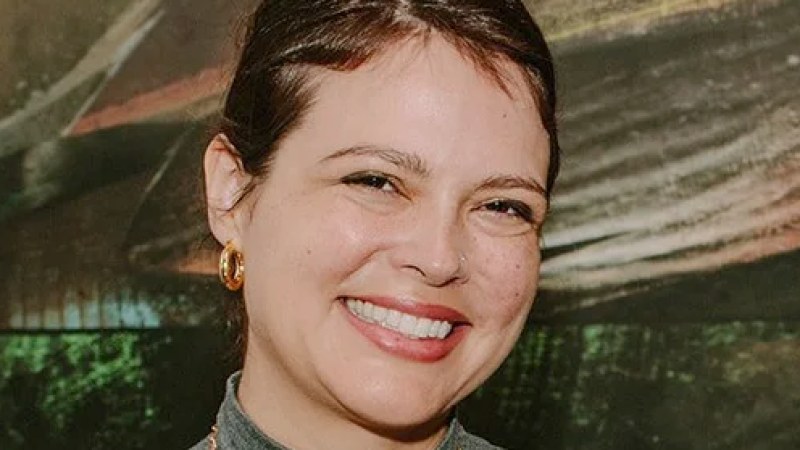
Sara Drakeley
Sara Drakeley is the CEO of Sentz (formerly MobileCoin), a privacy-focused stablecoin and global payments company based in Sacramento, California. An MIT-trained mathematician and computer scientist, she built animation pipelines at Walt Disney Animation Studios - the trees in Frozen, the water in Moana, the fur in Zootopia - then wrote trading infrastructure on Wall Street and joined SpaceX's simulation team before becoming the third engineering hire at MobileCoin in 2018. She rose from principal engineer to CTO to CEO, and now leads the company's push to make instant, low-cost, private cross-border payments accessible worldwide.

Sonic
Sonic is the largest independently owned internet service provider in California, founded in 1994 in Santa Rosa. It builds and runs its own fiber-optic network, selling fast, flat-priced gigabit and 10-gigabit home and business internet with no contracts, no data caps, and a privacy stance that has earned it a perfect score from the Electronic Frontier Foundation. After more than 30 years serving the San Francisco Bay Area, Sonic began its first out-of-region expansion in 2026, lighting up fiber in Los Angeles and Dallas.
Edge
Edge is a San Diego company building a self-custody, privacy-first mobile wallet for buying, storing, swapping and spending more than 120 cryptocurrencies. Founded in 2014 as Airbitz and rebranded to Edge in 2018, it pioneered a username-and-password login model backed by client-side encryption and a zero-knowledge architecture, so private keys and account data never leave a user's device unencrypted. The same security layer is offered to developers as the Edge Login SDK.