Tagged: software-engineer
22 results
Tony Holdstock-Brown
Tony Holdstock-Brown is the co-founder and CEO of Inngest, a San Francisco developer platform that gives engineers a durable, observable execution layer for background jobs, workflows, and AI agents. A self-described tinkerer since age 10 and former Docker engineer, he started Inngest in 2021 with CTO Dan Farrelly after the two met in a New York co-working space. The company has raised roughly $31.6M, including a $21M Series A led by Altimeter in 2025, on the thesis that in an AI era the real moat is how fast a team can iterate.

He Taught a Machine to Sit Across the Table From You
John Rytel is the co-founder and CTO of Alex (formerly Apriora), a San Francisco startup that builds an agentic AI recruiter which conducts live, real-time video interviews with job candidates. A Brown University graduate in computer science and applied mathematics, Rytel teamed up with Aaron Wang to launch the company in 2023, went through Y Combinator's Winter 2024 batch, and has helped raise roughly $20M from Peak XV Partners and 1984 Ventures. He is the builder behind the engine: the person who writes the code that lets an AI named Alex interview thousands of people at once.

Advith Chelikani
Advith Chelikani is the co-founder and CTO of Pylon, an AI-powered B2B customer support platform based in San Francisco. A Caltech computer science graduate and former Samsara engineer, Advith co-founded Pylon in November 2022 alongside Marty Kausas and Robert Eng. In under three years, the company raised $51.2M in total funding - including a $17M Series A from a16z in 2024 and a $31M Series B in 2025 - scaled to 750+ customers, and grew revenue 5x year-over-year for two consecutive years. Pylon replaces legacy platforms like Zendesk by meeting enterprise support teams where their customers already are: Slack, Microsoft Teams, and Discord.

Coco Mao
Coco Mao is the CEO and co-founder of OpenArt AI, the creative platform that grew from a viral Hacker News post about AI image prompts to $70M+ ARR with just 20 people. A Carnegie Mellon computer scientist who spent seven years at Google building search products and the Tangi short-form video app, she left in 2022 to co-found OpenArt with CTO John Qiao. Under her leadership, OpenArt scaled 7x in 2025, reached 8 million monthly active users, raised a $30M Series A from Canaan Partners, and launched One-Click Story — a feature that lets anyone turn a single sentence into a complete video with persistent characters.

Nathan Stewart
Nathan Stewart is a founding engineer at Merge (merge.dev), the unified API platform that lets B2B SaaS companies connect to hundreds of HRIS, ATS, CRM, accounting, and ticketing systems through a single integration. Based in New York and educated at The Ohio State University, Stewart is a backend developer who joined Merge in its early days and has helped scale the company to over 140 employees and $74.5M in funding. He describes himself as a 'Software Engineer & Puzzle Aficionado,' an apt description for someone building the connective infrastructure that keeps the modern SaaS stack wired together.
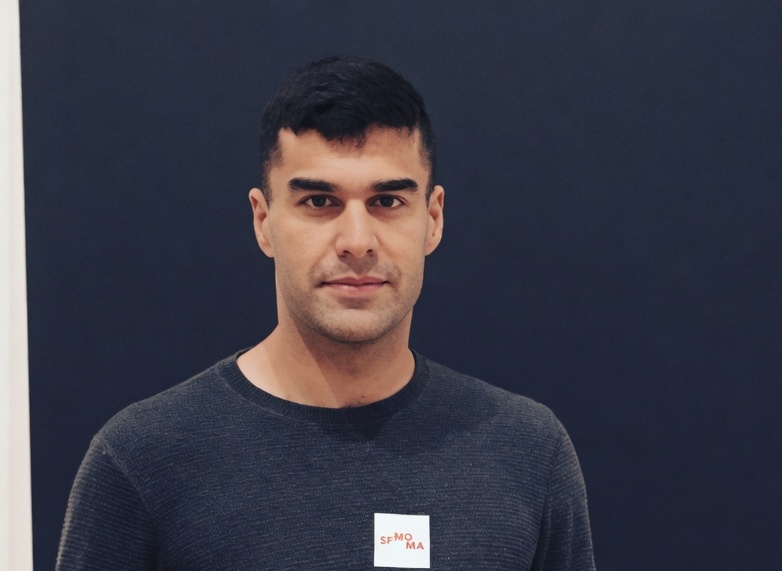
Raghav Gulati
Raghav Gulati is a San Francisco-based technologist and executive who built CoinList into one of crypto's most recognized token launch platforms before transitioning to partner at Ravikant Capital. A University of Georgia mathematics graduate who cut his teeth as a software engineer at companies like Backplane and Shyp, Gulati rose through CoinList from engineer to CEO, helping orchestrate landmark token sales including Solana's early raise. His vision: make regulated token launches as accessible to 330 million Americans as equity markets, with Solana as the decentralized NASDAQ.

Zack Bloom
Zack Bloom is a co-founder of Heirloom Carbon Technologies, the company behind America's first commercial direct air capture facility in Tracy, California. A software engineer turned climate entrepreneur, Bloom previously co-founded Eager - a cloud app marketplace acquired by Cloudflare in 2016 - and served as Director of Product at Cloudflare overseeing Workers, Storage, and Tunnel. In 2020, he pivoted from internet infrastructure to atmospheric infrastructure, co-founding Heirloom alongside Shashank Samala and Noah McQueen. The company has since raised over $354M in total funding, opened its first facility, and secured contracts with Microsoft, Stripe, Shopify, Meta, and JPMorgan.
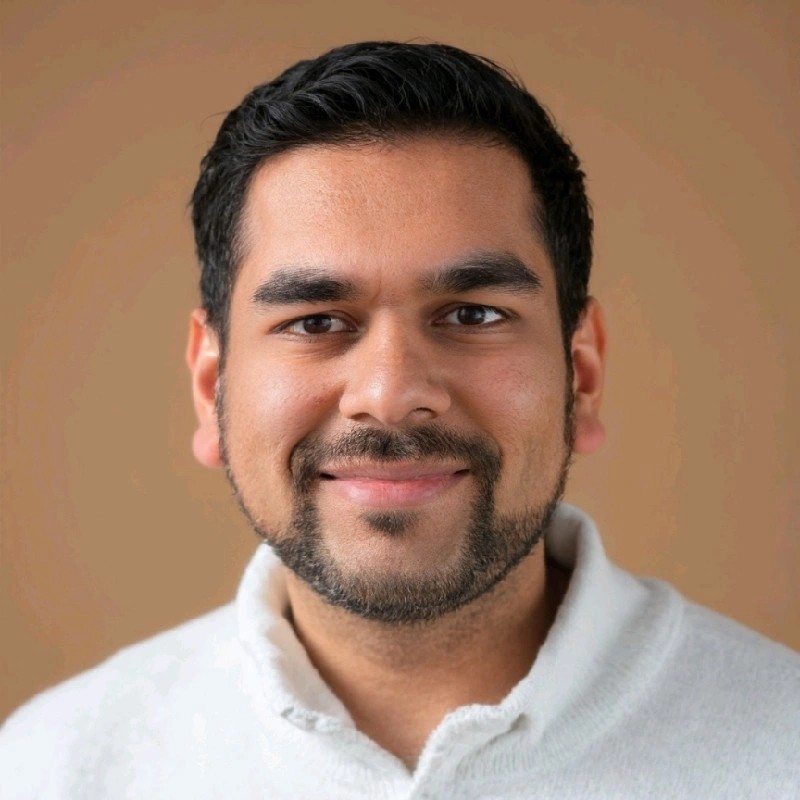
Hemkesh Agrawal
Hemkesh Agrawal is an engineer-turned-venture-operator who went from arriving in the US from India in 2019 to holding a patent, founding multiple startups, and becoming Head of Engineering at Redbud VC in Columbia, Missouri. A Board of Trustees Scholar at Michigan State University with a perfect 4.0 GPA, he co-founded UniServices (an Uber-for-odd-jobs platform for college students) and Village (AI-driven HOA management), and was one of only 15 selected out of 4,000 applicants for the Survive & Thrive entrepreneurship bootcamp at age 16. He bridges deep technical skill with startup hustle, embodying the rare builder who can go from Arduino prototypes to VC infrastructure.

Tommy McGlynn
Tommy McGlynn is a Los Angeles-based engineering manager at Meta's Reality Labs, where he leads the AI Character Platform team building AI-powered characters for the mixed-reality metaverse. A self-taught hacker who cracked an ad referral platform at 12, he went on to design scalable server architectures for Apple's TestFlight, speak on stage at WWDC for three consecutive years, and author the Oculus Developer Hub launch. He bridges design thinking and deep engineering - from Flash games and real-time multiplayer systems to VR developer tooling and interactive AI agents.

Justin Rosenstein
Justin Rosenstein is the co-founder of Asana and creator of some of the internet's most influential features - including the Facebook Like button and Gmail Chat. A Stanford mathematics graduate who dropped out of grad school at 20 to join Google, he went on to shape how billions communicate and collaborate online. Now he's wrestling with the consequences of his creations, starring in Netflix's The Social Dilemma and founding One Project, a nonprofit reimagining governance and economics. He lives in Agape, a cooperative house in San Francisco's Mission District founded on unconditional love, and has banned himself from the very technologies he helped build.

Bobby Murphy
Bobby Murphy is the co-founder and Chief Technology Officer of Snap Inc., the parent company of Snapchat. A mathematical and computational science graduate from Stanford, Murphy has led the engineering vision behind one of the world's most influential social media platforms since 2011. Known as Snapchat's 'quiet genius,' he pioneered ephemeral messaging and has been instrumental in developing Snap's augmented reality innovations, including Spectacles AR glasses. Named to Time's 100 Most Influential People in 2014, Murphy became one of the world's youngest billionaires and remains a driving force in Snap's transformation into a comprehensive AR and AI company.

Haseeb Qureshi
Haseeb Qureshi is the Managing Partner at Dragonfly Capital, one of crypto's largest VC firms with $4B+ AUM. A former professional poker player who turned $50 into seven figures by age 19, he walked away from the game, gave away his earnings, taught himself to code at a bootcamp, worked at Airbnb, then bet everything on crypto. He is one of the most distinctive voices in Web3 - part philosopher, part strategist, part contrarian - known for rigorous long-form essays, sharp market predictions, and an improbable career arc that no resume template could contain.

Courtland Allen
Courtland Allen is the co-founder of Indie Hackers, a community and media platform where entrepreneurs share transparent revenue numbers and business strategies. He built the site in 2016, sold it to Stripe in 2017 — Stripe's first notable acquisition — and bought it back in 2023 on its exact 6th acquisition anniversary. A MIT CS grad who failed six startups before hitting on his seventh, Allen has become one of the internet's most trusted voices on bootstrapping and sustainable entrepreneurship.

Yasser Elsaid
Yasser Elsaid is an Egyptian-born software engineer and entrepreneur who bootstrapped Chatbase - an AI agent platform - from zero to $9M ARR with 18 people, all without raising a dollar of VC funding. He launched to 16 Twitter followers in February 2023, the tweet went viral, he failed two university classes, turned down a $1M acquisition offer for his source code three months in, and kept building. Now based in San Francisco on an O-1 'Alien of Extraordinary Ability' visa, he's declared 2026 the year Chatbase forgets it's bootstrapped.

Louie Bacaj
Louie Bacaj is an Albanian-American software engineer turned entrepreneur who climbed from immigrant poverty in the Bronx to Senior Director of Engineering at Walmart, then walked away from it all in 2021 to build a portfolio of small bets. He co-founded the Small Bets learning community with Daniel Vassallo, runs the M&Ms Newsletter on Substack with 9,000+ subscribers, and teaches engineers how to level up their careers and build income outside the 9-to-5. His philosophy: make money with bits, diversify into atoms.

Daniel Stenberg
Daniel Stenberg is a Swedish software engineer and the creator of curl and libcurl, tools found on an estimated 20-40 billion devices worldwide - from smartphones and smart TVs to spacecraft and every Windows and macOS installation. A self-taught programmer who began on a Commodore 64 at age 14, he has spent over 25 years maintaining one of the internet's most foundational software projects. He currently works at wolfSSL providing commercial curl support, sits as President of the European Open Source Academy, and contributes actively to internet standards through the IETF. His weekly newsletter chronicles his ongoing work simplifying, securing, and extending curl.

Joe Beda
Joe Beda is the co-creator of Kubernetes and Google Compute Engine, a software engineer who helped build the infrastructure layer that now underpins the modern cloud. After a decade at Google where he made the first Kubernetes commit on GitHub, he co-founded Heptio to commercialize Kubernetes adoption, which VMware acquired in 2018 for roughly $550 million. Now semi-retired, he advises companies like Tailscale, invests in startups including Bluesky and Edera, and writes about technology at eightypercent.net - a blog named after his belief that a simpler system solving 80% of the problem beats an overengineered one that never ships.

Michael Lynch
Michael Lynch is a bootstrapped solo founder who quit Google after seven years to build software and hardware businesses entirely on his own terms. He grew TinyPilot - a KVM-over-IP device built from a $100 Raspberry Pi kit - into a $1M/year business and sold it in 2024 for ~$600K. He writes with radical transparency about money, failure, and the craft of independent software development at mtlynch.io, and is now writing 'Refactoring English', a book on writing for software engineers.

Predrag Gruevski
Predrag Gruevski is an independent software engineer, open-source creator, and Rust ecosystem luminary best known for building Trustfall - a universal query engine that lets you query anything from APIs to LLMs - and cargo-semver-checks, a semantic versioning linter that's becoming a cornerstone of the Rust publish workflow. A former MIT competitive mathematician turned principal engineer at Kensho Technologies, Predrag brings Olympic-level rigor to API design and compiler technology, writing and speaking extensively on correctness-first software development.

Ryan Peterman
Ryan Peterman went from new grad to Staff Engineer at Instagram in three years, then left one of tech's most coveted jobs to build what he wished existed. His newsletter 'The Developing Dev' has 106,000+ subscribers, his podcast 'The Peterman Pod' features career stories from top engineers, and his hardware company Compose is building an ultra-low-profile ergonomic keyboard. Based in San Francisco, he is the rare engineer who codes, writes, interviews Turing Award winners, and designs keyboards with equal intensity.

Swizec Teller
Swizec Teller is a Slovenian-American software engineer, bestselling author, and educator based in San Francisco who has spent 20+ years turning hard-won startup experience into actionable career wisdom. Best known for his Senior Mindset newsletter and books like 'Scaling Fast' and 'Senior Engineer Mindset,' he teaches engineers how to stop writing code and start building leverage. Currently building web UX for gene sequencing at Plasmidsaurus, he's the rare person who codes all day and then writes about coding all evening - and makes that seem entirely reasonable.

Sylvain Kerkour
Sylvain Kerkour is a French software engineer, security researcher, and author best known for 'Black Hat Rust' - a hands-on book applying offensive security techniques with the Rust programming language. Self-described as a 'professional troublemaker', he writes about programming, hacking, and entrepreneurship at kerkour.com under the tagline '(Ab)using technology for fun & profit'. He is a vocal advocate for supply chain security in the Rust ecosystem and creator of the Bloom open-technology platform and the ChaCha20-BLAKE3 AEAD cipher implementation.