digital-wallet
(34)
Fluz makes your shopping pay a little rent
A gift card, a group of friends, and a bank account you already own: Fluz turns ordinary spending into cashback. The interesting part is who pays for it - and how much survives the fees.
The Price of Waiting for Friday
Payactiv built a business around a peculiar gap: people can finish the work on Tuesday and still pay to reach the money on Friday. Its answer began at a New Jersey construction company and now runs through payroll systems, cards and digital wallets.

Ontop Bet That Contractors Need a Bank, Not Just a Paycheck
The Bogota-born startup bundled contracts, compliance and cross-border payroll with a financial account for the person getting paid. Its sharper contractor-first strategy is a useful lesson in choosing one messy workflow and owning both ends of it.

Tala Bet the Credit Score Was Wrong - Now 14 Million Borrowers Power Its AI
Shivani Siroya built a lender for people the credit bureaus could not see. A decade, 14 million customers and $8 billion in disbursements later, Tala wants to turn that hard-won repayment history into the credit layer for the global majority.

The App That Turned Payday Loans Into a Neighborly Favor
SoLo Funds built a lending marketplace with no interest and no mandatory fees, betting that strangers would rather help strangers than let a payday lender do it. Two million users later, the model is either a fix for broken small-dollar credit or a regulatory magnet - and the founders keep insisting it is the first.

Apple Sells You a Smaller World, and You Keep Buying It
It started in a garage and now runs on custom silicon, a services machine, and a billion-plus devices that all talk to each other. Here is how the walled garden actually works - and why leaving it feels like moving countries.
The Phone-Top-Up App That Grew Into Brazil's Financial Swiss Army Knife
RecargaPay started with prepaid minutes. Now it wants one app to handle the small, constant money jobs of Brazilian life - and turn that daily utility into credit, savings and merchant relationships.
PayPal Wants to Be the Internet's Cash Register Again
The blue button helped teach the web to pay. Now PayPal is stitching checkout, Venmo, Braintree, credit, ads and AI agents into a new wager on how money will move.

Outlander Capital Wants to Sell You the Blockchain Without You Ever Seeing It
The Dallas firm behind the "Invisible Wallet" is quietly converting patents, pop songs, and NFC tags into assets you can trade - and betting most people will never notice the blockchain underneath.
ManagePay Built a Fintech Toolbox. Now It Wants to Run the Rails.
The Malaysian payments veteran spent two decades assembling wallets, cards, checkout tools and merchant software. Its next act puts that infrastructure behind public transport and branded financial services.

Current Built the Bank Account Around a Paycheck
Current began with a teen debit card and grew into a financial operating system for more than six million members. The bet is that owning the plumbing can make every paycheck work harder before the next one arrives.

How a Forgotten Wallet Turned Into America's Verb for Money
Venmo turned paying a friend back into a social ritual - complete with emojis and a public feed. Fifteen years later, "just Venmo me" is how a generation moves money.
Bonat
The Riyadh startup that turns a coffee-shop punch card into a data engine - and just raised $6 million to teach every merchant in the Gulf how to keep a customer.

Walid Mah'd
Walid Mah'd is the co-founder and CEO of Moreta (YC S24), a San Francisco fintech that lets international travelers pay with local QR networks in Asia without a bank account in every country. A former Mastercard Advisors payments consultant and Ivey Business School graduate, he built the company after feeling the friction of paying while backpacking across Southeast and East Asia.

Moreta
Moreta (Moreta Pay) is a Y Combinator S24 fintech building a mobile wallet that lets international travelers, expats and digital nomads pay local merchants by scanning QR codes across Southeast Asia and Latin America - using their own currency, at real exchange rates, without needing a local bank account. It connects to national QR networks like Indonesia's QRIS, Thailand's PromptPay and the Philippines' QR Ph so a Western visitor can pay at street stalls and cafes the same way a local does.

QUIK
QUIK is a Maracaibo-born super app that lets Venezuelans pay, save, shop and get food or groceries delivered in about 30 minutes, all from one phone. Its stablecoin-backed wallet lets users hold and spend in a currency that holds its value in a country long battered by inflation, while its QUIK Pro side gives merchants the software to run their storefront, inventory and logistics. Backed by Y Combinator in the Winter 2022 batch, it was the first startup from Maracaibo to be accepted into the accelerator.

Spring in Africa
Spring in Africa is a Nigerian-rooted fintech that lets people and small businesses send, receive, and hold money across borders in both fiat and crypto. It began as Wallet.ng, grew into Wallets Africa, and in 2023 launched Spring, a multi-currency wallet that pairs an instant account number, cashback, and payment links with Ethereum and stablecoin transactions shown in plain USD. Backed by Y Combinator (W19), Michael Seibel, Microtraction, Samurai Incubate, and Mozilla, the company has processed millions of dollars a month for tens of thousands of consumer and business accounts.
Hubpay
Hubpay is a UAE-regulated fintech that gives small and medium businesses a global payments platform - multi-currency business accounts, competitive FX, cross-border payroll, and regulated payment links in one dashboard. Founded in 2019 by Kevin Kilty and licensed under the Abu Dhabi Global Market, it was the first independently regulated fintech in the UAE authorized to offer digital money services, and it now connects the UAE with markets across Asia, Africa, and Europe.
Instapay Technologies Sdn Bhd
Instapay Technologies is a Kuala Lumpur-based fintech that gives migrant and foreign workers in Malaysia a regulated digital salary account. Through a mobile e-wallet paired with a prepaid Mastercard, workers receive their pay, send money home to 30+ countries, pay bills, top up mobile plans, shop and withdraw cash at ATMs. Licensed by Bank Negara Malaysia as an e-money issuer and money services business, Instapay also runs payroll disbursement for hundreds of corporate employers, bringing an underbanked workforce into the formal digital economy.

MatchMove
MatchMove is a Singapore-based, MAS-licensed banking-as-a-service (BaaS) company that lets any business embed financial services - accounts, cards, payments and lending - directly into its own app through an API-first platform called Banking Wallet OS. Founded in 2009 by Shailesh Naik, the company markets itself under the tagline 'A Bank in Any App' and has issued more than 4 million cards, processed over US$5 billion in payments, and reaches 200+ payout countries through 100+ enterprise partners.

MoneyMatch
MoneyMatch is a Kuala Lumpur-based fintech founded in 2015 that moves money across borders faster and cheaper than traditional banks. Starting as a peer-to-peer currency exchange, it grew into a licensed money services business serving individuals, SMEs and financial institutions across Malaysia, Singapore, Brunei, Hong Kong, Australia and New Zealand. It uses digital eKYC, machine learning treasury tools and blockchain rails - including Ripple - to settle payments in dozens of currencies, and is now an equity partner in Malaysia's KAF-led Islamic digital bank.
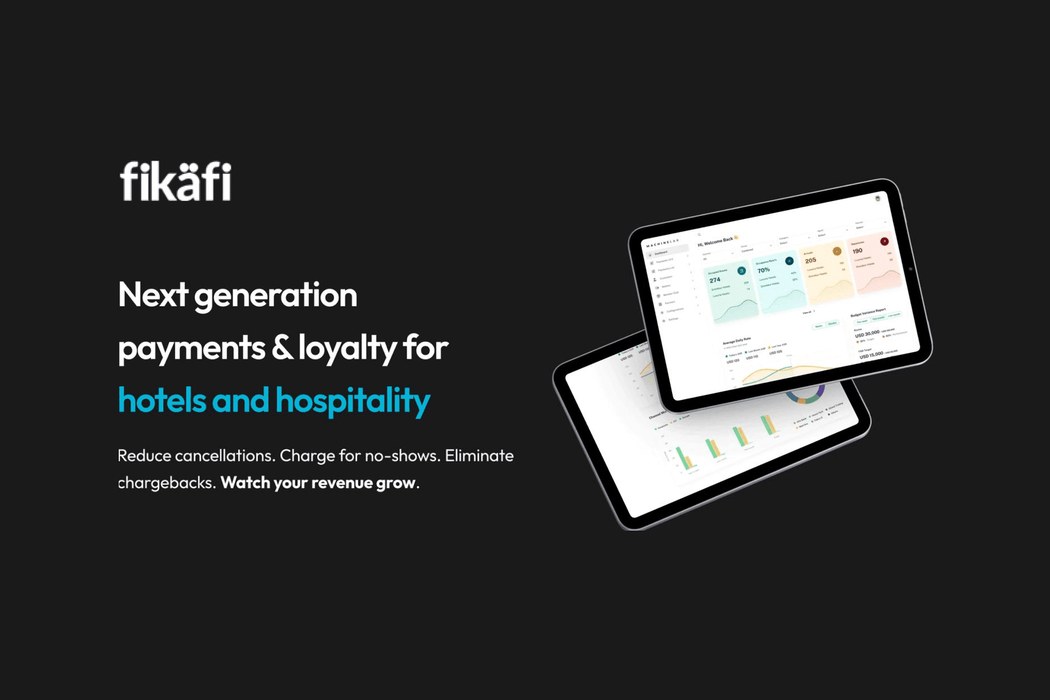
Fikäfi
Fikäfi is a Singapore-registered payments company built for hotels. It sits between a hotel's booking system and its bank, sending time-bound payment links over email, SMS or WhatsApp, capturing cards before arrival, automating reminders, settling funds by SWIFT, and pushing wallet credit back to guests so they rebook direct instead of through an OTA. Card processing starts at 1.95% with no setup fee or monthly minimum. Co-founded by hospitality-technology veteran Andre Privateer alongside Imran Saeed, the company argues that the industry's real leak is not the guest who cancels but the booking that quietly dies at the payment step - what it calls the "shadow guest." In March 2026 the PMS vendor Elektraweb embedded Fikäfi's payment orchestration layer across a platform serving thousands of hotels.
Resal
Resal is a Saudi digital gifting, rewards, and loyalty platform based in Jeddah. Founded in 2016, it connects merchants, businesses, and individuals through a single ecosystem that issues and manages digital gift cards, prepaid cards, loyalty points, and vouchers. Originally launched as a flower-and-gift delivery app, Resal pivoted in 2021 into a full B2B rewards and loyalty infrastructure company, and now serves more than 1.5 million users and over 1,000 organizations, working with 400+ retailers such as Jarir, Amazon, Noon, and Landmark Group across Saudi Arabia, the UAE, Bahrain, and Kuwait.

Wayex
Wayex is a Sydney-based fintech that lets people hold a single US dollar balance, fund it with bank transfers or stablecoins, and spend it worldwide on a Visa card. Founded in 2018 as CryptoSpend by two University of Technology Sydney students, it issued Australia's first crypto-linked Visa card in 2021, rebranded to Wayex in 2024, and in 2025 launched Wayex Global across 160+ countries. The platform supports USDC, USDT, DAI and PYUSD across 10+ blockchains, pays yield on stablecoin balances, and processes conversions in real time at checkout.
YAP
YAP is a Dubai-based digital banking platform that lets people open an account, get an instant IBAN and Mastercard, send and receive money, pay bills and track spending entirely from a mobile app. Launched in March 2021 as the UAE's first independent digital banking platform, YAP does not hold its own banking licence in the UAE; instead it partners with licensed banks (originally RAKBANK) to provide the underlying accounts while YAP builds the customer-facing experience, analytics and card controls. The company has raised roughly $41 million and is expanding across the Middle East, Africa and South Asia, targeting Saudi Arabia, Egypt, Pakistan and Ghana.

YouTrip
YouTrip is a Singapore-based fintech that operates a multi-currency mobile wallet and companion Mastercard prepaid card, letting travelers and everyday spenders hold and exchange 10 currencies in-app and pay in more than 150 currencies overseas at wholesale FX rates with no added transaction fees. Founded in 2018 by Caecilia Chu and Arthur Mak, the company has expanded from consumers into SMEs through YouBiz, a corporate multi-currency card, and processes roughly US$15 billion in annual transaction volume across Singapore, Thailand and Australia.

Ziina زينة
Ziina is a Dubai-based fintech that lets people and small businesses send, spend, and get paid from a phone. Launched in 2020 as one of the UAE's first peer-to-peer payment apps, it removes the friction of IBANs and Swift codes by moving money through a phone number, then extends into business tools: payment links, QR and NFC Tap to Pay, a checkout gateway for online stores, and an upcoming business card. Licensed by the Central Bank of the UAE as a stored value facility, Ziina has raised more than $30 million and serves tens of thousands of consumer and business customers across the MENA region.

Accrue
Accrue is a New York fintech that powers modern customer loyalty at the payment layer. Its brandable, stored-value digital wallet lets merchants take control of their payments and refunds, reward repeat customers, and reduce reliance on traditional card networks. Founded in 2021 by Michael Hershfield as a 'save now, buy later' alternative to BNPL, the company has expanded into a full-stack wallet, reward engine, pay-by-bank payments and closed-loop refunds used to lift order value and shopper frequency.

Fintiv
Fintiv is an Austin-based fintech infrastructure company that builds patented, white-label digital wallet ecosystems for telcos, banks and brands. Formerly known as Mozido, it pioneered the Trusted Services Manager (TSM) system for NFC tap-and-pay and says it has deployed wallet ecosystems across more than 35 countries. Today it positions its stack as a bridge from Web2 payments to Web3, adding digital-asset tokenization, real-time clearing and cross-border rails alongside its long-held mobile-wallet patent portfolio.

Ansa
Ansa is a San Francisco fintech that builds API-first, white-labeled stored-value wallet infrastructure for merchants. It lets brands launch their own branded digital wallet - the Starbucks-app model - where customers pre-load funds and pay in-app, online, or in-store. By batching many small purchases into one funded balance, Ansa cuts card processing fees on low-ticket transactions while adding incentives, loyalty, and analytics on top. Founded in 2022 by Adyen and Affirm alumni Sophia Goldberg and JT Cho, Ansa raised a $14M Series A in April 2024 (about 95% of it from female investors), bringing total funding to roughly $19.4M.