Company / Consumer Technology / Cupertino
Apple Sells You a Smaller World, and You Keep Buying It
It started in a garage and now runs on custom silicon, a services machine, and a billion-plus devices that all talk to each other. Here is how the walled garden actually works - and why leaving it feels like moving countries.
Ask someone why they will not switch off their iPhone and you rarely hear an argument about megapixels. You hear about their photos, their messages that turn blue, the watch on their wrist, the earbuds in the drawer, the card in the wallet app. Apple did not become the most valuable company on Earth by winning a spec sheet. It won by making the exit expensive - and making that expense feel, oddly, like comfort.
Apple Inc. designs and sells the iPhone, Mac, iPad, Apple Watch, AirPods, and the Vision Pro headset. It writes the operating systems those devices run on. It designs the chips inside them. And it runs the App Store, iCloud, Apple Music, Apple TV+, and Apple Pay that keep them useful long after the box is recycled. The pieces are sold separately. They are built to be owned together.
01 / What it actually sellsOne machine, sold in pieces
The iPhone is still the engine. It is Apple's largest single source of revenue, and the September 2025 lineup - iPhone 17, 17 Pro, 17 Pro Max, and a notably thinner model called iPhone Air - kept the release cadence Apple has run for nearly two decades. But the more interesting story is what surrounds the phone. Every product Apple ships is a doorway to the next one: a Watch that needs an iPhone, AirPods that pair in a single tap, a Mac that hands off a half-written message from your lap to your desk.
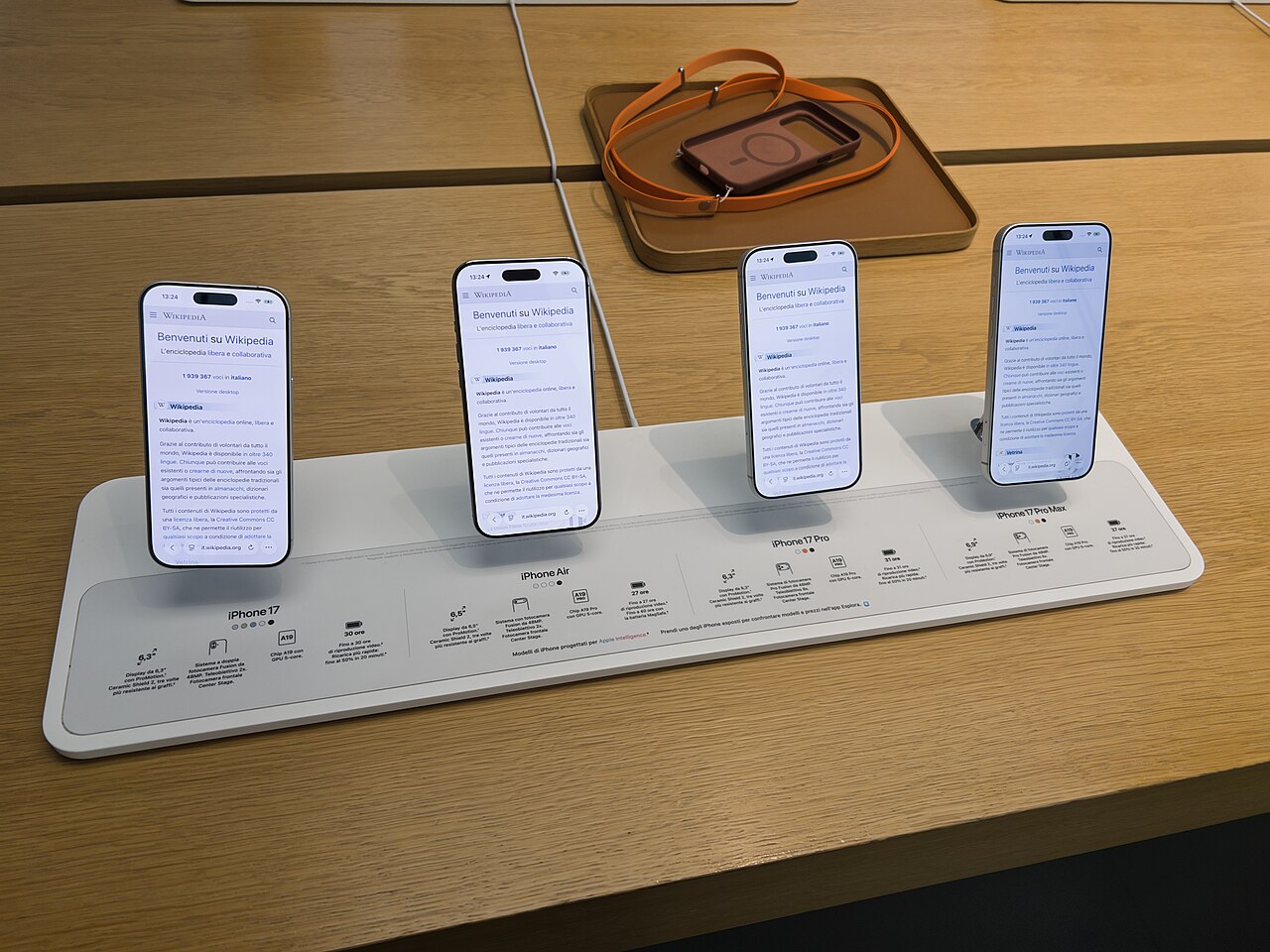
This is the part competitors find hardest to copy, because it is not a feature - it is an arrangement. A Samsung phone is excellent. A Windows laptop is capable. But the handoff between them is somebody else's problem. Apple made the handoff its entire product. Buy in once and the second purchase is easier, the third almost automatic. The company calls this a seamless experience. Critics call it a walled garden. Both descriptions are the same wall, viewed from different sides.
02 / The chip betOwning the hardest part
For most of computing history, the interesting part of a computer - the processor - belonged to someone else. Apple decided that was a strategic weakness. Starting with the iPhone and finishing with the Mac, it moved to silicon it designs in-house: the A-series in phones, the M-series in laptops and desktops. Between 2020 and 2023 the entire Mac line switched away from Intel to Apple Silicon, and the machines got faster, cooler, and quieter more or less overnight. Battery life on a laptop stopped being a compromise.
Apple does not own the factories. It designs the chips and relies on manufacturing partners such as TSMC to fabricate them on leading-edge processes. That distinction matters: Apple bought the design, which is the moat, and rented the fabrication, which is the commodity. It is a lesson worth stealing for any business - own the part rivals cannot reproduce in a single quarter, and be pragmatic about the rest.
03 / Services quietly took overThe subscription underneath
Somewhere in the last decade Apple stopped being only a company that sells you a device once and became a company that charges you every month. The App Store takes a commission on much of what you buy inside apps. iCloud sells you back the storage your photos outgrew. Apple Music, Apple TV+, Apple Arcade, AppleCare, and Apple Pay each add a small, recurring line to the bill. Together, Services now generates roughly $100 billion a year at software-like margins.
That is the razor-and-blades model with the roles quietly reversed. The hardware, sold at a healthy but finite margin, is increasingly the thing that recruits you into the services that never stop earning. It is why Apple reported Q2 FY2026 revenue of $111.2 billion, up 17% from a year earlier, with services near record levels. Devices get the applause at the keynote. Services pay a growing share of the rent.
04 / The patient categoriesSlow burns and mocked launches
Apple has a habit critics keep forgetting to price in: it is comfortable being early and unpopular. The Apple Watch was dismissed as a jewelry experiment and is now the best-selling watch of any kind. The AirPods were a punchline about losing expensive earbuds and grew into a business larger than many standalone public companies. The pattern is consistent - launch a category the internet ridicules, then keep shipping it until the ridicule quietly stops.
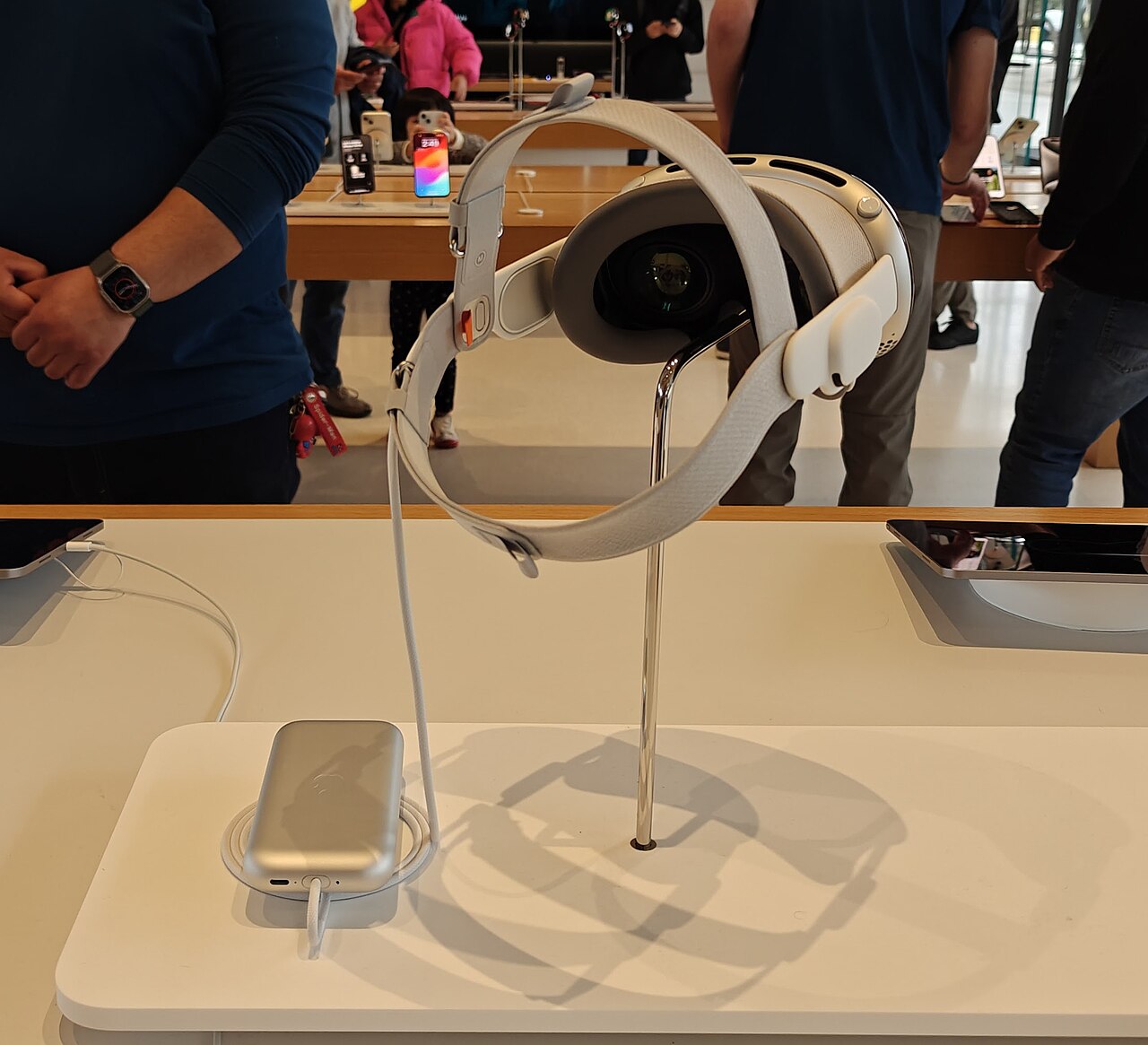
The Vision Pro is the current test of that patience. By the standards of internet verdicts, a $2,499 headset is a flop. By Apple's own history, it is a first act. The second-generation model shipped in February 2026 and expanded to 14 markets, and the software - visionOS - keeps gaining the immersive formats that make a new medium worth building for. Whether spatial computing becomes the next iPhone or the next Newton is genuinely unknown. Apple has the balance sheet to wait and find out.
05 / Privacy as a productSelling restraint
While much of the industry raced to collect more data, Apple made a bet on collecting less - and charging for the difference. Face ID stays on your phone. App Tracking Transparency let users switch off the surveillance that quietly funded a chunk of the ad economy. Apple Intelligence, the company's on-device generative AI, runs its most sensitive work locally rather than shipping your life to a data center, and a rebuilt, more conversational Siri leans on the same principle. In 2026, Apple said more than 80% of eligible devices had turned the features on.
There is a tension worth naming here. A company that sells your attention through the App Store and Apple TV+ also sells you privacy as a headline feature. So far, Apple has managed to hold both - positioning restraint as a premium rather than a sacrifice. It turns out plenty of people will pay for the version that promises to know less about them.
06 / Who buys it, who fights itCustomers and rivals
Apple's customers are almost everyone and no one in particular: consumers who want a phone that works, creative professionals who live in Final Cut and Logic, developers who build on its platforms, enterprises standardizing on Macs, and schools buying iPads by the cartful. The active installed base has passed 2.2 billion devices, sold through more than 500 stores that function less like shops and more like the brand's most expensive advertisement.
The competition is a different rival in every aisle. Samsung and Google in phones and wearables. Microsoft, Dell, HP, and Lenovo in computers. Google, Microsoft, Amazon, and OpenAI in the AI race Apple entered on its own quiet terms. Spotify in music. Meta and Sony in headsets. PayPal and the banks in payments. No single competitor fights Apple across the whole board, which is precisely the advantage of selling one integrated system instead of a dozen separate products.
07 / The handoffA rare, boring succession
In April 2026, Apple did the thing most founder-shaped companies do badly: it announced a calm, planned leadership change. Tim Cook, CEO since 2011, will become Executive Chairman on September 1, 2026. John Ternus, the senior vice president of hardware engineering who helped architect the iPad, AirPods, and recent iPhones, becomes the company's eighth CEO. Cook stays on through the summer to hand over the keys in person.
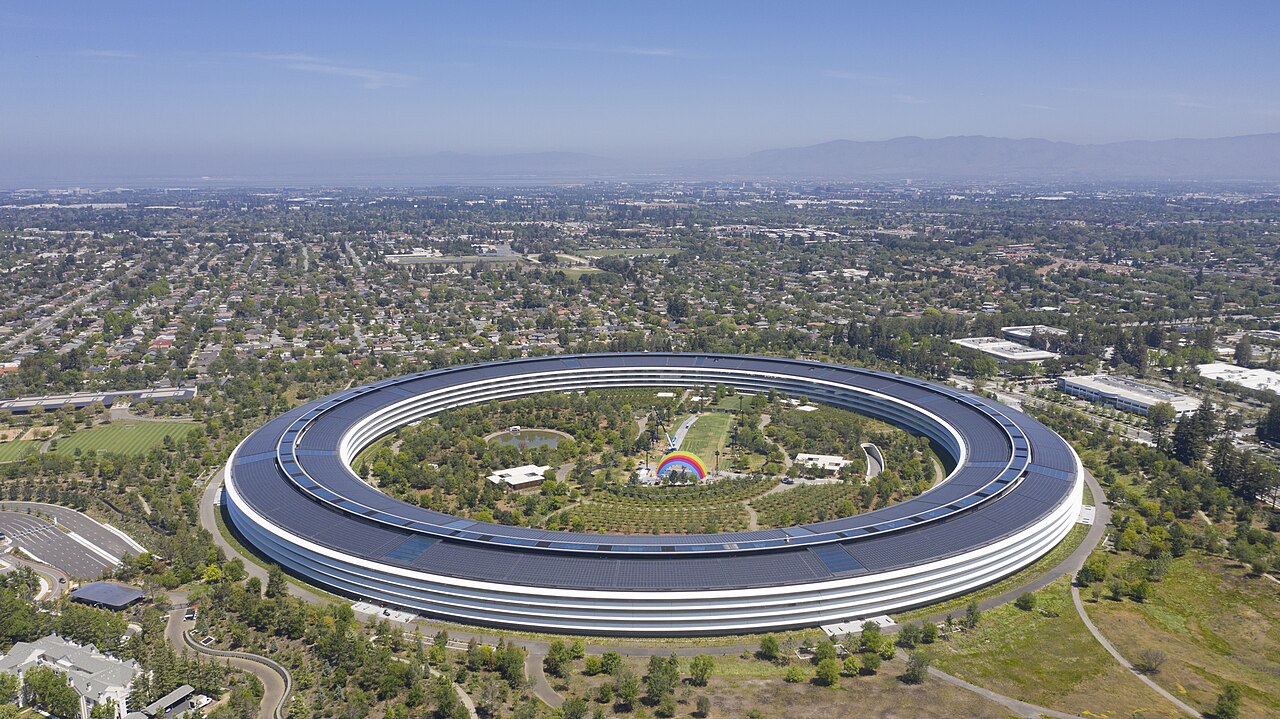
That a hardware engineer takes over - rather than a finance or software executive - is its own signal about where Apple thinks the next decade lives: in chips, devices, and the physical objects people hold. Ternus told interviewers he doubted himself when he started at Apple 25 years ago and was not sure he belonged. He now inherits the walled garden, the services machine, the patient categories, and the hardest promise in consumer technology: keep making it feel like it just works.
What can anyone actually copy from all this? Not the design language and not the balance sheet. The reusable idea is cheaper and more portable: make each product a small reason to buy the next one, own the part rivals cannot reproduce quickly, and be patient enough to look wrong for a few years. Apple built the most valuable company on Earth out of exactly that, one blue message bubble at a time.