spatial-computing
(48)
Joshua Wexler wants you inside the story
The creator of LEGO’s Clutch Powers became the Chief Executive of Fun at Pure Imagination Studios. His next chapter connects the make-believe worlds of entertainment with the very practical business of learning in Kansas.

Taron Khachatryan and the distance between an idea and your hands
A cardboard viewer gave the Knoxlabs founder his opening. His longer pursuit runs through developer tools, virtual classrooms and robotics: making unfamiliar technology something people can actually use.

Steve Lee and the Curious Shortage of Front-Row Seats
The AMAZE co-founder set out to build a global business after Kakao. His route ran through years of VR experiments, pop performances and a practical discovery: the cinema could supply the headset.

Chris Heinrich and the world you can take home
A physics PhD helped turn a phone into a 3D scanner. Years later, among the fragments of ancient Athens, Chris Heinrich was still asking what we can reconstruct - and what remains outside the frame.

Jay Jayaram’s future began with duct tape
A View-Master, a computer screen and a missed football game helped set Jay Jayaram on a three-decade pursuit: giving people more control over what they see. At Quintar, the former Intel Sports technology chief is taking that pursuit into the physical world.

Medivis wants the surgeon to stop looking away
A neurosurgeon and a radiologist built a company around a small, consequential inconvenience: the scan is on a screen, but the patient is on the table. Medivis brings the two into the same field of view.

Obsess put the shop back into online shopping
A Vogue product chief saw luxury brands reduced to thumbnail grids. Her answer was a room you could explore - and a lesson in why the doorway matters as much as the décor.

Looking Glass put depth on a screen. Then it made the work disappear.
A Brooklyn display company spent years teaching screens to show several sides of the same object. Its next bet is more practical: let people make a little spectacle with the video tools they already know.

Seerslab Lost the Selfie - and Found the Machine Behind It
A pioneering camera app was overtaken by larger rivals. Seerslab's answer was to stop fighting for the selfie and start selling the vision engine underneath it - then put that intelligence into streets, shops and a pair of glasses.

Justin Barad Took the Long Way Back to Video Games
He left game development to learn medicine from the inside. A decade of training later, Justin Barad returned with a stranger he met online, savings from his bar mitzvah, and an operating room that could fit inside a headset.

Spline makes 3D a team sport
A black cube on an email company’s website explains Spline’s appeal: designers can build something that moves, reacts, and actually ships. Now the company is inviting AI into the same file.

Pure Imagination Studios puts a zombie apocalypse in a taco truck
The studio behind Alien: Descent and LEGO screen adventures turns familiar stories into places people can enter. Its next setting is a $41 million studio and learning center in Kansas.

John Lin Spent Decades Teaching Cameras to See. Now He Wants Machines to Know Where They Are.
Before spatial computing became a slogan, John Lin was studying the stubborn physics of camera-phone images. His second act turns that patience into compact vision systems for robots and mixed-reality glasses.

Mike Noonen Bet His Career on the Space Between Pixels
After three decades of chips, turnarounds and startup bets, Mike Noonen arrived at a peculiar frontier: making holography behave like a semiconductor business.

Seungjoon Lee Spent a Decade Learning How Close a Concert Can Get
The AMAZE co-founder began with a grand theory about the screen after mobile. Ten years, several pivots and a cinema full of headsets later, the idea that survived is disarmingly simple: put the fan where the expensive seat cannot.

Nanea Reeves Has Spent a Career Betting on the Screen After the Screen
Before most people wanted games on a phone, Nanea Reeves helped build them. Now the TRIPP co-founder is asking a stranger question: what if the next interface could change not merely what you see, but how you arrive?

AmazeVR Quit Chasing the Metaverse - Then Put Pop Stars Two Inches From Their Fans
The Los Angeles startup spent years making every kind of VR content before narrowing to music. Its second act combines custom cameras, game-engine spectacle and an unexpectedly practical distribution hack: the neighborhood cinema.
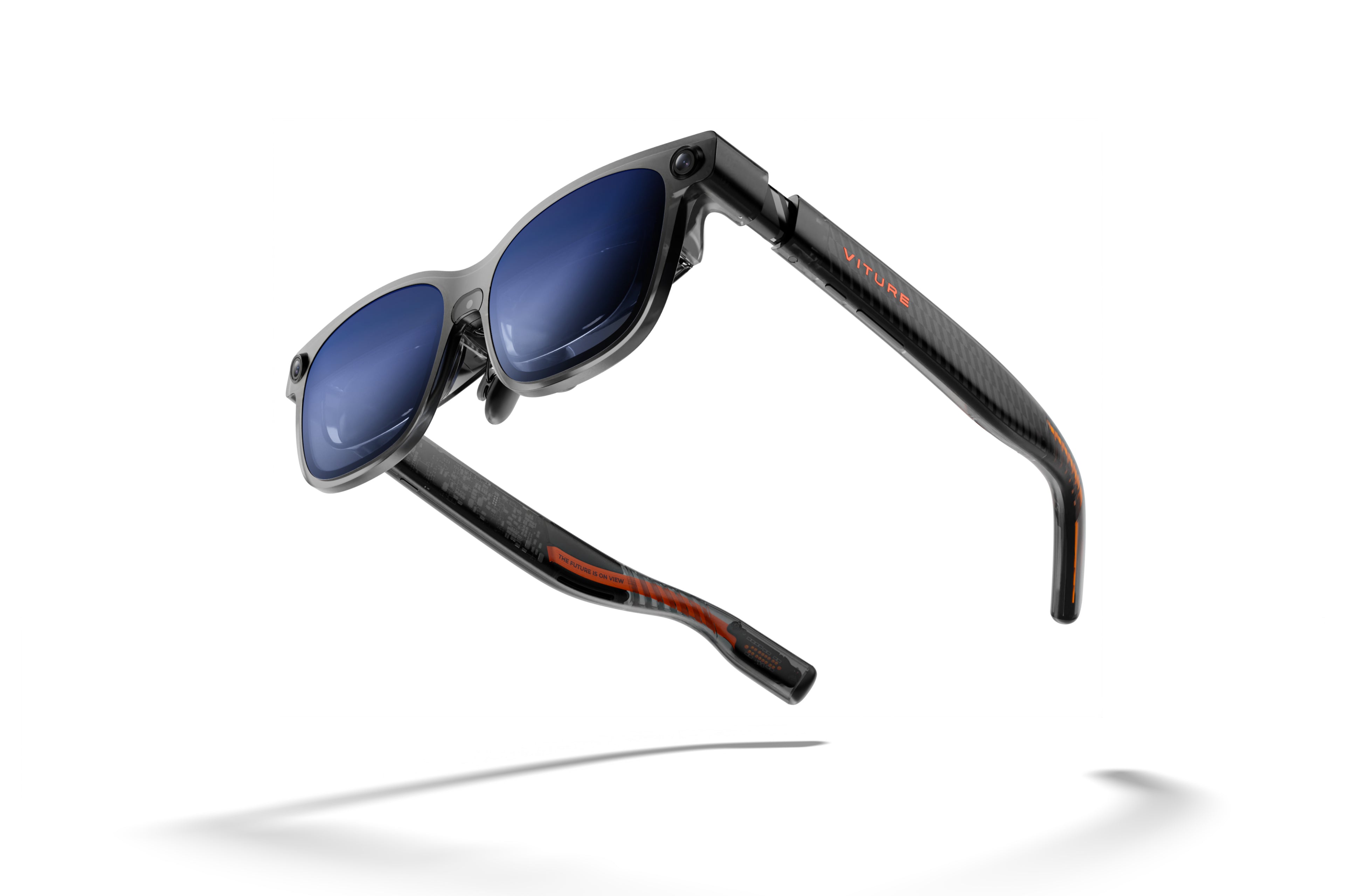
VITURE Luma Ultra Puts a 152-Inch Screen in Your Carry-On - If You Can Tame the Software
For travelers, handheld gamers and laptop nomads, VITURE's camera-packed glasses turn a USB-C port into a crisp private cinema. The hardware is convincing; the spatial-computing promise still asks for patience.
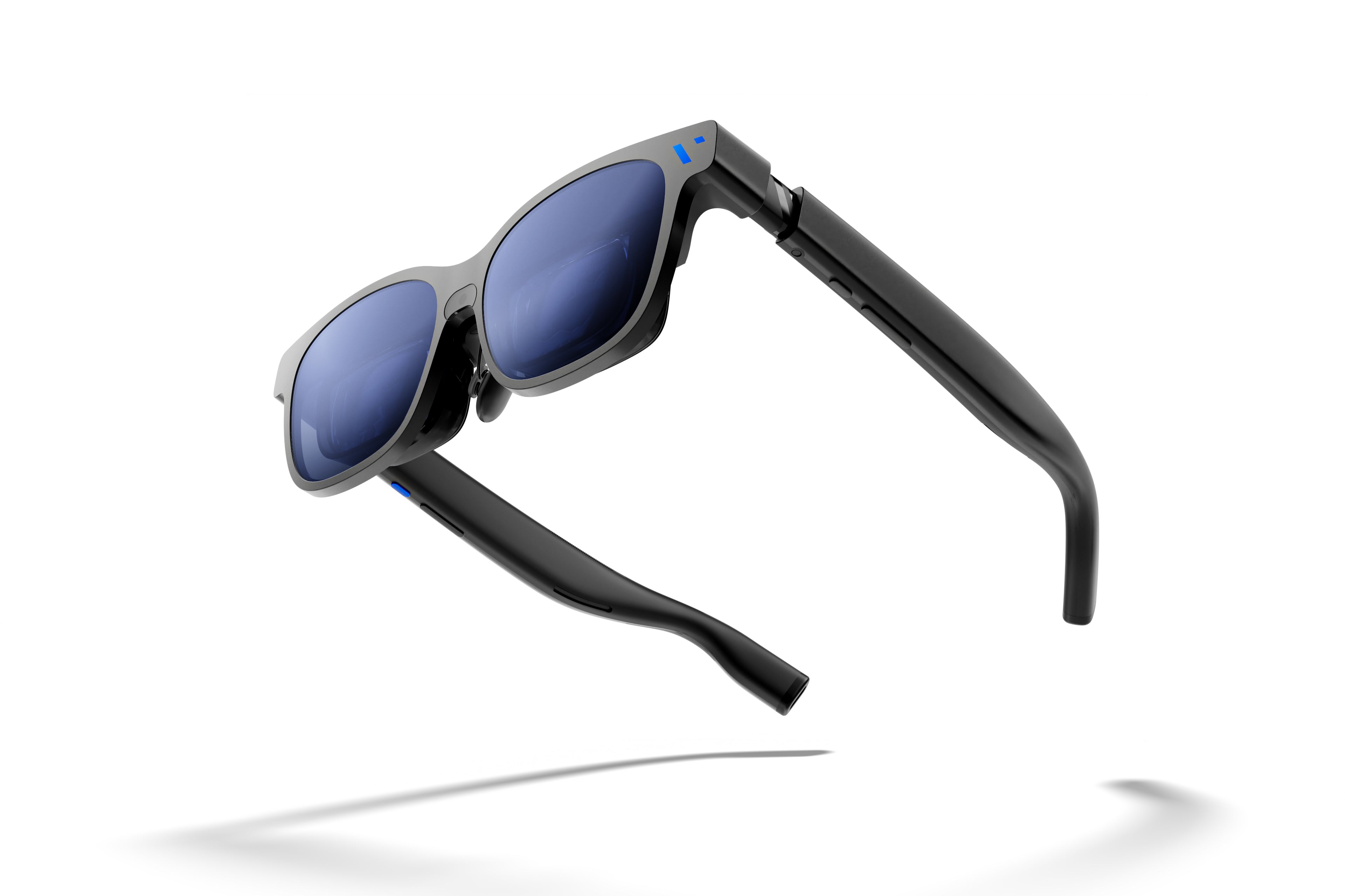
VITURE Beast Puts a 174-Inch Screen on Your Face - If Your Eyes Agree
VITURE built a private cinema for travelers and handheld gamers, then shipped part of the experience through firmware. The result is vivid, clever, and unusually personal: the best screen may depend on the geometry of your face.
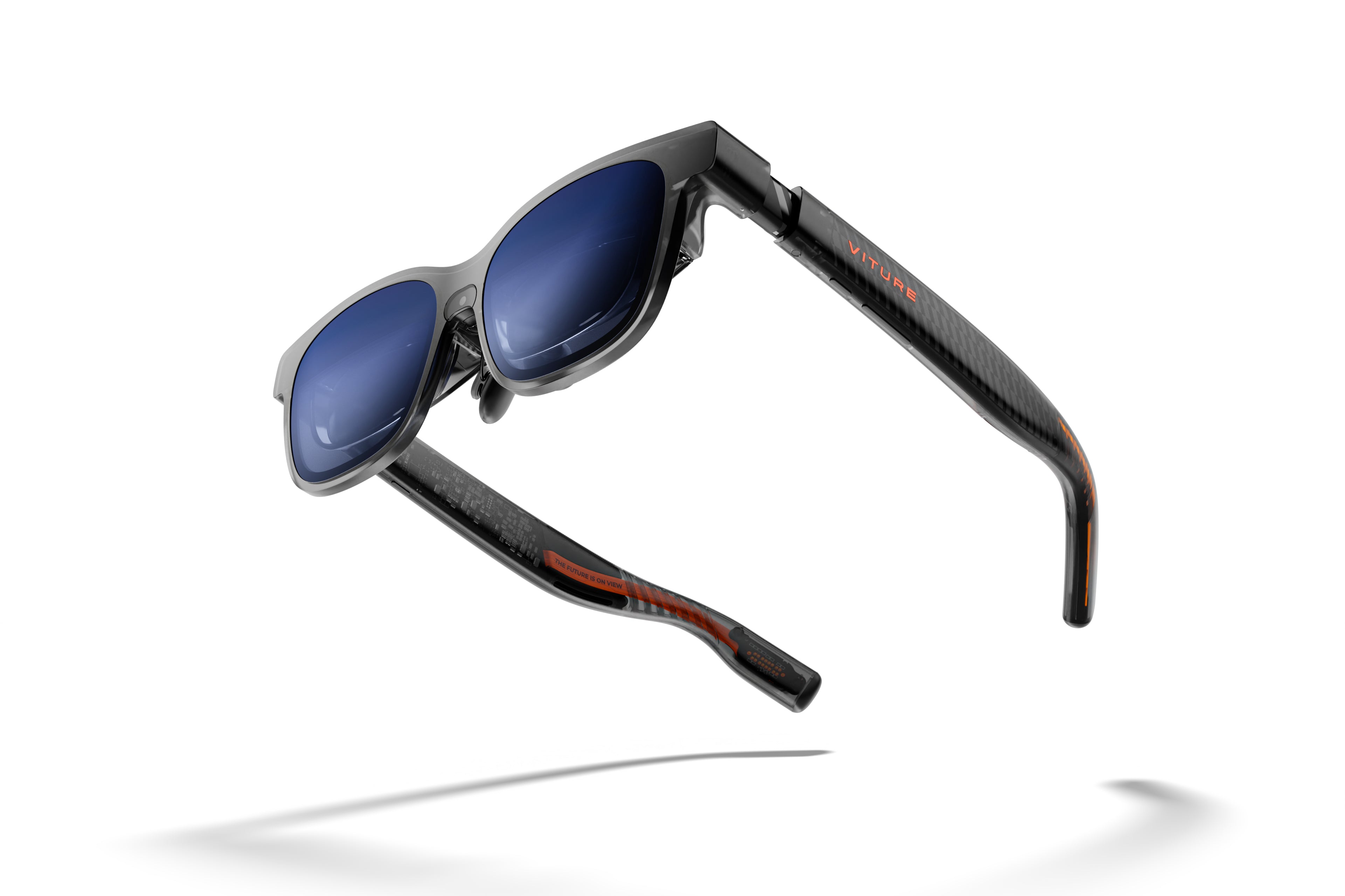
VITURE Luma Pro Puts a 152-Inch Screen in Your Bag - If Your Face Wins the Fit Lottery
For travelers, handheld gamers, and anyone hiding from a tiny laptop screen, VITURE's wired wearable display makes a persuasive private cinema. The buying decision comes down to one stubborn variable no spec sheet can settle: how it fits your face.

Apple Sells You a Smaller World, and You Keep Buying It
It started in a garage and now runs on custom silicon, a services machine, and a billion-plus devices that all talk to each other. Here is how the walled garden actually works - and why leaving it feels like moving countries.

Sankar Jayaram
Sankar (Jay) Jayaram is the co-founder and CEO of Quintar, a Santa Clara startup building augmented reality experiences for live sports. A former Washington State University engineering professor who founded the school's virtual reality lab in 1994, he co-founded VOKE with his wife Uma Jayaram, sold it to Intel in 2016, and served as CTO of Intel Sports before spinning out Quintar in 2021. Quintar became the official AR developer for the PGA Tour and shipped PGA Tour Vision for Apple Vision Pro.

BILT Incorporated
BILT Incorporated is a Grapevine, Texas software company that replaces paper manuals and static PDFs with 3D, voice- and text-guided Intelligent Instructions for assembling, installing, maintaining, and repairing physical products. Through its mobile app and, increasingly, extended-reality headsets, BILT lets people rotate and zoom animated 3D models step by step, cutting setup time, support calls, and product returns. Brands from Weber and NordicTrack to Siemens, Chamberlain, and Clearfield use BILT to turn the first-use experience into a source of customer loyalty, while government and military customers use it for training and readiness.

Emperia
Emperia is a London-based immersive commerce platform that lets brands and retailers build browser-based, cross-device virtual stores that blend e-commerce accessibility with gaming-style engagement. Founded in 2019 by Olga Dogadkina and Simonas Holcmann, its no-code, SaaS platform has powered virtual retail spaces for Dior, Bloomingdale's, Ralph Lauren, Burberry, Lacoste, Tommy Hilfiger, Hugo Boss and Christie's, reporting sharply higher conversion versus traditional online storefronts.

Avataar
Avataar is a Bengaluru- and San Francisco-based AI company that turns static product pages into 3D visuals, interactive experiences, and AI-generated videos for retailers and brands. Founded in 2014 by Sravanth Aluru and co-founders, it began with computer-vision-driven 3D product visualization for e-commerce and has since expanded into a full-stack agentic AI platform and its own distilled video model, Varya, positioned as a cheaper, culturally aware alternative to models like Veo and Runway. Backed by Tiger Global and Peak XV (formerly Sequoia Capital India), Avataar has raised roughly $55 million and counts HP, Victoria's Secret, Lowe's, and others among its customers.

Quintar, Inc.
Quintar is a Santa Clara-based extended reality company building a device-agnostic spatial XR platform that turns physical venues into digitally enhanced 'Quintar Places.' Its patented Q.reality platform combines a Spatial Visual Positioning System with True Spatial Video to overlay real-time, data-driven content on live sports and other events. Quintar is the official mobile AR and XR developer of the PGA TOUR and built PGA TOUR Vision, the first professional golf application for Apple Vision Pro. Founded in 2021 by former Intel CTO Dr. Sankar (Jay) Jayaram and Dr. Jeff Jonas, the company has raised roughly $11 million, including an $8.2 million Series A in 2024.

Swave Photonics
Swave Photonics is a Belgium-based fabless semiconductor company building the world's first true holographic display chip. Spun out of imec and Vrije Universiteit Brussel in 2022, Swave's Holographic eXtended Reality (HXR) platform uses a CMOS spatial light modulator with sub-300nm 'Diffraction Pixels' to sculpt light into natural 3D images - aiming to replace the waveguides and varifocal lenses in AR glasses, heads-up displays and glasses-free 3D walls with a single scalable chip.

Tripo AI
Tripo AI, built by the startup VAST, is a generative-AI platform that turns text prompts and images into production-ready 3D models in seconds. Its Tripo Studio app and REST API cover the full 3D pipeline - generation, texturing, rigging, retopology, segmentation and stylization - and are used by more than 6.5 million creators and roughly 90,000 developers. Founded in 2023 by former MiniMax co-founder Simon Song, the company is pushing from single 3D assets toward interactive, persistent 'world models' and has raised close to $400 million from backers including Alibaba and Baidu Ventures.

Xvisio Technology Corporation
Xvisio Technology Corporation is a Silicon Valley-founded spatial computing company building the visual SLAM engines, sensor-fusion modules, and mixed-reality hardware that let machines and headsets understand where they are in physical space. Its SeerSense modules and SeerLens MR glasses - built on a low-latency VPU pipeline it calls SlimEdge XR - power 6DoF tracking, depth sensing, and on-device AI inferencing for AR headsets, robots, and industrial devices across healthcare, manufacturing, education, and logistics.

Nathan Henderson
Nathan Henderson is co-founder, chairman and CEO of BILT Incorporated, the Grapevine, Texas company that turns manufacturers' CAD files into 3D interactive assembly, installation and maintenance instructions used across roughly 300 brands including Siemens, Weber, Assa Abloy, Chamberlain, Solo Stove and The Home Depot. He spent 17 years at SAP, where BILT began inside the innovation and user-experience incubator, then took it out in 2015. In December 2024 BILT raised a $21M Series B, bringing total funding to about $34M.