A taco truck is an unlikely place to stage the collapse of civilization. It is cramped, familiar and usually associated with a much happier kind of emergency. For Pure Imagination Studios, those qualities helped make it a useful doorway into the world of Army of the Dead. Visitors could climb aboard, accept a rescue mission and find themselves surrounded by virtual zombies.
The 2021 experience, Viva Las Vengeance, put up to six players inside an armored truck fitted with VR headsets and motion platforms. Netflix supplied the fictional universe; Pure Imagination developed the experience, with Fever as a presenting partner. The studio’s work included the concept, design and physical build. A streaming story had acquired somewhere for its audience to stand.
That is a good way into this company. Its name may be less familiar than the characters in its portfolio, but its specialty is easy to recognize: it helps a story survive the journey from one format to another. Along the way, the audience may acquire a controller, a moving seat or a pair of goggles.
A studio with several front doors
Founded in 2012 by Joshua Wexler and Andrew Tucker, Pure Imagination combines creative production with technology development. Wexler uses the title “Chief Executive of Fun,” which is both a joke and a reasonably accurate description of the assignment. Someone has to ensure that the engineering produces an experience worth having.
The company works across animation, films, television, interactive media and attractions. Its services stretch from story and script development through character design, storyboards, motion capture, 3D animation and show systems. The official account of its origins stresses a deliberate choice: build a studio capable of using real-time production tools across different kinds of content.
For a customer, that breadth can reduce the distance between a creative idea and its working implementation. A character may need to look convincing in a film and respond convincingly in a game. Those are related tasks, but they demand different decisions. Pure Imagination sells the ability to handle that conversation across disciplines.
The audience brings a body
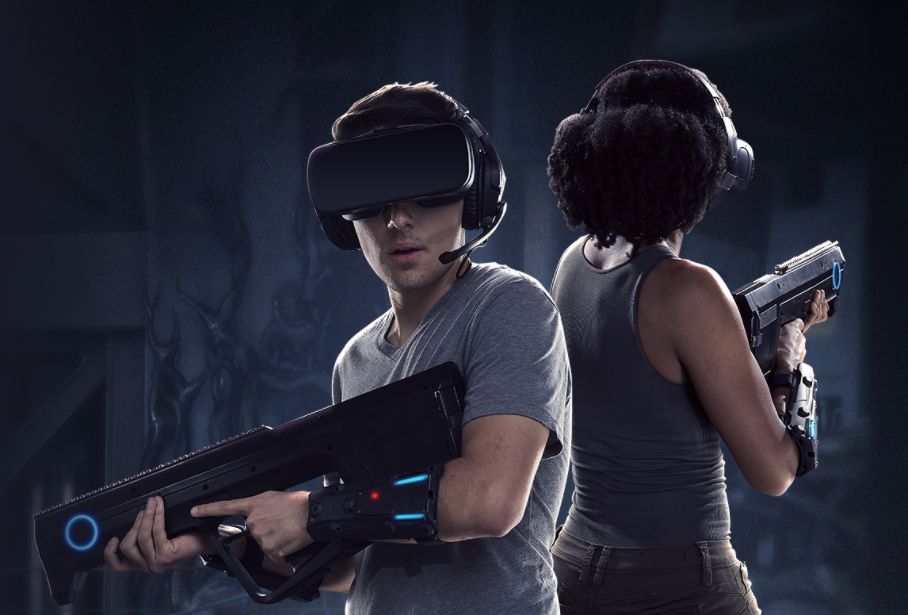
At the 2018 launch of Alien: Descent in Orange, California, the visitor became a Colonial Marine investigating a mining outpost. Pure Imagination and its partners built a free-roaming experience around that premise. The essential promise was participation: the creature could be somewhere around you.
An early UploadVR review supplies a revealing complication. Reviewer Ian Hamilton noticed tracking discomfort when he tested small head movements. As he began walking, wind, sound and floor effects helped draw his attention into the scene. His account was favorable overall, while remaining clear about the headset’s limitations.
The lesson I take from that review is to test the whole encounter. A beautiful virtual room does not excuse an uncomfortable physical one. Equally, a modest display can be supported by well-timed sensory detail. Designers have to consider what the visitor’s eyes, ears and body are being asked to believe together.
“The tech should disappear.”
Joshua Wexler, in an interview with blooloop
Four months, two armies
There is a more measurable example in the studio’s work on Plants vs. Zombies Garden Warfare: 3Z Arena at Carowinds. In a 2016 Epic Games interview, Wexler described a team of eight to fifteen people building the gameplay experience in four months. The attraction pitted two groups of 34 players against one another.
Pure Imagination supplied the media and gameplay, working alongside attraction specialist Alterface. One early challenge was matching the appearance of an existing game made with a different engine. The characters arrived with expectations attached. The studio had to preserve their look while building a new experience around them.
This is a useful distinction for anyone commissioning such work. The brief includes the familiar creative questions about character and pacing, but also practical ones about group size and interaction. A theme-park game has to make sense to a roomful of people at once.
Batman needs more than one kind of stage
Consider two projects featuring DC characters. For Justice League: Battle for Metropolis, Pure Imagination’s portfolio identifies Sally Corporation as the client and describes real-time gameplay within an interactive dark ride. Moving vehicles, large screens and player input had to work as one attraction.
For DC: Batman Bat-Tech Edition, the setting was a phone. Developed with Warner Bros., DC and sister studio Thunder Child, the app combined AR missions, mini-games, comics and educational material about Batman’s technology. The studio says it was localized into 13 languages.
These examples explain the company’s place in the market better than the word “metaverse.” A brand can commission a specific format, or work with a team experienced in several. The alternatives depend on the task: an animation house, an interactive developer, an attraction-media specialist or an internal production team. Pure Imagination’s argument is the range of work it can bring into the same discussion.

The invoice and the admission ticket
Pure Imagination’s commercial model includes commissioned production and original content development. RIT’s announcement of its partnership with the studio explicitly described both. A brand or production partner buys creative and technical work; the eventual audience encounters the result through a film, an app or an attraction.
Ticket prices belong to another layer of that business. The original Army of the Dead announcement advertised admission starting at $24. That was a visitor price in 2021, with different packages available. It was neither the cost of building the experience nor a measure of what the studio earned per customer.
The distinction matters because a memorable attraction and a profitable production contract are different achievements. When assessing a studio like this, the useful questions concern the scope of work, responsibilities between partners and the resources needed to operate the finished experience.
Its screen work provides another route to audiences. The 2024 film Piece by Piece tells Pharrell Williams’s story through LEGO animation. TIFF’s program credits Pure Imagination alongside Tongal and Zebu Animation Studios as animation contributors. Here, the audience stays seated in a cinema while the same company’s creative work travels through a conventional distribution system.
The next scene is in Kansas
The university connection predates the Kansas plan. In 2021, Pure Imagination and Rochester Institute of Technology announced a satellite office and spatial computing studio at MAGIC Spell Studios. Chief content officer John P. Roberts had joined RIT’s entertainment advisory board in 2016.
Roberts told Rochester Business Journal that pandemic-era collaboration had demonstrated how people could work together across distances. That made the timing attractive. The shift was in what geography seemed to permit: a production company could build relationships with emerging talent well beyond its Los Angeles base.
In August 2023, Kansas officials announced a $41 million studio and learning-center project with Pure Imagination, K-State Salina and public partners. It came with a projection of 101 new jobs and ambitions spanning education, aerospace, manufacturing and simulation. In March 2026, local reporting described the facility as under construction.
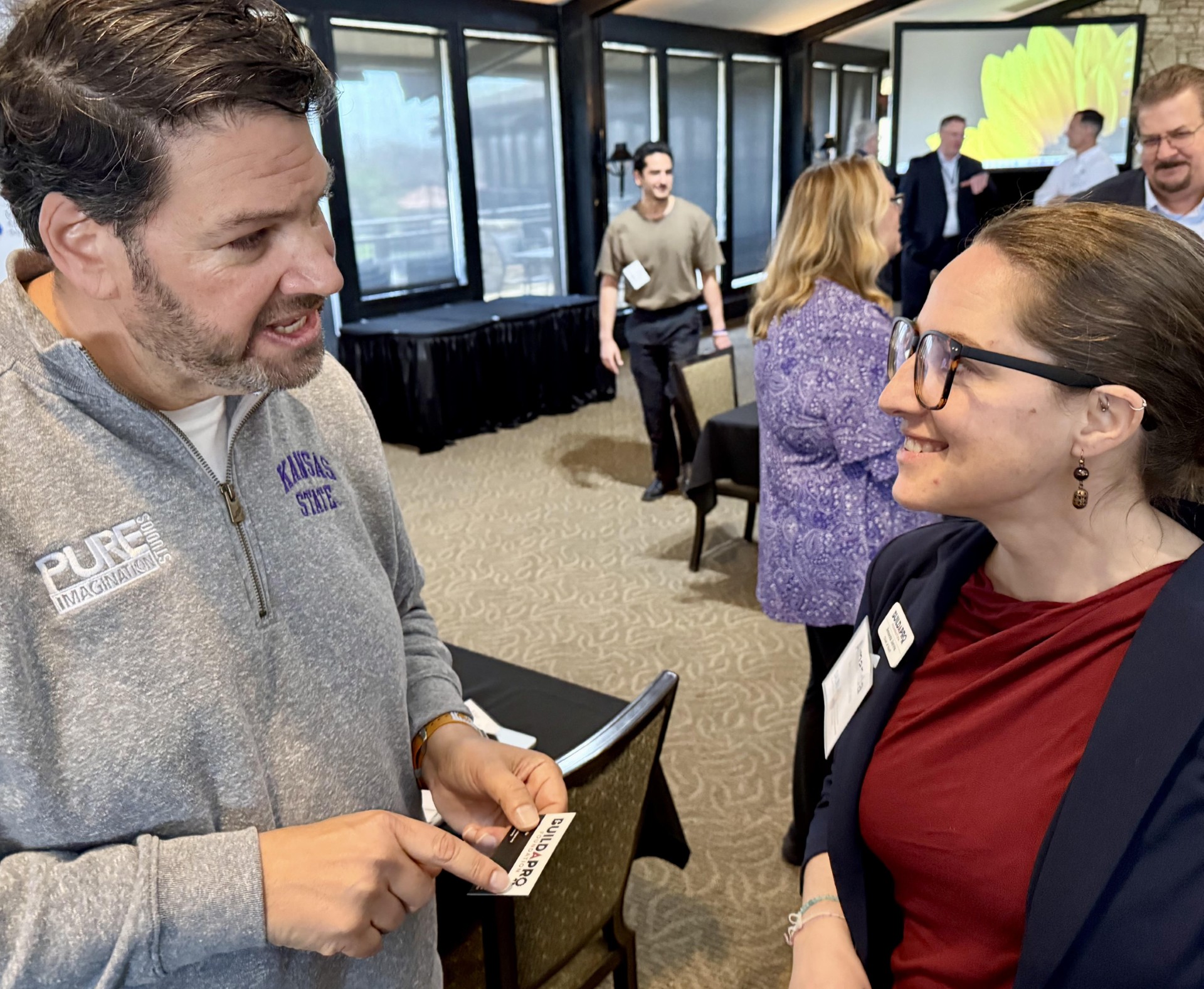
Read that investment as a project commitment, with jobs projected. The interesting proposition is the proximity: students, researchers and a working studio sharing a setting where digital production might become a practical skill rather than a distant career aspiration.
Give the visitor a job
The most portable idea in Pure Imagination’s portfolio is also the least expensive to borrow. Decide what the audience is there to do. Rescue someone. Help Batman. Compete with the other side of the room. A clear role gives the technology a purpose and gives the visitor a reason to pay attention.
Then test the constraints that role introduces. Can people understand the instructions? Does the movement feel comfortable? Can the venue run the experience repeatedly? This is an editorial reading of the projects, but a practical one. Without suitable space, reliable equipment and an operating team, a physical attraction may be the wrong format for the brief.
Pure Imagination’s range makes that choice interesting. It can help put the story on a screen, in a headset or around a moving audience. The taco truck is the memorable example because it makes the proposition so tangible. You can watch the apocalypse from your couch. Or you can be given something to do inside it.