spatial-computing
(21)
Joshua Wexler wants you inside the story
The creator of LEGO’s Clutch Powers became the Chief Executive of Fun at Pure Imagination Studios. His next chapter connects the make-believe worlds of entertainment with the very practical business of learning in Kansas.

Taron Khachatryan and the distance between an idea and your hands
A cardboard viewer gave the Knoxlabs founder his opening. His longer pursuit runs through developer tools, virtual classrooms and robotics: making unfamiliar technology something people can actually use.

Steve Lee and the Curious Shortage of Front-Row Seats
The AMAZE co-founder set out to build a global business after Kakao. His route ran through years of VR experiments, pop performances and a practical discovery: the cinema could supply the headset.

Chris Heinrich and the world you can take home
A physics PhD helped turn a phone into a 3D scanner. Years later, among the fragments of ancient Athens, Chris Heinrich was still asking what we can reconstruct - and what remains outside the frame.
Jay Jayaram’s future began with duct tape
A View-Master, a computer screen and a missed football game helped set Jay Jayaram on a three-decade pursuit: giving people more control over what they see. At Quintar, the former Intel Sports technology chief is taking that pursuit into the physical world.

Justin Barad Took the Long Way Back to Video Games
He left game development to learn medicine from the inside. A decade of training later, Justin Barad returned with a stranger he met online, savings from his bar mitzvah, and an operating room that could fit inside a headset.

John Lin Spent Decades Teaching Cameras to See. Now He Wants Machines to Know Where They Are.
Before spatial computing became a slogan, John Lin was studying the stubborn physics of camera-phone images. His second act turns that patience into compact vision systems for robots and mixed-reality glasses.

Mike Noonen Bet His Career on the Space Between Pixels
After three decades of chips, turnarounds and startup bets, Mike Noonen arrived at a peculiar frontier: making holography behave like a semiconductor business.

Seungjoon Lee Spent a Decade Learning How Close a Concert Can Get
The AMAZE co-founder began with a grand theory about the screen after mobile. Ten years, several pivots and a cinema full of headsets later, the idea that survived is disarmingly simple: put the fan where the expensive seat cannot.

Nanea Reeves Has Spent a Career Betting on the Screen After the Screen
Before most people wanted games on a phone, Nanea Reeves helped build them. Now the TRIPP co-founder is asking a stranger question: what if the next interface could change not merely what you see, but how you arrive?

Sankar Jayaram
Sankar (Jay) Jayaram is the co-founder and CEO of Quintar, a Santa Clara startup building augmented reality experiences for live sports. A former Washington State University engineering professor who founded the school's virtual reality lab in 1994, he co-founded VOKE with his wife Uma Jayaram, sold it to Intel in 2016, and served as CTO of Intel Sports before spinning out Quintar in 2021. Quintar became the official AR developer for the PGA Tour and shipped PGA Tour Vision for Apple Vision Pro.

Nathan Henderson
Nathan Henderson is co-founder, chairman and CEO of BILT Incorporated, the Grapevine, Texas company that turns manufacturers' CAD files into 3D interactive assembly, installation and maintenance instructions used across roughly 300 brands including Siemens, Weber, Assa Abloy, Chamberlain, Solo Stove and The Home Depot. He spent 17 years at SAP, where BILT began inside the innovation and user-experience incubator, then took it out in 2015. In December 2024 BILT raised a $21M Series B, bringing total funding to about $34M.

Olga Dogadkina
Olga Dogadkina is the co-founder and CEO of Emperia, a London-based immersive commerce platform that builds virtual stores and 3D brand experiences for the world's biggest luxury and retail names, including Dior, Burberry, Bloomingdale's, Tommy Hilfiger, Harrods, Lacoste, Christie's and Dom Pérignon. Named to the Forbes 30 Under 30 Retail & Ecommerce list in 2025, she started Emperia in 2018 after trying VR for the first time on a Microsoft fashion project and deciding it would change the way people shop.
Javier Vidal
Javier Vidal is the Madrid-born founder and CEO of Moonware, a Los Angeles startup building HALO, the world's first AI-powered Ground Traffic Control platform for airfields. A mechanical engineer trained at Duke who filed his first patent at 15 and became one of Tesla's youngest employees at 19, Vidal cut his teeth on autonomy at Tesla, Uber ATG, and Uber Elevate before setting out to replace the walkie-talkies and whiteboards that still run airport ramps. Moonware has raised roughly $9.3M and deployed HALO with carriers and handlers including British Airways, dnata, Aerocharter, Japan Airlines, and PrimeFlight.

John Manoochehri
John Manoochehri is the Founder and CEO of Treasury, a San Francisco-based registry and discovery system for the world's most valuable spatial assets - from architectural designs and film sets to real estate and world monuments. An architect and environmental scientist with an Oxford degree in ancient languages, he co-founded Treasury with Zaha Hadid Architects and Spaceform in 2022, securing backing from Google's AI fund Gradient Ventures. Before Treasury, he wrote policy frameworks for UNEP and WWF, ran a sustainable design firm working on Sweden's Kiruna city relocation, and launched Last Meter - an architectural tech company integrating circular consumption into real estate. He hosts two podcasts: Resource Talks and Futureperfect Talks (Epic Games-sponsored), and has taught architecture at KTH Stockholm.
Robert Masson
Robert Masson is a neurosurgeon turned founder who runs eXeX (Expanded Existence), an AI and mixed-reality platform that captures surgical mastery and pipes holographic guidance into the sterile field. With more than three decades of spine surgery and 13,000-plus procedures behind him, he made global headlines for bringing the Apple Vision Pro into the operating room as a touch-free logistics tool. He is also the founder of the Masson Spine Institute and, at 52, raced to a podium at the Rolex 24 at Daytona alongside his eldest son.

Darshan Shankar
Darshan Shankar is the founder and CEO of Bigscreen, the VR company that started as a social movie theater you could share with strangers and grew into a hardware maker shipping the Bigscreen Beyond, billed as the world's smallest VR headset. A self-described VR obsessive and UC Berkeley EECS graduate, he sold his first Y Combinator startup before turning the whole company toward virtual reality in 2014. Today Bigscreen builds quarter-pound headsets with custom 3D-scanned facepads and OLED microdisplays, ships to eight regions, and is on track to cross $100M in annual revenue.

Amit Jain
Amit Jain is the Co-Founder and CEO of Luma AI, the Palo Alto-based AI company behind Dream Machine - a text-to-video platform with over 25 million users - and Ray 3, the world's first reasoning video model. Before founding Luma AI in 2021, he spent four years at Apple leading development of the Passthrough feature for Apple Vision Pro and integrating the first LiDAR sensors into iPhones. Under his leadership, Luma AI has raised over $1 billion in funding including a $900M Series C led by HUMAIN at a $4 billion valuation, and is building unified multimodal intelligence systems that blur the line between reasoning and reality synthesis.
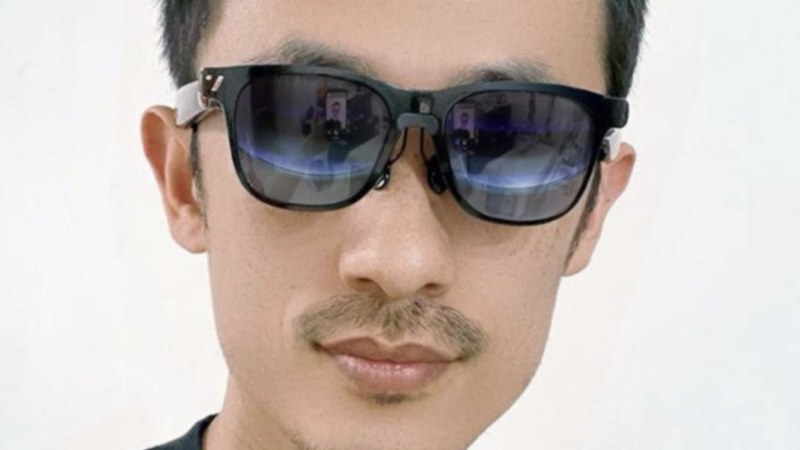
David Jiang
David Jiang (Gonglue Jiang) is the co-founder and CEO of VITURE, the XR glasses company that captured 52% of the U.S. smart glasses market in Q4 2024 and raised $100M in Series B funding in 2025. A Harvard-trained human-computer interaction designer who worked on Google Glass and led AR at Rokid, he founded VITURE in 2021 with a single conviction: that wearable screens would replace the smartphone as the primary entertainment and productivity interface. VITURE One raised $3.1M on Kickstarter in one month, surpassing Oculus's prior record, and VITURE Pro later outranked Meta Ray-Ban on Amazon.
Elliott Spelman
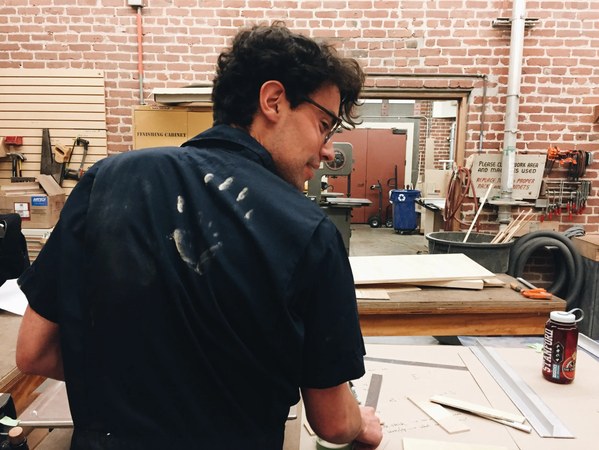
Elliott Spelman is the co-founder and CEO of Polycam, the world's most-used 3D imaging app with over 10 million downloads and nearly 100,000 paying customers. A Stanford-trained designer and creative technologist, Spelman built Polycam to make 3D capture as accessible as photography - describing it as the Kodak Brownie of spatial computing. After meeting co-founder Chris Heinrich at Ubiquity6, they launched Polycam in 2020, raising an $18M Series A in early 2024 backed by Left Lane Capital, Adobe Ventures, and YouTube co-founder Chad Hurley. Today Polycam serves individuals across more than half the Fortune 500 and is pushing hard into AI-powered floor plans, generative 3D, and enterprise spatial workflows.

Bilawal Sidhu
Bilawal Sidhu is a creative technologist, former senior product manager at Google (AR/VR & 3D Maps), host of The TED AI Show podcast, venture scout for Andreessen Horowitz, and angel investor. After shipping landmark products like Google Maps Immersive View and the ARCore Geospatial API to billions of users, he left Google to become a full-time creator, curator, and investor at the intersection of spatial intelligence, generative AI, and immersive media. His newsletter and YouTube reach over 1.6 million followers, and he made headlines in April 2026 when he built WorldView - a real-time OSINT geospatial platform - in three days.