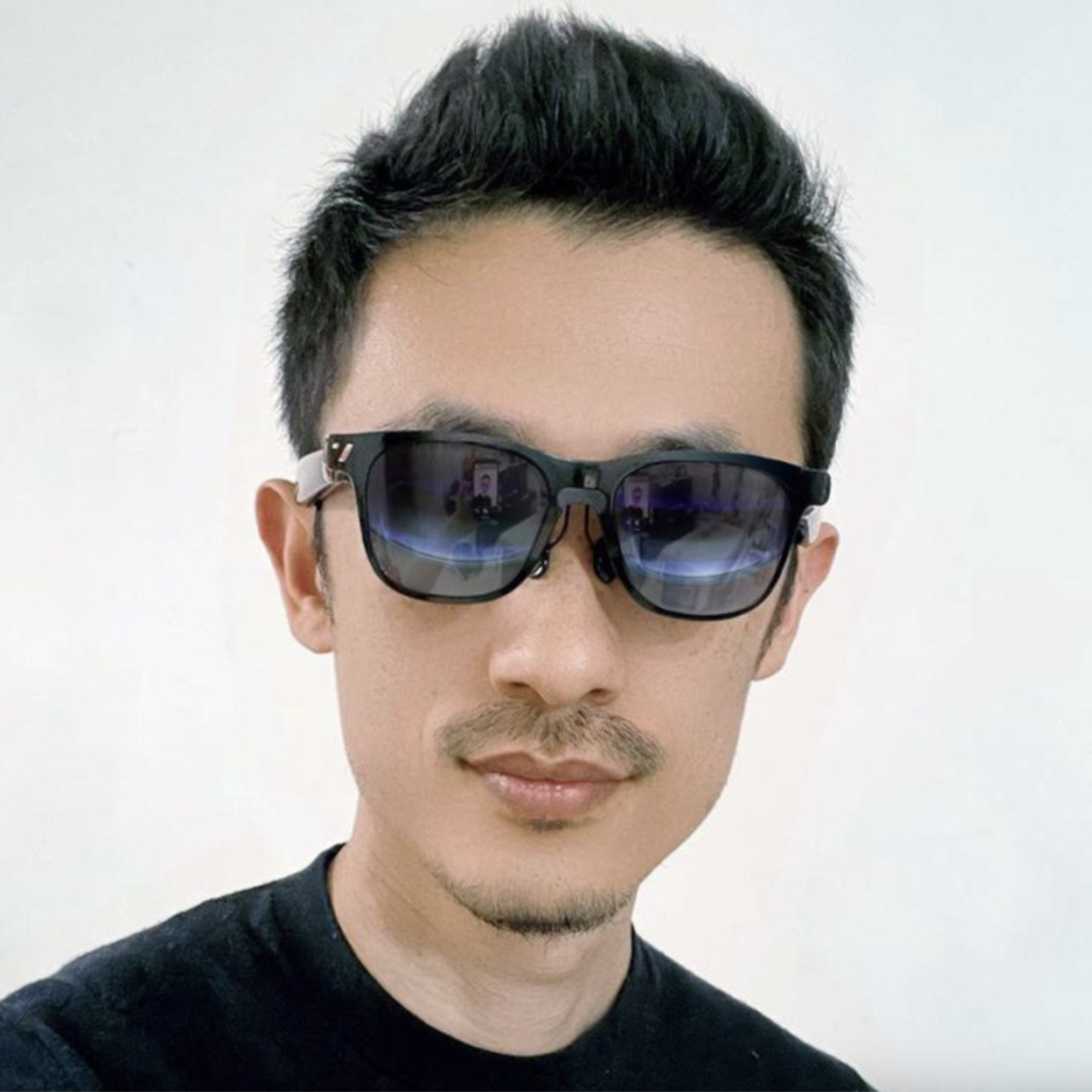
One game. One insight. One category.
Somewhere around 2020, David Jiang was playing Cyberpunk 2077 on a low-powered TV stick. The game ran. The cloud could carry the load. And in that moment, something clicked: the display was the bottleneck. Not the processor. Not the bandwidth. The screen you were holding in your hands.
That single gaming session convinced Jiang that the threshold had been crossed - the technology pipeline was finally good enough to untether entertainment from the television and the desktop. What consumers needed next wasn't more computing power. They needed a better way to see.
VITURE was born from that observation. Not from a pitch deck or a trend report. From a man playing a video game and paying attention to the wrong thing at exactly the right time.
in 30 days
Q4 2024
from customers
(minutes)
repurchase rate
raised
Trained for exactly this problem
David Jiang - full Chinese name Gonglue Jiang - grew up with a computer science professor for a mother. He was writing Flash animations in high school while other kids were figuring out AIM. His instinct was always the same: how does a human interact with a machine? What makes it feel effortless? What breaks the spell?
He took that question to Harvard's Graduate School of Design, becoming the first student from Mainland China admitted to the Human-Computer Interaction program. Then to MIT Media Lab. Then to Google, where he arrived just as Google Glass was being born.
David Jiang contributed to Google Glass during its foundational years - one of the most instructive product failures in consumer tech history. He watched it stumble, up close, from the inside. Price too high. Social reception hostile. No clear use case. Every mistake became a data point.
He left Google and joined Rokid as Chief Designer and Head of AR. Then founded Meteorolite, building AR experiences for retail environments and theme parks. Each chapter was a different angle on the same question: under what conditions will a person actually put something on their face?
By the time Jiang founded VITURE in 2021, he had a decade of answers.
Our product, VITURE One, will change the way we view mobile entertainment - but that's just the beginning. XR will eventually become part of our daily reality.
David Jiang, Co-founder & CEO, VITUREThe Kickstarter nobody expected to work
When VITURE launched on Kickstarter in 2022, the smart glasses space was a graveyard. Google Glass was dead. Intel's Vaunt was dead. Magic Leap was on life support. The prevailing wisdom was that consumers did not want glasses on their faces.
VITURE raised $3.1 million in one month. That beat Oculus's previous Kickstarter record of $2.4 million. Over 5,000 backers gave money to a founder they had never heard of, on a product they had never touched. The return rate after delivery? Under 1%.
Jiang's theory - that gaming was the gateway drug for wearable screens - was right. Gamers are the most tolerant early adopters in consumer tech. They will accept bulk, wires, and social embarrassment in exchange for immersion. VITURE One gave them a 120-inch virtual screen they could carry in a coat pocket. For a specific kind of person, that was enough to change behavior.
Building a playbook while everyone else was building hype
VITURE's rise hasn't been loud. There were no splashy keynotes, no celebrity founders on magazine covers. Jiang describes himself with a directness that sounds almost algorithmic: "We are not a technology-driven, capital-driven, or boss-driven company." The word "user" appeared 41 times in a single interview. That's not an accident.
The Four Factors - David Jiang's framework for AR adoption
By May 2024, VITURE Pro had climbed past Meta Ray-Ban on Amazon's best-seller list. A company with 37 employees was outselling a product backed by one of the largest technology corporations on earth. IDC data for Q4 2024 showed VITURE holding 52% of the U.S. XR smartglasses market.
Jiang doesn't celebrate this in the way you might expect. His benchmark is not market share. It's the user who recommended VITURE to 50 friends. It's the customers who said VITURE was the one thing they would want to take with them to the afterlife. It's the product that keeps getting better after you buy it - firmware updates that users describe as making them feel like they got a new device.
When users support us, we gain the entire world. When users abandon us, we lose everything.
David JiangThe $100M moment - and what comes next
In September 2025, VITURE closed $100 million across two Series B rounds, bringing total funding past $126 million. Investors include Singtel Innov8, BlueRun Ventures, BAI Capital, and Verity Ventures. The Luma series launched - four models from entry-level to The Beast, the largest-field-of-view XR display the company has ever made.
At AWE in June 2025, Jiang stood next to The Beast and said: "It has everything. It's our largest field of view, our sharpest display, and our most immersive model." That sentence, plain and specific, is Jiang's style. No superlatives. No metaphors. Just the specs and the implications.
The next phase isn't just gaming. VITURE is moving into enterprise and productivity - multi-screen workflows, classroom applications, remote collaboration. SpaceWalker, their proprietary software platform, already runs on PC, Mac, iOS, and Android. Nintendo Switch 2 XR gaming support is live. An 8BitDo controller collaboration is in market.
Jiang believes AI and AR will eventually converge into a single device - one that can see what you see, hear what you hear, and handle the tasks your phone currently does. "The next decade will be driven by AI and XR technologies," he has said. "Smartphones will no longer be the optimal device for interaction" once human-computer interaction advances far enough. He has a Boston Celtics jersey somewhere in his San Francisco apartment to remind him of the city where that long arc of thinking started.
"I don't have any hobbies outside of work. Sometimes, even when I'm sleeping, I'm still working." Jiang wakes up in the middle of the night to write down ideas. He built a food delivery startup in Boston during grad school. He ran two crowdfunding projects before VITURE. He is constitutionally incapable of coasting.