The most valuable minutes in aviation happen while the engines are off
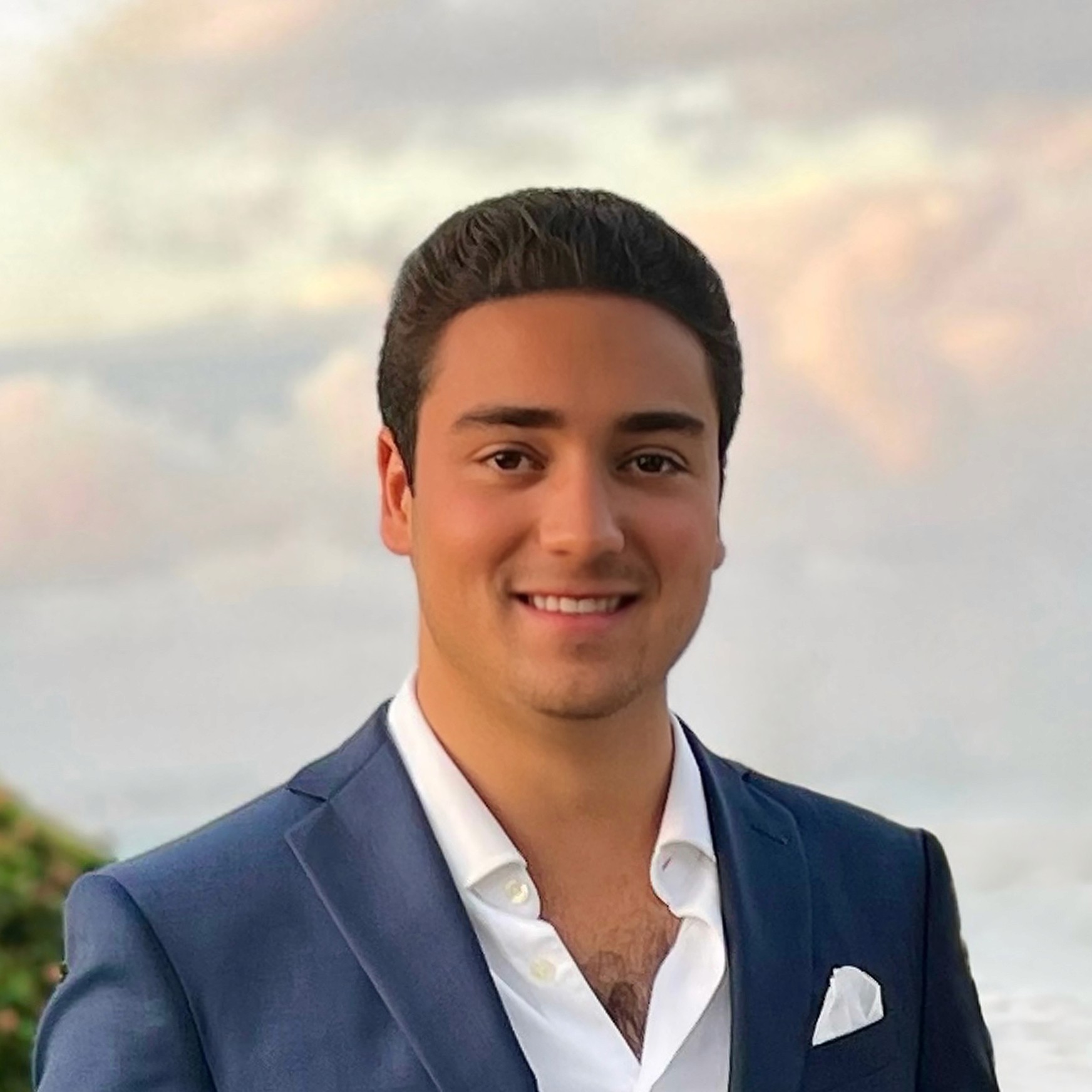
Javier Vidal runs Moonware, a Los Angeles company betting that the future of flight is decided on the ground, in the frantic window between a plane touching down and pushing back out.
That window has a name in the industry: the turnaround. Fuel, bags, catering, cleaning, crew, pushback - a dozen teams converging on one aircraft, racing a clock. And for decades it has been coordinated the way it was in the 1970s: over radios, on clipboards, with tribal knowledge that lives in the heads of veteran rampers and walks out the door when they retire.
Vidal's answer is HALO, which Moonware calls the world's first Ground Traffic Control platform. It fuses three live data streams - real-time flight information, crew schedules, and the GPS positions of ground crews and vehicles - into a single moving picture, then uses AI to dispatch the right people and equipment to the right aircraft at the right moment. Save five minutes at one airport, three at another, and those minutes compound into hours of new capacity across an airline's day.
A patent at 15, a factory floor at 19
Vidal grew up in Madrid and was building things worth protecting early - his first patent was granted when he was fifteen, an age when most people are still figuring out geometry homework. He studied mechanical engineering at Duke, but his real education was itinerant. It started in Tokyo, at a robotics company, learning how precise machines behave in the physical world.
Then came Tesla, in 2018, at nineteen - one of the company's youngest employees, dropped into the Model 3 production ramp, the most scrutinized manufacturing sprint in modern car history. He worked on autonomous systems for moving material around the factory. If you want to understand why Moonware is obsessed with choreography under time pressure, start there: a car line does not wait, and neither does a departing flight.
The Uber years: autonomy, then flight
At Uber ATG, Vidal sat between the systems and hardware teams building self-driving vehicles - the connective tissue role, the one that teaches you that the hard part of autonomy is rarely the algorithm and usually the coordination. Then Uber Elevate pulled him toward the sky, designing autonomous pushback vehicles for air taxis. That was the hinge. Working on how flying machines would be handled on the ground, he saw that the ground itself had no brain. There was no coordination layer. There was a whiteboard.
HALO, and the case for a coordination layer
Vidal founded Moonware in 2020 with co-founder Saunon Malekshahi. The thesis is almost stubbornly logical: before airfields can be automated or autonomous, they need to be legible. You cannot hand a runway full of trucks, tugs, and fuel bowsers to robots if no single system knows where everything is or what it should do next. HALO is that system - the structured environment that lets execution, human or machine, happen with clear tasking.
The product tells on his roots. In December 2024, at the GHI conference in Barcelona, Vidal unveiled HALO on Apple Vision Pro - a full three-dimensional, live model of the airfield you can wear on your face. Station managers get a hands-free, bird's-eye view: focus on a gate, watch an aircraft, track a piece of ground support equipment, follow personnel, all in real time. It is spatial computing pointed at the least glamorous, most operationally critical real estate in transportation.
There is a second product too, NOVA, aimed at military airfields - the ones with the literal whiteboards and magnets. The commercial and the defense worlds share a problem, and Vidal is happy to sell the same clarity to both.
Who's flying on it
The customer list is the proof. HALO has gone live with British Airways and dnata at JFK, with Aerocharter at LAX, with Japan Airlines and JAL Ground Service at Tokyo Haneda, and with PrimeFlight at Mexico City's Santa Lucia. Getting conservative legacy carriers to trade radios for software is its own kind of engineering, and Moonware has done it on multiple continents.
From a $2.5M pre-seed to airport hardware
Moonware started with $2.5M in pre-seed capital led by Third Prime, then closed a $7M seed round in March 2024, again led by Third Prime alongside Zero Infinity Partners, with The House Fund and Lorimer Ventures joining. Total funding sits around $9.3M - lean for a company operating at airports on three continents.
Vidal's long horizon points past software. Moonware intends to introduce autonomous vehicles for ground operations later this decade, and it is deliberately positioned for the aircraft that don't exist yet at scale - eVTOLs and the vertiport ecosystem. The coordination layer comes first; the robots come after. That ordering is the whole strategy.
The referee before the robots
There is a lot of noise about autonomous aircraft and self-driving airport vehicles. Vidal's contribution is unglamorous and load-bearing: a system that knows the state of the whole airfield and can task it. Autonomy needs a referee first. Build the coordination layer, and everything downstream - efficiency now, automation later, full autonomy eventually - gets a foundation to stand on.
It is a patient, systems-engineer's bet from someone who has spent his career in the connective-tissue roles: the factory floor at Tesla, the interface teams at Uber, and now the airfield itself. Vidal keeps building the layer nobody notices until it's gone.