At the Acropolis Museum, Chris Heinrich did something a little different from the usual visitor’s routine. On a trip through Turkey and Greece, he scanned fragments and artifacts with Polycam. The objects could travel home as digital models, available to turn and examine on a screen. The ruins outside had survived centuries. The files offered a newer, rather more portable arrangement.
Heinrich helped build the tool that made this possible. He is a physicist by training, a Polycam cofounder, and now a member of its board. His career has involved turning observations of the physical world into something a computer can work with. In Athens, that technical habit acquired an older subject. A fragment invites reconstruction; it also reminds you how much is missing.
His account of the trip, published in September 2026, moves between photographs, museum scans, and a question about the conditions that let ideas become consequential. A holiday, apparently, need not be entirely free of homework. But there is pleasure in the excursion too: a person who helped make a new kind of camera using it to look more closely at a place he wanted to see.
A camera with another dimension
Polycam reached the public in the autumn of 2020. The first version used the LiDAR sensor on Apple’s new iPad Pro to capture objects and environments in three dimensions. Walk around a space, and a textured model could emerge on the tablet. By November, the app had reached the LiDAR-equipped iPhone 12 Pro family. The scanner was becoming something you could carry in a pocket.
The launch offered an appealing reversal of effort. Capturing a room had required a deliberate technical undertaking. Polycam let the user begin with a familiar device and the ordinary act of moving through a space. Its early demonstration of a scanned Pasadena church suggested the range: walls, surfaces, and architectural details could become a digital object rather than remain the background of a photograph.
Heinrich’s argument for the technology was about access as much as geometry. He compared the development of 3D scanning with the history of photography, where easier cameras changed who could make pictures. The image-making public grows when the first attempt becomes less troublesome. An interesting building need not wait for someone with specialist equipment and a free afternoon.
“There are strong parallels to the history of photography, where ease-of-use is what drove mass adoption.”Chris Heinrich, 2021
That comparison helps explain the ambition without requiring a reader to become a computer-vision researcher. A camera gives people a way to keep what they notice. A 3D capture tool adds another possibility: a record that can be inspected from different angles or used in a design. The attraction begins with a fairly human wish to bring a piece of the world back with you.
Learning to live with an unfinished answer
Before the phone scanner came physics. Heinrich studied mathematics and physics at Indiana University and completed a physics PhD at the University of Chicago. His 2017 dissertation concerned symmetry-enriched topological phases and their edge theories. The title is unlikely to displace a beach novel in anyone’s luggage. It does establish that his appetite for difficult problems preceded his startup career.
He describes research as an education in difficult questions, incomplete information, and the long wait between starting a problem and understanding it. These are useful qualifications for work in which the answer does not arrive on schedule. They also offer a more credible account of transferable skills than the suggestion that a doctorate comes with a hidden handbook for running a company.
He grew up in Bloomington, Indiana, with two brothers, later lived in Chicago, and moved to Los Angeles in 2017. His route into Polycam included Ubiquity6, a company working on mobile 3D scanning and augmented reality. There he met Elliott Spelman, who became his cofounder. The partnership had a working history before it had a company of its own.
The personal geography matters too. Los Angeles took time to feel familiar; Heinrich now calls it home. His life there includes a young daughter, friends and family, reading, and music. He enjoys smaller venues for live performances and likes live comedy. A career built around precise reconstruction leaves room for people who are cheerfully willing to make a mess of solemnity.
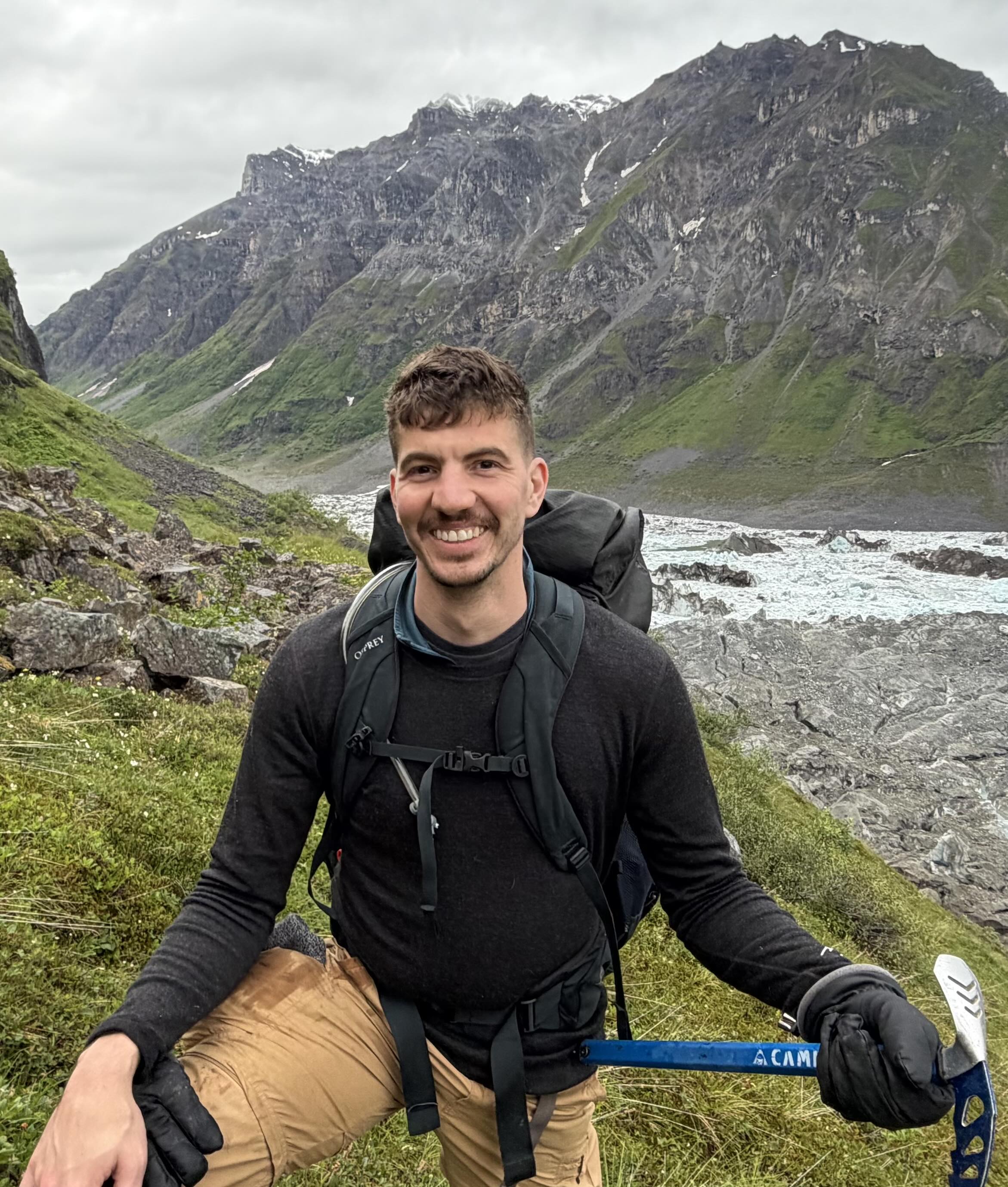
He lists hiking and sailing among his interests, along with travel. Science, philosophy, and architecture are subjects he repeatedly returns to. He also describes going deeply into a subject for a while. Read alongside the physics and the scanning work, these details suggest a recurring habit of close attention. They do not require every walk or concert to be recruited into the business plan.
A business built from other people’s rooms
For a founder interested in broad participation, other people’s uses of a tool are part of the story. Polycam’s early iPhone announcement described interest from architects, archaeologists, and movie-set designers. These professions do different things with a captured environment. The shared starting point is a need to bring physical detail into work that continues elsewhere.
By April 2023, Heinrich was publicly celebrating profitability. His announcement emphasized that the team had grown while the company continued investing in research and development. He credited the employees, early backers, and customers. Later that year, a team gathering in upstate New York prompted another public expression of appreciation. The company appeared in his posts as a group effort with names and relationships attached.
In February 2024, Polycam announced an $18 million Series A co-led by Left Lane Capital and Adjacent. Adobe Ventures and investors including YouTube cofounder Chad Hurley participated. The company said the money would support engineers, researchers, creation tools, and AI models for 3D reconstruction. The round brought its disclosed funding to $22 million.
A February 2024 snapshot from Polycam’s funding announcement.
The figures give scale to the camera analogy. Nearly 100,000 paid subscribers and more than 20 million user-created models meant the experiment had acquired a substantial public. Every model also represented a choice about what was worth capturing. The company could supply the instrument; its users supplied the subjects, purposes, and patience.
Heinrich’s professional biography now says Polycam became profitable and reached $20 million in annual revenue before he stepped away from day-to-day responsibilities. He remains a board member. The shift places his story in a different tense: the CEO who helped grow the business is now a cofounder looking back at a company that continues developing beyond his daily involvement.
Polycam’s February 2025 Vision 25 release illustrates that continued development. It combined space capture, guided object capture, arrangements of multiple scans, spatial reports, and comments on models. Those features address what happens after an intriguing first scan. People need measurements, ways to assemble material, and places to leave feedback. A captured room becomes more useful when colleagues can actually work with it.
- CaptureRecord an object or space.
- ArrangeBring captures into a scene.
- DiscussLeave feedback on the model.
Three tasks reflected in Polycam’s Vision 25 tools.
The museum comes home
In Athens, Heinrich’s interests in architecture, philosophy, and capture found themselves on the same itinerary. His essay began with a vacation through Turkey and Greece. Walking through the Acropolis, the Ancient Agora, and Plato’s Academy gave a physical setting to a question he could otherwise have considered from a desk: how does a place help human ability find expression?
He considered repeated contact among people with different kinds of knowledge, and the institutions that let ideas meet an audience and resistance. His essay treats that connection as an argument to examine rather than a settled explanation. The city is useful to think with because the buildings and distances make intellectual history tangible. A famous name once belonged to a person walking through an actual neighborhood.
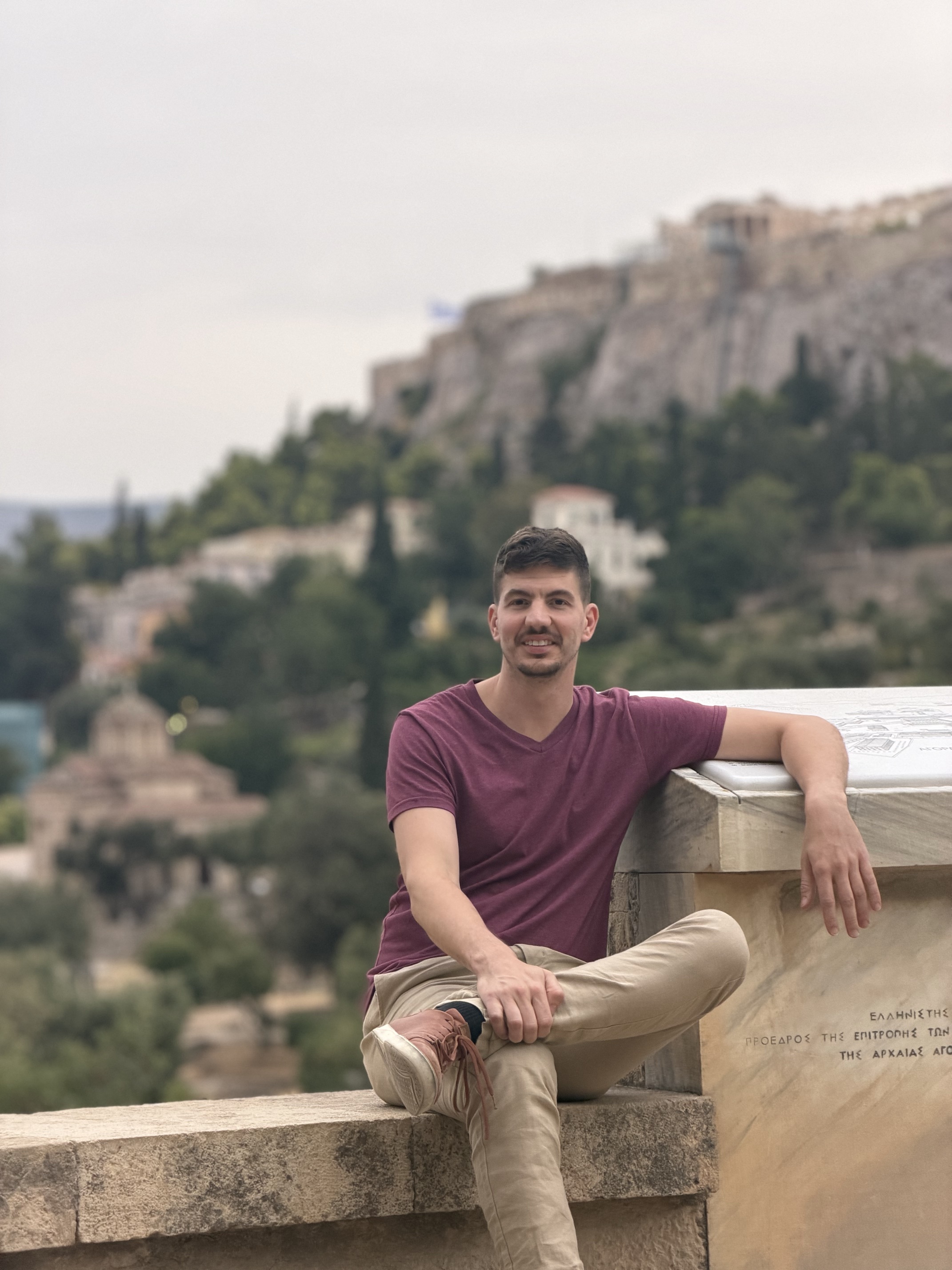
At the museum, he scanned artifacts instead of only looking at them. He described the experience as a small act of reconstruction. It is an apt activity for a founder whose tool turns a physical subject into something that can be examined again later. The resulting models remain available in his essay, where a reader can orbit them rather than accept the photographer’s single chosen angle.
“The gaps are not an inconvenience we can polish away. They are part of the evidence.”Chris Heinrich, “What Athens Made Possible”
That observation gives the scene its weight. A scan preserves visible geometry. The object’s wider context extends beyond it. Heinrich draws a connection with historical reconstruction, where surviving material allows a picture to be assembled while leaving large areas unresolved. The tool makes examination easier. It also gives the missing pieces a sharper outline.
Give the machine a world
His next published essay, dated October 6, 2026, returned to scientific discovery. Heinrich proposed an experiment in which human communities and AI communities investigate unfamiliar simulated worlds. They would observe, manipulate, build tools, and develop explanations. The question is whether machines can originate useful scientific concepts and tests, rather than work only within a problem someone has already defined.
He is interested in the route to an answer: what investigators notice, which measurements they invent, and how they revise an explanation when better evidence exposes its limits. He presents the proposal as a thought experiment. He also distinguishes scientific understanding from subjective experience, allowing the experiment to ask something concrete without claiming to settle the entire question of consciousness.
Read beside the Athens trip, the proposal reveals a continuing interest in how knowledge gets made. One essay gives an investigator a museum, fragments, and a camera. The other imagines giving investigators an unfamiliar world. In both, observation starts something. What follows depends on questions, instruments, other minds, and the willingness to change an explanation.
Heinrich’s path has taken him from Bloomington to Chicago to Los Angeles, from a physics dissertation to a phone that can capture a room. The Athens visit adds a pleasingly ordinary destination: someone on holiday, looking carefully at an old object. He can take its shape home. The questions are coming too.
Follow the questions
Personal website · LinkedIn · X · Instagram · GitHub
- What Athens Made Possible - travel photographs and two museum scans.
- Can a Machine Discover a World from Scratch? - his October 2026 essay.
- Watch: Bad Decisions Podcast, episode 34 - a 2023 conversation about Polycam, AI, and 3D capture.
- Explore Polycam · Vision 25 · 2024 funding announcement