spatial-computing
(24)
Medivis wants the surgeon to stop looking away
A neurosurgeon and a radiologist built a company around a small, consequential inconvenience: the scan is on a screen, but the patient is on the table. Medivis brings the two into the same field of view.

Obsess put the shop back into online shopping
A Vogue product chief saw luxury brands reduced to thumbnail grids. Her answer was a room you could explore - and a lesson in why the doorway matters as much as the décor.
Looking Glass put depth on a screen. Then it made the work disappear.
A Brooklyn display company spent years teaching screens to show several sides of the same object. Its next bet is more practical: let people make a little spectacle with the video tools they already know.

Seerslab Lost the Selfie - and Found the Machine Behind It
A pioneering camera app was overtaken by larger rivals. Seerslab's answer was to stop fighting for the selfie and start selling the vision engine underneath it - then put that intelligence into streets, shops and a pair of glasses.

Spline makes 3D a team sport
A black cube on an email company’s website explains Spline’s appeal: designers can build something that moves, reacts, and actually ships. Now the company is inviting AI into the same file.

Pure Imagination Studios puts a zombie apocalypse in a taco truck
The studio behind Alien: Descent and LEGO screen adventures turns familiar stories into places people can enter. Its next setting is a $41 million studio and learning center in Kansas.

AmazeVR Quit Chasing the Metaverse - Then Put Pop Stars Two Inches From Their Fans
The Los Angeles startup spent years making every kind of VR content before narrowing to music. Its second act combines custom cameras, game-engine spectacle and an unexpectedly practical distribution hack: the neighborhood cinema.

Apple Sells You a Smaller World, and You Keep Buying It
It started in a garage and now runs on custom silicon, a services machine, and a billion-plus devices that all talk to each other. Here is how the walled garden actually works - and why leaving it feels like moving countries.

BILT Incorporated
BILT Incorporated is a Grapevine, Texas software company that replaces paper manuals and static PDFs with 3D, voice- and text-guided Intelligent Instructions for assembling, installing, maintaining, and repairing physical products. Through its mobile app and, increasingly, extended-reality headsets, BILT lets people rotate and zoom animated 3D models step by step, cutting setup time, support calls, and product returns. Brands from Weber and NordicTrack to Siemens, Chamberlain, and Clearfield use BILT to turn the first-use experience into a source of customer loyalty, while government and military customers use it for training and readiness.

Emperia
Emperia is a London-based immersive commerce platform that lets brands and retailers build browser-based, cross-device virtual stores that blend e-commerce accessibility with gaming-style engagement. Founded in 2019 by Olga Dogadkina and Simonas Holcmann, its no-code, SaaS platform has powered virtual retail spaces for Dior, Bloomingdale's, Ralph Lauren, Burberry, Lacoste, Tommy Hilfiger, Hugo Boss and Christie's, reporting sharply higher conversion versus traditional online storefronts.

Avataar
Avataar is a Bengaluru- and San Francisco-based AI company that turns static product pages into 3D visuals, interactive experiences, and AI-generated videos for retailers and brands. Founded in 2014 by Sravanth Aluru and co-founders, it began with computer-vision-driven 3D product visualization for e-commerce and has since expanded into a full-stack agentic AI platform and its own distilled video model, Varya, positioned as a cheaper, culturally aware alternative to models like Veo and Runway. Backed by Tiger Global and Peak XV (formerly Sequoia Capital India), Avataar has raised roughly $55 million and counts HP, Victoria's Secret, Lowe's, and others among its customers.

Quintar, Inc.
Quintar is a Santa Clara-based extended reality company building a device-agnostic spatial XR platform that turns physical venues into digitally enhanced 'Quintar Places.' Its patented Q.reality platform combines a Spatial Visual Positioning System with True Spatial Video to overlay real-time, data-driven content on live sports and other events. Quintar is the official mobile AR and XR developer of the PGA TOUR and built PGA TOUR Vision, the first professional golf application for Apple Vision Pro. Founded in 2021 by former Intel CTO Dr. Sankar (Jay) Jayaram and Dr. Jeff Jonas, the company has raised roughly $11 million, including an $8.2 million Series A in 2024.

Swave Photonics
Swave Photonics is a Belgium-based fabless semiconductor company building the world's first true holographic display chip. Spun out of imec and Vrije Universiteit Brussel in 2022, Swave's Holographic eXtended Reality (HXR) platform uses a CMOS spatial light modulator with sub-300nm 'Diffraction Pixels' to sculpt light into natural 3D images - aiming to replace the waveguides and varifocal lenses in AR glasses, heads-up displays and glasses-free 3D walls with a single scalable chip.

Tripo AI
Tripo AI, built by the startup VAST, is a generative-AI platform that turns text prompts and images into production-ready 3D models in seconds. Its Tripo Studio app and REST API cover the full 3D pipeline - generation, texturing, rigging, retopology, segmentation and stylization - and are used by more than 6.5 million creators and roughly 90,000 developers. Founded in 2023 by former MiniMax co-founder Simon Song, the company is pushing from single 3D assets toward interactive, persistent 'world models' and has raised close to $400 million from backers including Alibaba and Baidu Ventures.

Xvisio Technology Corporation
Xvisio Technology Corporation is a Silicon Valley-founded spatial computing company building the visual SLAM engines, sensor-fusion modules, and mixed-reality hardware that let machines and headsets understand where they are in physical space. Its SeerSense modules and SeerLens MR glasses - built on a low-latency VPU pipeline it calls SlimEdge XR - power 6DoF tracking, depth sensing, and on-device AI inferencing for AR headsets, robots, and industrial devices across healthcare, manufacturing, education, and logistics.

eXeX
eXeX (short for eXpanded eXistence) is an Orlando-based medtech company building a Surgery Intelligence platform that captures a surgeon's setup knowledge and delivers it - as playbooks, checklists and holographic guides - to every member of the operating-room team, on every device. Founded in 2022 by neurosurgeon Dr. Robert Masson, the company targets the unglamorous logistics of surgery: room setup, instrument sequencing, staff onboarding and workflow tracking. In 2024 it became the first company to bring Apple Vision Pro into a live operating room as an organizational tool, and it raised a $5.8M seed round to fund a commercial launch across the US and UK.

Inspirit
Inspirit is a Palo Alto-based education technology company building a spatial-computing platform that brings virtual and augmented reality into STEM, career, and workforce learning. Its no-login library of 270+ interactive 3D models and simulations runs across VR headsets like Meta Quest and Pico as well as ordinary Chromebook browsers, letting teachers and trainers plan, run, and track immersive lessons without heavy hardware budgets. Founded by Stanford Graduate School of Education researchers, Inspirit grounds its content in learning science and is used across hundreds of school districts and, increasingly, in workforce and justice-reentry programs.

Moonware
Moonware is a Los Angeles aviation-technology company building the software and autonomy layer for airfield ground operations. Its flagship product, HALO, is billed as the world's first AI-powered Ground Traffic Control platform - coordinating the crews and equipment that fuel, load, clean, and turn around aircraft, much like air traffic control coordinates planes in the sky. Moonware serves commercial, cargo, defense, and advanced air mobility operators, and has deployed with customers including British Airways, dnata, Japan Airlines, and PrimeFlight across airports in New York, Los Angeles, Tokyo, and Mexico City.

Tesseract
Tesseract (Jio Tesseract) is an MIT Media Lab spin-off and Jio Platforms/Reliance Industries subsidiary building India's mixed reality stack: consumer devices like the JioDive VR headset (Rs 1,299), JioGlass smart glasses, and JioFrames AI glasses, plus enterprise XR platforms for training and remote assistance. Founded in 2015 by Kshitij Marwah, acquired 92.7% by Reliance in May 2019, it calls itself India's biggest XR and AI company, reaching 50+ million consumers and 50+ enterprise clients.

Treasury
Treasury is a San Francisco startup building a registry and discovery system for the world's most valuable spatial assets - architecture, film sets, real estate, monuments, experiential art and nature scans. Co-founded with Zaha Hadid Architects and Spaceform, it protects and distributes the work of spatial creators in the age of spatial computing and generative AI, letting builders license premium 3D environments while letting creators fingerprint their work, track licensed use, and get paid for the 'design DNA' that trains the next generation of AI.

Windup Minds
Windup Minds is a Seattle-based, remote-first independent game studio building the next generation of virtual pets for virtual and mixed reality. Founded in 2023 by a crew of veterans from Oculus, EA, Microsoft and Bungie, the studio's debut, Stay: Forever Home, drops a magical companion named Ember into your living room via Meta Quest passthrough - a pet you feed, play with, and grow attached to. The bet: VR and MR are the only mediums that can make a digital creature feel genuinely, instinctively real.
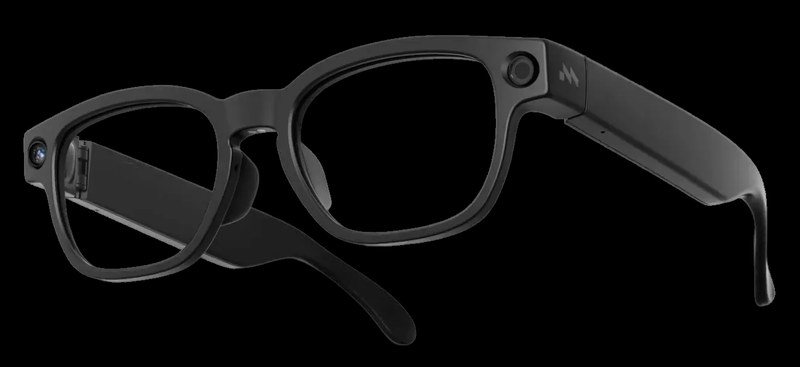
Mentra
Mentra is a San Francisco startup building MentraOS, an open-source operating system and app store for smart glasses, alongside Mentra Live, a 43-gram AI camera-glasses device. Founded in 2024 by MIT-dropout Cayden Pierce and Alex Israelov after they collaborated on the OpenSourceSmartGlasses project, Mentra wants to be the Android of smart glasses - a neutral software layer that lets developers ship apps and lets people actually use the hardware in the real world.

VITURE
VITURE builds XR glasses that look like sunglasses and act like a giant private screen. Plug them into a phone, console, Steam Deck, or laptop and a 150-plus-inch virtual display floats in front of you, with electrochromic tint, sharp micro-OLED panels, HARMAN audio, and AI-powered 2D-to-3D conversion. Founded in 2021 by ex-Google Glass engineer David Jiang, the company has become the leading name in the U.S. display-glasses market and has raised over $120M to expand from gamers into enterprise and productivity.
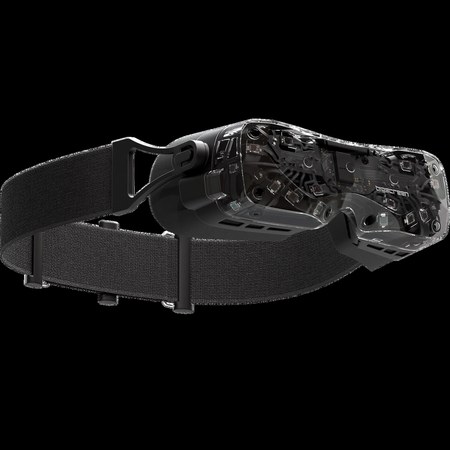
Bigscreen VR
Bigscreen VR is a California-based virtual reality company that started in 2014 as a social app for watching movies, gaming, and hanging out in shared virtual rooms, then pivoted into hardware with the Bigscreen Beyond - marketed as the world's smallest VR headset. Built for enthusiasts, the Beyond uses high-resolution micro-OLED displays, custom pancake optics, and a face cushion molded to each customer's face. The company sells direct to PC VR users who want maximum visual clarity and comfort without the bulk of mainstream headsets.