The company that decided VR headsets were too big - and then built the smallest one anyone had seen.
Put on a typical PC VR headset and you feel it. The weight on your forehead. The pressure on your cheeks. The quiet negotiation with your own neck about how long this is going to last. Bigscreen built a company around hating that feeling. Today the Bigscreen Beyond 2 weighs 107 grams - lighter than a can of soda, roughly five to seven times lighter than a Quest 3 or an Apple Vision Pro - and it ships from a team of around seventeen people in Walnut, California.
That is the part worth sitting with. Bigscreen is not a giant. It raised about $14 million, total, across its entire history, and then spent a decade refusing to grow into something bloated. The headset is the thesis: do less, weigh less, fit better.
The bulk was never the feature. Comfort was.// the whole Bigscreen argument, in seven words
Here is the inconvenient truth about most virtual reality: people love the demo and quit the device. The displays got sharper every year. The processors got faster. And the thing strapped to your skull stayed heavy, hot, and built for a face that wasn't yours. The industry kept solving for "wow" and forgetting about "wear."
Bigscreen had a front-row seat to this. Before it made any hardware, the company spent years running a social VR app that lived on nearly every headset available. That meant years of watching exactly where users gave up - and it usually wasn't the software. It was the weight. It was the blur at the edges. It was the moment someone took the headset off and rubbed the red marks on their face.
Existing headsets forced a choice: visual quality or comfort. Bigscreen refused to pick.// the design brief, more or less
The mainstream answer was to chase the mass market - cheaper, standalone, good enough. Bigscreen looked at the people who never wanted to take the headset off, the enthusiasts logging hours not minutes, and decided those were the customers worth obsessing over.
Darshan Shankar founded Bigscreen in 2014. He was not new to this game - a Y Combinator alum from the Winter 2011 batch, he'd previously built Flotype, a startup backed by some of the same names that would later back Bigscreen. So when Andreessen Horowitz and True Ventures wrote checks totaling $14 million across a seed and a Series A in 2017, they were betting on someone who'd shown he could turn a small amount of money into a long runway.
And that is exactly what happened. Most VR startups of that era either flamed out or got acquired and absorbed. Bigscreen did neither. It stayed independent, stayed lean, and quietly redirected from being a software company into being a hardware company - the hardest pivot in tech, attempted by one of the smallest teams to try it.
YC alum, repeat founder, and the reason Bigscreen has been compared to Nintendo - a small studio with an opinionated, do-fewer-things-better philosophy.
Andreessen Horowitz led the 2017 seed; True Ventures led the $11M Series A. Total raised across the company's life: roughly $14M.
About 17 people, remote-friendly, hardware-obsessed. The constraint became the strategy.
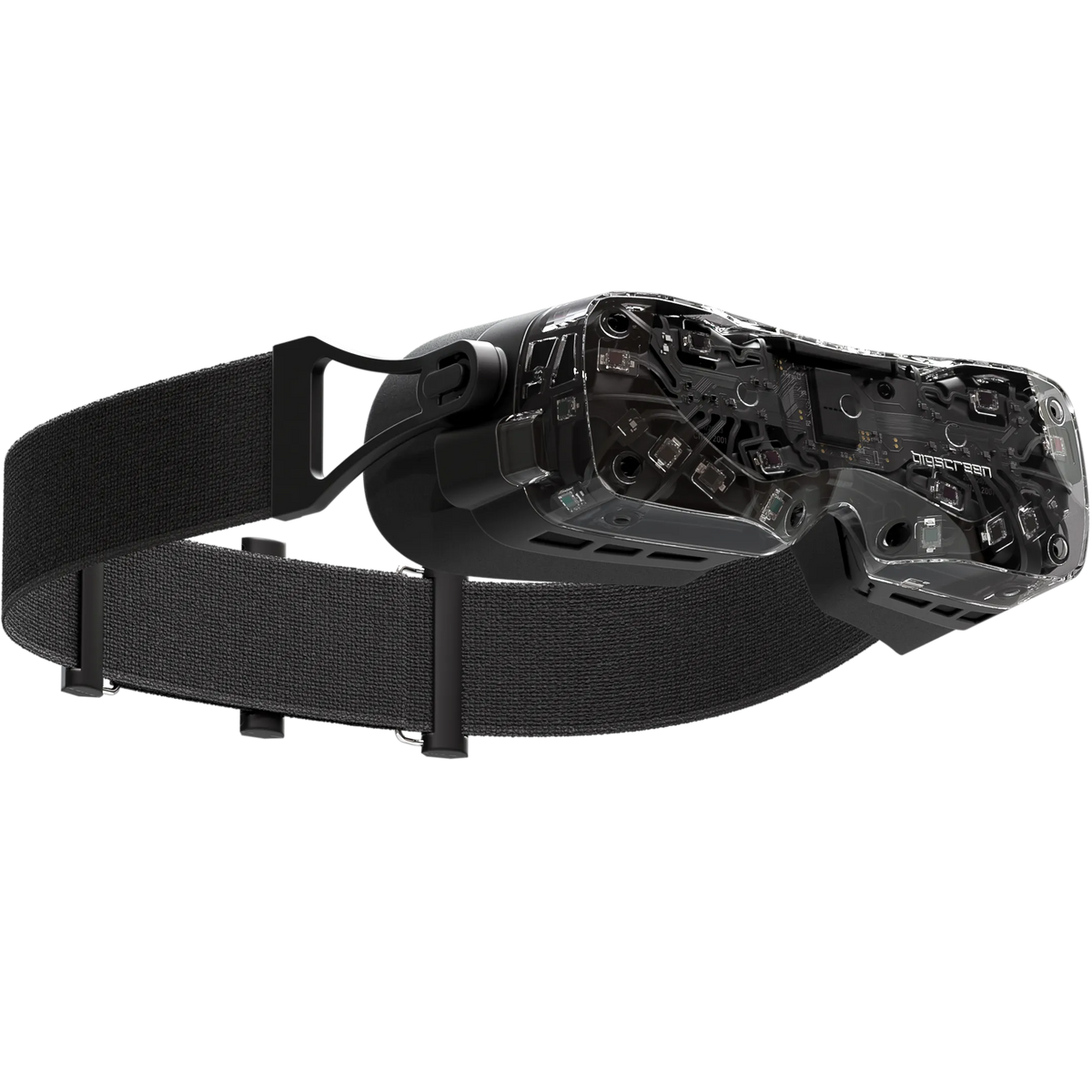
The Bigscreen Beyond launched in 2023 and did something no mainstream headset bothered with: it asked you to scan your face first. Each Beyond's cushion is then molded to that scan, so the device sits flush against your individual bone structure. It is mass customization applied to a product category that had been shipping one-size-fits-most for years.
Everything else followed the same logic. Custom pancake optics to fold the light path into almost nothing. OLED displays for deep blacks and high clarity. SteamVR tracking for precision. The result on the original Beyond was 127 grams and less than an inch thick at its thinnest point - numbers that read like typos next to the competition.
Each Beyond is custom-built to the shape of a customer's face for comfort during long VR sessions.// from Bigscreen's own description of the headset
Then came the Beyond 2 in June 2025: 107 grams, a wider field of view of around 116 degrees diagonal, manual IPD adjustment, and dual micro-OLED panels at 2560x2560 each - 13.1 million pixels in total, running up to 90Hz. The 2e variant adds eye tracking that the company describes as AI-powered, low-latency, and privacy-focused. None of it requires you to compromise comfort to get clarity. That was always the rule.
Before it made hardware, it made a theater. The original Bigscreen app - still around - lets up to 12 people watch movies, stream a PC desktop onto a giant screen, or game together in shared rooms, from a campfire to a cinema. Bigscreen Cinema later sold tickets to films (including Paramount titles) for roughly $4-$5 a seat. The software taught the company what the hardware needed to fix.
Bigscreen launches in Berkeley, California as a social VR platform for movies, games, and shared screens.
A $3M seed (a16z) and an $11M Series A (True Ventures) bring total funding to roughly $14M.
The Bigscreen Beyond debuts - 127 grams, custom-fit, billed as the world's smallest VR headset.
Wider FOV, manual IPD, and an eye-tracking 2e model revealed on March 20.
Released June 1 at 107 grams with dual 2560x2560 micro-OLED displays.
A co-developed Beyond 2e: VRChat Edition arrives for the social-VR crowd.
You can debate field of view and pixel density forever. The one spec that captures Bigscreen's entire reason for existing is mass - how much of the device you are actually carrying on your face. Here is how the Beyond line stacks up against the headsets it competes with.
Five to seven times lighter than the headsets it competes against. That gap is not a rounding error - it is the product.// what the chart is really saying
Co-developed the Beyond 2e: VRChat Edition - the social-VR community asked, and Bigscreen built a headset tuned for them.
Licensed films for Bigscreen Cinema, letting people buy tickets and watch movies together inside VR.
The Beyond headsets use external base-station tracking and plug into the wider PC VR ecosystem rather than a walled garden.
Strip away the spec sheets and Bigscreen's goal is almost modest: remove the friction between a person and an immersive experience. Watch a film. Race a car. Meet a friend in a virtual room. The mission was never to win a benchmark - it was to get the headset out of the way so the experience could happen.
That is also why the company stayed small. A bigger team would have been pressured to chase the mass market, ship a standalone headset, compete with the giants on their terms. Bigscreen picked a narrower lane - PC VR enthusiasts, sim racers, social-VR regulars, people who log real hours - and served them with something the giants weren't willing to build: a premium, custom-fit device for an audience that values comfort over convenience.
Most VR companies chase the mass market. Bigscreen chased the people who never take the headset off.// strategy, condensed
Eye tracking on the 2e. A wider field of view. A VRChat edition built hand-in-hand with a community. Each step points the same direction Bigscreen has walked since 2014: lighter, clearer, more personal. As the rest of the industry slowly admits that comfort is not a luxury feature, the small team in Walnut has a decade head start on the idea.
So go back to the start. You put on a typical headset and you feel it - the weight, the pressure, the quiet timer ticking down to when you'll take it off. Now put on a Beyond 2. It was scanned to your face. It weighs about as much as your phone. And the timer? It doesn't start. You just stay. That was the entire bet. It turns out it was a good one.
The headset you forget you're wearing is the one you keep wearing. That is the whole company, in one sentence.// closing argument