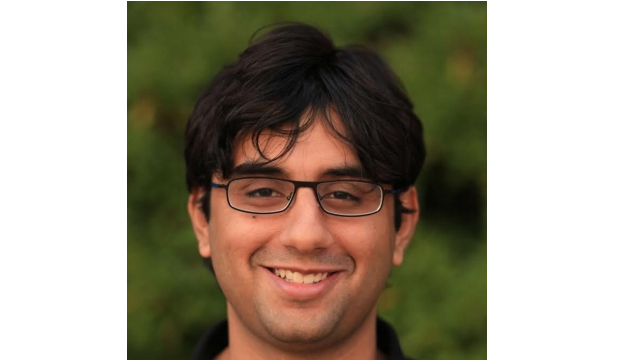
Kshitij Marwah is what happens when a Cambridge research lab ships its student back to Mumbai with a half-built camera and the conviction that the next medium of storytelling will be touched, not watched. He is the founder of Tesseract, now Jio Tesseract, and the person to ask if you want to know how an Indian conglomerate ended up shipping mixed reality headsets to millions of consumers instead of importing them.
The official tag is CEO. The unofficial one, which he printed on his Forbes 30 Under 30 profile, is tinkerer-in-chief. Both fit, but only one of them tells you where he spends his afternoons.
The MIT Years
Before Tesseract there was the Camera Culture group at the MIT Media Lab, where Marwah arrived in 2011 with a background already too crowded for a CV. He had been a research scientist at Stanford and Harvard Medical School working on deep learning for biomedical data. He had been a visiting scientist at MIT CSAIL and the Harvard-MIT Health Sciences and Technology program. He had not yet picked optics as a career, but optics picked him.
At MIT he built what the lab described as the world's first full-resolution 4D light field camera. A light field is what your eyes do without thinking about it - capture not just light, but the direction it came from. Most cameras throw away that information. Marwah's design kept it.
He started a PhD on deep learning over 4D light field tensors. He didn't finish it. Somewhere between the photonics seminar and the Indian Ocean, he decided the prototype mattered more than the paper.
The India Initiative
Parallel to the lab work, Marwah was running the MIT Media Lab India Initiative, a not-for-profit platform that he took over in 2012 with about 50 students attached to it. He left it in 2016 with closer to 500, drawn from hundreds of thousands of applicants. By later accounts the network reached 1,000 members and produced more than 100 prototypes and a handful of spin-offs. Tesseract was one of them.
The Initiative was, in Marwah's framing, the largest MIT program outside the United States. It was also the rehearsal for what came next - an argument that India did not have to import its innovation infrastructure, that students from Tier 2 cities could ship hardware if you handed them a workbench and a deadline.
The Tesseract Bet
Tesseract Imaging spun out in 2015. The early reporting placed parts of the company in Bengaluru and parts of the manufacturing in a workshop in Dharavi - the Mumbai neighborhood better known for global misconceptions than for prototype electronics. That choice was deliberate. Marwah wanted hardware made in India, by Indian engineers, for Indian price points. He kept that line even when investors suggested Shenzhen would be easier.
The early products were a pocket-sized 360-degree camera called Quark 360, marketed as the world's smallest of its kind, and a viewing headset called Holoboard. Quark 360 won the gold at the TechCrunch Asia Hardware Battle. NASSCOM listed Tesseract in the Emerge 50 League of 10 and gave it a Design4India award in the immersive category. None of these awards put the company in profit. They did put it in the room.
The Reliance Year
In 2019, Reliance acquired Tesseract. The deal moved an MIT spin-off into Jio Platforms - the digital arm of India's largest conglomerate - and pushed Marwah's roadmap from indie hardware to consumer scale. JioGlass was unveiled at the 2020 Reliance AGM, a pair of mixed reality glasses positioned as an India-first answer to the headsets coming out of Cupertino and Menlo Park. JioDive followed - an entry-level VR headset priced for the Indian middle class. JioFrames arrived after that. Together they made Tesseract, by his own description, India's biggest XR and AI organization.
In 2025 the company was fully merged into Jio and rebranded Jio Tesseract. Marwah stayed. Founders who survive an acquisition usually do not survive the integration. He did both.
The Tinkerer's Posture
What separates Marwah from the standard XR founder profile is not the credentials, which are dense, or the funding, which was famously absent for years - Tesseract was bootstrapped and self-funded long after most deep-tech peers had raised. What separates him is the insistence on building hardware in India when almost no one else was willing to. The Quark 360 was assembled in Mumbai. JioGlass is engineered there now. The supply chain runs through cities most of his MIT classmates have never visited.
He is a design-first founder in a sector dominated by engineering-first founders. He is a hardware founder in a country whose tech press prefers software founders. He is a returnee in a generation that mostly stayed in Cambridge.
What Comes Next
Marwah continues to lead Jio Tesseract from Navi Mumbai. The roadmap, by his telling, is the same one he sketched at MIT - storytelling through optics, holographic capture, mixed reality at consumer prices, and an AI layer underneath all of it. The audience has changed. The premise has not. He still calls himself a tinkerer. The workshop is just larger now.
Ask him for his personal tagline and he gives you four words that you can find on his current website. They are not a manifesto, but they describe the orbit reasonably well.