xr
(18)
The Garage That Sold Google Cardboard, Then Sold America Its Whole VR Stack
A bootstrapped LA outfit began by folding cardboard goggles in a garage. A decade and 10,000-plus headsets later, it sells the whole spatial-computing stack to hospitals, factories and defense labs.

The Company That Built a Drug-Free Trip You Can Buy on the App Store
A game-industry executive turned a lifelong meditation habit into the first mindfulness app on the Meta Quest. Now TRIPP is betting an AI guide named Kōkua can follow you off the headset and into your pocket.

Ratson Morad Has Spent a Career Turning Difficult Physics Into Repeatable Manufacturing
Before smartglasses, Ratson Morad worked on MRI systems, 300 mm wafer tools and solar modules. The industries changed; his practical question did not: how do you make difficult technology reliably, repeatedly and at scale?

Sankar Jayaram
Sankar (Jay) Jayaram is the co-founder and CEO of Quintar, a Santa Clara startup building augmented reality experiences for live sports. A former Washington State University engineering professor who founded the school's virtual reality lab in 1994, he co-founded VOKE with his wife Uma Jayaram, sold it to Intel in 2016, and served as CTO of Intel Sports before spinning out Quintar in 2021. Quintar became the official AR developer for the PGA Tour and shipped PGA Tour Vision for Apple Vision Pro.

Aura
Aura is an AI agent for game development built by Ramen VR, the San Francisco studio behind the VR MMO Zenith: The Last City. Purpose-built for Unreal Engine and Unity, Aura turns written ideas into Blueprints, C++ and C# code, generates 3D assets, and automates repetitive tasks so professional developers can ship games faster. Its multi-agent system - including the Telos Blueprint agent and specialized verification and material agents - understands a studio's existing codebase and works within the engine editor. Ramen VR raised more than $45M (Series B led by Anthos and Dune) and pivoted from VR gaming to XR + AI developer tooling.

DigiLens Inc.
DigiLens is a Silicon Valley optics company that designs, manufactures, and licenses holographic waveguide displays - the transparent, printed lenses that let augmented reality smartglasses overlay digital information onto the real world. Founded in 2003 as SBG Labs around a switchable Bragg grating technology, the company pairs its proprietary CrystalClear photopolymer with an inkjet-printing and holographic contact-copy process it argues can scale AR optics to consumer price points. Alongside licensing its optics to manufacturers, DigiLens builds ARGO, a standalone AR/XR smartglasses platform aimed at enterprise and industrial workers, and counts Samsung, Sony, Continental, and Niantic among its investors.

Quintar, Inc.
Quintar is a Santa Clara-based extended reality company building a device-agnostic spatial XR platform that turns physical venues into digitally enhanced 'Quintar Places.' Its patented Q.reality platform combines a Spatial Visual Positioning System with True Spatial Video to overlay real-time, data-driven content on live sports and other events. Quintar is the official mobile AR and XR developer of the PGA TOUR and built PGA TOUR Vision, the first professional golf application for Apple Vision Pro. Founded in 2021 by former Intel CTO Dr. Sankar (Jay) Jayaram and Dr. Jeff Jonas, the company has raised roughly $11 million, including an $8.2 million Series A in 2024.

Tripo AI
Tripo AI, built by the startup VAST, is a generative-AI platform that turns text prompts and images into production-ready 3D models in seconds. Its Tripo Studio app and REST API cover the full 3D pipeline - generation, texturing, rigging, retopology, segmentation and stylization - and are used by more than 6.5 million creators and roughly 90,000 developers. Founded in 2023 by former MiniMax co-founder Simon Song, the company is pushing from single 3D assets toward interactive, persistent 'world models' and has raised close to $400 million from backers including Alibaba and Baidu Ventures.

Xvisio Technology Corporation
Xvisio Technology Corporation is a Silicon Valley-founded spatial computing company building the visual SLAM engines, sensor-fusion modules, and mixed-reality hardware that let machines and headsets understand where they are in physical space. Its SeerSense modules and SeerLens MR glasses - built on a low-latency VPU pipeline it calls SlimEdge XR - power 6DoF tracking, depth sensing, and on-device AI inferencing for AR headsets, robots, and industrial devices across healthcare, manufacturing, education, and logistics.

Tesseract
Tesseract (Jio Tesseract) is an MIT Media Lab spin-off and Jio Platforms/Reliance Industries subsidiary building India's mixed reality stack: consumer devices like the JioDive VR headset (Rs 1,299), JioGlass smart glasses, and JioFrames AI glasses, plus enterprise XR platforms for training and remote assistance. Founded in 2015 by Kshitij Marwah, acquired 92.7% by Reliance in May 2019, it calls itself India's biggest XR and AI company, reaching 50+ million consumers and 50+ enterprise clients.

Windup Minds
Windup Minds is a Seattle-based, remote-first independent game studio building the next generation of virtual pets for virtual and mixed reality. Founded in 2023 by a crew of veterans from Oculus, EA, Microsoft and Bungie, the studio's debut, Stay: Forever Home, drops a magical companion named Ember into your living room via Meta Quest passthrough - a pet you feed, play with, and grow attached to. The bet: VR and MR are the only mediums that can make a digital creature feel genuinely, instinctively real.
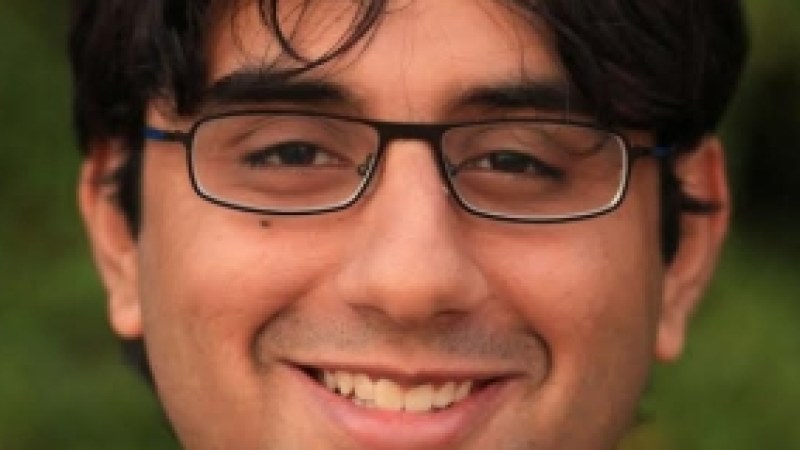
Kshitij Marwah
Kshitij Marwah is an Indian deep-tech entrepreneur who founded Tesseract, an MIT Media Lab spin-off building extended reality hardware and software in India. Acquired by Reliance in 2019, Tesseract became Jio Tesseract and shipped consumer XR products including JioDive, JioGlass and JioFrames. A former head of the MIT Media Lab India Initiative, he is an MIT Technology Review TR35 honoree (2017), a Forbes 30 Under 30 (2018) awardee and a TED speaker working at the intersection of AI, optics and immersive design.
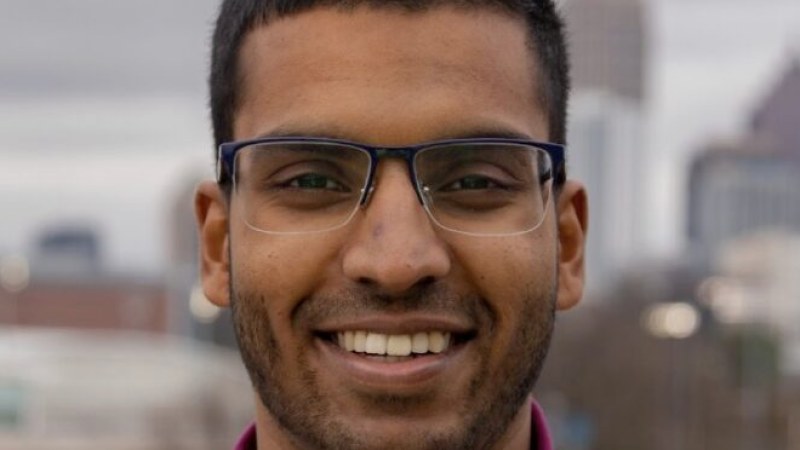
Aditya Vishwanath
Aditya Vishwanath is the co-founder and CEO of Inspirit, a Palo Alto edtech company that brings virtual and augmented reality into middle and high school STEM classrooms. A Georgia Tech computer scientist turned Stanford learning-sciences PhD, he built Inspirit to be the bridge between cutting-edge academic research and the everyday teacher. Before Inspirit he co-founded MakerGhat, a network of makerspaces for youth in low-income Mumbai neighborhoods. He is a Knight-Hennessy Scholar, Schmidt Futures Fellow, Ashoka Fellow, and a Forbes 30 Under 30 honoree in education.

Bernard Yee
Bernard 'Bernie' Yee is the CEO and co-founder of Windup Minds, a Seattle-based independent VR/MR studio building 'Stay: Forever Home,' a mixed-reality virtual pet named Ember. A games-industry lifer who started as a journalist and trained as a lawyer, Yee has produced or shaped some of the most influential titles in gaming - Plants vs. Zombies 2 and Peggle 2 at PopCap, Destiny at Bungie, Rock Band at Harmonix, EverQuest at Sony Online - before spending nearly a decade at Oculus/Meta Reality Labs producing landmark VR experiences like Dreamdeck, Toybox, First Contact and First Steps. His thesis: XR is uniquely capable of making a digital creature feel real, and a game can make you feel loved.
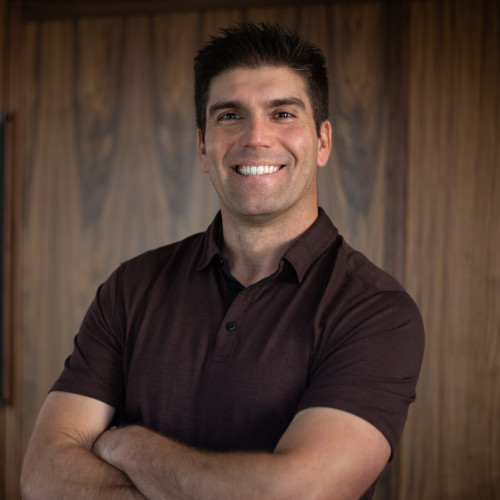
Derek Belch
Derek Belch is the founder and CEO of STRIVR, the enterprise virtual reality training company he spun out of Stanford's Virtual Human Interaction Lab in 2014. A former Stanford kicker turned graduate assistant football coach, Belch built a VR prototype to give quarterbacks mental reps off the field, then pivoted the company from sports to the Fortune 1000. STRIVR has since trained more than a million workers in VR for clients including Walmart, Verizon, Bank of America and the NFL, and has raised roughly $87.5 million through a Series B.

Michael Deng
Michael Deng is the founder, Chairman, President, and CEO of ArcSoft, a Fremont, California-based computer vision and AI imaging company he started in 1994 with $150,000 from family and friends. Over three decades, he built ArcSoft into a global leader powering the cameras of Samsung, Huawei, Xiaomi, Sony, and dozens more, then pivoted to automotive AI vision - driver monitoring, ADAS, and in-cabin sensing. When ArcSoft listed on Shanghai's STAR Market in 2021, Deng became a billionaire with a stake valued at roughly $1.1 billion. Today he's steering the company into AI glasses, XR headsets, robotics, and AIGC creative tools.
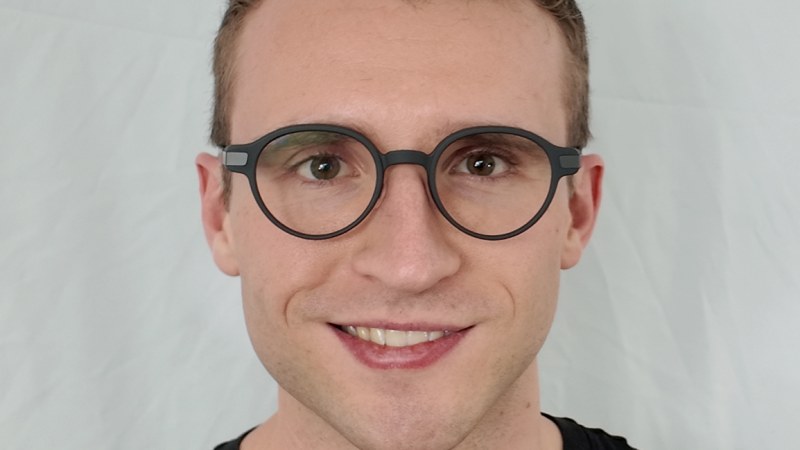
Cayden Pierce
Cayden Pierce is the CEO and co-founder of Mentra, a San Francisco startup building MentraOS - the open-source operating system for AI smart glasses. Described as 'the Android for smart glasses,' MentraOS lets developers write one app and deploy it across any pair of smart glasses. A self-described transhumanist hacker, Pierce built his first DIY smart glasses prototype in his dorm room, worked with smart glasses inventor Steve Mann at the University of Toronto, researched proactive AI wearable agents at MIT Media Lab under Pattie Maes, converted a 40-year-old RV into a mobile hacker lab, and dropped out of MIT in 2024 to launch Mentra. The company raised an $8 million seed round backed by the co-founders of Android, YouTube, and Pebble, plus Y Combinator, Amazon, and Toyota Ventures.

Luke Wilson
Luke Wilson is the CEO and co-founder of ManageXR, the leading device management platform for enterprise XR (extended reality) deployments. A Stanford computer science graduate who designed and taught one of the university's first VR development courses as an undergraduate, Wilson built ManageXR out of a real operational problem: while deploying thousands of VR headsets to children's hospitals across the United States through his earlier venture Mighty Immersion, he found no viable management solution existed at scale. That gap became ManageXR, which raised a $4M seed round led by Rally Ventures in December 2021 and now serves 100+ enterprise customers across healthcare, training, education, and retail verticals.