vr
(18)
The Garage That Sold Google Cardboard, Then Sold America Its Whole VR Stack
A bootstrapped LA outfit began by folding cardboard goggles in a garage. A decade and 10,000-plus headsets later, it sells the whole spatial-computing stack to hospitals, factories and defense labs.

3i Inc.
3i Inc. is a Seoul-based spatial AI company that turns physical spaces into interactive digital twins. Founded in 2017, it operates two brands: Beamo, an enterprise digital twin platform used to remotely inspect and manage mission-critical facilities like data centers and factories, and Pivo, a consumer AI-powered auto-tracking pod for content creators. Backed by a $24M Series A led by SV Investment, the company holds dozens of technology patents in computer vision, 3D scanning, and SLAM.

Aura
Aura is an AI agent for game development built by Ramen VR, the San Francisco studio behind the VR MMO Zenith: The Last City. Purpose-built for Unreal Engine and Unity, Aura turns written ideas into Blueprints, C++ and C# code, generates 3D assets, and automates repetitive tasks so professional developers can ship games faster. Its multi-agent system - including the Telos Blueprint agent and specialized verification and material agents - understands a studio's existing codebase and works within the engine editor. Ramen VR raised more than $45M (Series B led by Anthos and Dune) and pivoted from VR gaming to XR + AI developer tooling.

Olga Dogadkina
Olga Dogadkina is the co-founder and CEO of Emperia, a London-based immersive commerce platform that builds virtual stores and 3D brand experiences for the world's biggest luxury and retail names, including Dior, Burberry, Bloomingdale's, Tommy Hilfiger, Harrods, Lacoste, Christie's and Dom Pérignon. Named to the Forbes 30 Under 30 Retail & Ecommerce list in 2025, she started Emperia in 2018 after trying VR for the first time on a Microsoft fashion project and deciding it would change the way people shop.
Kshitij Marwah
Kshitij Marwah is an Indian deep-tech entrepreneur who founded Tesseract, an MIT Media Lab spin-off building extended reality hardware and software in India. Acquired by Reliance in 2019, Tesseract became Jio Tesseract and shipped consumer XR products including JioDive, JioGlass and JioFrames. A former head of the MIT Media Lab India Initiative, he is an MIT Technology Review TR35 honoree (2017), a Forbes 30 Under 30 (2018) awardee and a TED speaker working at the intersection of AI, optics and immersive design.
Bigscreen VR
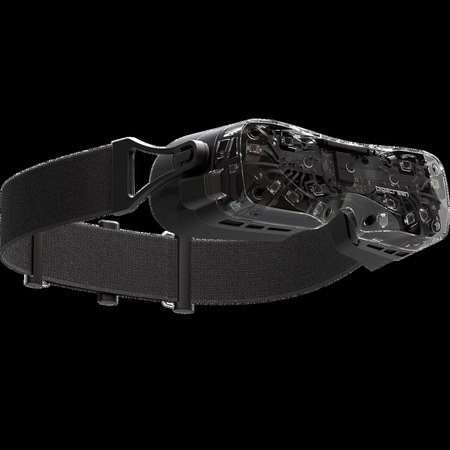
Bigscreen VR is a California-based virtual reality company that started in 2014 as a social app for watching movies, gaming, and hanging out in shared virtual rooms, then pivoted into hardware with the Bigscreen Beyond - marketed as the world's smallest VR headset. Built for enthusiasts, the Beyond uses high-resolution micro-OLED displays, custom pancake optics, and a face cushion molded to each customer's face. The company sells direct to PC VR users who want maximum visual clarity and comfort without the bulk of mainstream headsets.

Derek Belch
Derek Belch is the founder and CEO of STRIVR, the enterprise virtual reality training company he spun out of Stanford's Virtual Human Interaction Lab in 2014. A former Stanford kicker turned graduate assistant football coach, Belch built a VR prototype to give quarterbacks mental reps off the field, then pivoted the company from sports to the Fortune 1000. STRIVR has since trained more than a million workers in VR for clients including Walmart, Verizon, Bank of America and the NFL, and has raised roughly $87.5 million through a Series B.

Jason Paul
Jason Paul is Vice President of GeForce Platform Marketing at NVIDIA, where he has worked since 2003. Over more than two decades, he has led the marketing and launch of every major GeForce GPU generation, pioneered NVIDIA's SHIELD gaming ecosystem, championed GameWorks VR, and now spearheads the company's consumer AI push connecting RTX hardware to over 100 million Windows users. Educated at UCLA and Stanford (MBA), Paul sits at the crossroads of gaming hardware, software platforms, and the emerging era of on-device AI.

Amit Jain
Amit Jain is the Co-Founder and CEO of Luma AI, the Palo Alto-based AI company behind Dream Machine - a text-to-video platform with over 25 million users - and Ray 3, the world's first reasoning video model. Before founding Luma AI in 2021, he spent four years at Apple leading development of the Passthrough feature for Apple Vision Pro and integrating the first LiDAR sensors into iPhones. Under his leadership, Luma AI has raised over $1 billion in funding including a $900M Series C led by HUMAIN at a $4 billion valuation, and is building unified multimodal intelligence systems that blur the line between reasoning and reality synthesis.

Clay Bavor
Clay Bavor is Co-Founder of Sierra, the AI customer experience company he launched in early 2023 alongside Bret Taylor. Before Sierra, Bavor spent 18 years at Google, where he rose from product manager to VP leading Google Labs — overseeing Google's AR/VR efforts (including Cardboard, Daydream, ARCore, Google Lens, and Project Starline), and before that running product and design for Gmail, Google Drive, Google Docs, and Google Workspace. Sierra has raised $1.585 billion in total funding, most recently a $950M Series E at a $15.8 billion valuation in May 2026, serving over 40% of the Fortune 50 with AI agents that resolve 50–90% of customer inquiries.

Graham Gaylor
Graham Gaylor is the co-founder and CEO of VRChat Inc., the social virtual reality platform he built from a single Reddit-recruited room in 2014 into a $500M company with millions of custom avatars and hundreds of thousands of user-created worlds. A Vanderbilt-trained mathematician and software engineer who backed the original Oculus Kickstarter, Gaylor has spent over a decade building the infrastructure for human connection in virtual space - a platform where avatars meet, worlds multiply, and the line between game and community blurs entirely.

Polycam
Polycam is a cross-platform 3D scanning and spatial AI company that turns iPhones, Android phones, and drones into professional reality-capture tools. Used by architects, game studios, forensics teams, and millions of hobbyists, it combines LiDAR, photogrammetry, and Gaussian splatting to make 3D capture as easy as taking a photo.
Prisms
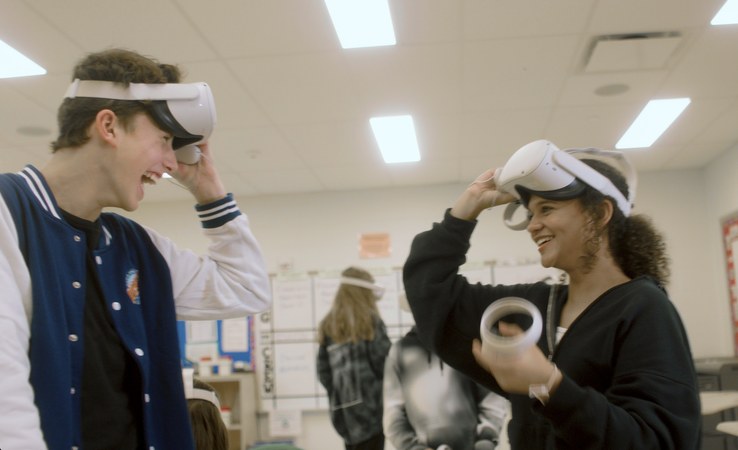
Prisms (legally Prisms of Reality) is a San Francisco-based education-technology company building the first spatial learning platform for K-12 math and science. Students don VR headsets and walk through problems - tsunamis, viral outbreaks, exponential growth - before ever picking up a pencil. Founded in 2020 by MIT-trained educator Anurupa Ganguly, the company now reaches hundreds of thousands of students across most US states.

Teppei Tsutsui
Teppei Tsutsui is General Partner and co-founder of GFR Fund, a San Francisco-based early-stage venture capital firm focused on gaming, generative AI, creator economy, and consumer tech. Tokyo-raised and University of Chicago-educated, he co-founded GFR Fund in 2016 after a decade spanning Mitsubishi Corporation, Morgan Stanley M&A, and GREE - where he moved to San Francisco in 2014 to launch their seed investment program. GFR Fund III closed at $53.5M in 2023, and the firm's portfolio of over 100 companies includes three unicorns - VRChat, Animoca Brands, and Sky Mavis - with GFR's earliest and most famous bet being VRChat, invested when the platform had just 1,000 active users.

Julian Park
Julian Park is the Co-Founder and CEO of Bezi, a San Francisco-based AI assistant for Unity game developers that helps with debugging, code generation, shader creation, and prototyping through deep project-level context. A UC Berkeley computer science grad, Park cut his teeth at Facebook building WebGL design tools and then at Oculus leading VR multitasking and UI framework projects before co-founding Bezi in 2021. The company raised $13M across Seed and Series A rounds, with Benchmark leading the Series A, and has evolved from a collaborative 3D design tool into a powerful AI coding companion purpose-built for Unity pipelines.
Tommy McGlynn
Tommy McGlynn is a Los Angeles-based engineering manager at Meta's Reality Labs, where he leads the AI Character Platform team building AI-powered characters for the mixed-reality metaverse. A self-taught hacker who cracked an ad referral platform at 12, he went on to design scalable server architectures for Apple's TestFlight, speak on stage at WWDC for three consecutive years, and author the Oculus Developer Hub launch. He bridges design thinking and deep engineering - from Flash games and real-time multiplayer systems to VR developer tooling and interactive AI agents.

Luke Wilson
Luke Wilson is the CEO and co-founder of ManageXR, the leading device management platform for enterprise XR (extended reality) deployments. A Stanford computer science graduate who designed and taught one of the university's first VR development courses as an undergraduate, Wilson built ManageXR out of a real operational problem: while deploying thousands of VR headsets to children's hospitals across the United States through his earlier venture Mighty Immersion, he found no viable management solution existed at scale. That gap became ManageXR, which raised a $4M seed round led by Rally Ventures in December 2021 and now serves 100+ enterprise customers across healthcare, training, education, and retail verticals.

Bilawal Sidhu
Bilawal Sidhu is a creative technologist, former senior product manager at Google (AR/VR & 3D Maps), host of The TED AI Show podcast, venture scout for Andreessen Horowitz, and angel investor. After shipping landmark products like Google Maps Immersive View and the ARCore Geospatial API to billions of users, he left Google to become a full-time creator, curator, and investor at the intersection of spatial intelligence, generative AI, and immersive media. His newsletter and YouTube reach over 1.6 million followers, and he made headlines in April 2026 when he built WorldView - a real-time OSINT geospatial platform - in three days.