mit-media-lab
(27)
Ben Vigoda Has Spent 25 Years Teaching Machines to Handle the Mess
Before AI could sell you a jacket, Ben Vigoda taught chips to reckon with uncertainty. Now the Product Genius CEO is applying the same obsession to every scroll, pause and click.

Marcus Lowe’s Bet on the People Who Don’t Code
The Anything co-founder left Google’s product machine, killed a profitable startup, and rebuilt around a blunt idea: expertise should be enough to ship software.

Ideaflow
Ideaflow is a Palo Alto-based AI company building an 'intelligence amplification' layer for knowledge work. Its flagship product is a notebook that augments your thinking as you type, letting people capture and stitch together fragments of information. The company has since expanded into team knowledge tools - Base, which surfaces context from Slack, meetings, and documents, and meeting intelligence - aiming to become an organization's collective memory. Founded around 2015 by MIT Media Lab designer Jacob Cole and Etherpad/Meteor veteran David Greenspan, it has raised roughly $11M in seed funding from First Round Capital, 8VC, StartX, Naval Ravikant, and Tim Draper.

Soofa
Soofa builds solar-powered, network-connected digital signs that turn ordinary street corners into two-way community bulletin boards. Spun out of the MIT Media Lab in 2014, the women-founded company started with a phone-charging park bench and grew into a network of zero-carbon kiosks that broadcast hyperlocal news, transit updates, and events while giving advertisers and cities measurable pedestrian data - smart, social, and sustainable street furniture for the modern city.

Tesseract
Tesseract (Jio Tesseract) is an MIT Media Lab spin-off and Jio Platforms/Reliance Industries subsidiary building India's mixed reality stack: consumer devices like the JioDive VR headset (Rs 1,299), JioGlass smart glasses, and JioFrames AI glasses, plus enterprise XR platforms for training and remote assistance. Founded in 2015 by Kshitij Marwah, acquired 92.7% by Reliance in May 2019, it calls itself India's biggest XR and AI company, reaching 50+ million consumers and 50+ enterprise clients.
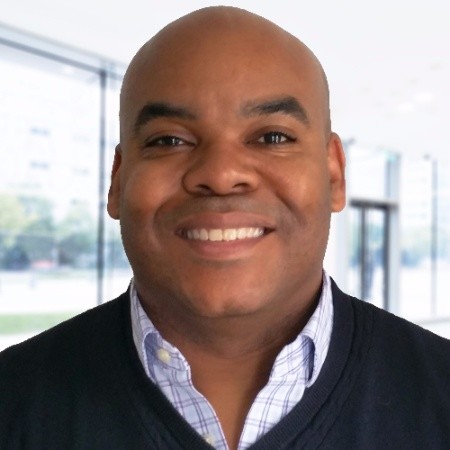
Birago Jones
Birago Jones is the co-founder and CEO of Pienso, a no-code AI platform that lets subject-matter experts train, fine-tune and deploy their own machine learning models without writing code. Born out of research he and Karthik Dinakar did at the MIT Media Lab on cyberbullying detection, Pienso is built on a simple conviction: the people who understand the data best, not just the engineers, should build the models. His customers now include the US government and Sky, the UK's largest broadcaster, which used Pienso to process half a million customer calls a day.

Bridgit Mendler
Bridgit Mendler is the co-founder and CEO of Northwood Space, an El Segundo startup mass-producing phased-array ground stations to move data between satellites and Earth. A former Disney Channel lead (Teddy Duncan on Good Luck Charlie) and platinum-selling pop singer, she pivoted through the MIT Media Lab and Harvard Law School into deep-tech, and by early 2026 had raised more than $100 million and won a $49.8M U.S. Space Force contract to modernize the Satellite Control Network.

Jifei Ou
Jifei Ou is the founder and CEO of OPT Industries, a Medford, Massachusetts company that turned a decade of MIT Media Lab research into a new kind of factory. After nearly seven years spent learning to 3D-print fur, hair, and micro-textures no mold could produce, Ou built RAMP, described as the world's first roll-to-roll 3D printing system, which prints intricate microstructures by the mile. Rather than sell machines, OPT sells the products it makes on them - false eyelashes, beauty applicators, and diagnostic swabs that outperformed the gold standard during COVID. Ou raised $15M in Series A funding and is betting that reconnecting design and production can bring precision manufacturing back onshore.
Robert Frederick
Robert Frederick is the founder, CEO and President of Sirqul, Inc., a Seattle IoT company built around an Engagement-as-a-Service platform of hundreds of APIs and patented edge devices. An MIT Media Lab alum and TR35 honoree with 41 issued patents, he helped launch Amazon Anywhere and co-founded Amazon Web Services and the AWS Marketplace before scaling the voice startup Snapvine past 5 million users. He is also an author and music producer.
Kshitij Marwah
Kshitij Marwah is an Indian deep-tech entrepreneur who founded Tesseract, an MIT Media Lab spin-off building extended reality hardware and software in India. Acquired by Reliance in 2019, Tesseract became Jio Tesseract and shipped consumer XR products including JioDive, JioGlass and JioFrames. A former head of the MIT Media Lab India Initiative, he is an MIT Technology Review TR35 honoree (2017), a Forbes 30 Under 30 (2018) awardee and a TED speaker working at the intersection of AI, optics and immersive design.
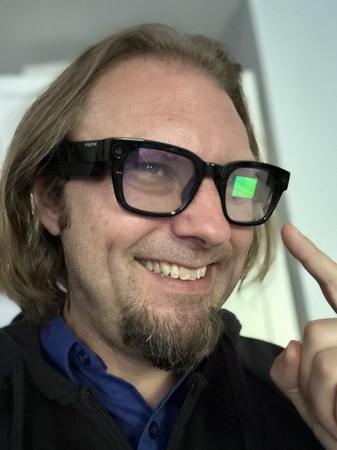
Alex Westner
Alex Westner is the co-founder and CEO of Xander, a Raleigh-based startup building AR smart glasses that print live captions of in-person conversations directly into the wearer's field of view. An MIT Media Lab-trained audio engineer who spent nearly two decades shipping sound software (including the Emmy-winning iZotope RX, nicknamed the Photoshop for Sound), Westner now turns his obsession with the cocktail party problem into a self-contained, no-cloud, no-phone device that helps people follow conversations they can no longer fully hear.
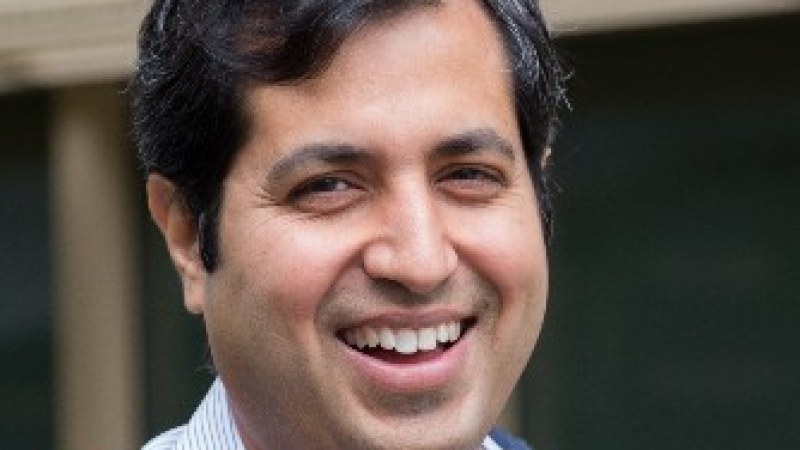
Ashish Kapoor
Ashish Kapoor is the co-founder and CEO of General Robotics (formerly Scaled Foundations), a Redmond, Washington startup building a unified intelligence layer for robots of every shape. After 17 years at Microsoft, where he led the Autonomous Systems and Robotics Research group, created the open-source AirSim simulator, and co-authored the widely read 'ChatGPT for Robotics' paper, Kapoor set out in 2023 to make robot intelligence portable across hardware. His thesis: general intelligence emerges from the rich composition of many robot skills, not from a single ever-larger model. He holds a PhD from the MIT Media Lab, flies and has built his own airplane, and treats simulation as the laboratory where machines learn to be safe before they touch the real world.

David Rose
David Rose is a five-time entrepreneur, author, and former MIT Media Lab lecturer who builds technology that disappears into everyday life. Today he is co-founder and CEO of LOOKOUT, a Boston marine AI company that fuses computer vision, radar, AIS and chart data into a single augmented reality view so boaters can spot vessels, debris, whales and people in the water before it is too late. Before LOOKOUT he invented the Ambient Orb (now in MoMA), built the cellular GlowCap pill cap, ran computer-vision pioneer Ditto Labs, led vision technology at Warby Parker, and wrote two influential books, Enchanted Objects and SuperSight.
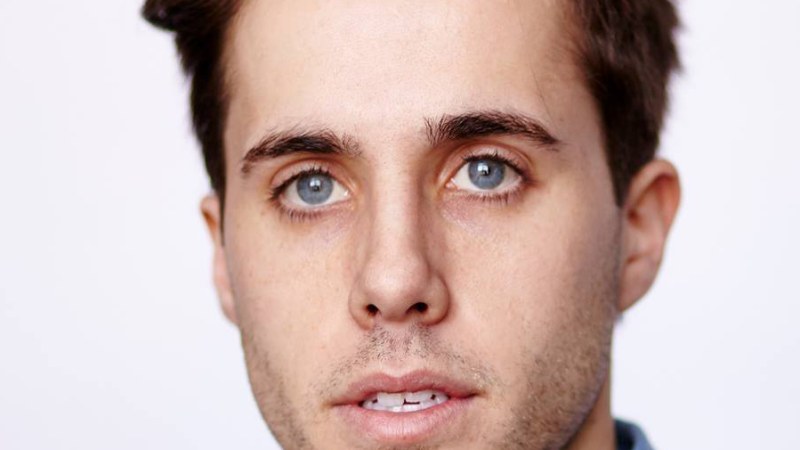
Francesco Marconi
Francesco Marconi is a computational journalist turned startup founder who built AppliedXL, a New York company that points the tools of investigative reporting at machine data to detect events before they become news. After serving as the first R&D Chief at The Wall Street Journal and co-leading AI strategy at the Associated Press, he wrote the field-defining book Newsmakers and now applies 'pre-news' event detection to clinical trials and biopharma, surfacing the earliest signals of trial risk for partners including STAT News and the Bloomberg Terminal.

Jacob Cole
Jacob Cole is the CEO and cofounder of Ideaflow, a Palo Alto company building intelligence-amplifying software - a notebook and team knowledge platform designed to fuse human thinking with AI. A former MIT Media Lab collective-intelligence researcher who also studied at Oxford, Cole frames Ideaflow as a life mission: a future where 'nobody feels alone with their ideas.' The company has raised more than $10M from First Round Capital, 8VC, StartX, Tim Draper, and Naval, building a human-AI hybrid 'shared brain' for organizations.
Paul Nemirovsky
Paul Nemirovsky is the cofounder and CEO of dMetrics, the Brooklyn-born AI company behind Minsky, a natural language processing platform that lets non-technical experts steer AI across the world's largest financial, pharmaceutical, and public-sector organizations. An MIT Media Lab PhD who once built musical navigation shoes and showed interactive art at the Centre Pompidou, he has grown dMetrics from two founders to a 40-person team without venture capital, and in 2024 the company landed a Department of Defense AI/ML production contract worth up to $99.5 million.
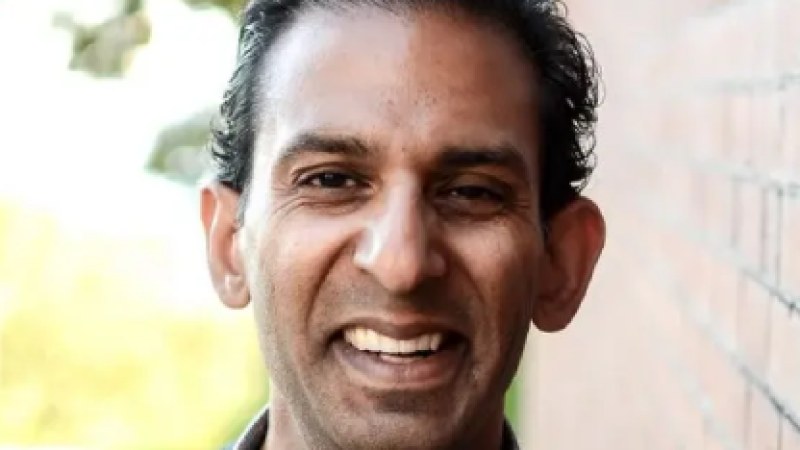
Satayan Mahajan
Satayan Mahajan is the founding CEO of Datalign Advisory, a Cambridge, Massachusetts fintech that matches Americans with vetted fiduciary financial advisors using AI and human-centered design. An MIT alumnus and Media Lab pioneer, he spent two decades building motion-capture and gaming companies (Motus, iClub) before an eight-year run at Amazon as a GM and Head of Product. He returned to startup mode in 2024 when Cogo Labs founder Dave Blundin recruited him to lead Datalign, which has since referred more than $80 billion in assets across thousands of advisors.

Som Ray
Som Ray is the co-founder and CEO of CLIP, a Brooklyn clean-mobility company that builds the world's first no-tools, plug-and-play device that snaps onto a regular bicycle's front wheel and turns it into an e-bike in seconds. Trained as an architect in New Delhi and New York and shaped by a stint in MIT Media Lab's Smart Cities group, Ray is a design technologist and serial entrepreneur recognized by MIT Technology Review's TR35 for an ultra-low-cost wheelchair. He started CLIP in 2018 after a steep Brooklyn hill made his bike commute miserable, and built the company around a simple idea: instead of throwing out the world's dormant bicycles, electrify them.

Eric Ly
Eric Ly is a Vietnamese-American entrepreneur and software engineer best known as a founding member and the first CTO of LinkedIn. Born in Saigon and raised in Silicon Valley, he was an early Java engineer at Sun and a product builder at General Magic before helping Reid Hoffman launch LinkedIn in 2002. Today he is co-founder and CEO of KarmaCheck, an AI-forward background check and credentialing company that raised a $45M Series B in 2024, focused on speeding up hiring in healthcare and staffing. Across a 30-year career he has chased one recurring idea: building trust between people online.

Wise Systems, Inc.
Wise Systems is a Cambridge, Massachusetts software company that uses machine learning to plan, dispatch, and continuously re-optimize last-mile delivery routes in real time. Spun out of the MIT Media Lab in 2014, its AI-driven platform helps fleets run more efficient, more predictable deliveries for enterprises including Anheuser-Busch and Lyft. The company raised $50M in Series C funding in 2021, bringing total funding to roughly $73M.

Sourcemap: the Supply Chain Mapping Company
Sourcemap is a New York-based enterprise SaaS company that maps global supply chains down to the raw-material origin. Born as a research project at the MIT Media Lab, it gives compliance and sourcing teams end-to-end, verified visibility across multi-tier supplier networks - helping Global 1000 brands meet forced-labor, deforestation, tariff and ESG regulations while reducing disruption risk.
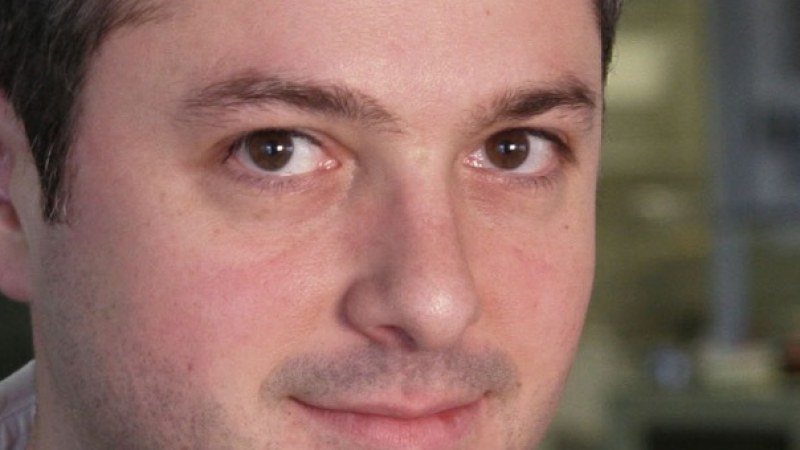
Leonardo Bonanni
Leonardo Bonanni is the founder and CEO of Sourcemap, the supply chain mapping company he spun out of his PhD research at the MIT Media Lab. What began in 2008 as a 'Wikipedia for supply chains' became enterprise software that helps the world's largest brands in food, apparel, electronics, pharmaceuticals and automotive trace their products down to raw-material origins - tanneries, farms, mines and slaughterhouses. He testified before the US Senate and the French Senate on traceability, spoke at TEDxMilano, and has been named among the most influential people in business ethics.
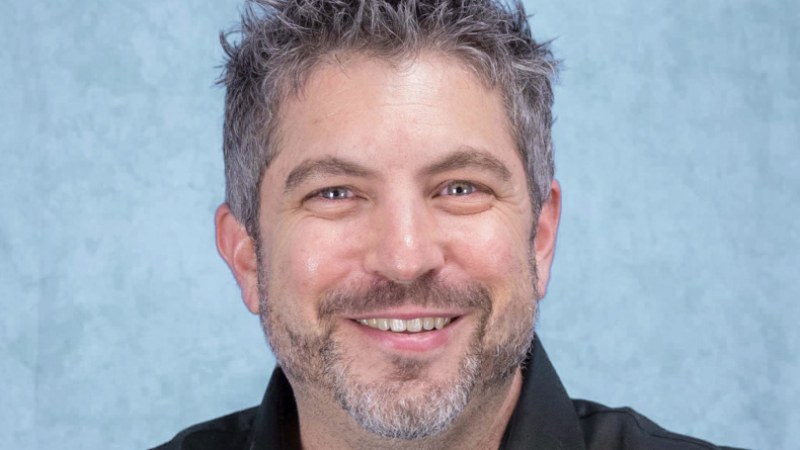
Natan Linder
Natan Linder is the cofounder and CEO of Tulip Interfaces, the no-code frontline operations platform that reached a $1.3B valuation with its $120M Series D in January 2026. An MIT Media Lab PhD out of Pattie Maes' Fluid Interfaces Group, he also cofounded and chairs Formlabs, the desktop 3D-printing company behind the Form 1 Kickstarter. He wrote the book Augmented Lean and hosts the Augmented Ops podcast, arguing that software should give frontline workers superpowers rather than automate them away.
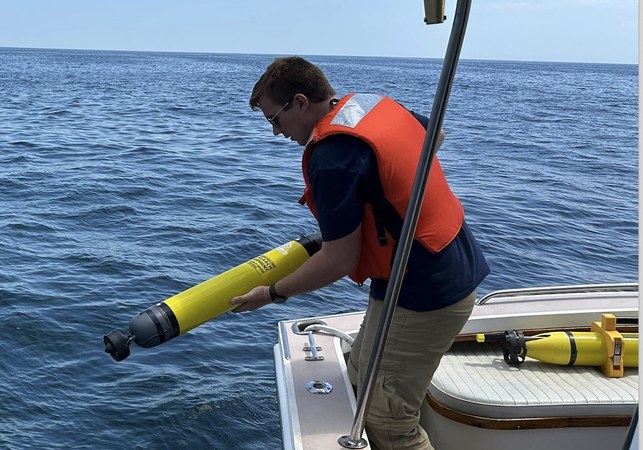
Ravi Pappu
Ravi Pappu is the founder and CEO of Apeiron Labs, a Cambridge, Massachusetts startup building low-cost autonomous robots that drift through the water column to measure the ocean at a scale never attempted. A physicist-turned-serial-founder, he invented Physical Unclonable Functions during his MIT PhD, co-founded the RFID pioneer ThingMagic (acquired by Trimble), and served as CTO of the CIA-linked venture firm In-Q-Tel before deciding the subsurface ocean was the hardest, most under-measured place on Earth and going after it with hardware he calls 'the CubeSat for the ocean.'

Kwindla Hultman Kramer
Kwindla Hultman Kramer is co-founder and CEO of Daily.co, a developer platform providing real-time voice, video, and AI infrastructure. He is also the creator of Pipecat, the most widely used open-source framework for building voice AI agents. A Harvard and MIT Media Lab alumnus, Kwindla has spent his career at the intersection of real-time communication and developer infrastructure—from scaling AllAfrica.com as CTO to building spatial computing interfaces at Oblong Industries to raising $62M+ for Daily and releasing Pipecat to the open-source community.
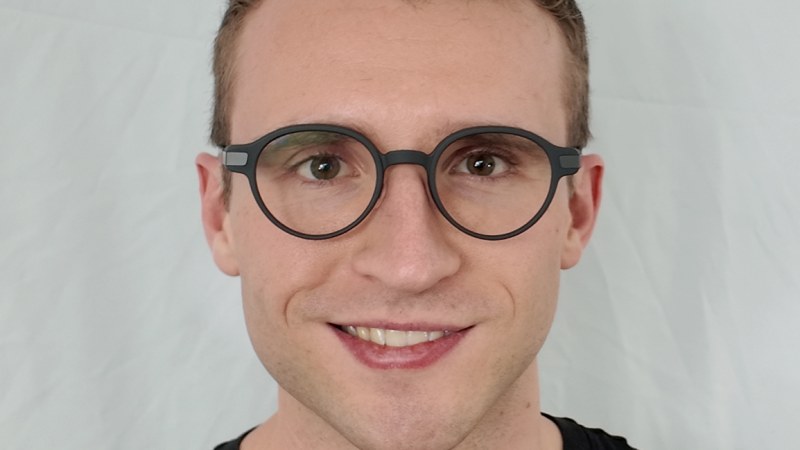
Cayden Pierce
Cayden Pierce is the CEO and co-founder of Mentra, a San Francisco startup building MentraOS - the open-source operating system for AI smart glasses. Described as 'the Android for smart glasses,' MentraOS lets developers write one app and deploy it across any pair of smart glasses. A self-described transhumanist hacker, Pierce built his first DIY smart glasses prototype in his dorm room, worked with smart glasses inventor Steve Mann at the University of Toronto, researched proactive AI wearable agents at MIT Media Lab under Pattie Maes, converted a 40-year-old RV into a mobile hacker lab, and dropped out of MIT in 2024 to launch Mentra. The company raised an $8 million seed round backed by the co-founders of Android, YouTube, and Pebble, plus Y Combinator, Amazon, and Toyota Ventures.

Honghao Deng
Honghao Deng is the CEO and co-founder of Butlr, a San Francisco-based Physical AI company that uses anonymous thermal sensors to understand how spaces are occupied - without cameras or personal data. A Harvard GSD MDes graduate and MIT Media Lab researcher, Deng spun Butlr out of MIT in 2019 alongside co-founder Jiani Zeng. The company has raised over $105M in venture funding, deployed 30,000+ sensors across 22 countries, and processes 1 billion data points daily. Deng is a Forbes 30 Under 30 honoree (2022), a World Economic Forum Technology Pioneer, and the inventor of 'Illusory Material' - a multi-material 3D printing breakthrough named one of TIME Magazine's 100 Best Inventions of 2021.