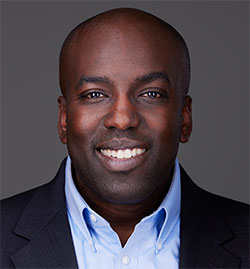
The patient maker who kept his eye on one idea
Robert Frederick runs Sirqul, a Seattle company built on a single stubborn belief: that people, places and things should talk to each other without anyone doing the heavy lifting. It is the same sentence he has been repeating, in one form or another, since 1993. The technology finally caught up to him.
Sirqul is an Engagement-as-a-Service platform - a stack of hundreds of APIs, dozens of microservices, and a handful of patented edge devices that let a retailer, a stadium, a hospital or a fleet operator stand up a connected application without wiring it all from scratch. Frederick founded it in 2013 and has spent the years since expanding the catalog: from tens of services to more than 600 APIs, 93 microservices, and roughly 30 white-label templates that drop into an industry and start working.
What makes him worth reading is not the current product spec. It is the through-line. Most founders pivot. Frederick found his thesis young and refused to let go of it, riding it through Amazon, through the birth of cloud computing, through a voice startup that hit five million users, and out the other side into his own company. He is a serial entrepreneur who has really only had one idea - and it turned out to be a big one.
Start at the beginning, because it explains everything. Frederick grew up inside the Maker community of the 1970s and 80s - Heathkit, Radio Shack, Jameco - back when "maker" was not a movement or a magazine but just a kid with a soldering iron and a catalog. That childhood wired his instincts. When he got to MIT, he gravitated to the Media Lab and to a small startup working on a wireless standard that the world would later name Bluetooth. He was interested in connected devices before there were connected devices to be interested in.
He built Amazon Anywhere and helped push AWS out the door
Before Amazon was an everything-store colossus, Frederick ran a company called DeviceTalk.com. Its central server used intelligent agents with event-based logic - commands and conditional triggers, the automation grammar that now underpins Sirqul. Amazon acquired it in 1999, and Frederick stayed to lead Amazon Anywhere, the company's first mobile commerce initiative, across the US, Europe and Asia. This was 1999. The iPhone was eight years away. He was figuring out how to let people shop from a phone before phones could really do anything.
Then came the bigger swing. Working alongside Colin Bryar, Frederick helped drive the approval and technical framework for what became Amazon Web Services and the AWS Marketplace. He is, by the company's own telling, one of the technical co-founders of the cloud platform that now quietly runs a large slice of the internet. It is the kind of credential most people would build an entire career around. For Frederick it was a chapter.
After Amazon came Snapvine, a voice startup whose Voice Player went from a few beta testers to more than five million registered users, with millions of casual users on top. He also spent time in the world of TidalScale. Each stop was a different surface - mobile, voice, cloud, infrastructure - and each one was really the same project: making it easier for humans and machines to reach each other.
Sirqul, and the idea he never let go of
In 2013 he stopped renting his vision to other people's companies and built his own. Sirqul is the accumulation of everything before it - the maker's love of hardware, the Amazon-scale ambition, the platform thinking of AWS, the consumer reach of Snapvine. The pitch is almost defiant in its simplicity: a full IoT stack "with no heavy lifting," from a solo developer to a Fortune 50 enterprise.
The catalog reads like a maker's fever dream made enterprise-grade. Smart stadiums measuring dwell time. Retail heatmaps. Fleet management and logistics optimization. Connected agriculture. Industrial robotics. Patented location-based edge devices - the edysen line - forming local secure mesh networks that keep working even when the cloud does not. Under it all sits the same event-based logic Frederick first sketched at DeviceTalk in the 1990s, now pointed at agentic AI and on-device intelligence.
He wrote it all down, too. Frederick published a two-part book series on building IoT, mobile and social apps - the manual for the ecosystem he keeps describing. It is a very maker thing to do: build the thing, then hand someone else the schematic.
Solder first
Raised on Heathkit and Radio Shack kits, he was a maker before the word meant anything.
Serial, not scattered
Entrepreneur, author, and music producer - with an IMDb credit to prove the last one.
41 patents deep
Roughly one issued patent for every year he has chased connected devices.
The honest read on Frederick is that he is early to almost everything and patient enough to wait for the world to arrive. Mobile commerce in 1999. Cloud infrastructure at its inception. IoT before the acronym was fashionable. Now agentic swarms at the edge. He has spent thirty years betting that the physical and digital worlds want to merge, and quietly building the connective tissue while everyone else caught up to the premise.
That is the strange, specific truth of Robert Frederick. Not the AWS line on the resume, impressive as it is. It is that a kid with a soldering iron drew one picture of the future and then spent his whole career filling it in - patiently, patent by patent, API by API, until the dream stopped sounding like science fiction and started shipping.