edge-computing
(105)
Permutive Wants Publishers to Sell What They Know
Publishers know their readers. Too often, somebody else gets paid for that knowledge. Permutive is building the software to change the transaction - and now wants AI agents to handle more of the work.
Petrolink wants your oilfield to speak one language
A drilling operation can drown in data and still struggle to make a decision. Petrolink’s bet is that getting everyone onto the same feed can save money before the clever analytics even begin.
The AI Boom Has a Heat Problem. Vertiv Built the Plumbing.
AI chips get the headlines. Vertiv sells the power, liquid cooling and factory-built infrastructure that determines whether those chips can actually run - and its $15 billion backlog shows how physical the digital boom has become.

Qu Is Rebuilding the Restaurant Stack Around the Moment the Wi-Fi Dies
The restaurant-tech company won enterprise chains by treating downtime, menu sprawl and disconnected orders as one systems problem. Now it is turning that plumbing into an AI and payments business.

EPIC iO Bet the Camera Was Never the Point
The Fort Mill company is stitching cameras, sensors and wireless links into one operating layer for remote sites - a useful idea whose economics depend less on magical AI than on good placement, clean signals and humans who still make the call.
Fastly Put the Internet on Fast-Forward. Then One Customer Found the Brake.
Fastly made a business of shaving milliseconds from the web and giving developers unusual control over the edge. Its biggest outage showed the bargain hiding inside that speed - and its recovery offers a practical playbook for anyone building critical infrastructure.

The Software Company You Notice Only When Everything Goes Wrong
Wind River put an operating system on Mars, watched it stumble, and helped patch it from Earth. Four decades later, its business still rests on the same promise: make complicated machines behave when the deadline is literal.
DataCore’s 28-Year Bet: Your Storage Hardware Isn’t the Product - Control Is
DataCore built a business by telling IT teams to keep the expensive storage they already own. Now, after acquisitions and a Kubernetes push, it is trying to make the same anti-lock-in argument from the data center to the edge.

Enes Akar Is Making the Database Disappear
After two decades inside distributed systems, the Upstash co-founder has turned an engineer’s irritation with idle infrastructure into a company built for code that appears, runs and vanishes.

John Lin Spent Decades Teaching Cameras to See. Now He Wants Machines to Know Where They Are.
Before spatial computing became a slogan, John Lin was studying the stubborn physics of camera-phone images. His second act turns that patience into compact vision systems for robots and mixed-reality glasses.

Eric Chen Put a Computer in the Ceiling - Then Waited for the Edge to Catch Up
After two decades inside networking companies, Eric Chen founded Relay2 around a practical provocation: the Wi-Fi access point already hangs where data is born, so why should every useful computation make a round trip to the cloud?

Blues Put 10 Years of Connectivity in a Tiny Card - So Hardware Teams Can Skip the Telecom Homework
Ray Ozzie’s latest company turns the messiest parts of industrial IoT into a small module and a JSON request. The payoff is speed; the tradeoff is that Blues works best when machines whisper useful data, not when they stream the world.

Shekar Ayyar Is Betting the AI Boom on the Part Nobody Sees
After helping VMware turn strategy into more than 60 deals, Shekar Ayyar chose a smaller stage and a harder problem: freeing networks from the boxes that contain them. Now AI is making his once-technical argument feel rather urgent.

Meghan Easley-Park Makes the Messy Middle Work
Before edge AI and e-ink glasses, there were pencils taped into a prototype. Meghan Easley-Park has built a career around the same practical instinct: take an ambitious idea, ask what it is for, then make it work in the real world.

John Bevilacqua Spent 13 Years Making Space Electronics Smaller - Then Trident Came Calling
The Ibeos founder built the unglamorous electronics that keep ambitious spacecraft useful. An Air Force research program, a 40-watt space computer and a 2026 acquisition reveal his practical theory of innovation: listen closely, shrink the hardware and earn the right to fly.

Vinay Nathan Has Spent 13 Years Teaching Factories to Tell the Truth
Before factory AI can sound clever, someone has to connect the old machines, clean up the records and prove the software pays. Vinay Nathan built Altizon around that less glamorous - and more useful - work.

Sam Enoka Is Putting the Cloud Where the Current Already Runs
Raised in North Pole and seasoned in finance and electricity markets, the Greensparc founder has a practical wager: remote communities should host the computing their power can support.

Nikhil Bharadwaj Put the Cloud on Notice
The Xeal co-founder learned EV charging’s least glamorous lesson in concrete garages: if the network disappears, the product cannot. His answer was to move the essential work closer to the plug.

Roger Dewey Put the Tiny SIM Card in Charge
For decades, telecom treated the SIM as a passport. Roger Dewey saw a pocket-sized computer - and built a company around letting it make decisions.

Adam Fish Is Building for the Moment the Network Disappears
A failed connection used to look like an error message. Fish turned it into a company - one built on the idea that phones, tablets and machines should keep working together when the cloud cannot.

Able Device Bet the Tiny SIM Card Could Run Your IoT Fleet. Now the Market Is Catching Up.
For 16 years, a nine-person Raleigh company has argued that the most underused computer in telecom is already inside the device. SIMbae turns that overlooked chip into a programmable traffic cop for connected fleets - with no new hardware and far less Java Card work.
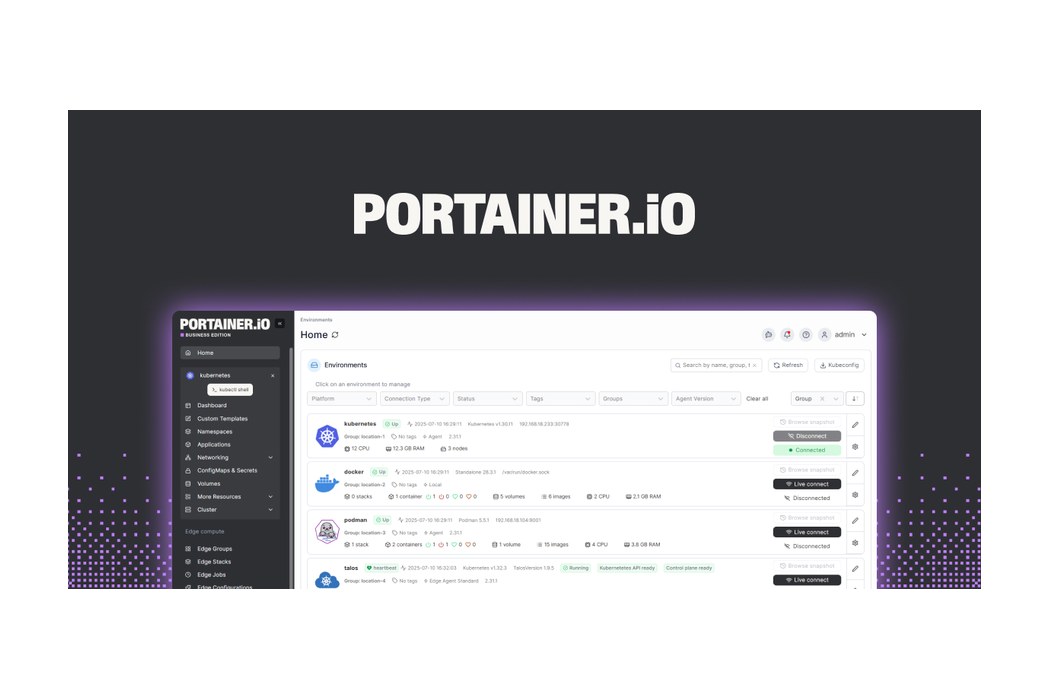
Portainer Turned Kubernetes Expertise Into a Button - Now 1 Million Users Want the Shortcut
The Auckland company started by taking the migraines out of Docker. Its bigger business is selling operational control to teams that cannot afford to make every employee a Kubernetes expert.

Xeal’s Contrarian Bet: The Best EV Charger Is the One That Ignores the Internet
After its first connected chargers stranded drivers and drew hate mail, Xeal spent two years moving the transaction off the cloud. The result is a real-estate-first charging business built for the place Wi-Fi goes to die: the parking garage.
The Colorado Startup Teaching Your Phone to Diet on Netflix
Video eats the wireless network alive. A husband-and-wife team on Colorado's Western Slope built AI that puts it on a diet - on the device, before it ever clogs the tower.

MaiaEdge Wants to Turn the Internet’s ‘Big Middle’ Into a Push-Button Business
Private connectivity still gets negotiated by spreadsheet and activated on telecom time. MaiaEdge’s hardware-and-software bet is that operators can turn months of coordination into minutes - without handing the customer to somebody else.

Ibeos Put CubeSat Economics Into Serious Space Hardware - Then Trident Bought the Factory
The Virginia spacecraft supplier spent 13 years turning radiation-tolerant power, batteries and computers into configurable products. Its March 2026 sale to Trident shows what happens when a small engineering shop makes the least glamorous parts of a satellite easier to buy.

When Heavy Machines Break, Elevāt Makes Them Talk Back
The Seattle startup wires up off-highway equipment - tractors, cranes, fire trucks - and hands technicians an AI that reads the machine's mind before anyone opens the panel.

The Open-Source Company That Quietly Runs Other People's Clouds
It bet on OpenStack, bought Docker Enterprise, and now wants to turn your GPUs into an AI factory - all without locking you in. In August 2026, IREN bought the whole thing for $625 million.

Altizon Gave the Factory Floor a Brain That Talks Back
A Princeton-and-Pune software company spent a decade wiring up shop floors. Now it is betting the most useful worker in the plant will be a piece of software you can talk to.

Blue Pillar Made Old Machines Talk - Then Generac Bought the Conversation
Hospitals, utilities and microgrids were full of useful machines that could not share data. Blue Pillar found a practical business in connecting the awkward old stuff - often in days, sometimes for a few thousand dollars - and became part of Generac in 2022.