BREAKINGLOOKOUT 3.0ships AI marine safety to recreational + commercial vessels///IBEX 2025Innovation Award, OEM Electronics///100+systems deployed worldwide///MoMAholds his Ambient Orb///CES 2025David Rose talks AI + IoT///5xfounder, 2x author///
Founder · Author · Inventor

David
Rose

He spent two decades teaching machines to see. Now he's bolting that sight onto the helm of your boat with LOOKOUT - the marine AI that spots whales, debris and people in the water before you can.

# marine AI# augmented reality# computer vision# ex-MIT Media Lab# enchanted objects
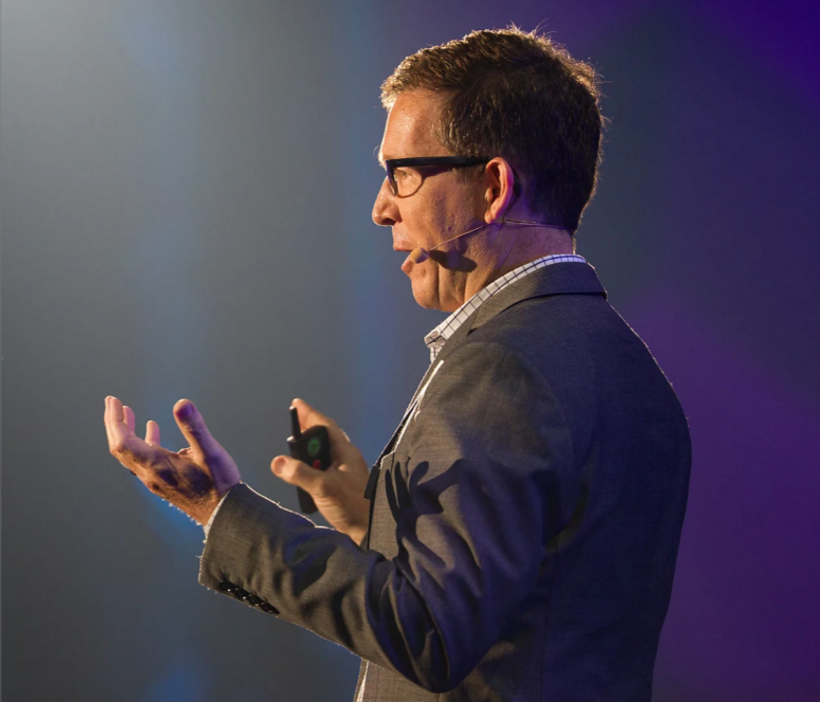
David Rose, founder and CEO of LOOKOUT The man who teaches gadgets manners.
The Helm, 2026

A boat that finally sees

Ask most captains what scares them on a dark night and they will say the same thing: the log you cannot see, the kayaker without lights, the whale surfacing where it has no business being. David Rose looked at that fear, then looked at his car - which already brakes for pedestrians and beeps at curbs - and asked the question that became a company. Why does a $40,000 sedan have better eyes than a $400,000 yacht?

LOOKOUT, the Boston company he co-founded in 2020 and runs as CEO, is his answer. It is a camera and a "brain" that fuse computer vision, radar, AIS transponder data and nautical charts into one calm, 3D augmented-reality view. Instead of a captain juggling four screens, LOOKOUT paints the hazards directly onto a live picture of the water and tells you, in plain terms, what is out there and whether it matters.

By late 2025 the system had landed in more than 100 vessels worldwide, plugged straight into marine electronics from Garmin, Furuno, Raymarine and Simrad, and won the IBEX Innovation Award for OEM Electronics - chosen from 112 entries by a jury of marine writers. Then came LOOKOUT 3.0, which hovers a virtual drone above your boat and raises 3D "shallow fences" out of the seabed as you near it.

The hardware reads like a wish list a frustrated captain might scrawl on a napkin. A dedicated infrared sensor for night vision, so a drifting log shows up at 2 a.m. Wide-angle and zoom optics. A 360-degree panorama that stitches the whole horizon into one band. The premium camera-and-brain package sells in the five figures, which tells you the boats it is built for - and the lives, and hulls, it is built to protect. Version 3.0 layers on an adjustable overhead "Aerial View," depth fences that rise with your draft, and light-and-audio alerts that get louder as a hazard gets closer.
100+
vessels running LOOKOUT
5
companies founded
2
books published
12
years lecturing at MIT

"Why don't boats have the intelligent display systems that are standard in modern cars?"

- The question that started LOOKOUT
How the magic works

Four senses, one view

LOOKOUT's trick is not any single sensor. It is the fusion - taking inputs that normally live on separate displays and stitching them into a single picture a tired captain can read at a glance. A radar return tells you something is out there. AIS tells you it is a tanker named and tracked. The camera shows you the thing nobody is broadcasting: the paddleboarder, the half-submerged container, the dark shape that turns out to be a whale. Charts anchor it all to the seabed below. Alone, each input is noise. Together, they are situational awareness.

SEE
Computer Vision
SENSE
Radar Fusion
IDENTIFY
AIS Data
LOCATE
Chart Data
RESULT
One 3D augmented-reality view + night vision

Good technology should feel like a sixth sense - not another screen to stare at.

A working philosophy traced across every company he has built.

Before the water

The orb that lived in a museum

Long before marine AI, Rose was famous for a glowing glass ball. The Ambient Orb, invented at his MIT Media Lab spin-off Ambient Devices in 2002, sat on a desk and slowly shifted color to tell you the stock market was sliding or rain was coming. No app, no notification, no demand for attention. It was so quietly radical it ended up in the permanent collection of the Museum of Modern Art.

That orb contained his whole career in miniature. Rose has chased one idea for thirty years: technology that disappears into the objects and rooms we already love. He gave it a name in his 2014 book - "enchanted objects" - and the phrase stuck.

The path there was anything but straight. He helped bring LEGO Mindstorms to life. He filed an early patent on online photo sharing - the kind of foundational idea most people assume always existed - and founded Ophoto on the back of it before it was acquired. He built GlowCap, a cellular pill cap that glowed and chimed until you took your medicine and pushed adherence past 90% in trials, won a Medical Design Excellence Award, and is now sold through CVS, Walgreens and Express Scripts. He ran the computer-vision company Ditto Labs, then led vision technology at Warby Parker, where he built the virtual try-on that lets you fit glasses with your phone's camera using its depth-sensing front camera.

Rose was raised between the Midwest and the East Coast - born in Chapel Hill, schooled in Madison - and studied an unusual pairing of physics and fine arts at St. Olaf College before a master's in technology in education at Harvard. That combination of the analytical and the aesthetic is the tell. He is an engineer who cares how a thing feels in the hand, and a designer who can read the math behind the screen. The result is a body of work that keeps showing up in museums as often as in stores: the GlowCap reached London's Design Museum, and his pieces have featured in the Boston Museum of Science.

The pattern

Make machines polite

String his ventures together and a through-line appears. A lamp that knows the weather. A pill bottle that knows you forgot. Eyeglasses that know your face. A boat that knows the whale. Each one takes something complicated and hides the complexity, leaving only a gentle nudge.

He is not a screens person. For a technologist, that is almost heretical. But it explains why a man who could build dashboards instead spends his time making them unnecessary.

Rose lectured at the MIT Media Lab from 2008 to 2020, co-teaching alongside Hiroshi Ishii's Tangible Media Group and Kent Larson's City Science group, and even taught a course called "Enchanted Architecture" at MIT's School of Architecture and Planning. He has also taught at the Copenhagen Institute of Interaction Design and advised the Dubai Institute of Design and Innovation. When Enchanted Objects came out, he ended up on The Daily Show with Jon Stewart; his work was popular enough to be parodied on The Colbert Report. He followed it in 2021 with SuperSight, on augmented reality, which won a National Indie Excellence Award.

He keeps a foot in the speaking world, too - a regular on stages from CES to TEDx, represented for keynotes by The Lavin Agency, and the kind of futurist companies invite in when they want to know what is coming rather than what already shipped. The catalog of patents underneath all of it is long: photo sharing, ambient information displays, connected medical devices, dynamic lighting, and, fittingly for his current chapter, obstacle avoidance. The boat company was not a swerve. It was the next object waiting to be enchanted.

"He translates complex technology into products people instantly understand."

- The reputation that follows his name
The portfolio

Five companies, one obsession

Interactive Factory
1992
Early studio that helped create the LEGO Mindstorms Robotic Invention System.
Ophoto
1997
Patented an early online photo-sharing service; later acquired by Flashpoint Technology.
Ambient Devices
2002
MIT Media Lab spin-off behind the Ambient Orb - the glowing object now in MoMA.
Vitality / GlowCap
2008
The first cellular-connected pill cap; 90%+ adherence in trials, now in major pharmacies.
Ditto Labs
2012
Computer-vision pioneer reading brand logos in photos. He served as CEO.
LOOKOUT
2020 - present
Marine AI vision for collision avoidance. His current company, where he is CEO.

He has also served as VP of Vision Technology at Warby Parker, futurist-in-residence at IDEO, and a Samsung and Gensler Fellow.

The long arc

A career in milestones

1989 - 1992
Physics & fine arts at St. Olaf; a master's in technology in education at Harvard.
2002
Co-founds Ambient Devices; invents the Ambient Orb.
2008
Launches Vitality & GlowCap; begins lecturing at the MIT Media Lab.
2014
Publishes Enchanted Objects; appears on The Daily Show.
2017
Joins Warby Parker as VP of Vision Technology.
2020
Co-founds LOOKOUT, taking AI vision to the water.
2021
Publishes SuperSight on augmented reality.
2025
Speaks at CES; LOOKOUT wins IBEX award and launches 3.0.
On the page

Two books

Enchanted Objects
Scribner · 2014
Design, human desire, and the Internet of Things. A case for spreading intelligence into ordinary objects instead of one glowing rectangle.
SuperSight
BenBella · 2021
What augmented reality means for our lives and work. Winner of a National Indie Excellence Award.

He is at work on a third, on human-AI collaboration.

Off the record

Things you didn't know

01
A gadget he invented - the Ambient Orb - hangs out in the Museum of Modern Art.
02
He helped bring LEGO Mindstorms to life early in his career.
03
His GlowCap pill cap is distributed through CVS, Walgreens and Express Scripts.
04
Both of his books have deliberately magical titles: Enchanted Objects and SuperSight.
05
He once carried the title "futurist-in-residence" at the design firm IDEO.
06
LOOKOUT plugs straight into Garmin, Furuno, Raymarine and Simrad hardware.
Where it's headed

Bring the calm intelligence of a self-driving car to everyone on the water.

Rose wants the kind of driver-assistance sight that protects drivers to protect boaters too - making the water safer, and boating itself a little more accessible to the people who never felt confident enough to leave the dock. The same instinct that put a glowing orb on a desk and a chiming cap on a pill bottle now points at the open ocean: take the part that scares people, hand it to a machine that never blinks, and give the human back the joy of the thing. Twenty-four people now work toward that at LOOKOUT's Boston base, building for both the weekend cruiser and the commercial fleet.

It is a tidy bookend for a career that started by teaching plastic bricks to think. From LEGO Mindstorms to a museum-grade orb to a pill cap that nags you kindly to a boat that watches the water so you do not have to - the medium keeps changing, the mission never does. David Rose has spent thirty years proving the same quiet point: the best technology is the kind you forget is there.