Profile / Clean Mobility / Brooklyn
Som Ray
The architect who refused to buy an e-bike, and built the missing part instead.
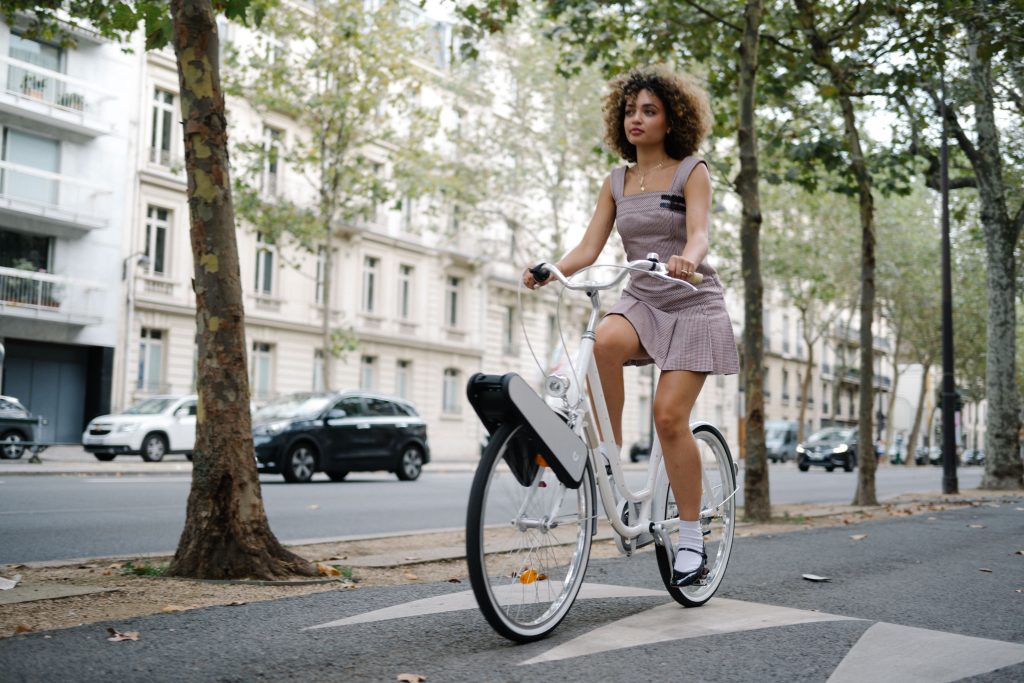
Som Ray, co-founder and CEO of CLIP - the device he built clips onto a front wheel and disappears into the ride.
The architect who refused to buy an e-bike, and built the missing part instead.
Most people see a billion dormant bicycles and think nothing. Som Ray saw a billion e-bikes waiting for one missing part. So he built it. CLIP is a palm-sized device that clips onto a regular front wheel and turns a mechanical bicycle into an electric one in the time it takes to lock the bike up. No tools. No bolts. No leaving the thing at a shop for a week.
Ray is the co-founder and CEO of CLIP, the Brooklyn clean-mobility company behind that device. He calls himself a design technologist, which is the honest label for someone who has spent two decades sliding between software, hardware, architecture, and the unglamorous physics of getting a wheel to spin. The pitch fits in a breath: clip it on, ride, clip it off.
What makes the idea stick is the restraint. A conventional e-bike asks you to throw away a working bicycle and buy a heavy new machine. CLIP asks you to keep the bike you love and add the only thing it lacked. The product is defined as much by what Ray left out as by what he put in.
I had a new bike, so I didn't want to buy an e-bike. A typical e-bike is overkill.- Som Ray, on the commute that started CLIP
The villain in the CLIP origin story is a street: Vanderbilt Avenue in Brooklyn, and its long, unforgiving uphill gradient. Ray had bought a new bike to commute to work. He loved it. Then the hill kept happening, every single day, and the commute curdled into a chore.
The obvious fix was to buy an e-bike. Ray refused. He had just invested in a bicycle he actually liked, and a full e-bike felt like spending a fortune to solve a small, specific problem. So he flipped the question. Instead of replacing the bike, what if you could add power to it for the moments you need it, then take the power back off?
That is the whole company in one mental move. CLIP is not a better e-bike. It is a refusal to throw the old one away. Ray frames the mission in platform terms: "The goal is to create a platform so all those dormant bicycles lying around can be turned into a dependable mode of personal, low-cost mobility."
He founded CLIP in 2018 with Clement De Alcala. The early company ran on grants and conviction more than capital, and the device went through the slow, expensive grind that hardware always demands before it earns the right to look simple.
Existing conversion kits make you take the bike apart - swap a wheel, run cables, mount a battery. CLIP deletes that ritual. It presses against the front tire and drives it by friction, so installation is a gesture, not a project.
Hook the device onto the front fork. No wrenches, no fasteners, no pre-installed brackets.
A trigger feeds power through a friction drive on the tire. The bike you know, now with a tailwind.
Pull it back off and carry it inside. The bike stays a bike; the power comes with you.
Ray likes to point out the logistics math: you can ship roughly 30 CLIPs in the volume of a single e-bike. Less box, less freight, less waste. By his account that is about one-fiftieth the logistics impact of a conventional e-bike.
The pitch is not abstract virtue. It is that the cheapest, cleanest e-bike is almost always the one already chained to a railing - it just needed a part.
Ray did not arrive at micromobility by accident. He was trained as an architect in New Delhi and New York, then moved to the United States in 2004 for graduate study, earning a master's at Columbia and another at MIT, where he worked inside the Media Lab's Smart Cities group. Cities, and how people move through them, were the through-line long before CLIP had a name.
In 2009 he went back to India to build electric auto rickshaws - an EV bet placed years before India's EV boom made that bet look obvious. The funding did not follow the foresight, and the venture stalled. He pivoted into an award-winning design consultancy and a software company serving large US corporations.
Along the way he won MIT Technology Review's TR35, its honor for top innovators under 35, for an ultra-low-cost wheelchair. The pattern is hard to miss: take an essential machine, strip out the cost, hand mobility to more people. CLIP is the same instinct pointed at the bicycle.
We are not simply building a novel consumer product. We are in the business of building a clean-mobility platform.- Som Ray
"The goal is to create a platform so all those dormant bicycles lying around can be turned into a dependable mode of personal, low-cost mobility."
"I had a new bike, so I didn't want to buy an e-bike. A typical e-bike is overkill."
Ray is careful about the word product. He talks about CLIP as infrastructure - a way to electrify the world's existing bicycles so that affordable, low-waste mobility expands access to jobs, education, and community instead of just adding another thing to buy.
In January 2025, Dezeen profiled CLIP as a portable converter that turns a mechanical bike into an e-bike "in a number of seconds." Two months later, Ray was billed to speak at What Design Can Do's Live Delhi event - back near where his rickshaw chapter began, this time with a device that fits in a backpack and a story that finally has traction.
The thread holding it all together is almost stubborn in its simplicity. Keep the bike. Add the part. Take it back off. Som Ray spent twenty years learning how to make essential machines cheaper, and pointed that knowledge at the most common vehicle on earth.
- Keep the bike. Add the part.