MentraOS
Open-source operating system with a full SDK and developer console. Runs on Mentra Live, Even Realities, Vuzix, and growing.
The open-source operating system that wants to do for smart glasses what Android did for the phone - quietly, stubbornly, and in 43 grams.
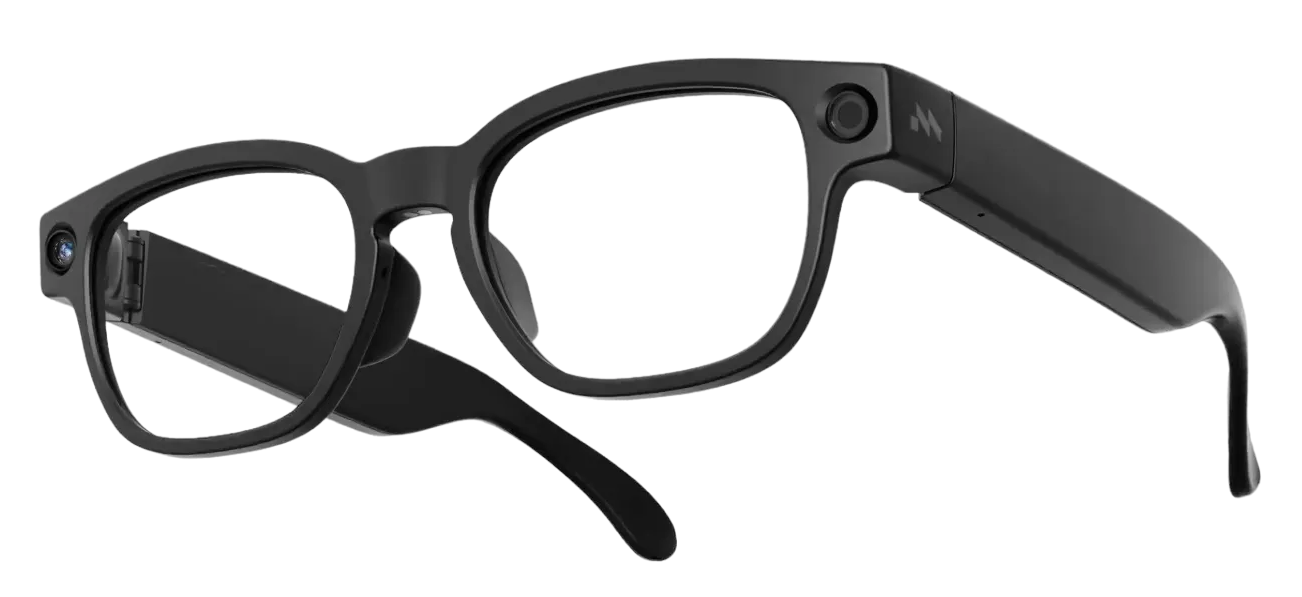
On any given Tuesday in a South of Market office, a 15-person team is doing the unfashionable work of making a category honest. Cayden Pierce is on a call with a developer in Berlin. Alex Israelov is on Slack with a factory floor in Shenzhen. A pair of Mentra Live glasses charges on a wooden desk, near a half-eaten burrito and a stack of return-merchandise envelopes that are conspicuously empty.
Mentra is the smallest serious company in smart glasses, and the only one that ships a real app store. That is the entire thesis, and it is a quietly radical one. The bet: the hardware moment for face computers has finally arrived, but the software moment hasn't - because nobody has been allowed to build for them. Mentra is asking the obvious question that the giants keep dodging. What if developers were treated like first-class citizens? What if the glasses on your face ran an open OS instead of someone else's roadmap?
The answer, so far, is a 43-gram device, an SDK on GitHub, and an $8 million seed round from people who have done this trick before - the founders of Android, YouTube, and Pebble; the venture arms of Amazon and Toyota; Y Combinator's Paul Graham personally. They are not betting on a gadget. They are betting on a platform.
The hardware exists to prove the software is real. The software exists so the hardware isn't a dead-end. Both are open and both are shipping.
Open-source operating system with a full SDK and developer console. Runs on Mentra Live, Even Realities, Vuzix, and growing.
43-gram AI camera glasses. 12MP / 119-degree lens, stereo audio, video-stabilized livestreaming, 12+ hour battery, $349.
An actual app marketplace for smart glasses. Live captions, real-time translation, AI assistants, notes, chess, more.
The toolkit nobody else gives you - camera, mic, and AI access on a face computer, on iOS and Android, openly documented.
"Smart glasses will only reach their full potential if the ecosystem remains open, accessible, and community-driven."- Cayden Pierce, Co-founder & CEO
The first pair of smart glasses Cayden Pierce ever made was bolted together in a college dorm in 2018, when smart glasses were still a punchline. He kept building them. By 2022 he was posting on Reddit. A computer-science student named Alex Israelov, who had been doing roughly the same thing in Hong Kong and Shenzhen, replied. They began collaborating on OpenSourceSmartGlasses - hardware you could solder yourself - and demoed it at CES in 2023.
The reception was loud enough that the obvious next question started to ask itself. The hardware was almost there. What was missing wasn't a better camera or a thinner frame. It was an operating system that anyone could write apps for. So in 2024, Cayden dropped out of MIT Media Lab, Alex left his spatial-computing job, and Mentra became a company. Y Combinator put them in the Winter 2025 batch. Eighteen months later they had $8 million and a shipping product.
This is the kind of origin that sounds tidy on a slide and was, in practice, anything but. The two founders did not meet in person for months. They argued about firmware over voice notes. They learned the entire consumer-hardware supply chain by failing at it on schedule. The thing that holds it together is taste - a shared, almost religious conviction that the future face computer should belong to the people wearing it.
The cap table is the press release. When the people who built Android, YouTube, and Pebble all write the same check, the round stops being about capital and starts being about benediction.
Mentra Live is a vessel. The interesting story is what shows up in the MiniApp Store and on real job sites.
Repair, inspection, and service teams use hands-free AI to document and diagnose without putting tools down.
Real-time captions for the deaf and hard-of-hearing. Real-time translation for everyone else.
Stream point-of-view video to X, YouTube, Twitch, or Instagram without a rig.
The glasses listen, the cloud transcribes, the assistant remembers - on your terms, not Meta's.
Cayden Pierce on building the open OS for the next computing platform.
Watch on YouTube →Product demos, SDK tutorials, field deployments and developer talks.
Browse channel →It's still Tuesday in SoMa. The burrito is gone. The Berlin developer just shipped a translation app. Alex is on a video call with the factory, holding a frame up to the light. The pair of Mentra Live on the desk is no longer charging - someone in the next room is wearing them, walking around, narrating notes into thin air. The desk that used to hold a prototype now holds a product. The glasses that used to belong to a dorm-room hobbyist now run an OS that other companies' glasses are starting to run too. The room is small. The bet is not. Mentra is doing the patient, unflashy work of turning a category that has been promised for a decade into something a person can put on, take off, and forget about - which is the only thing a computer is ever really meant to do.