Breaking Jawed Karim uploaded YouTube's first video on April 23, 2005 - a 19-second clip at the San Diego Zoo  •  His YouTube channel has 6.09 million subscribers and exactly one video  •  His $30K Airbnb seed investment is now worth an estimated $141M+  •  He criticizes YouTube via the description box of "Me at the zoo"  •  V&A Museum London acquired "Me at the zoo" for its permanent collection in February 2026  •  Emmy Award for Lifetime Achievement, 2019  •  Youngest commencement speaker in University of Illinois history  •  Net worth estimated at $300-350 million  •  Breaking Jawed Karim uploaded YouTube's first video on April 23, 2005 - a 19-second clip at the San Diego Zoo  •  His YouTube channel has 6.09 million subscribers and exactly one video  •  His $30K Airbnb seed investment is now worth an estimated $141M+  •  He criticizes YouTube via the description box of "Me at the zoo"  •  V&A Museum London acquired "Me at the zoo" for its permanent collection in February 2026  •  Emmy Award for Lifetime Achievement, 2019  •  Youngest commencement speaker in University of Illinois history  •  Net worth estimated at $300-350 million  • 
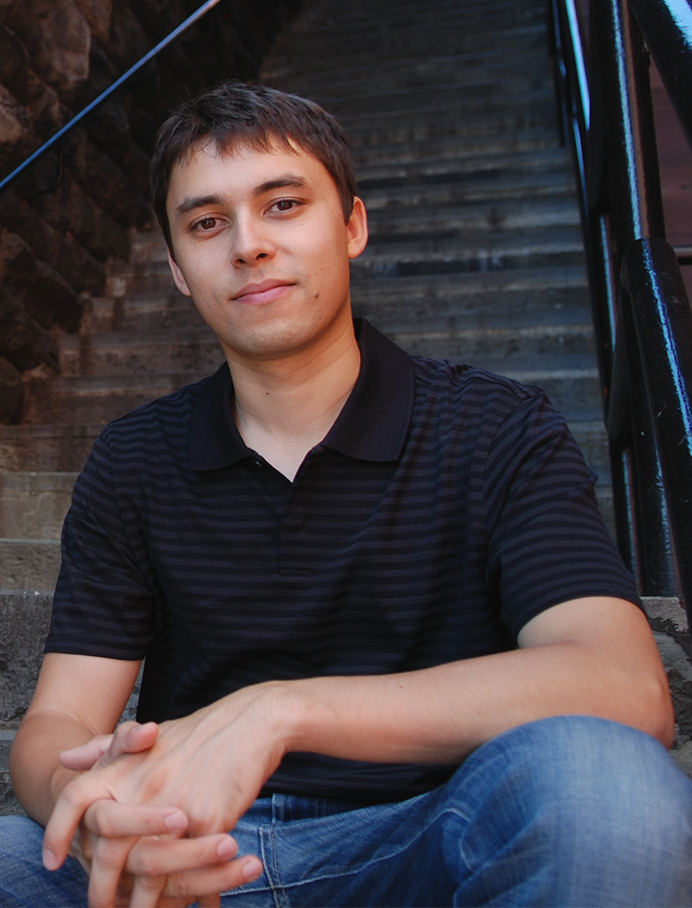
Jawed Karim, YouTube co-founder
Jawed Karim - The Quiet One Who Built the Loudest Platform on Earth

YouTube Co-Founder  /  Investor  /  Internet Pioneer

Jawed
Karim

He filmed 19 seconds at a zoo. The world watched for 389 million views. He hasn't uploaded since.

YouTube Co-Founder PayPal Mafia Y Ventures Partner Emmy Award 2019 Born 1979, Merseburg
389M Views on 1 video
$1.65B YouTube acquisition
22+ Investments made
1 Video uploaded
6.09M YouTube subscribers
$141M+ Airbnb seed stake value
2005 YouTube founded
19s Duration of first video
$350M Estimated net worth

The Man Who Said
"Really, Really Long Trunks"


There is a video on YouTube. Nineteen seconds. A young man stands in front of two elephants at the San Diego Zoo, filmed by his high school friend Yakov Lapitsky. He is not charismatic. He does not look at the camera for long. He says the elephants have "really, really, really long" trunks. Then it ends. This unremarkable footage, uploaded on April 23, 2005 at 8:27 PM Pacific Time, is now in the permanent collection of the Victoria and Albert Museum in London.

The man is Jawed Karim. He did not plan for the video to be historic. It was a test upload - a proof that the system he helped build actually worked. And yet it did more than work. It became the origin point of a platform that now serves over 500 hours of video per minute and defines how two billion people spend their attention.

"Me at the zoo"
The first video ever uploaded to YouTube. April 23, 2005. San Diego Zoo, California.
389M+Views
19sDuration
6.09MSubscribers
4.5MLikes on Zoo's comment

Karim was born on October 28, 1979, in Merseburg, East Germany - a city then behind the Iron Curtain. His father, Naimul Karim, was a Bangladeshi researcher working for 3M. His mother, Christine Karim, was a German biochemist and later a Research Professor at the University of Minnesota. The family fled East Germany in the early 1980s after experiencing racial violence and discrimination - first to Neuss in West Germany, where more discrimination followed, and then in 1992 to Saint Paul, Minnesota. Jawed grew up in Maplewood, a suburb where he became, by his own account, best known not for technology but for a high school philosophy course.

"The thing I was best at in high school was not really related to technology," he said. "I took a philosophy course where I was encouraged to do whatever I wanted with the final paper." For a man who rarely speaks in public, this detail is revealing. He is not primarily a technologist who codes. He is a thinker who happens to code exceptionally well.

"Our users were one step ahead of us. They began using YouTube to share videos of all kinds. Their dogs, vacations, anything. We said: 'Why not let the users define what YouTube is all about?'"

- Jawed Karim, on YouTube's pivot from dating site to platform

He enrolled at the University of Illinois at Urbana-Champaign in 1997, left partway through to join PayPal as an early engineer, and eventually completed his degree in 2004. At PayPal, he designed the real-time anti-internet fraud system - architecture that protected billions of dollars in transactions before the company was even three years old. It is also where he met Chad Hurley and Steve Chen. Three men who built one of the most consequential pieces of infrastructure in modern life, and they met at a payments startup run by a guy who later became an electric car magnate.

The inspiration for YouTube came from two moments of frustration in 2004. First, Karim couldn't find footage of the Janet Jackson wardrobe malfunction from Super Bowl XXXVIII online. Then he couldn't find video of the Indian Ocean earthquake and tsunami, which killed 230,000 people. Both events were witnessed by cameras - and both were inaccessible on demand. Karim understood that the internet had a video problem, and he believed he knew how to fix it.

YouTube was incorporated on February 14, 2005 - Valentine's Day. The original concept, almost comically at odds with its future, was a video dating site. The founders were so desperate for content that they posted on Craigslist offering women $100 to upload a video. Nobody did. Then something unexpected happened: users started uploading their pets, their vacations, their skateboarding fails, their teenagers doing strange dances. The founders stepped back and let the platform define itself. This instinct - to follow the user rather than the plan - is what separates YouTube from every other video site that launched in 2005.

When Google acquired YouTube in October 2006 for $1.65 billion in stock, Karim had already enrolled as a graduate student at Stanford. By choice, he had not been an employee of YouTube - he served as an informal adviser, taking a smaller equity stake than Hurley and Chen. He received 137,443 Google shares, worth approximately $64 million at closing. He quietly headed to campus. For most of the press, Karim did not exist until the acquisition papers revealed his name.

This is the essential Karim: present at every critical juncture, and invisible by design.


The Investor Who Doesn't Need Press

At Stanford, Karim co-founded Youniversity Ventures in March 2008 with Keith Rabois and Kevin Hartz - two other PayPal veterans. The fund's thesis was early-stage bets on students and alumni of Stanford and the University of Illinois. It was a strange, specific idea. It worked.

In April 2009, Youniversity Ventures participated in Airbnb's $600,000 seed round. Karim's stake was approximately $30,000. Airbnb went public in December 2020 at a valuation that made that $30,000 worth over $141 million. This is not an anomaly. His portfolio includes Reddit, Palantir, Eventbrite, Gusto, Postmates, and over twenty other companies. The fund was renamed Y Ventures and continues to make bets in enterprise software, fintech, and consumer technology. His most recent documented investment was in Wavedash, a Seed round in December 2025.

What Karim does not do is talk about any of this. He gives no interviews. He has no active Twitter presence. His Instagram exists but sits idle. His website doesn't load. His preferred communication channel - used only for the most important dispatches - is the description box of "Me at the zoo."

"why the fuck do i need a Google+ account to comment on a video?"

- Jawed Karim, via the "Me at the zoo" description box, November 2013

When YouTube integrated Google+ for comments in 2013, he updated the video description with that exact sentence. The tech press noticed. YouTube quietly backed away from the Google+ integration over the following months. When YouTube removed public dislike counts in November 2021, he wrote: "When every YouTuber agrees that removing dislikes is a stupid idea, it probably is. Try again, Youtube." He was right about that too.

In December 2023, he briefly changed the thumbnail of "Me at the zoo" to a clickbait MrBeast-style image - a wink at YouTube's attention economy that lasted two weeks before he reverted it. In February 2025, he used the same description to warn about the dangers of microplastics to brain health. Each update is a small event in tech circles. The man who built the platform has turned his single upload into the world's most unusual op-ed column.

The Victoria and Albert Museum in London acquired "Me at the zoo" in February 2026 - not just the video, but a reconstructed version of the early YouTube webpage, developed over 18 months by the museum's digital conservation team. The first upload to the world's video platform is now a museum piece. Karim, characteristically, said nothing publicly about this.

He is 46 years old, built in East Germany, raised in Minnesota, educated at Illinois and Stanford, enriched by Google and Airbnb, honored by the Television Academy. He is trilingual. He is reclusive. He is quietly, persistently right about the things that matter in technology - and he has demonstrated that you do not need to be loud to be consequential. The elephants in his video have trunks that are really, really, really long. That's still cool.

From East Germany
to the Internet's Archive

1979
Born October 28 in Merseburg, East Germany, to a Bangladeshi father and German mother.
1992
Family relocates to Saint Paul, Minnesota after years of racial discrimination in Germany.
1997
Enrolls at University of Illinois Urbana-Champaign for Computer Science. Interns at Silicon Graphics.
2002
Joins PayPal as early engineer. Designs the real-time anti-fraud system. Meets Hurley and Chen.
2005
Co-founds YouTube (Feb 14). Uploads "Me at the zoo" - the first YouTube video - on April 23.
2006
Google acquires YouTube for $1.65B. Karim receives 137,443 Google shares (~$64M). Enrolls at Stanford.
2008
Youngest commencement speaker in UIUC history. Co-founds Youniversity Ventures with Rabois and Hartz.
2009
Invests in Airbnb's seed round for ~$30K. That stake grows to $141M+.
2019
Receives Emmy Award for Lifetime Achievement alongside Hurley and Chen.
2026
V&A Museum acquires "Me at the zoo." The video hits 389M views. The zoo's comment becomes YouTube's most-liked ever.

The Bets That
Paid Off Quietly

Through Y Ventures (formerly Youniversity Ventures), Karim has backed 22+ companies at the earliest possible stage. A selection of the most notable:

Airbnb
Seed · April 2009
$600K total seed round. Karim's ~$30K stake grew to an estimated $141M+ after Airbnb's 2020 IPO.
~$141M+ return
Reddit
Portfolio · IPO 2024
Y Ventures held a position that delivered an exit when Reddit went public in March 2024.
IPO Exit
Palantir
Early Stage
Early investment via Y Ventures in the data analytics company that went public in 2020 at a $22B valuation.
Data Analytics
Eventbrite
Early Stage
Co-invested alongside Kevin Hartz, Eventbrite's co-founder and Y Ventures partner. IPO 2018.
Events Platform
Gusto
Early Stage
HR and payroll platform unicorn. Backed in early rounds through Y Ventures.
HR / Fintech
Postmates
Portfolio
Food delivery pioneer. Y Ventures portfolio company acquired by Uber in 2021 for $2.65B.
Acquired
Truebill
Series A & B · 2020
Subscription management app acquired by Rocket Companies for $1.275B in 2022. Now Rocket Money.
Acquired $1.275B
Wavedash
Seed · Dec 2025
Most recent documented investment. Karim continues to back early-stage founders as of 2025.
Latest Bet

The Rare Public
Statements

"

Our users were one step ahead of us. They began using YouTube to share videos of all kinds. Their dogs, vacations, anything. We found this very interesting. We said, 'Why not let the users define what YouTube is all about?'

On YouTube's founding philosophy
"

why the fuck do i need a Google+ account to comment on a video?

YouTube "Me at the zoo" description, November 2013 - on YouTube forcing Google+ integration
"

When every YouTuber agrees that removing dislikes is a stupid idea, it probably is. Try again, Youtube.

YouTube "Me at the zoo" description, November 2021 - on YouTube hiding public dislike counts
"

The thing I was best at in high school was not really related to technology. I took a philosophy course where I was encouraged to do whatever I wanted with the final paper.

On his formative education - 2008 UIUC commencement speech

The Details That
Define the Man

Things That
Should Surprise You

01
He has 6.09 million YouTube subscribers. His total output on the platform: one video, 19 seconds, filmed by a friend at a zoo in 2005.
02
He speaks German, English, and Bengali - three languages from three distinct heritages: East German birthplace, American upbringing, Bangladeshi father.
03
He was the youngest commencement speaker in the 140-year history of the University of Illinois. He was 28.
04
His $30K Airbnb seed investment is worth an estimated $141M+. That's a return of roughly 4,700x. He made it before most people had heard of Airbnb.
05
He received an Emmy Award for Lifetime Achievement in 2019 - 14 years after uploading a video about elephant trunks to test his own website.
06
He is a member of the PayPal Mafia - the network of early PayPal employees who went on to found Palantir, LinkedIn, SpaceX, Yelp, YouTube, and Yammer.
07
His speaking fee is $100,000-$200,000 per live event. He rarely speaks. The silence makes the fee go up.
08
The San Diego Zoo's pinned comment on "Me at the zoo" is YouTube's most-liked comment of all time: 4.5 million likes and counting.
09
At PayPal, he built the real-time anti-fraud system as one of its earliest engineers - the same infrastructure that protected Elon Musk's first major exit.