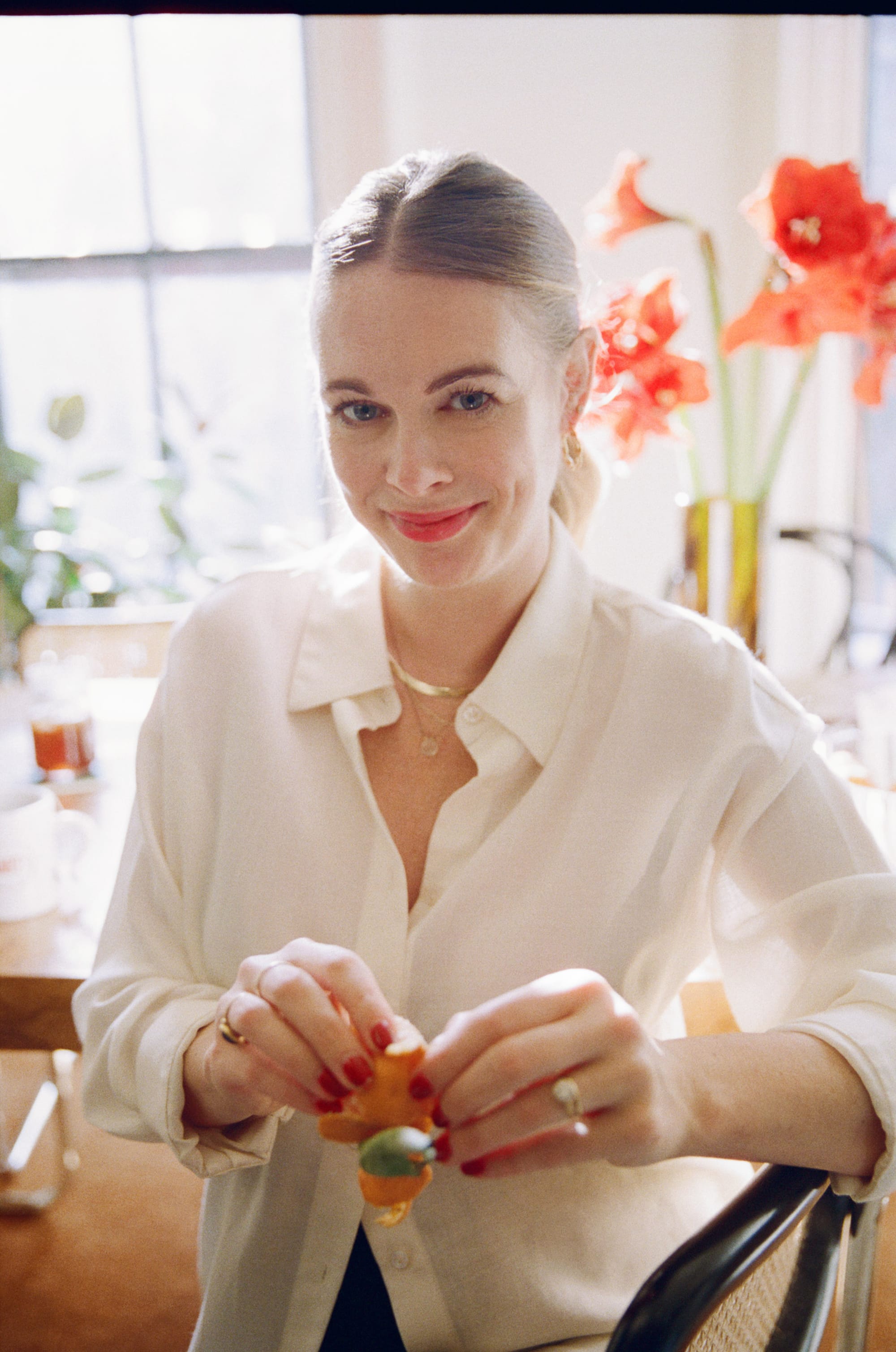
The Shallot Whisperer Who Owns Her Own Corner Store
Most food writers spend their careers convincing you that cooking is hard. Alison Roman has built hers convincing you it isn't - and doing it with such wit and specificity that 800,000 people follow her on Instagram just to watch her be casually right about dinner. She is the rare person who can make a Tuesday-night pantry meal feel like a cultural event without a single superlative, a single foam, or a single instruction to "plate artfully."
Roman grew up in the San Fernando Valley in Los Angeles - not the Hollywood part, but the good part, where Mexican tortillerias, Korean BBQ joints, and Jewish delis existed on the same block as each other. She absorbed flavors the way other kids absorbed television. At 19, she dropped out of UC Santa Cruz, where she had been studying creative writing, and walked straight into restaurant kitchens. No culinary degree. No pedigree. Just the particular stubbornness of someone who already knew what she wanted to learn and where she could learn it.
She worked her way through Sona in Los Angeles, Quince in San Francisco, and eventually Momofuku Milk Bar in New York City under Christina Tosi - one of the more demanding pastry environments in the country. She later moved to Pies 'n' Thighs in Brooklyn, a move that tells you something about her direction of travel: away from fine dining and toward the kind of food real people actually eat on a Wednesday.
"Do I want people to know what a badass cook I am and what skills I possess? Or do I want people to feed themselves?"- Alison Roman
Her editorial career started at Bon Appétit in 2011, where she rose from freelance recipe tester to Senior Food Editor. She had a gift that is rarer than it sounds: she could write a recipe that a nervous first-timer could follow, while making a confident home cook feel seen. When she moved to BuzzFeed Food in 2015, and then to the New York Times in 2018, that gift found its platform.
The cookies came first. In early 2018, her salted butter chocolate chunk shortbread recipe from "Dining In" went so thoroughly viral it became simply known as #TheCookies. People made them, photographed them, tagged her, made them again. Then came #TheStew - a spiced chickpea stew with coconut and turmeric that the internet collectively decided was the only acceptable thing to eat during a certain particular type of anxious winter. And then, in 2020, #ThePasta.
The Caramelized Shallot Pasta. The most-read recipe on NYT Cooking in 2020. Roman later admitted it almost had the significantly less viral name "Anchovy Tomato Pasta." She understood, perhaps better than anyone in the space, that the name is part of the recipe. That the frame is part of the story. That home cooking is as much about desire as it is about technique.
"This is not about living an aspirational life; it's about living an attainable one."- Alison Roman
2020 was also the year she left the New York Times. In May of that year, in an interview with The New Consumer, she criticized Chrissy Teigen and Marie Kondo for building product lines from their personal brands - calling it selling out. Critics quickly pointed out that both women are women of color, and that Roman had not made the same critique of white lifestyle brands. Chrissy Teigen responded publicly that the comments had hurt her. Roman apologized without equivocating, called her remarks tone-deaf and careless, and did not attempt to turn the episode into a redemption narrative. Her NYT column was briefly paused. She departed the Times by December 2020.
Rather than retreating, she built something new entirely. Her independent newsletter - simply called "A Newsletter" - launched in 2021 and grew to hundreds of thousands of subscribers. She started a YouTube series, "Home Movies with Alison Roman," that captured the texture of her actual cooking life rather than the polished production value of a cable show. A deal with CNN+ for an original cooking program collapsed when CNN+ itself collapsed. The show eventually found a home on Tastemade.
In 2023, she published "Sweet Enough," a dessert cookbook that became an IACP Award finalist and appeared on best-of-year lists from the San Francisco Chronicle, the New York Post, and Vice. That same year, she opened First Bloom - a curated corner store in Bloomville, New York, in the Catskills, in a building from the 1860s. She sells seasonal produce, freshly baked bread, local ciders, tinned fish, ceramics, and pantry goods. She and her husband, film producer Max Cantor, live in an apartment directly above the store.
Her fourth solo cookbook, "Something from Nothing," arrived in November 2025 and was shot entirely on film by photographer Chris Bernabeo - a deliberate departure from the crisp, high-key photography typical of the genre. It landed on best-of-year lists from NPR, The Economist, Lit Hub, and Bon Appétit. That month she also appeared on The Late Show with Stephen Colbert.
And then there is the tomato sauce. In September 2025, she launched "A Very Good Tomato Sauce" in three flavors: Classic Garlicky Tomato, Spicy Tomato with Fennel, and Caramelized Shallot and Anchovy. In February 2026, she appeared on Bloomberg's Odd Lots podcast - a macroeconomics show - to explain her plans to compete in the tomato sauce market. It is exactly the kind of move that makes Alison Roman Alison Roman: deeply practical, faintly absurd, and almost certainly going to work.
She welcomed a son, Charlie Davis Roman Cantor, in January 2025. She has since launched "A Little Newsletter" for occasional content on that particular chapter. She did not rebrand. She did not soft-launch a lifestyle. She just told the truth about it, in her voice, and kept cooking.
The thread running through everything - the restaurant kitchens, the viral recipes, the newsletter, the store, the sauce jars - is a consistent philosophy: food should make your life feel more manageable, not more aspirational. She has stayed independent, stayed direct, and stayed herself across every platform and format she has touched. In an industry that rewards reinvention and personal mythology, Alison Roman has found a more durable competitive advantage: being genuinely, recognizably, stubbornly herself.