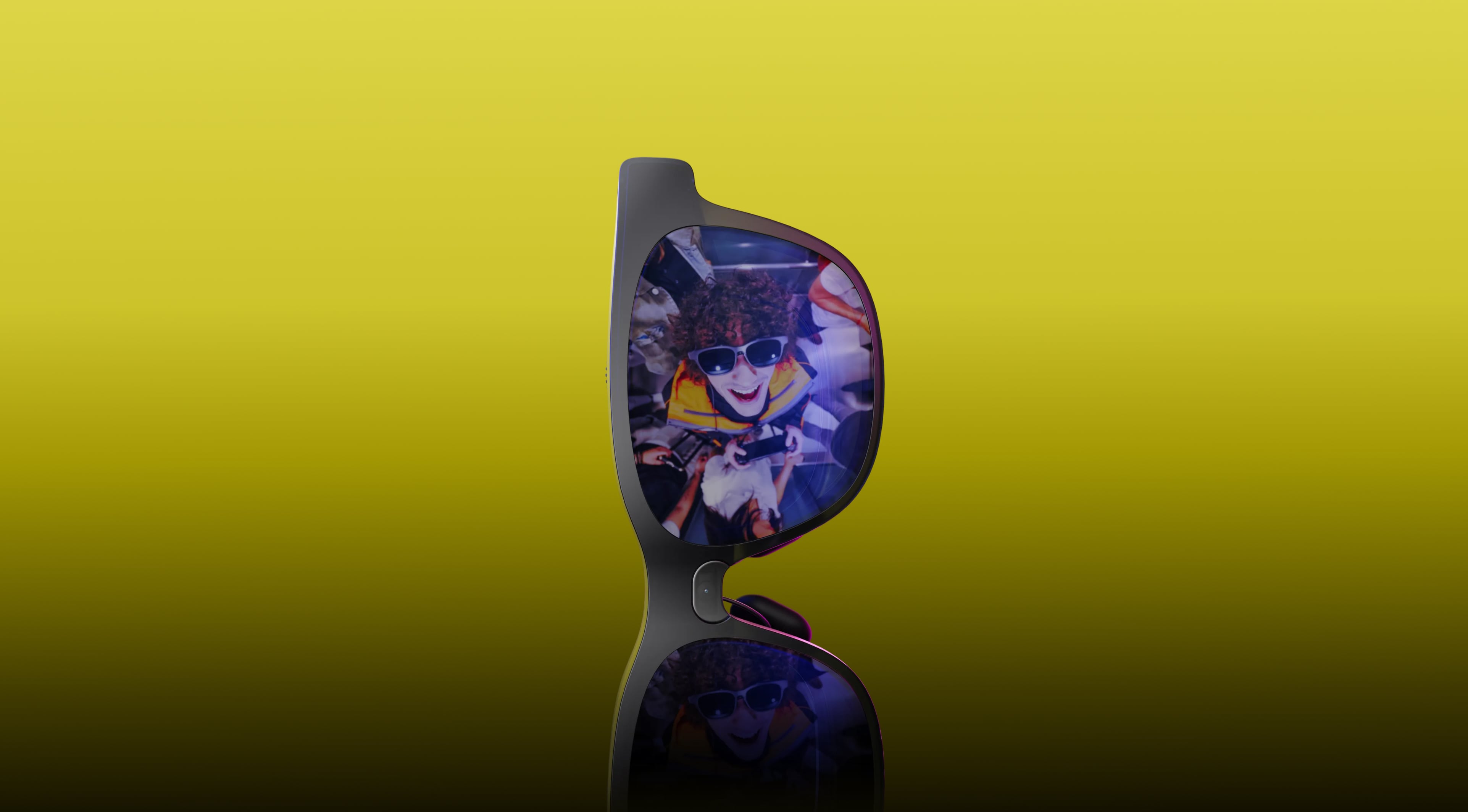
Look around any airport gate, any late-night couch, any cramped middle seat at 35,000 feet. Someone is wearing what looks like a slightly chunky pair of sunglasses, eyes pointed at nothing, smiling at a screen no one else can see. They are not asleep. They are watching a 150-inch display floating in the dark - and the glasses doing it weigh less than the phone in their pocket.
That is VITURE in 2026. Not a vision deck. Not a someday. A product you can buy at Best Buy, plug into a Nintendo Switch or a Steam Deck or an iPhone, and wear out of the box. The pitch is almost rude in its simplicity: your biggest screen should not sit on your desk. It should sit on your nose.
The company was founded in 2021 by David Jiang, a man with an unusual line on his resume: he worked on Google Glass. That project became shorthand for technology arriving a decade too early, a cautionary tale told at dinner parties. Jiang seems to have taken a different lesson from it than everyone else. The problem with Glass was not that people don't want screens on their faces. The problem was that Glass asked you to be a pioneer. VITURE asks you to watch Netflix.
So instead of a tiny notification window perched above one eye, VITURE built a proper display - sharp micro-OLED panels from Sony, tuned audio from HARMAN, a tint that darkens on command so you can switch from "transparent glasses" to "private theater" with a tap. It connects over a single cable to almost anything with a screen output. There is no headset, no controllers, no setting up a room. You put them on the way you'd put on reading glasses.
The market noticed. By the fourth quarter of 2024, the research firm IDC measured VITURE holding more than half - 52 percent - of the U.S. display-glasses market. For a company of roughly 37 people, that is the kind of number that makes much larger rivals reread the spreadsheet twice.
The product line tells the story of a company that found its audience and then refused to leave anyone behind. In July 2025, VITURE launched the Luma series: the Luma at $399, the Luma Pro at $499 with a 152-inch virtual screen, the Luma Ultra at $599 with dual depth cameras, and the Beast - a $549 flagship with a 174-inch screen, a full-metal build, and a customizable display system called VisionPair. Four glasses, one obsession: make the screen bigger, brighter, and sharper without making the glasses heavier.
And here is the detail that tells you what kind of company this is. The original VITURE One - the first product, years old now - still gets new software features. In an industry that loves to obsolete last year's hardware, VITURE keeps shipping updates to customers who bought in early. That is not charity. It is a bet that loyalty compounds.
The money agrees. In September 2025, VITURE closed two Series B tranches totaling $100 million, pushing total funding past $120 million. Five months later, in February 2026, it raised another $100 million, this round led by Legend Capital with Bertelsmann Investments. Roughly $200 million in under six months - a lot of conviction for a screen you wear.
What that money buys is ambition beyond gaming. VITURE has SpaceWalker software for spreading multiple virtual windows across your field of view, AI that converts ordinary 2D video into 3D in real time, and a new enterprise play: the VITURE Helix, AI safety glasses built on NVIDIA's XR and AI stack, unveiled at AWE 2026. The same company that sells you a portable cinema also wants to put a heads-up display on a factory floor.
What can you actually do with them? More than the gaming label suggests. Plug into a Steam Deck or a Switch on a long flight and the cramped seat becomes a private theater. Mirror a laptop and the single screen in a hotel room becomes three floating windows of work. Watch a film in bed without a television in the room. Hand them to someone with myopia and the built-in diopter adjustment means they can leave their prescription glasses in a drawer. The common thread is subtraction: VITURE removes the monitor, the TV, the seat-back screen, and gives you the picture without the furniture.
The culture behind it reads less like a unicorn and more like a workshop. Roughly 37 people, hardware-obsessed, shipping fast and arguing about millimeters and nits in public. The "built by gamers, loved by gamers" line is not marketing varnish so much as a hiring filter - the people making the glasses are the people who wear them on the couch at night. That is how a company stays compatible with its own first product instead of quietly burying it.
There are credible rivals - XREAL, Rokid, RayNeo, and the giants Meta and Apple circling the broader spatial-computing space. VITURE's edge is not a single patent. It is a posture: ship fast, stay compatible, treat the glasses as eyewear that happens to be a computer rather than a computer that happens to sit on your face.
So go back to that airport gate. The person in the slightly chunky sunglasses isn't waiting for the future of computing to arrive. They are already inside it, watching a film on a screen the size of a wall, and the gate agent has no idea. VITURE didn't make the screen disappear. It made the cinema portable - and quietly slipped it onto a few hundred thousand faces while the rest of the industry was still drawing slides.