Neha Singh had a peculiar problem with luxury shopping. At Vogue, where she was head of product, she worked with brands whose physical stores knew how to make an entrance. On a phone, those same brands became four or six thumbnails. The expensive atmosphere had vanished. What remained looked suspiciously like a database wearing perfume.
- Obsess makes branded 3D shops connected to existing e-commerce.
- Early headset experiments gave way to accessible browser links.
- Ava put virtual-store editing into retailers’ hands in 2023.
- Infinite Reality acquired the company in 2025; its parent became Napster.
Singh had studied computer science at MIT and worked as an engineer at Google. She also loved fashion. Trying an Oculus headset supplied an unexpected answer to the mismatch: “this is how I want to shop,” she recalled. Obsess, founded in 2017, became her attempt to recover the feeling of entering a shop without requiring a trip across town.
The room disappeared
A product grid is good at answering a narrow question. You want a particular jacket; here are jackets. Physical retail does something else. It puts the jacket beside a shirt, places both in a setting and suggests a person you might become while wearing them. Online, much of that work falls to a shopper’s imagination.
Obsess supplies the setting. Its stores let visitors explore branded environments, select products and encounter videos, quizzes or other interactive material along the way. A beauty brand can explain an ingredient. A home retailer can arrange a room. A fashion label can give a collection somewhere to live beyond the next row of rectangles.

A shop with too few visitors
The first obstruction was distribution. In a 2024 interview, Singh described building for early phone-powered headsets, including Google Daydream and Samsung Gear VR. The experiences worked, but “the reach was very low.” Obsess decided to build for the web. A visitor could arrive through a link instead of finding the right hardware.
“the reach was very low”Neha Singh, recalling the early headset audience
The technical choice served that commercial decision. Singh described a platform built on WebGL, with Three.js and proprietary software above it. Browser access made a virtual visit compatible with familiar marketing routes: a social post, an email or a QR code. Retailers could invite the audience they already had.
- 01 Follow a link
- 02 Explore a room
- 03 Select a product
- 04 Familiar checkout
Then the pandemic altered retailers’ priorities. Shops closed; websites acquired more responsibility. In a 2021 interview, Singh reported a 400% increase in inbound interest during the previous year. That was a measure of enquiries, rather than sales. Still, it described a change in urgency: the online shop had to carry more of the brand.
The theatre, and the till
The customer list reveals where this approach found work: Ralph Lauren, L’Oréal, Crate & Barrel, e.l.f. Cosmetics, J.Crew and Disney Music Group. These businesses sell products with a visual identity or a story attached. Their websites have something to gain from helping people browse before those people know exactly what to buy.
Disney offers a particularly tidy example. Obsess joined the 2022 Disney Accelerator and launched the Disney Music Emporium virtual experience that October. Music merchandise arrives with memories attached. Giving it an environment makes intuitive sense: the visit can carry some of the entertainment that made the merchandise desirable.
The platform also kept the practical machinery underneath. Obsess described dynamic product feeds that synchronized pricing, inventory and other details. Products added inside a virtual store could remain in the retailer’s cart as the visitor proceeded to normal checkout. A beautiful room still needed a functioning till.
Headsets later returned as an additional channel. In February 2024, e.l.f. launched an Obsess-developed Vision Pro app with product-themed environments, meditation, stretching and a painting game, alongside Apple Pay shopping. A Safari version widened access. Laura Mercier followed with a visionOS experience featuring tutorials and interactive product unboxing, announced in February 2025.
Who gets to move the furniture?
A launch is one afternoon. Merchandising is every morning after it. In April 2023, Obsess introduced Ava, a self-service builder developed over two years. Brands could update product placement and imagery, add clickable content and manage their virtual stores through an annual subscription. The change addressed a recurring chore: keeping the place worth visiting.
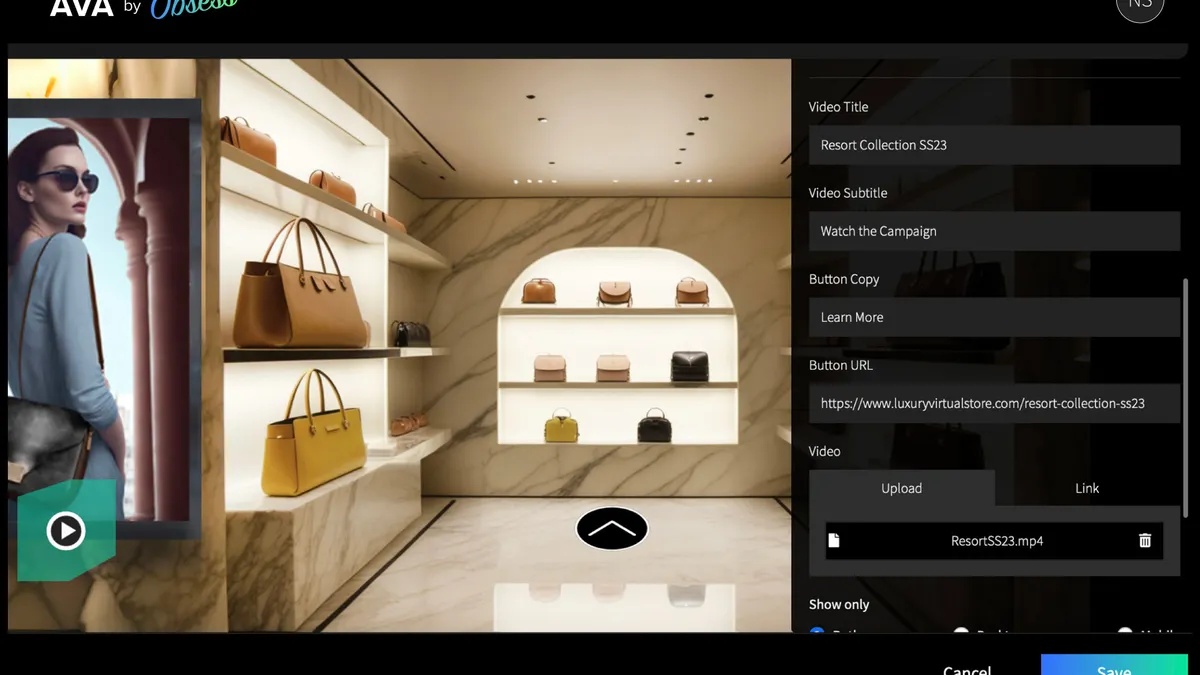
Obsess combined software with creative and implementation services. Its customer support description covered ideation, building, testing, launch and measurement. That places it between a commerce platform and an experience studio. Competitors such as Emperia and ByondXR pursue related territory. Obsess’s proposition joined branded environments, commerce integration, editing tools and behavioural measurement.
Funding helped pay for the expansion. Its June 2021 Series A raised $10 million, led by Jump Capital with the Venture Reality Fund and WXR Fund participating. Total funding then stood at $13.4 million. The announced plan included product development and expansion beyond fashion and beauty into home, entertainment and consumer goods.
Reported at the January 2025 acquisition announcement. Projects, not distinct customers.
The lesson for a retailer is conditional. A room can help someone discover a collection or understand a product. Someone replacing a familiar item may prefer the shortest path to purchase. Extra time spent inside an experience could reflect interest or difficulty. Measuring checkout completion and commercial outcomes alongside engagement is the sensible test.
After the acquisition, a different front door
Infinite Reality announced its agreement to acquire Obsess in January 2025, with Singh joining as chief innovation officer. In May, the parent announced a rebrand as Napster Corporation. Today, the Obsess domain redirects to Napster’s enterprise offering. The doorway has changed again.
Across those changes, the useful idea remains modest enough to copy: give shoppers a reason to explore, make entry easy and keep buying straightforward. Obsess’s early experience makes the order clear. Even a wonderfully decorated shop needs people who can get through the door.