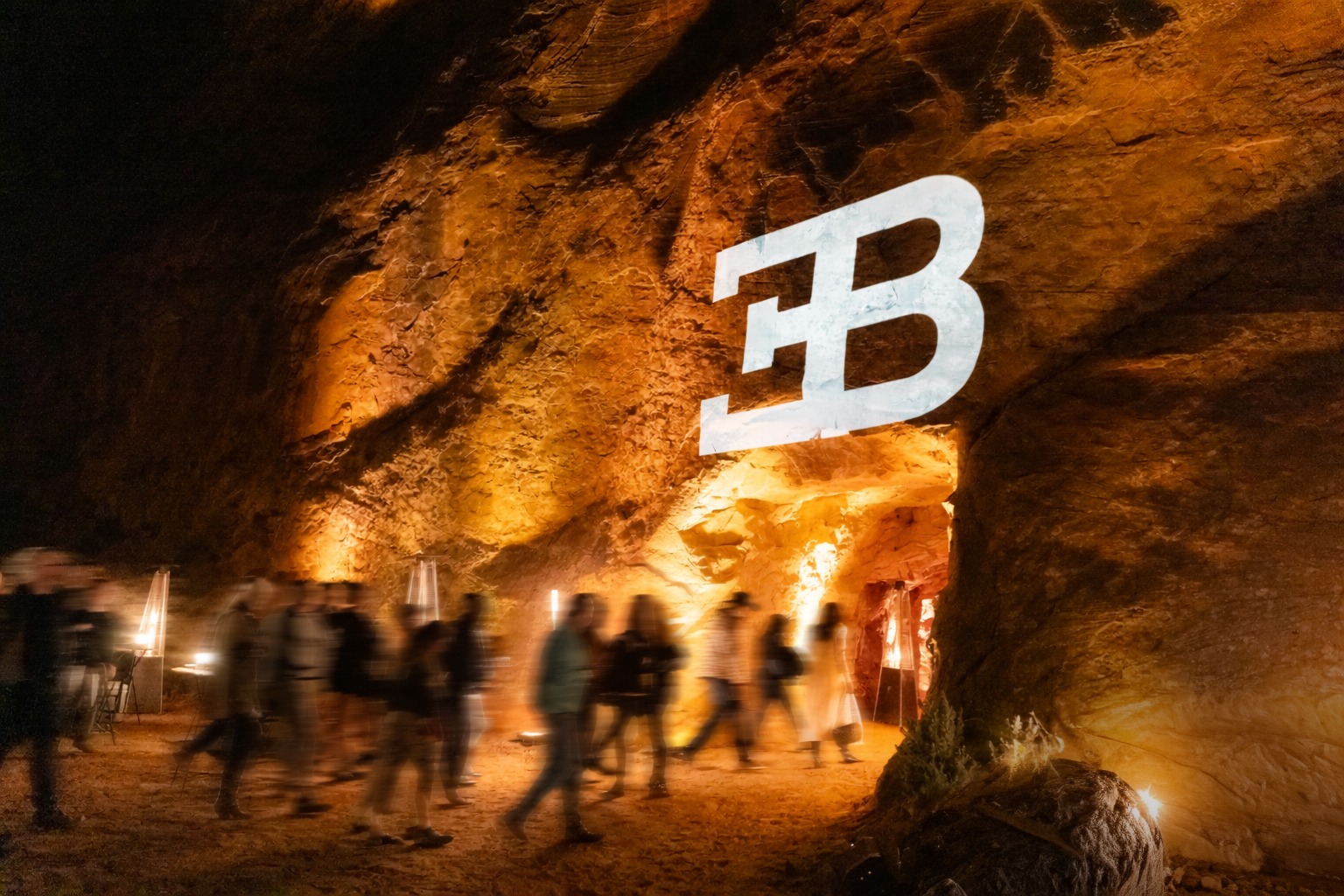
A Bugatti grand tour has a peculiar logistical problem: almost nothing can feel like logistics. The cars must arrive. The rooms must be ready. Dinner must appear at precisely the right moment. Roads, luggage, dietary preferences and human moods have to be managed, while every visible seam of that management disappears. Interluxe Group describes its Utah-to-Aspen owner journey as a sequence of curated drives, private meals and unusual access. The guests saw a world. The agency saw a thousand dependencies.
That is the old Interluxe craft - high-touch, high-stakes experiences for brands such as Ferrari, Rolls-Royce Motor Cars, Aston Martin and Bugatti. It is also the clue to the new Interluxe. The company is no longer content to arrange the moment. It wants to understand who entered it, decide who hears about it, extend it through media, translate it into a story, and connect the whole affair to acquisition and loyalty.
In other words, the party is not the product. The product is the customer journey that happens to contain a party.
The missing day after
The original Interluxe was founded in 2009 by Emma Gwyther Spencer, a British experiential marketer who had moved to the United States as the financial crisis arrived. She built relationships in luxury automotive and lifestyle marketing, where the brief is rarely “reach everyone.” It is more often “find the right few, and do not waste their time.” By 2015, the agency's Aston Martin On Ice program had won an Ex Award for B2B event production.
The work solved a real problem for expensive brands. A conventional advertisement can show a sports car. A well-made experience can let an owner drive it across an extraordinary landscape, dine with people who understand the obsession, and feel that ownership opens a door. For products with long buying cycles and narrow audiences, that difference matters.
But experience agencies have always had a missing day: the day after. Guests leave. Photographs circulate. Sales teams receive names. Another agency runs the media. A PR firm tells the story. A performance shop watches conversion. Every handoff loses context, and the client becomes the unpaid systems integrator.
That expectation explains the company Interluxe has become more cleanly than any slogan. In January 2025, private-equity firm Mountaingate Capital backed a combination of Interluxe and North & Warren. North & Warren brought digital marketing, lifestyle media and proprietary affluent-audience data. In September, the platform acquired Quinn, the luxury communications agency founded in 1989. In March 2026, the three names became one: Interluxe Group. Then, in June, Interluxe acquired adMixt, adding paid search, paid social, performance creative, analytics and optimization. Financial terms for these transactions were not disclosed.
Mountaingate backs the combination with North & Warren's audience intelligence, media and digital operation.
Quinn adds earned media, influencer marketing, thought leadership and crisis communications.
The businesses unify as Interluxe Group, with Nick Van Sicklen as CEO.
adMixt adds platform buying, analytics and real-time optimization. Headcount passes 200.
Four specialists, one affluent customer
The logic is easier to see from the customer's chair. A hotel guest, watch collector or Ferrari owner does not experience a brand in departmental columns. She sees an article, receives an invitation, attends a dinner, searches later, encounters an ad, and perhaps buys. The brand may employ six vendors to make that sequence happen. The customer sees one brand.
The Interluxe loop
Interluxe's services now map onto that sequence. Its experiential practice handles strategy, design, launches, affinity partnerships and production. Strategic communications covers earned media, travel trade, influencers, social and crisis work. Lifestyle media includes owned brands such as Cool Material, Kingdom, Remodelista + Gardenista and Full-Time Travel, alongside exclusive partnerships named by Interluxe with Four Seasons, The Agency and Wallpaper*. Performance marketing adds the platforms and arithmetic.
Optima sits underneath the diagram. Interluxe calls it an Affluent Intelligence engine: first-party data, audience intelligence and partnership networks used to identify and activate high-value consumers. Its programmatic product mixes first-party audiences with third-party data across premium websites, connected television and out-of-home media. The newer Optima AI Index is aimed at another discovery surface - answers from systems such as ChatGPT and Gemini - for luxury travel and hospitality brands concerned about how machines describe them.
What failed first was the handoff
There is no public account of a single disastrous campaign that forced this change. The pressure was structural. Luxury marketing once tolerated a clean separation between image and response: the glamorous people made desire; the spreadsheet people harvested demand. Digital discovery, fragmented media and tighter accountability made that handoff harder to defend. Van Sicklen's explanation of the adMixt deal is direct: clients increasingly want brand impact and measurable outcomes together.
That does not mean selling a seven-figure car like detergent. Mass-market performance habits can damage precisely what makes luxury valuable: scarcity, discretion and patience. Interluxe's differentiation is its claim that measurement can sit behind the velvet rope without replacing it. The agency can begin with a tiny guest list, not a giant lookalike pool; with owner loyalty, not an immediate checkout; with a private drive, not a discount code.
Its public case work makes the distinction concrete. For Ferrari, Interluxe says it orchestrated a multi-day rally from Amangiri to Monterey, handling the guest journey across accommodations, dining and the road to Pebble Beach. For Dewar's, it connected a hospitality lounge at the Kingdom Cup with influencer content from the Aberfeldy distillery. For Bugatti, concierge service and vehicle logistics became part of the brand expression. These are not interchangeable stunts. Each uses access and choreography to make the brand legible in person, then gives the story somewhere else to travel.
The part worth copying
Most readers should not copy Interluxe by buying three agencies. They can copy its sequence. Start with the customer, chart every meaningful touchpoint, and circle the handoffs where memory disappears. Decide which missing capability blocks the next outcome. Add it only when it improves the whole path.
A practical version of the Interluxe play
- Define a narrow, valuable audience before choosing channels.
- Create one experience or story worth remembering.
- Preserve consented customer context across teams and tools.
- Measure the next behavior, not merely attendance or applause.
- Use the result to improve the next invitation, story and offer.
This works best where a customer is valuable enough to justify care, where purchase and loyalty unfold over time, and where the brand itself carries emotional meaning. It is less persuasive for commodity products, anonymous high-volume sales, or businesses without usable customer data. Integration can also become bureaucracy: a platform with every capability is not useful if specialist teams protect their turf, if privacy rules prevent data from moving, or if the live experience has nothing interesting to say.
That is the tension inside Interluxe now. The company promises both scale and craft. It must make a 200-person platform feel as attentive as the producer who notices a guest's coat before the guest does. It must prove performance without flattening wonder into a dashboard. And it has to integrate companies founded in different decades, with different habits, while clients are watching.
Still, the strategic idea is unusually tidy. Luxury brands spend enormous energy controlling details, then routinely scatter the customer's journey across vendors. Interluxe has organized itself around the opposite proposition. One agency should know why the guest was invited, what happened in the canyon, which story carried the feeling outward, and whether any of it changed what the customer did next. The invisible logistics were always the craft. Now they are becoming the company.