Company Profile / Fintech & Community Finance
The App That Turned Payday Loans Into a Neighborly Favor
SoLo Funds built a lending marketplace with no interest and no mandatory fees, betting that strangers would rather help strangers than let a payday lender do it. Two million users later, the model is either a fix for broken small-dollar credit or a regulatory magnet - and the founders keep insisting it is the first.
Travis Holoway was a financial advisor in New York, spending his days helping people who already had money get more of it. Then a conversation about payday loans stuck with him. Friends were paying the equivalent of 400% a year to borrow a few hundred dollars until the next paycheck, and the deeper they borrowed the harder it got to climb out. He did the math and did not like the answer. In 2018 he and Rodney Williams started SoLo Funds on a stubborn premise: that the person best placed to lend you $200 is not a storefront lender or a bank, but another regular person who happens to have $200 to spare.
Eight years later that premise has a scoreboard. SoLo Funds says it has facilitated roughly $700 million in loans to more than two million registered members, most of them in zip codes the traditional banking system tends to skip. It is frequently described as the largest Black-owned fintech company in the United States. It has also spent much of that time in a fight - with state attorneys general, and briefly with the federal Consumer Financial Protection Bureau - over a deceptively simple question: when a loan has no interest but an optional tip, what does it actually cost?
01 / What it doesA marketplace, not a lender
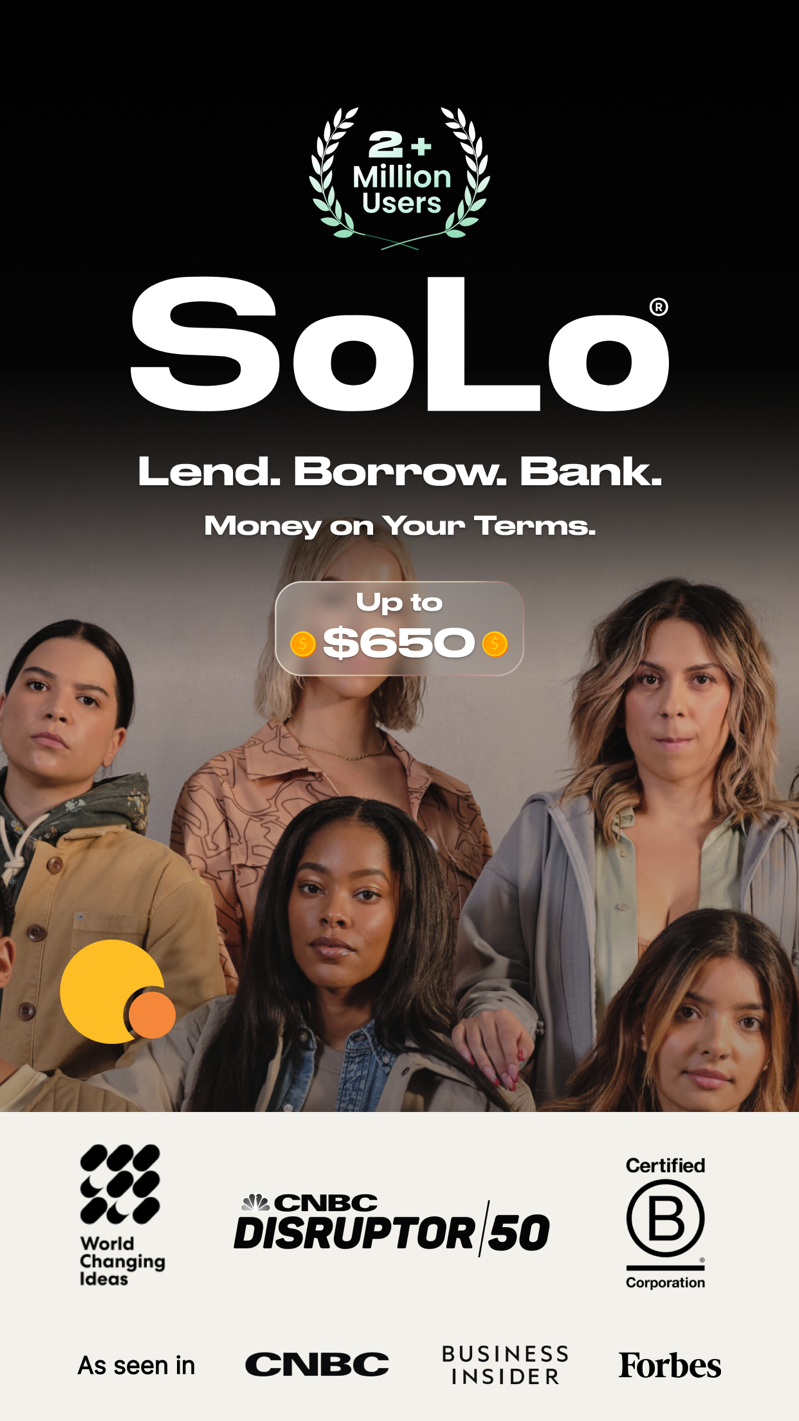
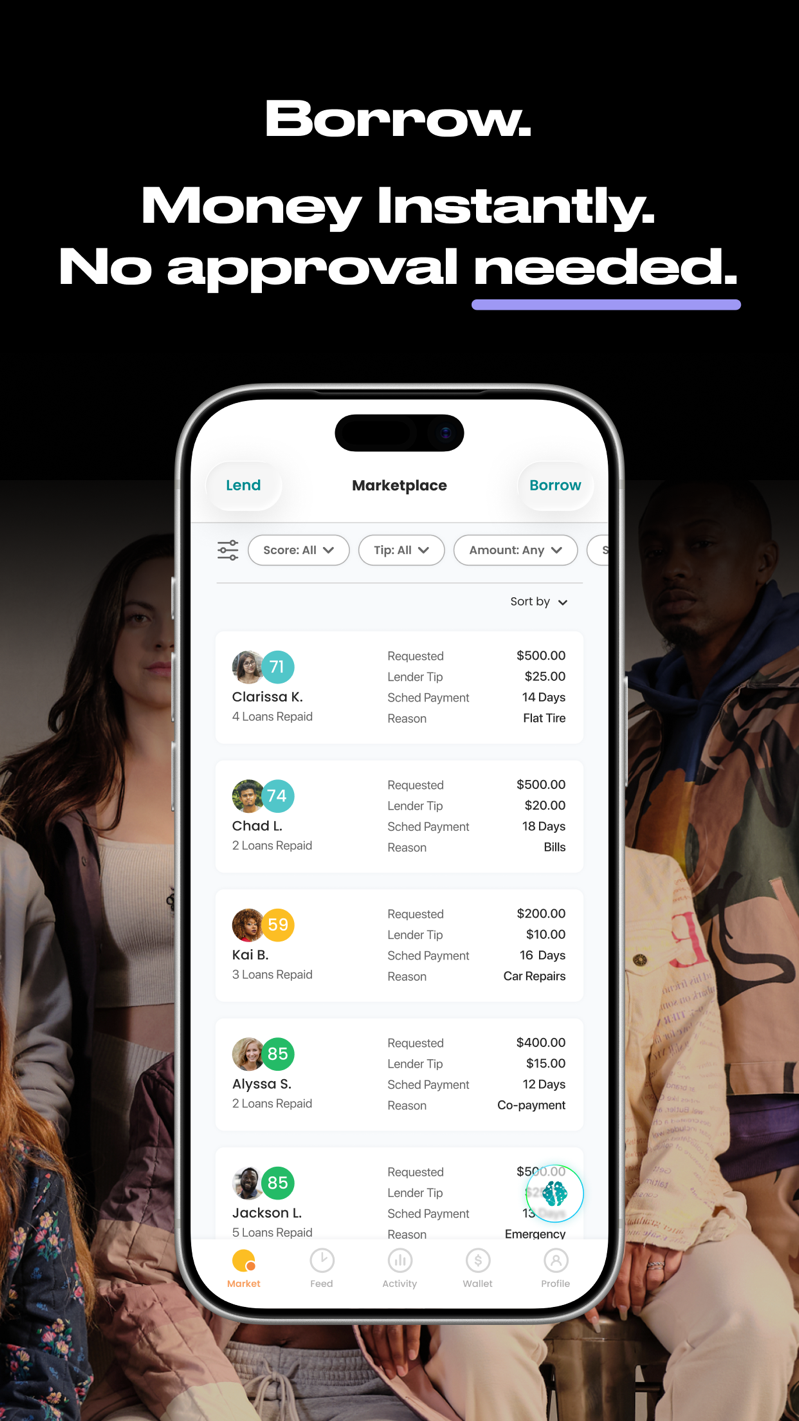
The distinction matters more than it sounds. SoLo Funds does not put up its own capital and does not charge interest. It runs a two-sided marketplace. On one side, a borrower posts a request - say $150 until Friday. On the other, individual lenders scroll requests and choose which ones to fund, the same way you might pick a project to back. When a lender says yes, the money moves, and the borrower repays in about 35 days.
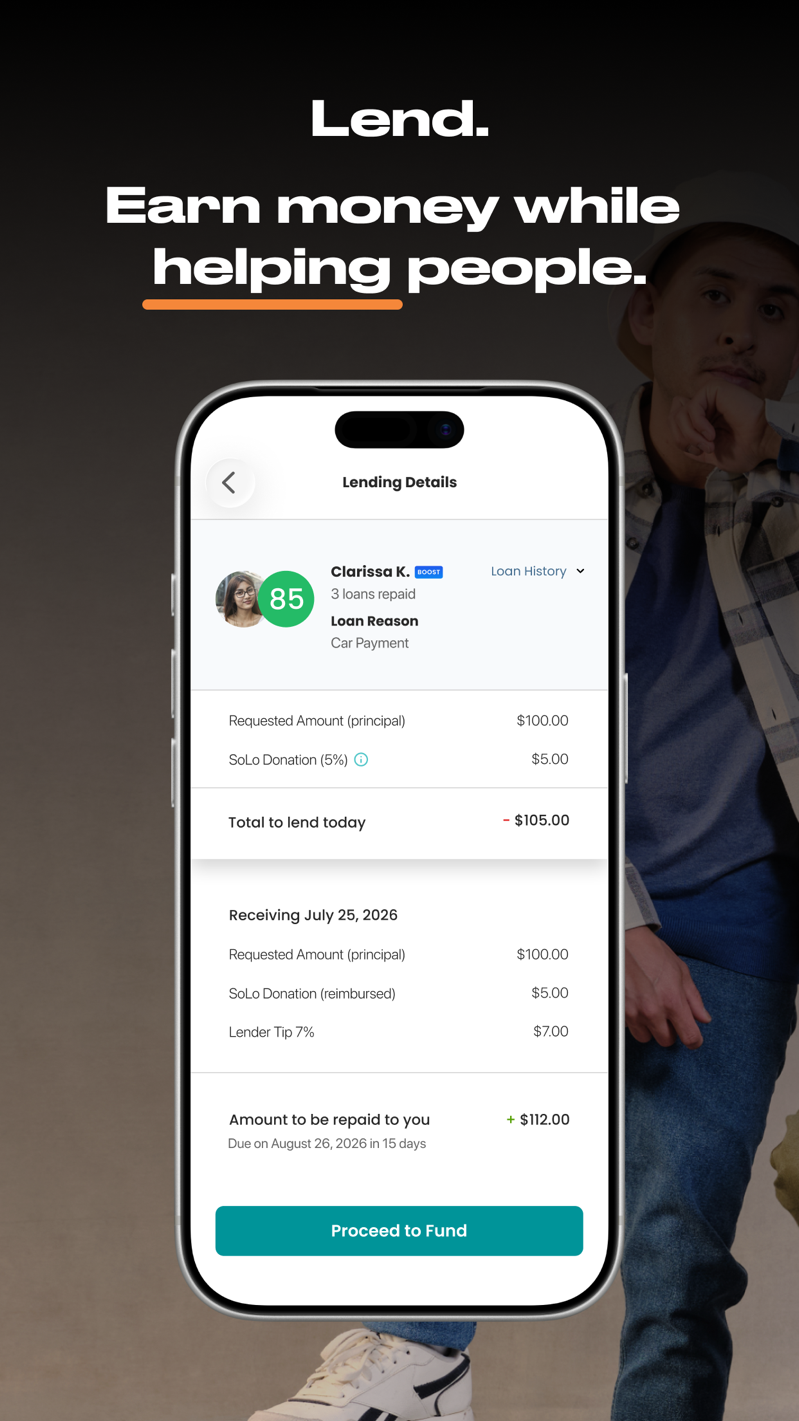
Two optional numbers make the model tick. A borrower can add a tip, which goes entirely to the lender as a thank-you, and a donation, which goes to SoLo to keep the platform running. Both are set by the borrower, not imposed by the company. That design is the whole pitch - and, as the lawyers would later argue, the whole controversy.
Request
Ask for a small amount - new users start low, up to $100.
Set terms
Add an optional tip for the lender and donation to SoLo.
Get funded
An individual lender chooses to fund your request.
Repay
Pay back in about 35 days; a strong SoLo Score raises your limit.
02 / Who it servesThe people banks wave off
SoLo's customers are not an afterthought market - they are the entire strategy. The company says roughly 82% of its members come from underserved zip codes. These are people living close to the paycheck line, the ones for whom a $300 car repair is a genuine crisis and a traditional overdraft or payday loan is a trap. For them, the appeal is speed and dignity: no credit check in the conventional sense, small amounts, and a repayment window measured in weeks.
There is a second customer hiding in plain sight - the lender. Everyday people use SoLo to put small sums to work funding their neighbors, earning a return through the tips borrowers choose to add. It is a marketplace that only functions if both sides show up, which is a harder business to build than a straightforward lender, and a more interesting one.
03 / The problemSmall-dollar credit is broken
The problem SoLo attacks is old and expensive. Tens of millions of Americans cannot cover a modest emergency without borrowing, and the formal system does a poor job serving them. Banks find $200 loans uneconomic. Payday and installment lenders will make them, but at rates that can compound into a debt spiral. Overdraft fees quietly function as one of the most expensive forms of short-term credit in the country.
SoLo's answer is to strip the interest out and let the price be voluntary and visible. The company reports the average tip a borrower adds is a low double-digit percentage of the loan - real money, but framed as a choice and a courtesy rather than a rate that balloons if you fall behind. Whether that framing holds up depends on who you ask, which brings us to the part of the story that made headlines.
Approximate, for illustration. SoLo tips are borrower-set and not annualized interest; APR comparisons vary by lender and term.
04 / The fightWhat does no-interest cost?
Regulators looked at the tip-and-donation structure and saw a pricing question dressed as a courtesy. Several states - among them California, Connecticut, Maryland, Pennsylvania, Massachusetts and the District of Columbia - reached settlements with SoLo over how it disclosed the true cost of loans, arguing the effective rates ran far above local usury caps. SoLo resolved those without admitting wrongdoing or liability, paying restitution and penalties along the way.
Then, in May 2024, the CFPB sued, alleging SoLo concealed borrowing costs. The company did something most startups do not: it fought back loudly and in public, publishing its regulatory record and arguing its model was being judged by rules written for a different kind of lender. In February 2025 the federal case was dismissed with prejudice. The dispute over how to describe an optional price is not fully settled, but SoLo kept growing through all of it.
05 / ProductsFrom a loan feed to a wallet
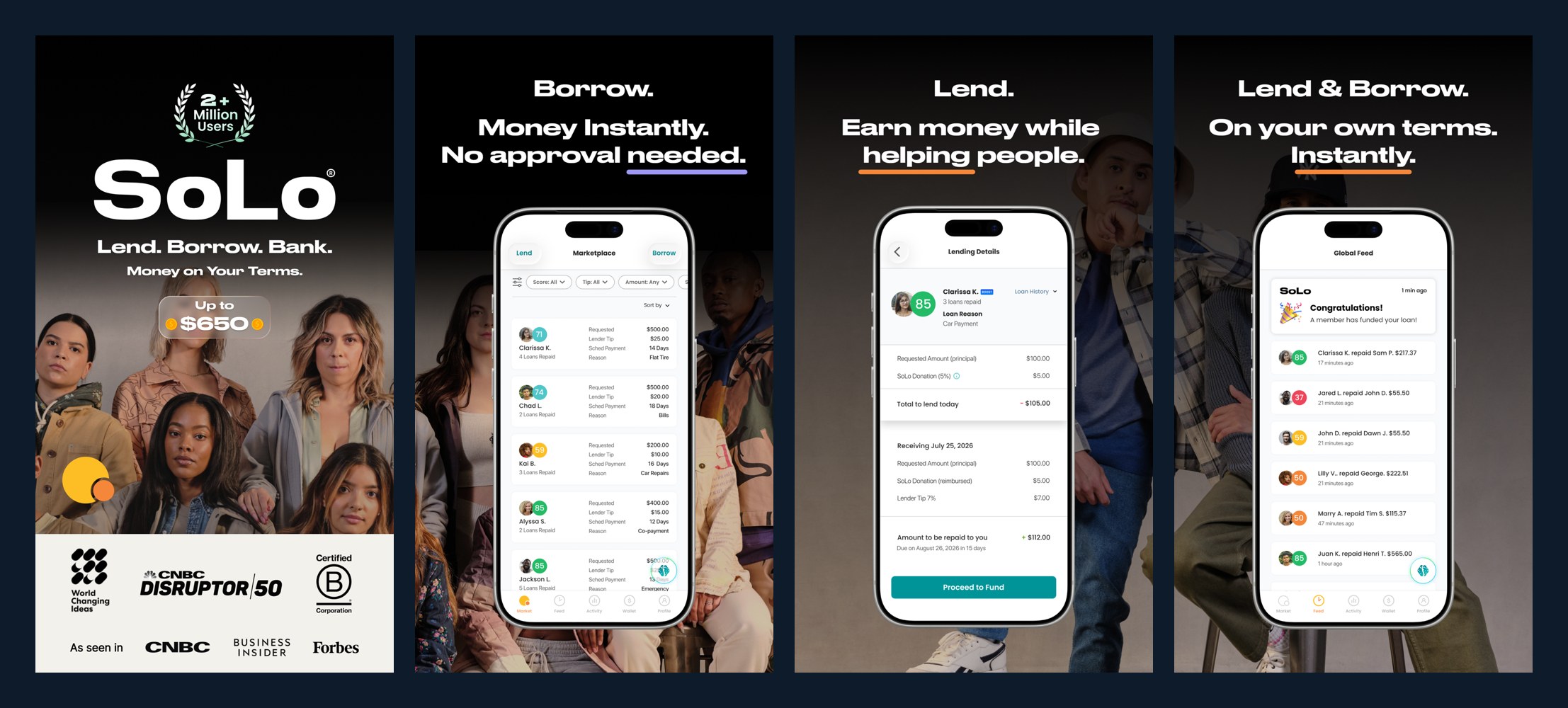
The core marketplace is only part of what SoLo now offers. The SoLo Score is a proprietary in-app measure of creditworthiness that lenders lean on to decide which requests to fund and that lets reliable borrowers climb from a $100 ceiling toward the $575 maximum. In 2022 the company launched the SoLo Wallet and a no-fee Mastercard debit card, issued by Bangor Savings Bank and FDIC-insured, turning the app into a place to hold and spend money as well as lend it. More recently it added SoLo IQ, an AI budgeting and financial-guidance feature aimed at helping members who live without much of a cushion plan ahead.
The product stack at a glance
- MarketplaceP2P loans, ~$20-$575, repaid in ~35 days
- SoLo ScoreIn-app credit score that unlocks higher limits
- SoLo Wallet + CardMastercard debit via Bangor Savings Bank, FDIC-insured
- SoLo IQAI budgeting & money guidance
06 / The businessMaking money without interest
If there is no interest, how does SoLo earn? Not from the tip, which goes to lenders. Its revenue comes from the optional donations borrowers make to the platform, an optional lender-protection product, interchange on the debit card, and related services. It is a thinner, more spread-out model than a lender clipping a rate on every loan, and it ties the company's fortunes to volume and trust rather than to any single borrower's distress.
The funding history is lean by fintech standards. SoLo raised a $10 million Series A in early 2021 led by ACME, with Impact America Fund and Gener8tor participating, and later drew backing from Serena Williams' Serena Ventures. Total disclosed funding sits in the mid-teens of millions - modest for a company operating a nationwide lending marketplace, which is either a sign of discipline or of how hard this corner of finance is to fund.
07 / The marketWhere it fits, and against whom
SoLo sits in the crowded lane of apps promising cash before payday - Earnin, Dave, Brigit, MoneyLion - and, more broadly, against payday and installment lenders and the ghosts of peer-to-peer platforms like the old LendingClub. What separates it is structure rather than marketing. Most cash-advance apps front the money themselves and monetize through fees or subscriptions. SoLo does not hold the credit risk at all; it matches people. That makes it lighter on capital and heavier on community, and it is why the company insists on the phrase "community finance" instead of "lending."
The recognition has followed the model. SoLo landed on CNBC's 2023 Disruptor 50, with co-founder Rodney Williams becoming one of the rare founders to place multiple companies on that list. In 2024 CNN Underscored named it the best peer-to-peer lending app. It is certified as a B Corporation and organized as a public benefit corporation, so the social mission is written into the charter rather than bolted onto the pitch deck.
08 / The takeawayWhat a founder can steal
The copyable idea here is not "lend money to poor people." It is that you can build a real business by removing yourself from the transaction. SoLo does not want to be your creditor; it wants to be the rails and the trust layer between two people who can help each other. That reframing - marketplace instead of lender, tip instead of rate, score instead of gatekeeper - is portable to plenty of industries where a middleman currently takes the spread.
The conditions where it strains are just as instructive. A voluntary price invites hard questions from regulators who measure everything in APR. A marketplace only works when both sides are liquid, which is brutal to bootstrap. And serving the most financially fragile people means defaults and disputes are features of the terrain, not bugs to be engineered away. SoLo's bet is that doing this openly - certification, published records, public arguments - buys enough trust to keep both sides of the marketplace showing up. Two million members in, the bet is still live.
Founded in New York
Travis Holoway and Rodney Williams launch a P2P lending app for paycheck-to-paycheck borrowers.
Techstars, then Los Angeles
After Techstars Kansas City, the company moves its headquarters to LA.
$10M Series A + B Corp
Raises a Series A led by ACME and becomes a Certified B Corporation.
SoLo Wallet & debit card
Adds a wallet and a no-fee Mastercard debit card via Bangor Savings Bank.
A million users, Disruptor 50
Passes a million members and lands on CNBC's Disruptor 50 list.
Regulators, then vindication
The CFPB sues, then dismisses with prejudice; SoLo reports ~$700M in loans facilitated.