The requests were almost insultingly small by the standards of high finance: $50, $150, perhaps $200. Travis Holoway was living in New York and working with affluent households, the kind of clients whose annual income could reach half a million dollars. Then his phone would pull him back toward another economy. Friends and relatives needed enough to put gas in a car, cover a utility bill, or bridge the annoying few days before payday.
At first, he wondered why they were asking him. He worked in finance, certainly, but what could such a modest amount really change? The answer was plain and rather brutal. It could be the difference between reaching a shift and losing a job. Between lights on and lights off. The arithmetic was tiny; the consequences had ambition.
Holoway had seen this split before. He grew up in Cleveland in a household he has described as comfortable, with both parents at home and a father who spent more than 35 years at General Motors. His parents deliberately sent him through schools with very different racial and social mixes. At friends' houses, comfort was less reliable. Sometimes the electricity had been cut. A child notices darkness. A future financial adviser eventually learns to name its price.
“People don't want handouts - they want a helping hand.”Travis Holoway
Two versions of money
After the University of Cincinnati, Holoway became the first person in his family to graduate from college and moved to New York. At Northwestern Mutual, he worked as a financial adviser and director of training and development. His days showed him what financial service looks like when a household already has plenty of finance. His calls from home showed him what happens when a household does not have enough to interest the system.
Traditional finance was happy to discuss portfolios with people earning $250,000. The person earning $75,000, in Holoway's telling, might receive little guidance and fewer useful options. This gap became his market map. It also gave him an unusual founder's advantage: he understood both the polished vocabulary of wealth management and the blunt grammar of an emergency.
Rodney Williams understood the other side too. The Baltimore-born entrepreneur had watched his own family juggle urgent bills. He and Holoway had been friends for years, close enough for Williams to sleep on Holoway's couch while pitching investors in New York. Later, the geography reversed. Holoway stayed with Williams while attending an accelerator in Cincinnati. Friendship became lodging, then research, then infrastructure.
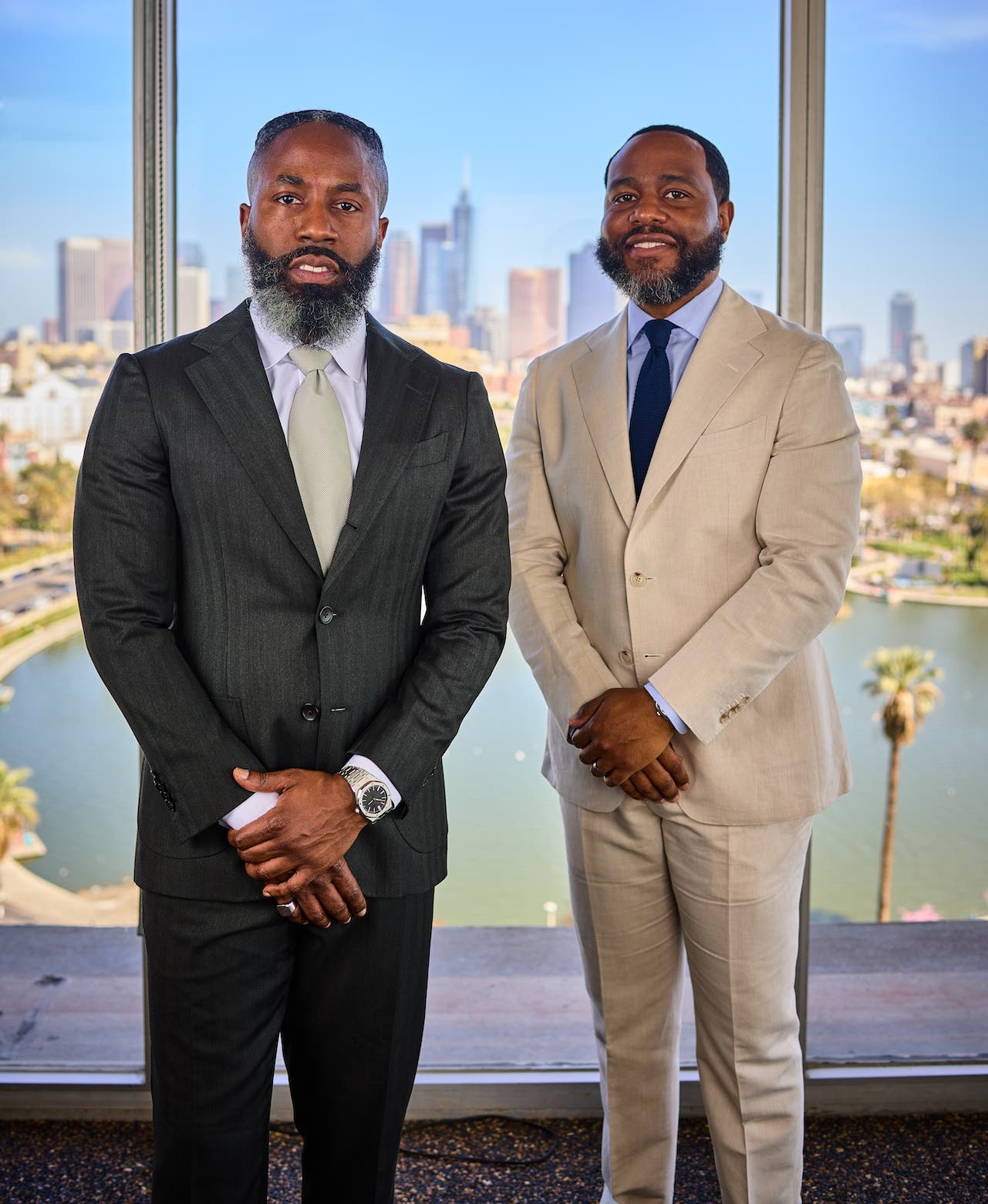
The pair started SoLo Funds in 2018 with a proposition simple enough to fit in a text message. Someone requests a small, short-term loan. Another member chooses to fund it. The borrower proposes the amount, repayment date, and any voluntary tip. The product aims to replace the awkward private negotiation between friends with a marketplace where choice is visible.
The useful fragility of two sides
Holoway likes the accountability of a marketplace. Borrowers need lenders, lenders need borrowers, and neither group can be treated as stage furniture. If one side has a rotten experience, he has said, the whole thing falls apart. It is a moral point with a balance-sheet consequence. Community may sound neighborly; liquidity has sterner manners.
The early company learned that lesson without ceremony. SoLo joined Cincinnati's Hillman Accelerator and Techstars Kansas City in 2018, moved to Los Angeles in 2019, and then ran out of money. The first version shut down. The founders relaunched in April 2020, just as household uncertainty made short-term liquidity more urgent. By 2021, the company had raised a $10 million Series A and earned B Corp certification.
Holoway's account of those years is not misty-eyed. He speaks often about persistence because the company had to spend it. He also speaks about the unequal margin for error available to Black founders. Investors sometimes praise the education of a failed first startup and back the founder's second attempt. In Holoway's view, African American founders are rarely offered the same indulgence. So the first one has to work, even after it briefly does not.
“If you can't be inspired by your friends, you have the wrong group of friends.”Travis Holoway, on Rodney Williams
The friendship survived the couch era and acquired scale. In 2023, SoLo passed one million registered users and appeared on CNBC's Disruptor 50. By early 2025, the company reported more than two million users and $1 billion in transaction volume. In April 2026, it said the community was approaching three million members and had facilitated nearly $2 billion in transactions.
When a new model meets old rules
Growth did not settle the argument about the product. Regulators in several states scrutinized SoLo's tip and donation model, licensing, disclosures, and debt-reporting practices. In May 2024, the Consumer Financial Protection Bureau sued the company and its founders, alleging violations of federal consumer-finance and credit-reporting laws. SoLo contested the claims and argued that its voluntary terms were more transparent and affordable than familiar short-term options.
In February 2025, the CFPB and defendants filed a stipulated dismissal with prejudice, ending that federal case. A dismissal is a legal event, not a magic eraser for the policy dispute. The interesting question remains: how should rules built around conventional lenders treat a marketplace where people negotiate with one another and the platform sits in between?
Holoway's answer begins with cost, choice, and actual consumer behavior. Critics have asked whether optional payments feel optional in practice. He replies that borrowers choose their own terms and can offer no tip. Both points deserve daylight. Transparent finance has to survive more than a slogan; it has to remain legible on a tired person's phone when the rent is due.
A classroom with consequences
Holoway's ambitions have widened beyond the moment of need. SoLo has added a wallet and banking services through a partner bank, along with lending tools and financial guidance. In 2025 it introduced SoLo IQ, an AI-powered financial coach built around the platform's transaction history. The larger aspiration is a financial ecosystem in which the same person might borrow today, regain footing, and lend tomorrow.
That loop matters to Holoway. In a 2025 interview, he pointed to a striking company figure: 30 percent of borrowers later became lenders. The number suggests that categories like “borrower” and “lender” may be temporary weather rather than permanent identity. An engineer loses a job, gets help, returns to work, and eventually funds someone else's request. Money travels; dignity need not be left behind.
His view of financial education follows the same logic. People do not learn very well when an expert talks at them, he says. They learn by doing, making mistakes, and hearing honest accounts of what worked. That belief became The Wealth Break, a podcast Holoway and Williams launched with iHeartRadio and ESSENCE. Its guests discuss wealth without pretending the route was tidy.
The idea is almost mischievous in a field addicted to instruction: perhaps experience is the teacher and the expert is merely a useful classmate. Holoway, now a husband and father, talks about money as something lived before it is optimized. His advice to his younger self would be to invest earlier, start businesses earlier, and take more risk while there was time to recover.
The Cleveland chip
For personality, return to sports. Holoway is a devoted Cleveland fan, which means hope has seldom been allowed to grow lazy. He jokes that the city's teams trained supporters not to expect winning. The reward was resilience, toughness, and a chip on the shoulder large enough to carry into other arenas.
It is a useful way to understand his public voice. He can be warm about friendship and combative about institutions. He praises his co-founder as a mentor, then challenges investors and regulators in the next breath. He likes measurable proof, but his central claim is stubbornly human: people will help one another if a system gives them a fair way to do it.
By 2026, SoLo Funds had been recertified as a B Corp, joined the Inc. 5000, and placed Holoway and Williams among the Greater Los Angeles finalists for EY's Entrepreneur Of The Year award. Awards make pleasant punctuation. The sentence Holoway is still writing concerns the overlooked sum on the first line: $100, urgently needed, expensive to obtain, and entirely capable of changing the day.
The wager behind SoLo is that technology can make a private favor work at public scale without sanding away its humanity. That is difficult work. It invites technical risk, credit risk, regulatory risk, and the oldest risk in the book: trusting strangers. Holoway has spent nearly a decade insisting the stranger may be the feature.