In 2004, Eric Barbier noticed people in the Philippines exchanging prepaid mobile credit by SMS. It was a small transaction with a large suggestion inside it: people were already finding ways to move value through the networks they had. The phone company had supplied airtime. Its customers had supplied a use the balance sheet might not have anticipated.
Barbier was working on international connections between telecom operators. He saw a possibility in taking those exchanges across borders, and launched TransferTo in 2005. An everyday habit became a business question. If a phone could receive a message from another country, why should receiving something spendable be so much more cumbersome?
The question still follows him. Today he leads Triple-A from Singapore, building payment services around digital currencies and, increasingly, stablecoins. His career has passed through mobile messaging, international top-ups and mobile-money networks. The technologies have changed; the interest in what happens between sender and recipient has endured. He tends to look at the plumbing while everyone else admires the tap.
That makes his story less tidy than the usual tale of a founder discovering a dazzling new technology. There is a continuity to his work, and a considerable amount of waiting. TransferTo needed 18 months to secure its first customer. Years later, he would describe spending a year establishing a relationship with a tier-one bank for Triple-A. Instant payments have a surprisingly slow childhood.
Two waits Barbier has described. Different businesses, the same patient work.
A message crosses first
Barbier is an engineer by training, with a master's degree in information technology. Before the payments businesses came Mobile 365, the mobile-messaging company he co-founded. He first arrived in Singapore in 2002 while developing that business in Asia. A move made for one company's expansion became the base for the companies that followed.
Mobile messaging offered an early education in interconnection. A message is useful because it reaches someone; the interesting work happens when the two people belong to different networks. Building links between operators meant dealing with the space between systems. It is an apt apprenticeship for someone whose later businesses would occupy the space between currencies, banks and mobile wallets.
In 2006, Sybase agreed to acquire Mobile 365 for $425 million, subject to adjustments. Its financial reporting records the acquisition as completed that November. The number gives the story a conspicuous milestone, although the more useful detail is what was being bought: a business that connected mobile networks and delivered messages across them. The connections themselves had become valuable infrastructure.
Barbier had already started TransferTo. The dates overlap, which gives his career a different rhythm from a sequence of clean exits followed by clean beginnings. One observation was leading to the next before the previous chapter had finished. A successful sale could close a transaction without closing his interest in the problem.
- MESSAGESMobile 365Linking mobile networks
- MOBILE VALUETransferToTop-ups and mobile money
- PAYMENT RAILSTriple-ADigital currencies meet banking
Eighteen months to the first yes
TransferTo developed into a business-to-business network for moving value to mobile phones in emerging markets. Financial institutions and merchants used it for transfers, payouts and other payment services. The business eventually became associated with two names, Thunes and DT One, reflecting the payments and digital-value strands of that history.
By January 2016, Barbier was explaining how its Mobile Money Hub connected financial institutions with mobile operators. The point of the network was to reach people through financial systems that were developing around their phones. International interconnection had migrated from delivering a message to making a balance usable.
There is a founder's temptation to tell that history backwards, as though a developed network had been hiding fully formed inside the original idea. The wait for the first customer interrupts that version nicely. Eighteen months is enough time for an idea to become tiresome even to its author. Barbier kept at it. His later businesses suggest that the delay became part of his working expectations.
His advice about time was unusually unsentimental: respect other people's hours, because money can be earned again and time cannot. It fits a business where somebody else's delay becomes your customer's inconvenience. The irony is useful. A founder urging people to waste less time had chosen an industry in which trust could take longer to establish than the product took to demonstrate.
“I wanted to make moving money around the world as simple as sending an SMS.”
Eric Barbier · 2017
The CFO changes the conversation
Triple-A was founded in 2017, according to the company's own history. Barbier has described learning about crypto through his engineers. The attraction grew from difficulties he already knew: money parked in different markets, settlement interrupted by bank calendars, and the operational expense of moving funds internationally. New rails looked interesting because old work remained awkward.
An early sales conversation helped sharpen the business. A public-company chief executive wanted to accept crypto and keep it on the balance sheet. The chief financial officer asked how those assets would be explained to auditors, regulators and the risk committee. Enthusiasm had encountered the person who would have to account for it.
Barbier took away a specific lesson. Enterprises might want a new route for payments without wanting a new category of assets to manage. Triple-A turned toward ecommerce businesses and larger companies that could accept digital-currency payments while receiving conventional money. The service would handle processing and conversion. A merchant could offer customers another way to pay without assigning its finance team a second profession.
That detail matters to his character as a builder. The inconvenient question in the meeting became product direction. He was interested in the business willing to buy the service, including the people whose job was to object. A good sales conversation can be the one in which the excitement briefly leaves the room and the actual requirements arrive.
The licence and the overlooked clause
Barbier's experience with regulated payments shaped Triple-A from the beginning. In his account, it needed to be a payment institution first, using digital assets as a means of moving money. The company received a Digital Payment Token licence from the Monetary Authority of Singapore in November 2021, under its Standard Payment Institution status.
He has also told a less ceremonial regulatory story. Triple-A was approaching the volume it could process under its lower-tier licence. The team and its lawyers feared they would have to cap growth while waiting for permission to operate at a higher tier. Barbier contacted MAS to ask what could be done.
The regulator directed him to a provision the team had missed. In his telling, applying for the higher licence triggered a waiver that allowed the business to continue growing. There is a modest comedy in the solution: after the meeting, the worry and the legal discussion, the answer was already in the reading material.
The episode explains why he places such weight on clear rules. A usable regulatory framework lets a business plan its next move. The human relationship matters too. Someone had to understand the problem, locate the clause and point it out. Even a company built around automated transactions still depends on people who will answer a question.
Capital followed the licensing milestone. In October 2023, Triple-A raised a $10 million Series A led by Peak XV Partners and Shorooq Partners. The round supported expansion and further product development. It was a different kind of endorsement from a licence, but both addressed the same practical issue: whether the company could keep building beyond its initial market.
Singapore, and the pleasure of proving a point
Singapore has remained more than an address for Barbier. He has served as president of La French Tech Singapore, and his LinkedIn profile lists that role from January 2023. The community brings together entrepreneurs, investors and advisers, helping connect French and Singaporean businesses. His work there places him among other founders navigating the same cross-border questions in less literal forms.
He has argued for French companies to look more closely at Southeast Asia. Having arrived to grow a business in the region, he can speak from an extended personal experiment. His companies supply one answer to the question of what an entrepreneur might build there; the community work gives him a place to discuss other people's answers.
His public manner can be pleasingly dry. Asked about being a boss, he has expressed little appetite for telling people what to do. Asked why he keeps building, he returns to the satisfaction of proving an idea. The persistence behind three companies comes with an engineer's wish to see whether the thing works outside his own head.
It also leaves room for discomfort. In a 2026 conversation about entrepreneurship, he discussed the difficulty of letting go after selling a company. The familiar exit story ends at the cheque; the founder still has to live with the departure. Barbier's continued work makes more sense when building itself is part of the reward.
An open rail still needs a keeper
The later Triple-A milestones put that persistence into institutional form. France's financial-markets regulator records a MiCA authorisation for Paytop SAS, Triple-A's European operation, dated May 21, 2026. In June, Triple-A announced multicurrency accounts with access to stablecoin rails. In July, it announced in-principle approval from Dubai's VARA, a step toward authorisation rather than a finished licence.
The same July brought a more difficult test. Triple-A said unauthorised access had affected wallets holding its own digital assets on July 25. Its July 27 statement said client funds were unaffected, services had been temporarily put into maintenance for approximately three hours, and the financial impact would be absorbed by its treasury reserves. Those are the company's statements about the incident.
The event belongs in a story about trust. A network may transfer value quickly and still require careful custody arrangements, separation of funds, security controls and a response when something goes wrong. Operating the connection means accepting responsibilities that a diagram of the connection cannot convey. Speed does little to simplify those duties.
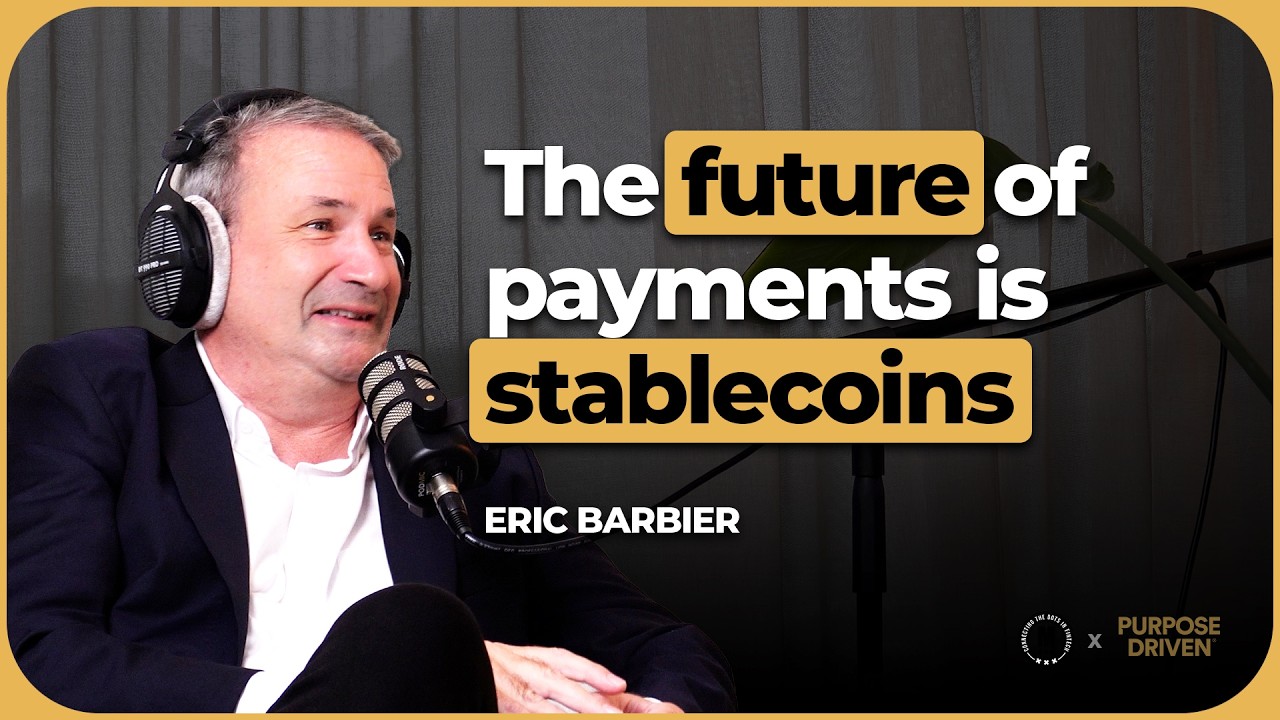
Barbier's aspiration remains access: people and businesses able to receive and use major currencies across borders. In February 2026 he described stablecoins as a possible future component of global payments, alongside banks and existing networks. His forecast was an opinion about where adoption might go, not a count of where it had already arrived.
The ambition connects back to the prepaid credit in the Philippines. In both cases, he is watching people use an available network to obtain something they need. His contribution is to build the connections around that behaviour, then persuade institutions to support them. The payment should take very little time. Getting the people on either side to trust it may take years. Barbier has repeatedly signed up for both parts of the job.
Follow the connections
CONVERSATIONS, PUBLIC RECORDS & PLACES TO FIND ERIC
- Triple-A
- Eric on LinkedIn
- Eric on X
- French Tech Singapore
- The 2017 TransferTo conversation
- Mobile-money interview · 2016
- Mobile 365 acquisition filing
- Triple-A’s 2021 licence announcement
- The Series A · 2023
- Singapore conversation · 2025
- The CFO conversation
- The licence-upgrade anecdote
- The Paypers conversation · 2026
- Tokenized interview
- AMF authorisation record
- July 2026 company statement
- Asia Tech Lens · watch
- Paris Fintech Forum · watch