Consider the Indonesian warung: a small neighborhood shop, sometimes a place to eat, always a place to buy something ordinary. Now give its proprietor a smartphone. The snacks stay on the shelf. But the counter acquires another job: helping customers pay bills, recharge phones and move money. This is where the Fazz story becomes interesting. The route into digital finance runs through a very physical place.
- Payfazz turned local merchants into financial access points.
- Xfers supplied payment infrastructure; the two joined in 2021.
- Today, the group connects agent services, business payments and StraitsX stablecoins.
The branch was already there
Hendra Kwik, Ricky Winata and Jefriyanto founded Payfazz in 2016. Its agent model addressed an awkward fact about banking: a service can exist in a country without being conveniently available to everyone in it. For somebody paying a small bill, the trip to a branch can become part of the price.
The transaction was straightforward. A verified agent maintained a funded balance in the app. A customer handed over cash; the agent used that balance to complete the digital payment. The customer gained access without first mastering a financial app. The merchant gained another reason for people to visit. The familiar counter did useful work before anyone redesigned it.
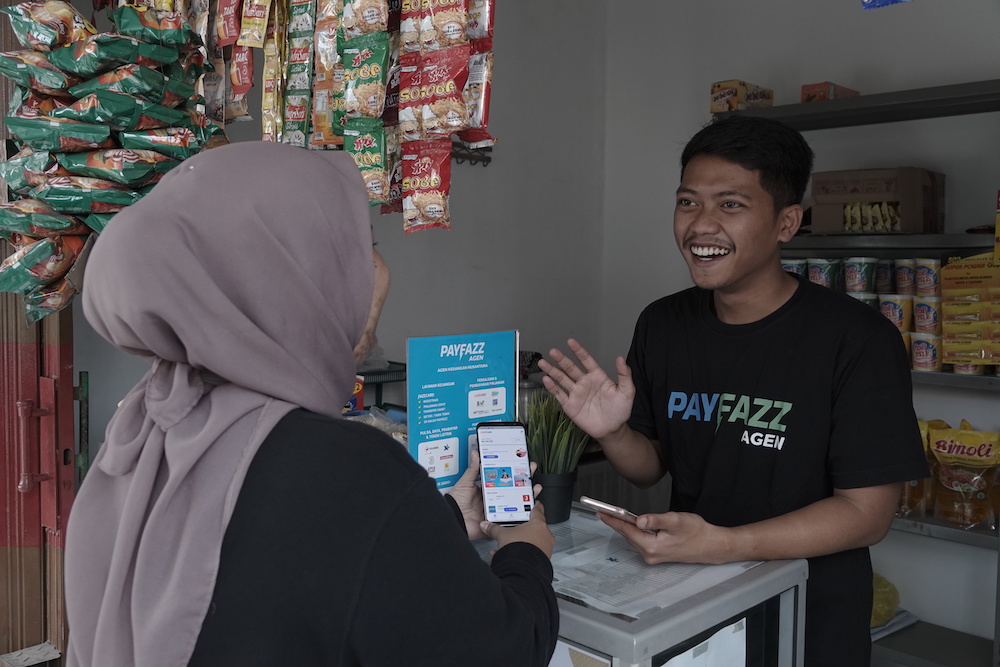
That arrangement also explains the economics. In 2020, Kwik described Payfazz taking a 0.5%-1% transaction commission, with agents setting their own customer margins. Those historical figures explain the incentive, rather than establish today’s prices. Somebody has to fund the balance, handle the cash and answer the customer’s question. Convenience has labor behind it.
The regulator gets a vote
The early obstacle was permission. An investor account describes Payfazz’s original consumer-payment ambition running into an expensive e-money licensing requirement. The team shifted toward payments through agents. Kwik later recalled a central-bank instruction to stop operations over inadequate licensing. Demand alone could not authorize the service.
That experience changed the company’s approach. A financial product needed an institution capable of operating it, including permissions and partners. For a founder reading this story, the useful lesson is practical: identify the regulatory route while designing the product. A working payment screen is only one part of a working payment business.
“We started with mobile data top-ups.”
Hendra Kwik · December 2025 interview
An email becomes infrastructure
Kwik’s connection with Tianwei Liu began with an email to the Xfers founders during Payfazz’s funding struggles. Liu understood the problem. Xfers was building APIs and bank integrations in Singapore; Payfazz was assembling local distribution in Indonesia. Each could see something the other company could supply.
In March 2021, Payfazz invested $30 million in Xfers as they formed Fazz Financial Group. The logic is easy to follow. A shop network gets financial services into people’s hands. Payment infrastructure gets those transactions through the systems behind the shop. Put them together and the company can address both ends of the journey.
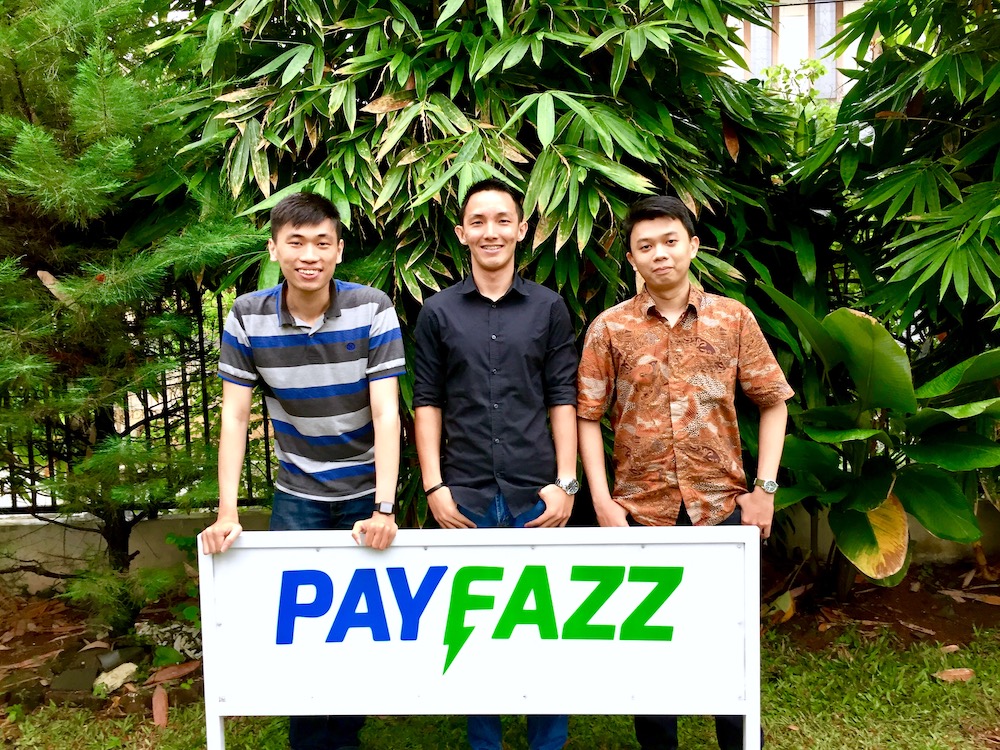
The competitive position follows from that combination. Payment gateways such as Xendit address merchant acceptance and payouts; business-finance platforms such as Aspire address company money management. Fazz spans these needs while retaining its agent origins. The comparison depends on the task. A rural cash payment and a startup’s overseas transfer require different tools.
$100 million, with an asterisk
Fazz’s September 2022 financing announcement comprised $75 million in equity and a term sheet for a $25 million debt facility from Lendable. The company also reported $10 billion in annualized transaction volume. That measures money moving through the system. It should not be read as revenue or profit.
Two kinds of capital. One headline. The facility announcement was a term sheet.
Expansion also had a cost beyond capital raised. March 2023 reporting described layoffs during a reorganization focused on payments, credit and stablecoins, following other cost reductions. It is a useful correction to the funding photograph: a large round does not remove the need to choose which operations deserve continued spending.
Different counters, different tools
Today, Fazz’s homepage presents payment infrastructure across fiat and stablecoin rails. It names payment gateways, bill-payment aggregation and StraitsX settlement. Its audience includes marketplaces, fintechs, remittance businesses and platforms operating across markets. The underlying problem is fragmentation: currencies, payment methods and regulations do not line up neatly.
Elsewhere in the group, Payfazz serves merchants, Billfazz aggregates bills and digital products, and Fazza addresses everyday consumer transactions. Fazz Business has marketed accounts, corporate cards and financing. Its Singapore startup offering advertises no monthly subscription or minimum balance. Borrowing, foreign exchange and digital-asset conversion still require attention to the applicable terms.
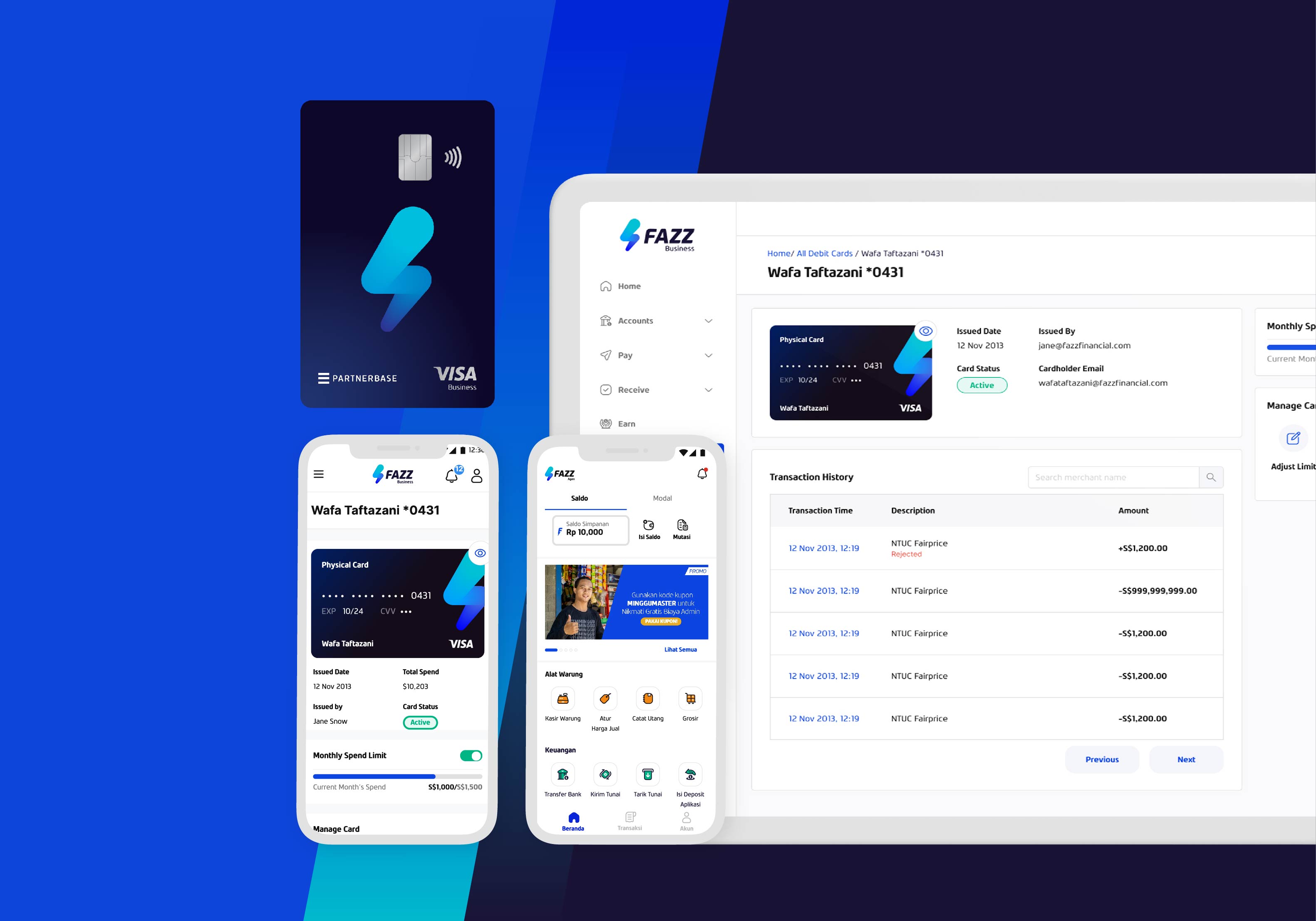
The limits are concrete. An agent needs sufficient balance and a customer’s trust. A business needs the right country and product eligibility. A payment provider needs working bank relationships and local connections. Copy the attention to existing habits; check those conditions before copying the business model.
The payment disappears
StraitsX takes the connection into digital assets. Its July 2026 account of Pionex Cards describes Apple Pay provisioning, with stablecoins supporting settlement while merchants receive ordinary money. The buyer can use a familiar card experience. The technical novelty stays behind the checkout.
- 01Customer tapsCard in Apple Pay
- 02Network routesVisa payment rails
- 03Merchant receivesLocal fiat currency
In October 2026, StraitsX also explained x402 support for XSGD and XUSD, allowing software to handle authorized payments for resources such as API calls. It is a long way from phone credit, but the design question remains recognizable: how much must the customer understand before a useful transaction can happen? At the warung, a person helps. Behind a card payment, infrastructure helps. Fazz’s story is the effort to shorten that distance.