payment-infrastructure
(49)
Juan Pablo Ortega and the Trouble With a Simple Payment
He learned the cost of fragmented payments while taking Rappi across nine countries. Now the pilot-turned-founder is trying to give global commerce one control panel - and teaching the software to fly more of the route itself.

NETS made paying ordinary. Now it wants borders to feel that way.
Singapore’s bank-owned payment network grew by making everyday transactions less of a chore. Its next assignment takes that familiar idea across borders - with some hard-earned lessons about what people actually want.
You clicked pay. BillGO wants to cancel the paper chase.
An online bill payment can still end up in an envelope. BillGO built a business around catching it before the printer - and getting small businesses paid sooner.
DECTA does the work behind the payment button
A bank wants card payments. A fintech wants its own cards. DECTA sells the infrastructure that makes both possible, with the fiddly parts included.
Fortris wants crypto to survive the finance department
Moving Bitcoin is one thing. Getting it approved, reconciled and past an audit is another. Fortris builds the machinery that lets businesses do both.
Guavapay wanted to move your money. Then came the stop.
An app, a merchant checkout and a place on football shirts: Guavapay built a broad payments business. Its UK company’s liquidation exposes the distance between making money move and keeping a financial firm running.

Modulr wants to make payday boring
Behind the payroll run, the used-car sale and the supplier invoice sits a surprisingly complicated money journey. Modulr is building a business by taking the manual work out of it.
Token.io Wants the Card Machine to Become a Bank Login
The London fintech does not want shoppers to know its name. It wants banks and payment companies to put their own names on a cheaper route from checkout to current account.
TrueLayer Wants to Make the Card Number Obsolete
The London fintech started by turning stubborn bank systems into tidy APIs. Ten years, two acquisitions and a bruising reset later, it is attempting something larger: a European payments network that can handle debit, recurring charges and credit without a card in sight.
Dwolla Killed Its App. Then the Money Started Moving.
The Iowa fintech began as a 25-cent rebellion against card fees. Its second act - invisible bank-payment infrastructure - proved durable enough for NMI to buy the company in 2026.

Maxwell Obi Is Building the Financial Plumbing Behind Africa's Global Trade
After an exit, a tour through global remittances, and hundreds of conversations with traders and finance teams, Maxwell Obi chose a gloriously unglamorous problem: helping emerging-market businesses move money on time.
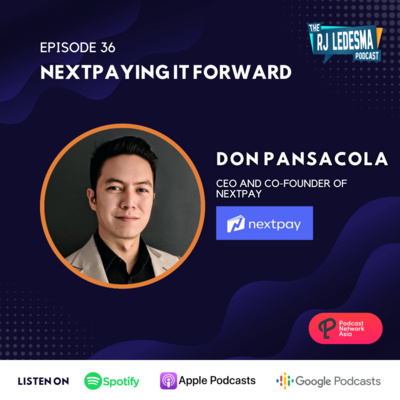
Don Pansacola Is Building the Boring Parts of Money - and the Strange Future of Work
The NextPay co-founder wrote the ledger, hid a few Easter eggs, and helped turn a pandemic pivot into Philippine payment infrastructure. Now he is testing whether an engineering team can share more than a codebase.

Daniel Lev Is Building the Payment Company His First Startup Needed
A fantasy-sports checkout problem sent Daniel Lev down a payments rabbit hole. The result is Coinflow, a Chicago company trying to make a merchant's money move as quickly as a customer's click.
The Australian Who Built a British Card-Killer - Then Sold It Back to Australia
Banked spent eight years trying to build a payments network cheaper than cards. In May 2026 National Australia Bank bought the whole thing - and pointed it at home.

Colin Luce Is Building the Vault for Commerce’s Agentic Turn
After years inside fintech’s expanding platforms, Colin Luce made a contrarian bet: the most valuable layer in payments may be the neutral vault underneath them. Now Basis Theory is testing whether merchant-controlled data can keep commerce open when software starts shopping for us.
The Payments Company You Rarely See - Even When It Moves $700 Billion
NMI built a large payments business by staying behind the curtain. Its white-label infrastructure lets software companies and payment specialists assemble, brand and monetize the route from merchant sign-up to checkout to payout.

Bitcoin’s Fast Lane Is Getting a Finance Department
Voltage began by putting Lightning nodes in the cloud. Now it is selling something more ambitious: instant payment rails that engineers can call by API and finance teams can settle in dollars.

Milio
Milio (YC W23) is a Colombian fintech building real-time, account-to-account payment infrastructure for Latin America. Through a single API, banks, fintechs, and enterprises can move money between accounts in seconds - handling collections, disbursements, cross-border transfers, and treasury automation while cutting transaction costs by up to 80%.

NextPay
NextPay is a Philippine fintech that gives small and medium businesses the money-movement tools banks make hard to reach: batch payouts to any local bank or e-wallet, payroll, digital invoicing, QR Ph collections, and an API for embedded finance - with no corporate bank account, setup fee, or maintaining balance required. Founded by Don Pansacola and Aldrich Tan and backed by Y Combinator (W21), it has processed billions of pesos for thousands of growing Filipino businesses.

Paul Gormley
Paul Gormley is the EVP and Chief Operating Officer of PayNearMe, the Silicon Valley payments company that helps businesses in lending, iGaming, and consumer finance collect payments across cash, cards, ACH, and mobile wallets. He joined in 2023 as SVP of Operations and stepped into the COO seat, bringing a resume that runs from partner at McKinsey & Company to a long run at Google leading Commerce and Payments Partnerships and finance for the Infrastructure and AI/ML groups. He holds a BA from Northwestern and an MBA from Harvard, and is known around the office for long, slow bike rides in the hills above Silicon Valley.
Vendy
Vendy is a Lagos-founded payment infrastructure company that lets businesses accept payments inside the places people already chat - WhatsApp, Instagram, Telegram and AI assistants. Sellers spin up a shop in minutes with a catalog, cart, automated invoicing and checkout, and buyers pay without downloading an app or signing up. Started in Y Combinator's W22 batch, Vendy now positions itself as 'agentic payments infrastructure,' offering a single API across cards, bank transfers, mobile money and USSD, and reports more than 20 million transactions processed for around 2,000 merchants.
Waza
Waza is a Y Combinator-backed (W23) B2B payments and liquidity platform that helps businesses in emerging markets - starting with Nigeria and Ghana - pay global suppliers, hold multi-currency balances, and access USD without the friction of traditional correspondent banking. Founded in 2023 by fintech veterans Maxwell Obi and Emmanuel Igbodudu, the company processes hundreds of millions of dollars in annual payment volume and in 2025 launched Lync, a multi-currency banking product positioned as an alternative to Mercury for African startups.
dtcpay
dtcpay is a Singapore-headquartered, regulated payments company that lets merchants, consumers and financial institutions move money in stablecoins as easily as in dollars. Founded in 2019 as Digital Treasures Center by Alice Liu and Band Zhao, it runs a real-time swap engine that converts stablecoins to fiat at the moment of payment, so a shopper can pay in USDC while a merchant is settled in Singapore dollars. The company holds a Major Payment Institution licence from the Monetary Authority of Singapore plus licences and registrations in Hong Kong, Australia, the United States, Canada and a Luxembourg EMI licence covering the European Economic Area. In January 2025 it dropped volatile cryptocurrencies entirely and became stablecoin-only. Its product line spans in-store POS+ terminals, online checkout, payment links, multi-currency wallets, a Visa Infinite "Digital Treasures Card", corporate cards and stablecoin-as-a-service APIs for institutions. dtcpay raised a US$10M Series A led by Vertex Ventures Southeast Asia & India in March 2026, bringing total disclosed funding to roughly US$26.5M.

Nearpay
Nearpay is a Riyadh-based fintech that turns any NFC-equipped smartphone into a payment terminal. Its payment-infrastructure-as-a-service platform gives banks, payment providers and developers a certified SoftPOS (tap-to-phone) SDK plus the full stack behind it - acceptance, compliance, certification, reconciliation and merchant dashboards - so businesses can accept in-person card payments in about 30 minutes without dedicated hardware. Founded in 2020, Nearpay was one of the first companies certified under Visa's tap-to-phone program, processed more than 40 million transactions in 2024, and in 2025 became the first Saudi payments fintech to expand into the United States.

SUNRATE
SUNRATE is a Singapore-headquartered global payment and treasury management platform for businesses. Founded in 2016, it lets enterprises move money across more than 190 countries and regions in 130+ currencies, collect in 30+ currencies, issue multi-currency commercial cards, and manage FX and treasury through proprietary tools like TreasuryOS - all via a single platform and set of APIs. Backed by investors including Peak XV (formerly Sequoia Capital Southeast Asia) and Prosperity7 Ventures, and a principal member of both Mastercard and Visa, SUNRATE serves e-commerce, travel, logistics, maritime and other cross-border sectors.
Tazapay
Tazapay is a Singapore-based cross-border payment platform that lets businesses collect, hold, and pay out money in over 170 markets without setting up local entities. Founded in 2020 by three payments veterans, it combines a payment gateway, multi-currency global accounts, escrow, and same-day payouts on top of local payment rails, cards, and stablecoins - all wrapped in institutional-grade compliance. The company processes more than $10 billion in annualized payment volume, serves 1,000+ enterprises and fintechs, and has raised roughly $68 million to date, including a $36 million Series B whose extension was led by Circle Ventures.

Thunes
Thunes is a Singapore-headquartered cross-border payments company that operates a proprietary Direct Global Network connecting businesses to bank accounts, mobile wallets, cards and stablecoin wallets in more than 130 countries and 80-plus currencies. Spun out of TransferTo in 2016 and led by co-founder and CEO Peter De Caluwe, Thunes powers real-time money movement for gig-economy platforms, super-apps, banks, remittance companies and PSPs, backed by its in-house SmartX Treasury System and Fortress Compliance Platform. In 2026 Juniper Research ranked it among the top three cross-border payments leaders alongside Swift and Visa.
TransFi
TransFi is a Dubai-headquartered payment infrastructure company that moves money across borders on stablecoin rails. Its platform lets businesses and Web3 apps collect, convert and pay out funds across fiat and stablecoins, spanning 100+ markets, 40+ currencies, 250+ local payment methods and 130+ digital assets. Founded in 2022 by former McKinsey payments partner Raj Kamal, TransFi targets high-friction emerging markets across Asia, the Middle East, Latin America and Africa, replacing slow correspondent-banking and SWIFT flows with near-instant settlement.
Conduit
Conduit is a stablecoin-powered cross-border payments network for businesses. Through a single API it connects banks, local payment rails, and blockchains so companies can move money internationally faster and cheaper than legacy systems like SWIFT. Founded in 2021 by Kirill Gertman and Michael Gregson, the company processes more than $10 billion in annualized payment volume and raised a $36 million Series A in May 2025.

Pliant
Pliant is a Berlin-based B2B fintech that turns corporate payments into programmable infrastructure. Its API-first platform lets companies issue physical and virtual credit cards, automate spend controls and receipt handling, and plug card data straight into accounting systems like DATEV and NetSuite. Through its cards-as-a-service model, banks and software platforms can launch their own branded card programs. Founded in 2020 by Malte Rau and Fabian Terner, Pliant runs on the Visa network across 30-plus countries, serves more than 3,500 businesses, and raised a $40M Series B in 2025 to expand into the United States.