darpa
(22)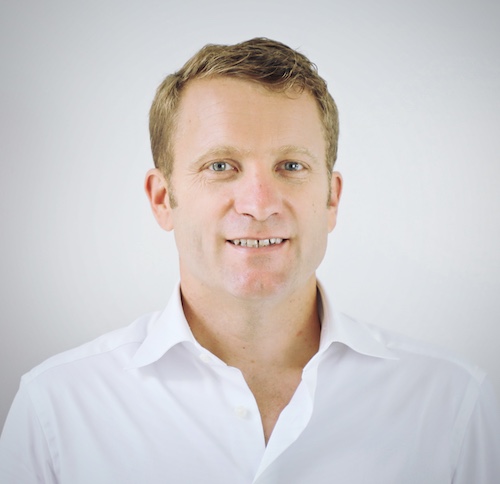
Adam Wenchel
He was studying how AI fails before most people believed it worked. Now he builds the guardrails that keep everyone else's models honest.

Product Genius
Product Genius is a Cambridge, Massachusetts AI company that builds a personalized, TikTok-style shopping feed for Shopify stores. Its platform, powered by what the company calls Large Interaction Models (LIMs), learns from each shopper's swipes, clicks and scrolls to assemble an individualized homepage of products, videos, reviews and Q&A. Founded by MIT PhD and deep-learning hardware pioneer Ben Vigoda, the company grew out of roughly $35 million in DARPA research and reports a median +20% lift in revenue per session, with controlled A/B tests showing a 36% average revenue lift across 25 brands including Betsey Johnson.
Array Labs
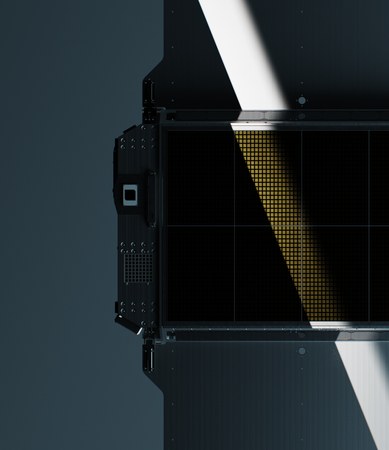
Array Labs designs, builds, and operates radar satellites that fly in coordinated clusters to image the same place on Earth from many angles at once. By distributing the radar across many small, mass-manufacturable satellites instead of one large bespoke spacecraft, the company aims to produce continuously refreshed, high-resolution 3D maps of the planet - a form of space-based radar it likens to what SpaceX did for launch. Founded in 2021 and based in Redwood City, California, Array Labs raised a $20M Series A in January 2026 to scale radar manufacturing and prepare to launch the world's first formation-flying radar satellite cluster.

Carecubes
Carecubes makes the Carecube, an FDA 510(k)-cleared negative-pressure isolation canopy that turns any standard hospital bed into an airborne-isolation unit in about 20 minutes. Born from a DARPA-funded Ebola-era project at San Francisco research lab Otherlab, the device pulls air through an H14 HEPA filter, holds negative pressure, and lets caregivers reach patients through glove walls - isolating the pathogen instead of the patient. The Arden Hills, Minnesota company closed a $6.5M Series A in March 2026 and has deployed across dozens of communities and health systems.

Diffraqtion
Diffraqtion is a Somerville, Massachusetts deeptech company building what it calls the first quantum camera for satellites and telescopes. Spun out of research at MIT and the University of Maryland, its photon-counting sensors paired with AI aim to extract far more information from incoming light than conventional CMOS or CCD sensors, letting smaller, cheaper optics see beyond the diffraction limit. The company targets space domain awareness, defense, and Earth observation, and raised $4.2M in pre-seed funding in January 2026 alongside a DARPA SBIR contract.

S2 Corporation
S2 Corporation is a Bozeman, Montana photonics company that reads the radio spectrum the way a hologram stores an image - all at once. Its core technology, spatial-spectral (S2) holography, uses a cooled, sugar-cube-sized crystal doped with rare-earth atoms as an optical computer that captures and processes radio frequencies across enormous instantaneous bandwidths (0.03 to 110 GHz). Packaged as the Extreme Bandwidth Analyzer and Correlator (EBAC), the technology serves electronic warfare, signals intelligence, RF spectrum monitoring, emitter geolocation, and data mining for U.S. defense and intelligence customers including DARPA and IARPA.
Luis Alvarez
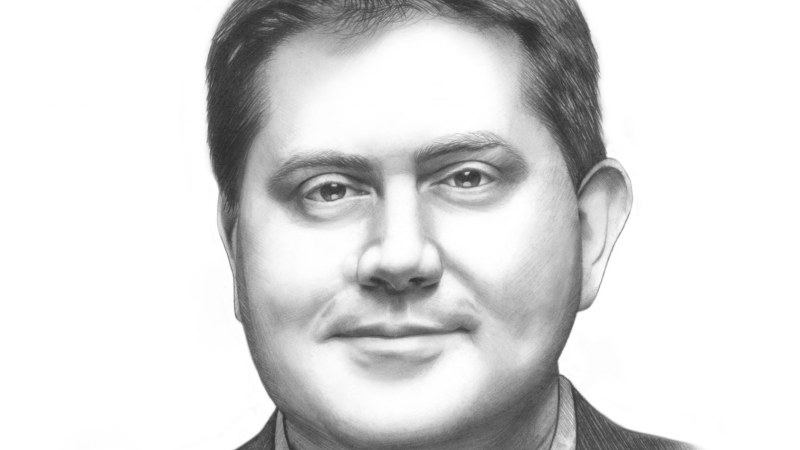
Luis Alvarez is the founder and CEO of Theradaptive, a Frederick, Maryland biotech engineering proteins that latch onto implants and surgical materials to trigger the body to regrow bone, cartilage, and other tissue exactly where it is needed. A retired U.S. Army lieutenant colonel and MIT-trained biological engineer, he traced the idea back to a combat tour in Iraq, where soldiers under his command lost limbs to delayed amputations. Theradaptive has since won multiple FDA Breakthrough Device Designations, raised more than $43 million, and moved its lead protein, AMP2, into human clinical trials.
Naveen Verma
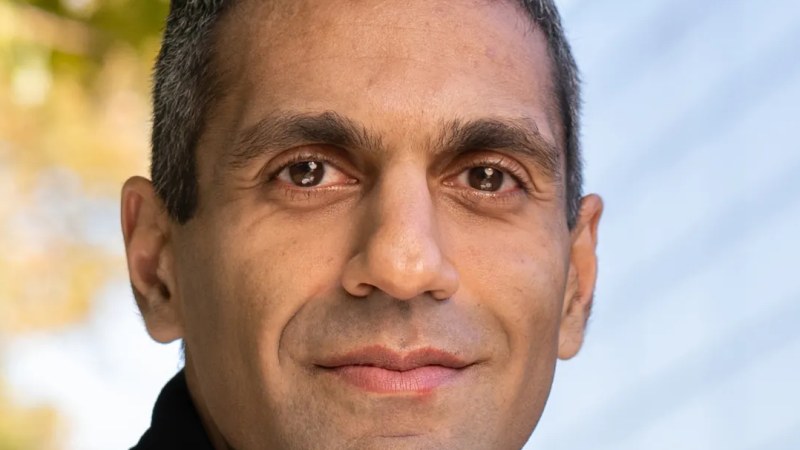
Naveen Verma is the co-founder and CEO of EnCharge AI and a professor of electrical and computer engineering at Princeton University. He spent roughly six years de-risking a single, stubborn idea - computing with electric charge stored in metal capacitors instead of noisy transistors - before spinning it out of his lab in 2022. The result is analog in-memory computing hardware that his company says runs AI inference at roughly 20 times less energy than a typical GPU, aimed squarely at putting powerful AI on laptops and edge devices rather than in power-hungry data centers. EnCharge has raised more than $144 million, including an oversubscribed $100M+ Series B led by Tiger Global in early 2025, and shipped its first commercial accelerator, the EN100.
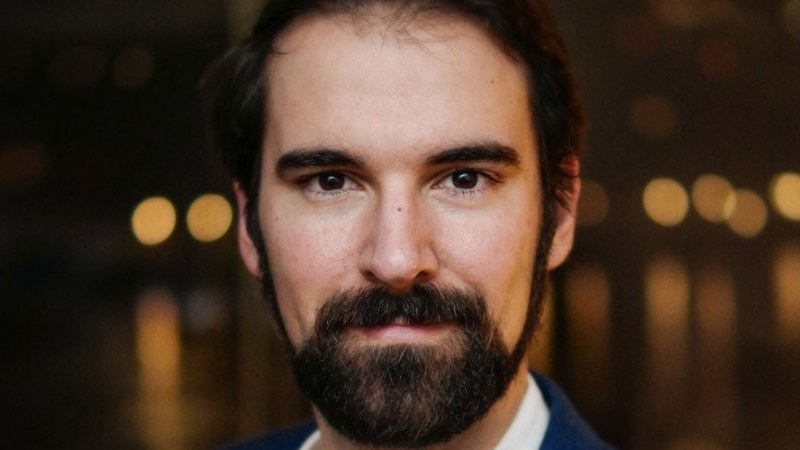
Johannes Galatsanos
Johannes Galatsanos is Co-Founder and CEO of Diffraqtion, a Boston-based quantum imaging startup that has built a quantum camera capable of recovering 95% of photon information lost by conventional sensors - translating to 20x higher resolution and 1,000x faster image processing than any existing optical system. A multilingual MIT and Oxford graduate with Greek-German roots, Galatsanos pivoted from leading AI and data transformation at Novartis to commercializing a decade of DARPA- and NASA-backed quantum photonics research. Diffraqtion won first prize at SLUSH 2025, secured a $4.2M pre-seed round in January 2026, and is targeting satellite launches for space domain awareness and Earth observation by 2028-2029.

Kris Merkel
Kris Merkel is the President and CEO of S2 Corporation, a Bozeman, Montana deep-tech firm turning rare-earth-doped crystals into an optical computer that watches the entire radio spectrum at once. A physicist by training and a patient operator by temperament, he has spent more than two decades pulling a niche piece of laboratory physics, spatial-spectral holography, out of Montana State University and into the hands of the U.S. Department of Defense, DARPA, and the intelligence community.
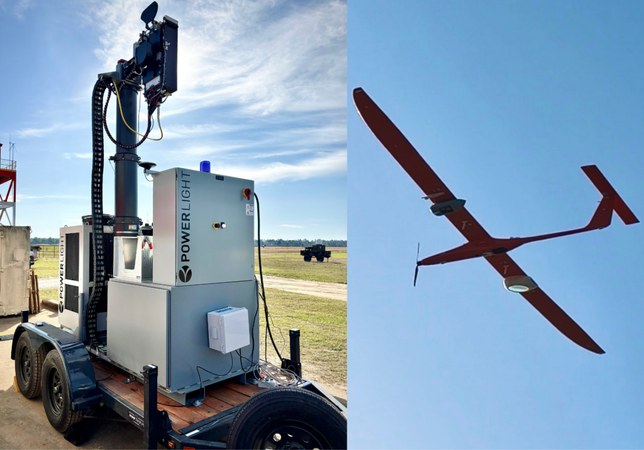
PowerLight Technologies
PowerLight Technologies is a Kent, Washington-based engineering company that transmits electricity through the air using lasers. Spun out of the original LaserMotive (founded 2006 by Tom Nugent and Jordin Kare), PowerLight builds end-to-end power beaming systems that keep drones flying for hours, relay energy across kilometers of free space, and underpin DARPA initiatives for terrestrial, aerial, and lunar power transmission.
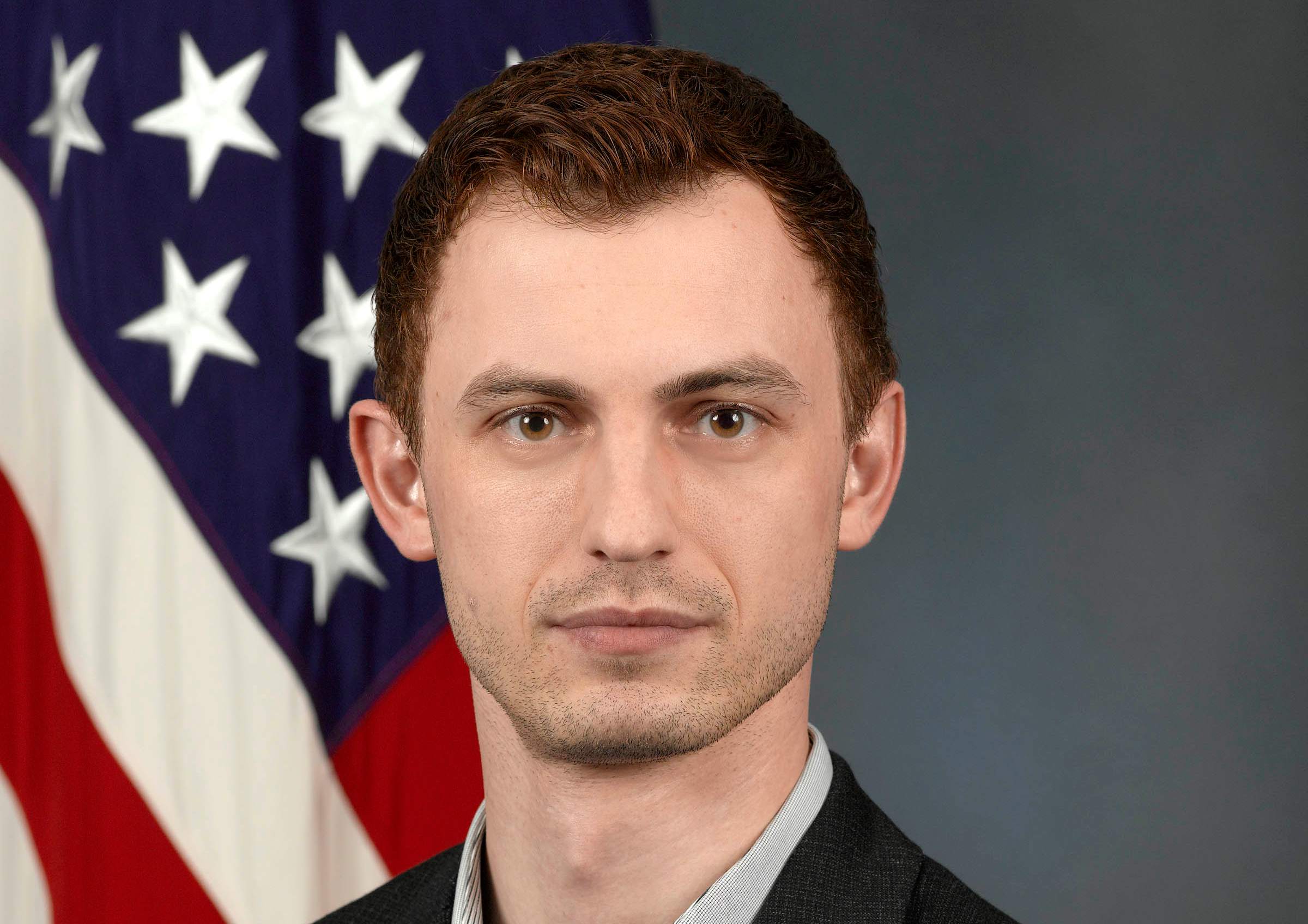
Paul Eremenko
Paul Eremenko is the co-founder and CEO of P-1 AI, a startup building 'engineering AGI' for the physical world through an AI agent named Archie. Born in Lviv, Ukraine and trained at MIT, Caltech and Georgetown Law, he ran X-plane and spacecraft programs at DARPA, created Google's modular-phone Project Ara, became the youngest CTO of Airbus at 35, served as CTO of United Technologies, and co-founded hydrogen-aviation company Universal Hydrogen. P-1 AI emerged from stealth in April 2025 with $23M in seed funding led by Radical Ventures.

Armon Sharei
Armon Sharei is the founder and CEO of Portal Biotechnologies, a cell-engineering platform company in Watertown, Massachusetts that builds devices to push genetic and molecular cargo into living cells without killing them. He earned a chemical engineering PhD at MIT, where he invented the membrane-squeezing CellSqueeze technique, then founded SQZ Biotechnologies, raised more than $300M, struck a billion-dollar Roche partnership, and took the company public on the NYSE in 2020 before being ousted and watching it liquidate in 2024. After a sabbatical spent drawing comics about immune cells, he returned with Portal, choosing this time to sell tools rather than develop drugs, and has built a network of 100+ customers including most of the top 10 global pharma companies plus an $8M DARPA contract.

DUST Identity
DUST Identity authenticates physical objects with a thin coat of engineered diamond dust. Each randomly oriented constellation of microscopic diamonds forms a fingerprint that cannot be copied, and that fingerprint is bound to a tamper-evident digital record. The result is an unbroken chain of trust from raw material to final delivery, used across aerospace, defense, electronics, luxury goods, and sports memorabilia.

Umaimah Khan
Umaimah Khan is the co-founder and CEO of Opal Security, a San Francisco identity security company building the controls that decide who - and increasingly what - can access an organization's systems. A homeschooled math kid who entered MIT at 16 and fell for cryptography, she did research embedded with government agencies including DARPA, then engineered infrastructure and security at two startups that became unicorns. She founded Opal in 2020 to treat authorization as the hard technical problem she believes it is, and has raised roughly $32M, including a $22M Series B in December 2023. Opal's customers include Cloudflare, Figma, Databricks, Scale AI, Grammarly and Perplexity.

Ophir Gaathon
Ophir Gaathon is the co-founder and CEO of DUST Identity, a Massachusetts deep-tech company that sprinkles microscopic, industrial diamond dust onto physical objects to give them an unclonable fingerprint. A Columbia-trained applied physicist who once chased the quantum properties of diamonds for computing, he turned that research into an identity layer for the physical world, used across defense, aerospace, automotive and luxury supply chains. Backed by Kleiner Perkins, Airbus Ventures, Lockheed Martin and Castle Island Ventures, his company has raised more than $50M and works on problems originally posed by DARPA.

Artis
Artis, LLC (Advanced Real-Time Information Systems) is a Herndon, Virginia defense and technology developer that builds systems for problems measured in microseconds. Founded in 1999 by Keith Brendley, the company is best known for active protection systems for military vehicles - Iron Curtain and its third-generation successor, Sentinel - that detect and defeat incoming rockets, missiles and drone-borne threats in fractions of a second. Beyond defense, Artis applies its high-speed sensing and parallel-processing work to highway worker safety, 3D imaging and pedestrian monitoring.
EnCharge AI
EnCharge AI is a Santa Clara semiconductor startup, spun out of Princeton University, building AI accelerator chips based on analog in-memory computing. Its charge-based architecture runs heavy AI workloads on laptops, workstations and edge devices at roughly 20x the energy efficiency of conventional GPUs. Its first product, the EN100 accelerator, delivers 200+ TOPS within an 8.25W power budget, aiming to move generative AI out of the data center and onto the devices people actually hold.
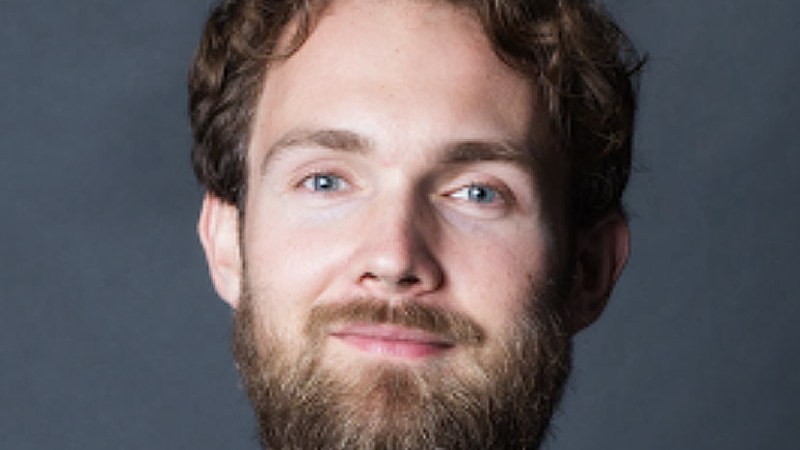
Alec Nielsen
Alec Nielsen is the co-founder and CEO of Asimov, a Boston synthetic biology company building computer-aided design tools for living cells. His MIT PhD work in the Voigt Lab produced Cello, a programming language that compiles plain-text logic instructions into thousands of DNA letters. Asimov turned that academic breakthrough into a commercial platform for designing and manufacturing biologics, cell therapies, and gene therapies, backed by Andreessen Horowitz, DARPA, and a $175M Series B led by CPP Investments.
Ben Reinhardt
Ben Reinhardt is the founder and CEO of Speculative Technologies, a nonprofit industrial research lab built on the ARPA model to unlock materials and manufacturing breakthroughs that have no natural home in startups, academia, or government. A space-robotics PhD who once built tractor beams at Cornell and taught machines to see at Magic Leap, he became one of the most-read writers on how DARPA actually works, then set out to build a privately funded version of it. He hosts the Idea Machines podcast, where he interviews people who design the systems that produce innovation.
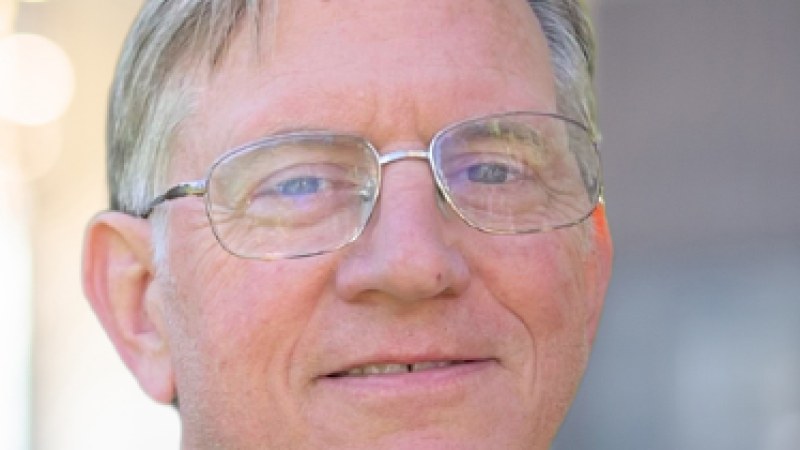
Tim Jenks
Tim Jenks is the Interim CEO of PowerLight Technologies, a Kent, Washington-based company pioneering laser-based wireless power beaming for drones, defense systems, and space infrastructure. A U.S. Naval Academy graduate with a nuclear engineering master's from MIT and an MBA from Stanford, Jenks spent over two decades building NeoPhotonics from a venture-backed startup into a NYSE-listed company before selling it to Lumentum Holdings for approximately $918 million in 2022. Now he's steering PowerLight through a pivotal moment: in April 2026, the company achieved the world's first wireless power beaming to a fielded military drone in flight, delivering kilowatt-class laser energy to a Kraus Hamdani Aerospace K1000ULE at 5,000 feet altitude - a breakthrough that could redefine how unmanned aircraft operate in contested environments.
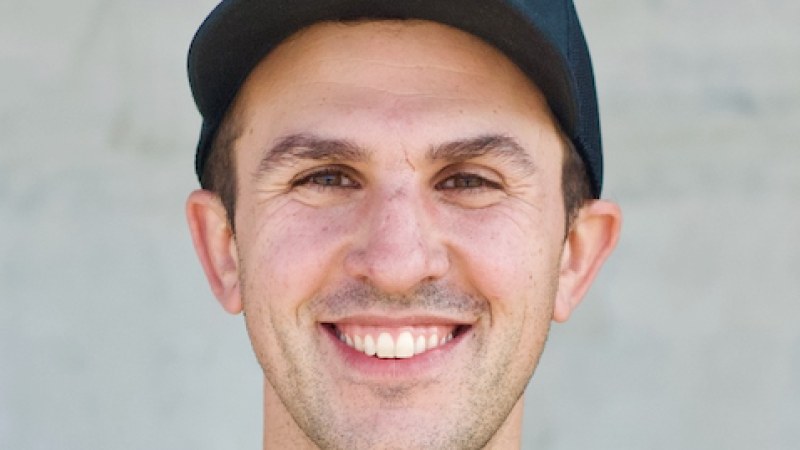
Aaron Nathan
Aaron Nathan is the CEO and co-founder of Point One Navigation, a San Francisco-based precision location company building the infrastructure layer for Physical AI. A Cornell-trained engineer who helped lead the university's DARPA Urban Challenge team, he went on to serve as Chief Architect at Coherent Navigation (acquired by Apple) before co-founding adeptCloud (acquired by Hightail). At Point One, he is turning centimeter-level GPS accuracy from a specialist tool into a universal platform — raising a $35M oversubscribed Series C from Khosla Ventures in 2025 to accelerate a mission: making precise location as ubiquitous as GPS itself.