interoperability
(39)
Nervecentre wants the whole hospital on the same page
A bedside software specialist is taking on the hospital-wide patient record. Its NHS contracts reveal the appeal of shared information - and the hard work of getting everyone to use it.

R3 built blockchain for banks. Now it wants to open the gates.
Corda brought shared ledgers into the financial back office. R3’s next wager is that the assets inside those private networks can find a bigger market on Solana.

TPP wants your medical record to stop starting over
The company behind SystmOne has built a business around a simple promise: one patient, one record. Its most revealing results come from fixing the small administrative failures that make healthcare feel so disjointed.

Parity built the machinery. Now comes the human part.
The engineers behind Polkadot spent a decade making blockchains work together. Their next test is whether people can use the result without needing a blockchain education.
Qualifacts Built a Behavioral-Health EHR Empire. The Bet Is That Three Platforms Beat One.
Qualifacts assembled three EHRs for three different kinds of behavioral-health provider. Now it is using AI, interoperability, and targeted acquisitions to turn that portfolio into something closer to an operating system for care.

Lightbeam Found Billions in Healthcare’s Messy Middle - Then Turned a Customer Into Its Operator
Hospitals do not need another dashboard. They need to know who to call before lunch. Lightbeam built a business around that unglamorous handoff from data to action - and says its customers have generated more than $5 billion in gross savings along the way.

The BlueJeans Playbook: Build the Bridge, Sell for Under $500 Million, and Know When Bundles Win
BlueJeans made incompatible cameras talk, grew to 25 million users, and sold to Verizon at the precise moment video became oxygen. Its shutdown four years later is a useful warning: a brilliant bridge can still lose when the platforms on both sides become the destination.

Jean Ross Is Building the Missing Place Between the Portal and the Kitchen Table
A patient-finance manager became a critical-care nurse, then turned years of binders, portals and repeated explanations into a company. Jean Ross’s useful idea is simple: the record should travel with the family.
The Standards Group That Made 4,500 Smart-Home Gadgets Actually Talk to Each Other
It doesn't sell a single gadget. It sells a promise - that the smart lock, the motion sensor and the hub in your hallway will all speak the same language, no matter whose name is on the box.
The Back Office Behind One in Five American Doctor Visits
athenahealth doesn't see patients. It runs the billing, charts, and reminders for the clinicians who do - and it's betting the whole network on AI.

Surtr Defense Systems
Surtr Defense Systems builds ParallaxOS, a hardware-agnostic operating system for drone defense. It ingests data from any radar, RF detector, camera, or acoustic array, fuses it into a single common operating picture, applies AI threat classification, and passes human-authorized engagement recommendations to any effector. Founded in 2026 by two former Shield AI and Anduril autonomy engineers, the company is a Y Combinator Spring 2026 (P26) startup that raised roughly $4.8M in seed funding and field-tested its system with Ukraine's Brave1 defense cluster.
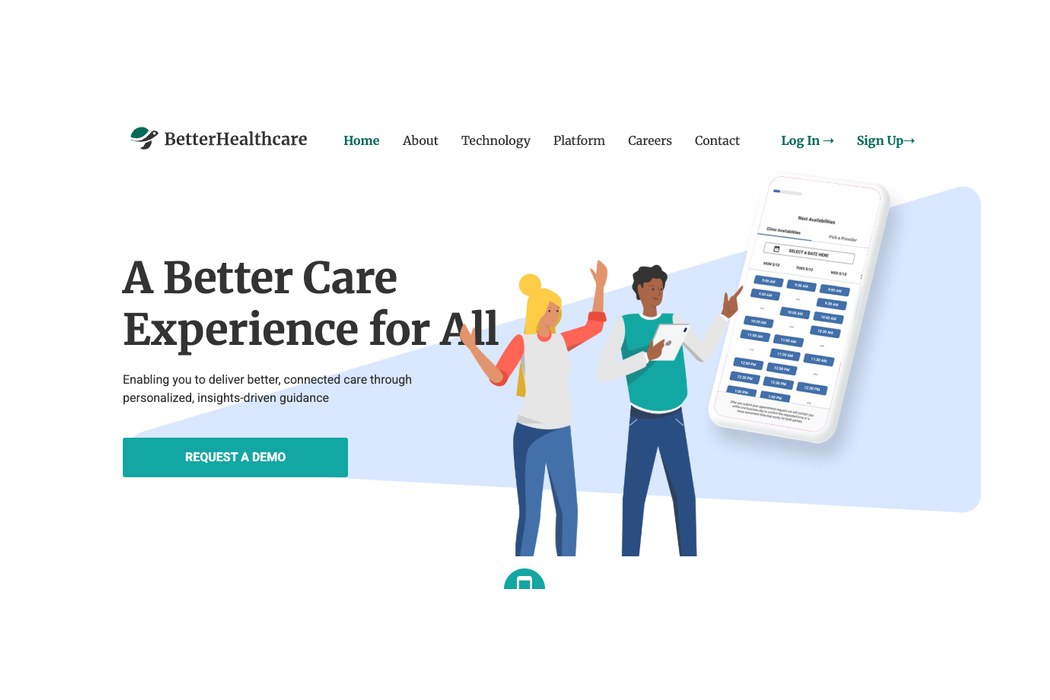
BetterHealthcare
BetterHealthcare is a New York-based healthcare technology company that modernizes patient access through its BetterAccess platform, a HIPAA-compliant SaaS product for online self-scheduling, telehealth booking, automated reminders and bi-directional integration with practice management and EHR systems. Founded in 2016 as BetterPT - a booking app for physical therapy - the company broadened into a full patient-access platform used across the continuum of care and was acquired by HealthBus (TRCM Fund) in January 2025.
DeFi Devs
DeFi Devs is a Miami-based blockchain and AI development company that serves as the lead community developer of the Accumulate Protocol, an identity-based, delegated-proof-of-stake blockchain built for decentralized finance, digital identity, and enterprise tokenization. Founded in 2021 as a subsidiary of Inveniam Capital Partners and led by Factom founder Paul Snow, the firm builds infrastructure for cross-chain atomic transactions, human-readable addresses, and hierarchical key management, positioning Accumulate as an 'Internet of Blockchains' that bridges regulated real-world assets onto decentralized rails.
IgniteData
IgniteData is a healthtech company automating the transfer of clinical trial data between hospital electronic health records (EHRs) and sponsors' electronic data capture (EDC) systems. Its flagship platform, Archer, is a cloud-based, system-agnostic 'Virtual Research Assistant' that uses HL7 FHIR and SMART on FHIR APIs to move clinically validated data securely and automatically, cutting manual transcription, reducing source data verification, and helping treatments reach patients faster. Founded in the UK and now operating on both sides of the Atlantic, IgniteData works with pharmaceutical sponsors like AstraZeneca and research hospitals including UCLH, Cambridge University Hospitals, and Memorial Sloan Kettering Cancer Center.

Noble
Noble is a purpose-built blockchain for native asset issuance, focused on stablecoins and tokenized real-world assets. Built on the Cosmos SDK and connected through IBC, it is the canonical home of native USDC in the Cosmos ecosystem and the issuer of the yield-bearing Noble Dollar (USDN). Founded in 2022 by Jelena Djuric, Stefan Coolican and John Letey after the collapse of Terra's UST, Noble gives issuers such as Circle, Ondo Finance, Hashnote and Monerium a neutral, compliant rail to mint dollars and distribute them across dozens of connected chains - with no gas token required and fees paid in USDC.
Predoc
Predoc is a New York-based, clinician-founded startup building an AI-native platform for health information management. It automates the retrieval, cleaning, and structuring of patient medical records - pulling data from digital sources, faxes, and direct provider requests - and turns fragmented, unstructured documents into normalized, actionable data that plugs into existing clinical and research systems. Founded in 2022, the company raised $30M (Series A led by Base10 Partners) and serves oncology groups, research networks, and virtual care providers.

Snaptrude
Snaptrude is a cloud-based, AI-native design platform for architecture, engineering and construction (AEC) teams. It lets architects move from a brief to a BIM-ready model inside one connected, browser-based workspace - handling site analysis, space programming, massing, BIM modeling and presentation while staying interoperable with legacy tools like Revit, Rhino and Archicad. Founded in 2017 by Altaf Ganihar and backed by Foundamental and Accel, Snaptrude positions itself as a modern, collaborative alternative to design software largely built in the late 1990s.

Vim
Vim is a healthcare technology company that builds a middleware and developer platform connecting data to clinical workflow at healthcare's 'last mile' - the point of care. Its EHR-agnostic Vim Connect layer sits on top of popular electronic health records, pulling in insights and applications from payers, health plans, and digital-health innovators and surfacing them directly inside a provider's existing workflow. By automating tasks such as care gap closure, diagnosis capture, prior authorization, referral management, and chart retrieval, Vim helps payers and providers align on value-based care while reducing administrative burden for clinicians.
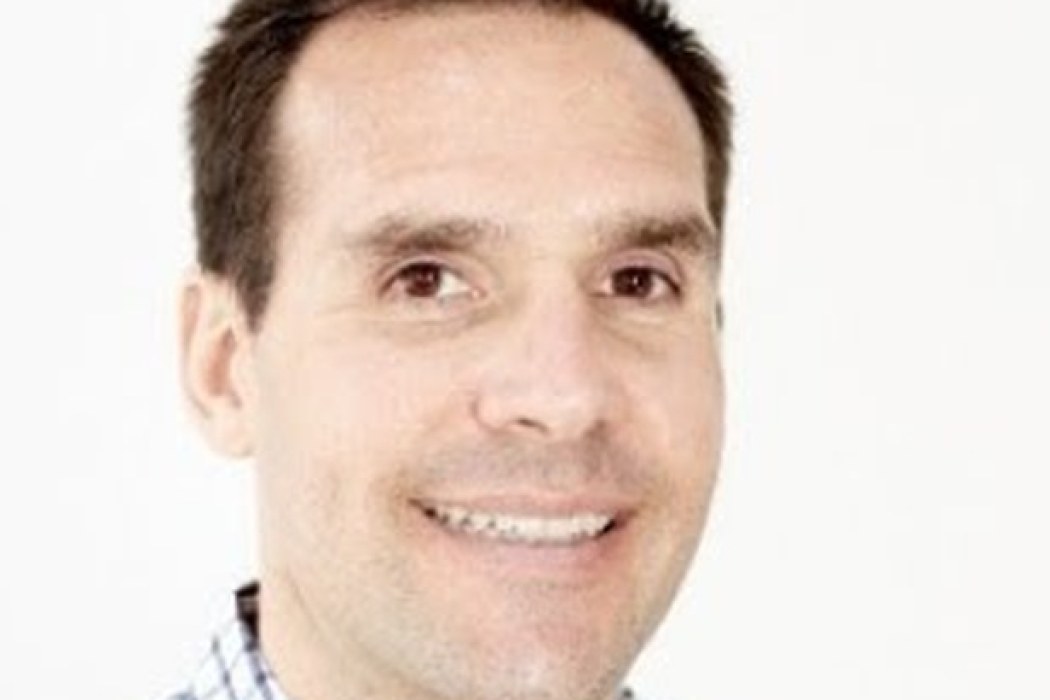
Greg Peters
Greg Peters is the co-founder and CEO of BetterHealthcare, a New York-based healthcare technology company that started as BetterPT in 2016 and grew into an interoperable patient-access and scheduling platform. A former Division I football player and New York fitness professional, he partnered with Hospital for Special Surgery surgeon Dr. Stephen Fealy to remove the friction in booking physical therapy and, later, broader care. BetterHealthcare was acquired by HealthBus in January 2025, where its BetterAccess platform now powers real-time appointment booking and provider matching across a national network.

RISA Labs
RISA Labs is a Palo Alto healthtech company building an AI operating system for oncology. Its platform, BOSS (Business Operating System as a Service), decomposes the paperwork-heavy work of cancer care - prior authorization, benefits verification, eligibility checks, denial management - into micro-tasks handled by a network of AI agents, digital twins, and reinforcement learners that plug into EHRs and payer portals. Founded in 2024 by IIT Kanpur alumni Kshitij Jaggi and Kumar Shivang, RISA aims to cut the days-long administrative delays that keep cancer patients waiting for treatment.

Oron Afek
Oron Afek is co-founder and CEO of Vim, a New York-based healthcare technology company that plugs into electronic health record systems to close the gap between insurers and clinicians at the point of care. An Israeli entrepreneur with a background in the IDF's special forces and a summa cum laude degree in law and business from IDC Herzliya, he founded Vim in 2015 with Sequoia Israel as founding investor and has since raised over $100 million from investors including Optum Ventures, Anthem, Walgreens Boots Alliance, and Frist Cressey Ventures.

Paul Snow
Paul Snow is the inventor of the Factom protocol and the architect of the Accumulate blockchain, currently building tokenization and digital-identity infrastructure at DeFi Devs and IDD Labs. He co-founded the Texas Bitcoin Conference, testified before the U.S. Congress on blockchain, and is listed as inventor on more than 40 patents that now underpin Accumulate.

Grant Walter
Grant Walter is the Chairman, CEO and President of KoreLock, a Denver-based IoT technology company that sells turnkey embedded smart lock platforms to the lock and access-control industry. Rather than making locks or software, KoreLock builds the printed-circuit-board module, firmware and cloud that let any manufacturer ship a Wi-Fi and Bluetooth connected lock. Its patent-protected, gateway-free Wi-Fi direct technology sits inside tens of thousands of locking devices across 65+ countries. In 2023 Walter was named a Security Industry Innovator for that WiFi-ready platform.

Medplum
Medplum is an open-source, API-first, FHIR-native healthcare developer platform - a 'Firebase for Healthcare' that gives engineers a HIPAA- and SOC2-ready backend so they can ship custom EHRs, patient portals, and clinical workflows without rebuilding the plumbing.

Succinct
Succinct is a San Francisco cryptography company building SP1, an open-source zero-knowledge virtual machine that lets developers prove the correct execution of any Rust program, and the Succinct Prover Network - a decentralized marketplace where independent provers compete to generate ZK proofs for rollups, bridges and onchain applications.

Allan Brik
Allan Brik is the CEO and managing founder of Everysk, a New York fintech building intelligent automation and risk workflows for capital markets. A structural engineer turned quant turned operator, he spent three decades managing risk at Merrill Lynch, Goldman Sachs, and the $14 billion hedge fund allocator Arden Asset Management before founding Everysk in 2013. He holds a PhD in Computer Aided Engineering from MIT and argues that cloud computing, open APIs, and agentic AI are quietly dismantling the spreadsheets and data silos that have governed investment management for decades.

NexHealth
NexHealth is a San Francisco-based health technology company building the patient experience platform for medical and dental practices. Its software gives doctors EHR-integrated online scheduling, patient messaging, digital paperwork, recalls, reviews and payments, while its Universal API and proprietary Synchronizer let developers read and write data across 20+ practice management systems in real time. Founded in 2017 by Alamin Uddin and Waleed Asif, NexHealth reached unicorn status in 2022 with a $125M Series C at a $1B valuation and serves more than 10,000 practices.

HealthEx
HealthEx is a San Francisco healthcare technology company building a patient consent and preference platform that lets individuals authenticate, access, and share their comprehensive health records in real time - while giving health systems a way to enforce granular consent across the care journey. Founded in 2024 by physician Priyanka Agarwal and engineer Anand Raghavan, it raised $14M led by General Catalyst and operates under the federal TEFCA framework, connecting patients to most U.S. care providers through partners like Epic, athenahealth, CLEAR, and CommonWell.

HERE
HERE is the enterprise browser company formerly known as OpenFin. Built on Google Chromium, its software turns the workday browser into a unified workspace - stitching web apps, internal tools and data together so employees stop paying the 'toggle tax' of jumping between disconnected applications. After 14 years winning over the world's largest banks with its desktop interoperability platform, OpenFin relaunched as HERE in June 2024 to take the same technology beyond finance into contact centers, healthcare, government and any enterprise drowning in browser tabs.

Vocera Communications, now part of Stryker
Vocera Communications builds the hands-free, voice-controlled communication tools that hospitals use to connect care teams in real time. Founded in 2000 and inspired by the Star Trek communicator badge, Vocera's wearable Badge and Smartbadge, plus its Vina app and Engage intelligent-workflow platform, let clinicians reach a colleague by name, role, or group with a single voice command. Used in roughly 2,300 facilities worldwide and integrated with more than 150 clinical and operational systems, Vocera went public in 2012 (NYSE: VCRA) and was acquired by medical-technology giant Stryker in February 2022 for about $3.09 billion, where it now anchors Stryker's digital care coordination portfolio.