The bridge nobody else wanted to build
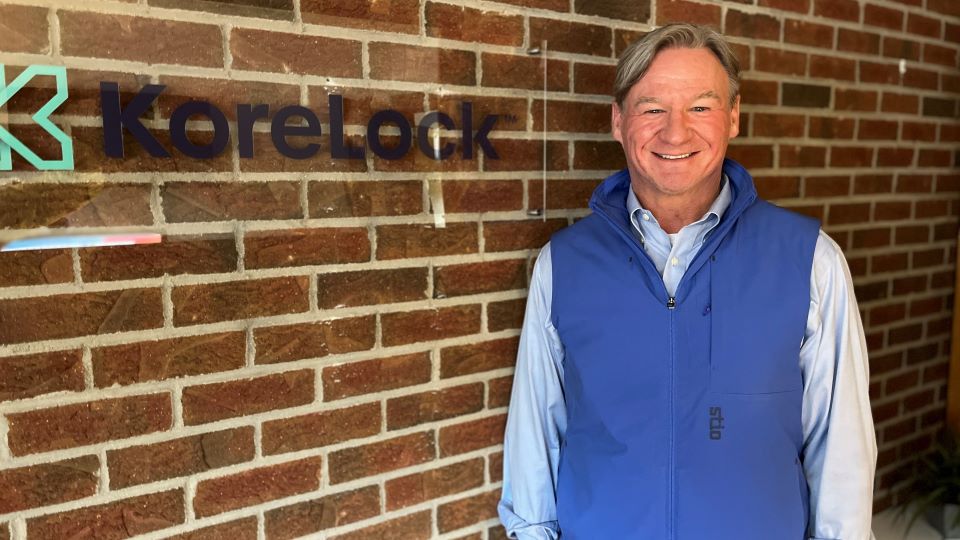
Grant Walter runs a company that will not sell you a lock. It will not sell you access-control software either. What KoreLock sells is the thing sitting between the two - a small printed circuit board, some embedded firmware, a cloud to talk to, and an app to open the door. Slide that module into someone else's lock and it wakes up on Wi-Fi and Bluetooth. That is the whole business, and Walter guards its narrowness like a moat.
As Chairman, CEO and President of KoreLock, Inc., he leads a Denver outfit that describes itself as the only true technology bridge in its category. The pitch is deceptively plain: any access-control software should be able to talk to any locking hardware, regardless of brand. Walter calls it brand-agnostic. In an industry built on walled gardens, that word is closer to a provocation.
Our brand-agnostic interconnection technology bridges any access control software with any type of locking hardware.
A startup that skipped the risky part
KoreLock is technically young - formed in 2022 - but it did not start from a blank page. It spun out of a larger software business, carrying with it more than a decade of intellectual property in Wi-Fi direct connectivity for locks. That inheritance is the plot twist. Most Series A companies are still hunting for product-market fit. Walter's arrived with the fit already stamped on it: technology field-tested for years and sitting inside tens of thousands of devices before the new logo went on the door.
The money followed the proof. Iron Gate Capital, a private equity firm, and Kozo Keikaku Engineering of Japan invested alongside management to stand the company up. What they bought was not a prototype. It was a running platform looking for a sharper commercial story.
The patent that sips instead of gulps
Wi-Fi has a reputation among lock makers, and it is not flattering: power-hungry. A radio that keeps a battery-powered lock chatting with the network tends to flatten the battery. The usual fix is a gateway - an extra box on the wall, more wiring, more cost, more things to install and support. KoreLock's answer is a patent aimed squarely at power savings, letting a Wi-Fi direct lock stay connected without the gateway and without hardwiring. Take out the box on the wall and you take out a big reason manufacturers said no.
Traditional lock companies have tried to develop their own smart locks but abandoned these efforts, lacking the capabilities to do it themselves.
That sentence is the entire market thesis in one breath. The incumbents wanted connected locks. They tried. They quit. Walter's company exists to be the capability they could not build - and, crucially, to hand it over without competing against them on the shelf.
The outsider's advantage
Walter did not grow up in the security industry. He arrived from the business side - an MBA from the Tuck School of Business at Dartmouth in his back pocket - and he treats that lack of pedigree as a feature. Someone steeped in the trade might have assumed the walled gardens were load-bearing. Walter looked at an industry where giants own whole ecosystems and innovate in small, careful increments, and saw an opening for a fast, neutral supplier that lowers the barrier to entry for everyone else.
The strategy shows up in the partnerships. KoreLock teamed with PDQ Manufacturing to build toward an integrated access-control platform and folded in an integration with Jervis Systems to widen what its locks can plug into. Each deal is another node on the bridge - proof that neutrality, done well, turns would-be rivals into distribution.
What the industry noticed
In July 2023, SecurityInfoWatch, Security Business and Security Technology Executive named Walter a Security Industry Innovator for the WiFi-ready IoT smart lock technology. The award goes to people the editors describe as pushing the envelope to meet market needs. For a company barely a year into its independent life, and a CEO who had never worked a day inside the trade, it was a fast handshake from the establishment he set out to route around.
People are increasingly relying on untethered connectivity to essential devices.
The ambition under the modesty
For a business defined by what it refuses to do, the goal is not modest. Walter wants KoreLock to become the universally adopted IoT technology hardware and services platform for access control - the default bridge, the piece everyone reaches for, the standard nobody argues with. It is the plumber's version of world domination: own the connection, not the fixtures. Stay invisible inside 75,000 locks and counting, in more than 65 countries, and let every brand on every door quietly run on your board.
The elegance of the plan is that it only works if he stays disciplined. The moment KoreLock starts making its own locks or its own software, it stops being neutral and starts being a competitor - and the bridge burns from both ends. So far, Walter's most important product decision is the one he keeps refusing to make.
KoreLock is well-positioned for accelerated growth, anchored by partnerships with industry-leading lock brands worldwide.
Locks are the oldest security technology on earth. A CEO with no history in the field, holding a decade of borrowed patents, is betting he can make them all speak the same language - and that the winning move is to sell everyone the translator while never once selling the lock.