Profile / Healthcare / Founder
Oron
Oron
Afek.
He plugs into your doctor's EHR without asking permission from your doctor's EHR. That's the business.
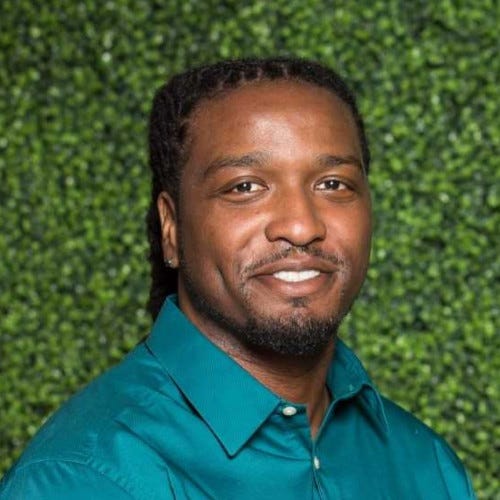
He plugs into your doctor's EHR without asking permission from your doctor's EHR. That's the business.
Oron Afek runs a company called Vim, which sells software that lives inside the electronic health record that lives inside the American doctor's office. If you have never thought about what lives inside the electronic health record that lives inside the American doctor's office, that is roughly the point. Afek has thought about it for a decade, and it is why Sequoia Israel, Optum Ventures, Anthem, Walgreens Boots Alliance, and Frist Cressey Ventures have collectively wired him more than $100 million.
Vim's product does something that sounds boring and is, in fact, quite boring. It connects the systems that insurance companies use to keep track of what a patient is allowed to do, to the systems that doctors use to keep track of what a patient is being asked to do. When those two systems talk to each other correctly, prior authorizations get resolved during the visit instead of two weeks after it. Referrals go to in-network specialists. Diagnosis codes come out cleaner. HEDIS gap-closure numbers move. This is not the kind of thing anyone writes songs about. It is the kind of thing that, if you did it well enough at national scale, would make American healthcare somewhat less exhausting for everyone in it.
Afek did not start out in healthcare. Before Vim, he ran a telecommunications company called Cellxpert, which shipped applications onto feature phones. Then he ran a gaming company called Smite Entertainment, direct-to-consumer, out of Tel Aviv. Before either of those, he served in a specialist unit of the Israel Defense Forces and, per some retellings, spent time in the flight academy. Before any of that, he went to IDC Herzliya, now Reichman University, and graduated summa cum laude with degrees in law and business administration. It is the kind of Israeli founder biography that clusters like grapes on a vine, and Afek is careful to point out that his path through it was not linear. His self-critique on the record is unusually specific: he stopped, at some point, "trying to chase the next shiny object" and admitted what he was good at, which was building organizations, and what he was not, which he does not enumerate publicly.
Vim was founded in 2015 with Sequoia Israel as the founding investor, which is a slightly strange sentence to write. Sequoia Israel writes checks into consumer marketplaces, gaming, cybersecurity, developer tools. Its book of business is not thick with middleware for American health insurers. That the firm nonetheless underwrote Vim's seed round is either an indication that Afek made a very compelling pitch about the size of the American healthcare software market, which is roughly the size of a small country's GDP, or an indication that Sequoia Israel understood that the founder was the underwrite. Probably both. In the years since, the cap table has filled up in a way that is telling on its own: two large insurance companies (Optum, Anthem), one retail health giant (Walgreens Boots Alliance), and one specialist healthcare fund (Frist Cressey). Payers do not usually invest in the plumbing they will one day depend on unless they intend to depend on it.
Afek's public position on American healthcare is that it is, in his words, "not healthy, not caring, and not really a system." This is the kind of thing CEOs of health insurance middleware companies are often reluctant to say out loud, because their customers are the system. Afek says it anyway, and then explains why the fix is technical rather than moral. His argument, boiled down, is that fee-for-service medicine rewards volume because the plumbing rewards volume, and value-based care will only work when the plumbing rewards outcomes. Vim is the plumbing. "Doctors making money, not from rendering more care but by rendering less care" is how he described the destination state, in an interview with health-law commentator David Harlow. The company's role, in Afek's telling, is to make the switch legible at the point of care, on the screen the doctor is already looking at, without asking the doctor to learn a new tool.
Vim now runs on Epic, Athena, eClinicalWorks, and several other electronic health records. Its integrations are what the industry calls "bi-directional," which means data flows both into the EHR from the payer and back out to the payer from the EHR. This is technically difficult and legally complicated, because the EHR vendors have historically treated their systems as closed platforms, and the payers have historically treated their claims data as proprietary. Vim's argument to both sides is that a neutral middleware layer, EHR-agnostic and workflow-native, is the only way anyone actually adopts value-based care contracts at scale. It appears to be a persuasive argument. The company has ~150 employees across New York, Tel Aviv, and Kyiv, and is live in six U.S. markets, with California, Florida, and New York leading.
Afek runs it from Manhattan. His stated ambition, on the record, is to serve 100 million Americans through Vim's platform within five years. That is, roughly, one in three Americans. It is a large number. Whether Vim gets there or not, the interim consequence is that a former Israeli special forces officer with a background in gaming and telecom is now, in a quiet way, one of the more important integration architects in U.S. healthcare. The most consequential companies in American medicine over the next decade will not necessarily be the ones that build new hospitals or new drugs. Some of them will be the ones that make the existing hospitals and existing drugs talk to each other. Vim is one of them.
On leadership, Afek is a broken-record advocate for a single principle: hire smarter than yourself, and lose the ego. "Surround yourself with people that are 10x smarter than you, and put your ego aside" is how he puts it, and he applies the same rule inward. The Cellxpert years, by his account, taught him that great technology is not sufficient. You have to start from a customer with a problem. The Smite years, by his account, taught him something similar and possibly the same lesson twice. What Vim gets from those two prior companies is a founder who is fairly resistant to falling in love with his own product, and fairly aggressive about killing features that customers do not use.
He is on the record quoting Leonardo da Vinci - "simplicity is the ultimate sophistication" - which is the kind of thing founders quote when they want you to know they think product decisions are moral decisions. And he is on the record saying "the currency you are going to take with you when you leave this world is not going to be monetary, it's going to be whether you leave a mark or not," which is the kind of thing founders say when they mean it. Afek appears to mean it. In interviews he tends to redirect questions about his own biography toward questions about American healthcare, which is either a well-honed media discipline or a genuine preference or, again, both.
The number to watch, if you want to watch a number, is not Vim's revenue. It is the fraction of American office visits that touch a payer-provider data exchange during the visit, rather than after it. That number has been near zero for most of the history of American healthcare. Afek is trying to make it not near zero. If he succeeds, the change will be invisible to patients, unromantic to investors, and enormous in aggregate. Which is, arguably, the best kind of change to be trying to make.
"I'm really not motivated by money. I'm motivated by impact."
- Oron Afek, CTech interviewI'm really not motivated by money. I'm motivated by impact.
Surround yourself with people that are 10x smarter than you, and put your ego aside.
The U.S. healthcare system is not healthy, not caring, and not really a system.
It doesn't really matter if you spend $500 or $5,000 on an MRI, because you are going to have that test performed on exactly the same machine.
Doctors making money, not from rendering more care but by rendering less care.
The currency you are going to take with you when you leave this world is not going to be monetary, it's going to be whether you leave a mark or not.
Its portfolio is thick with consumer, cyber, and dev tools - and one healthcare middleware company.
Telecom, gaming, real estate, education. Healthcare is act five.
New York, Tel Aviv, and Kyiv. He hires talent where talent is.
Co-founder and CEO of Vim, a New York-based healthcare technology company that integrates payers and providers inside the electronic health record.
2015, with Sequoia Israel as founding investor.
Over $100 million from investors including Sequoia, Optum Ventures, Anthem, Walgreens Boots Alliance, and Frist Cressey Ventures.
Served in a specialist unit of the IDF, then founded companies in telecom (Cellxpert), gaming (Smite), real estate, and education, mostly from Tel Aviv.
Reichman University (IDC Herzliya), graduating summa cum laude in law and business administration.