BREAKING  Portal Biotechnologies surpasses 100+ active customers DARPA  awards Portal $8M for a Red Blood Cell Factory SECOND ACT  Founder returns after SQZ's collapse NYSE  SQZ went public in 2020 ROCHE  a $1B+ collaboration at its peak BREAKING  Portal Biotechnologies surpasses 100+ active customers DARPA  awards Portal $8M for a Red Blood Cell Factory SECOND ACT  Founder returns after SQZ's collapse NYSE  SQZ went public in 2020 ROCHE  a $1B+ collaboration at its peak
Portal Biotechnologies / Watertown, MA

Armon Sharei

He built a machine that opens a living cell, slips medicine inside, and lets it heal - in a fraction of a second. Then he had to learn how to open up himself.

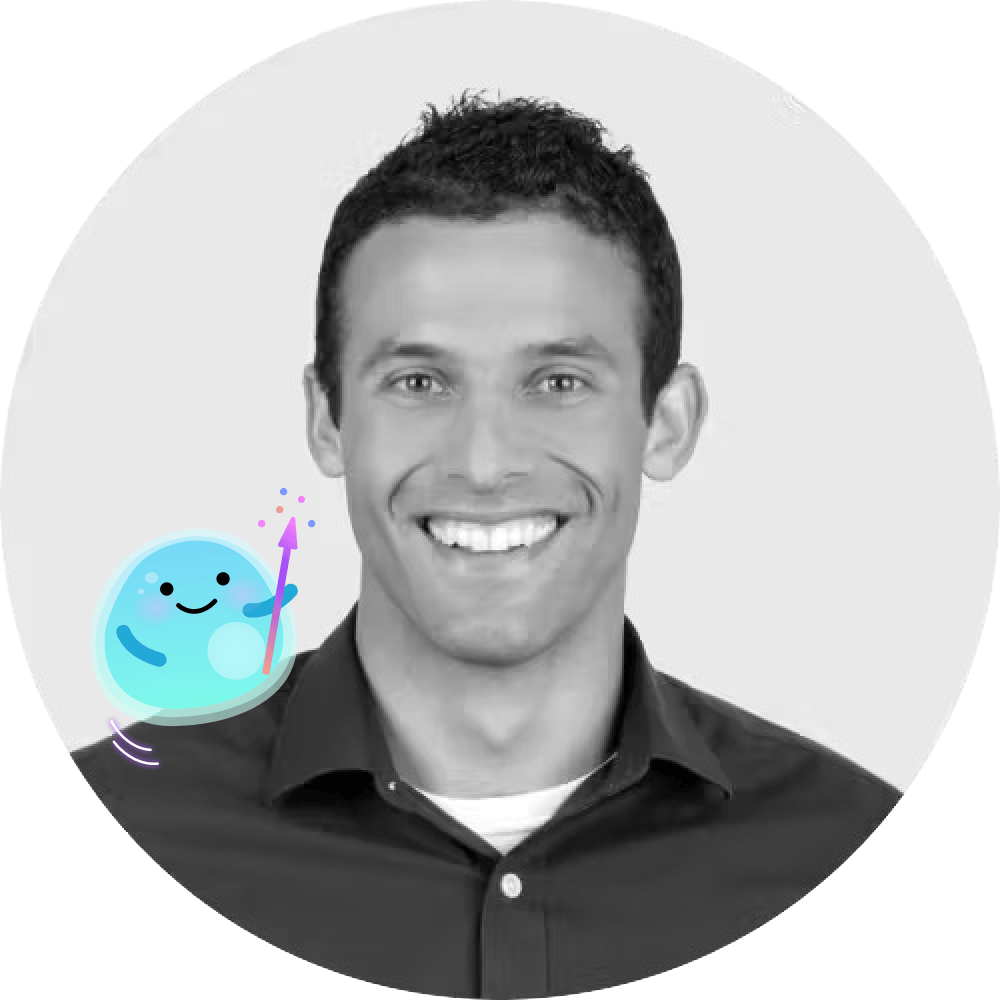
Armon Sharei, founder and CEO of Portal Biotechnologies
Armon Sharei, PhD — Founder & CEO, Portal Biotechnologies
The Dispatch

A toolmaker, the second time around

Armon Sharei runs Portal Biotechnologies out of a building on Coolidge Avenue in Watertown, Massachusetts, and the thing he sells is not a drug. It is a fleet of machines - the Galaxy, the Galaxy-i, the MilliBooster cartridge - that do one strange, useful trick: they push living cells through a channel narrow enough to stretch the cell membrane open, hold it open for an instant, and let molecular cargo float in before the membrane seals back up. RNA. CRISPR. Peptides that no cell would normally let through the door. The cell survives. It keeps doing its job. That is the whole magic, and it is harder than it sounds.

Portal is roughly 70 people and, by its own count, more than 100 active customers - most of the top 10 global pharmaceutical companies, leading academic hospitals, and a Red Blood Cell Factory program funded by an $8M DARPA contract. The company launched in December 2023, raised a $5M pre-seed led by Pear VC in March 2024, shipped its first product that same year, and has been adding customers and a funding round led by NFX since. For a company barely two years old, the customer logos read like the guest list at a much older party.

But to understand why Sharei built Portal the way he did - tools, not therapies, on purpose, by hard-won design - you have to know what happened the first time he tried to change medicine. Because he has done this before. He went all the way to the top. And then the floor gave out.
By the numbers
$300M+
Raised at SQZ
$1B+
Roche collaboration
100+
Portal customers
$8M
DARPA contract

SQZ figures span Sharei's roughly decade-long tenure; Portal figures are current to 2025.

The Idea

Gentle violence

The breakthrough is, at its core, a controlled act of bruising. Squeeze a cell hard enough and its skin springs tiny leaks. Time it right and you can put almost anything through them.

Step 02

Stretch

The squeeze stretches the membrane, opening transient gaps - no virus, no electric shock required.

Step 03

Heal

Cargo diffuses in. The membrane reseals. The cell lives, healthy and reprogrammed.

Sharei worked it out during his PhD at MIT, in the labs of chemical-engineering heavyweight Klavs Jensen and the famously prolific inventor Robert Langer. Most methods for getting material into a cell either rely on a virus to smuggle it in or zap the cell with electricity - both effective, both rough on the cell, both fussy about which cell types they work on. The squeeze was indifferent. It worked on nearly anything, including the stubborn primary human immune cells that matter most for therapy. In 2014, Scientific American named it one of its Top 10 World Changing Ideas.

"Everything inevitably starts to depend on what the trial readout is. You're betting the entire validity on the first things you picked."
- Armon Sharei, on why he no longer wants to develop drugs
The Arc

Up the mountain, then off the cliff

SQZ Biotechnologies was the company Sharei built on top of the squeeze. It did everything a hot biotech is supposed to do. It raised more than $300 million. It signed a collaboration with Roche worth over a billion dollars at its height. It ran three oncology clinical trials. It earned a spot on Fierce Biotech's Fierce 15 and a World Economic Forum Technology Pioneer badge. In 2020, during a frenzy of biotech IPOs, it went public on the New York Stock Exchange.

Then the company drifted from being a platform into being a drug developer - staking its future on its own clinical programs. The readouts disappointed. The stock fell. The runway shortened. In November 2022, the board removed Sharei as CEO. By mid-2023, Roche had walked away from the partnership. In February 2024, SQZ liquidated for roughly $12 million, barely more than the cash it had left. A company that had once been worth a fortune ended at the price of a nice house in a few zip codes.

Sharei has been unusually honest about the cost of all this. He has called it "so much work and pain and suffering." He did not bounce straight into the next thing. He took a sabbatical with his family. He made art. He wrote comics about immune cells - a founder of a cell-therapy company turning the cells themselves into characters, which tells you something about how he thinks. One of his talks about the period is titled, simply, "When the board turns, but the mission stays."

The Record

A career in eleven beats

PRE-2014
Invents the CellSqueeze technique during his MIT PhD
2014
SQZ wins a startup competition; CellSqueeze named a Scientific American Top 10 World Changing Idea
2015
SQZ raises early venture funding; named to Fierce Biotech's Fierce 15
2017
Named a World Economic Forum Technology Pioneer
2020
SQZ Biotechnologies goes public on the NYSE
NOV 2022
Ousted as CEO by the SQZ board
2023
Roche ends the partnership; Sharei takes a sabbatical and launches Portal in December
FEB 2024
SQZ liquidates for ~$12M
MAR 2024
Portal raises $5M pre-seed led by Pear VC; ships its first product
2025
Portal wins an $8M DARPA contract and raises a round led by NFX; passes 100 customers
The Strategy

Sell the shovels

With Portal, Sharei made a deliberate, almost ascetic choice: the company will not develop a single therapeutic. No pipeline. No flagship drug. Just the tools, sold to everyone else who wants to build cell therapies. It is the opposite of the strategy that sank SQZ, and he is candid that the scar tissue is the reason.

The economics of this are counterintuitive, and he says the quiet part out loud. If a customer uses Portal's machines to cure a disease, that customer captures most of the upside - the blockbuster, the patents, the headlines. Portal gets paid for the tool. Sharei is fine with that. He would rather catalyze a hundred cures he doesn't own than bet the company on one he does.

There is a humility in it that biotech rarely rewards and a shrewdness the field often misses. New technology, he has observed, struggles to get adopted unless someone proves it works in the real world first. SQZ proved the squeeze in the hardest possible way. Portal's job is to make that proof portable - to "streamline all the present complexities associated with cell therapies to a simple portable device deployable with minimal healthcare infrastructure," as he puts it. A cell-engineering lab you could, in principle, carry to where the patients are.

The Roots

California, Iran, Dubai - then MIT

Sharei grew up moving between California, Iran, and Dubai, and he has said that early exposure shaped how he sees the stakes of his work - watching how differently life treats people depending on where they happen to be born. Access, not just invention, is the thing he keeps circling back to. A portable cell-engineering device is, among other things, an answer to a childhood observation about who gets cutting-edge medicine and who doesn't.

The academic path ran through Stanford for his undergraduate years, MIT for the PhD that produced the squeeze, and Harvard Medical School for a postdoctoral fellowship in immunology - chemical engineering and biology braided together, which is exactly the seam his technology lives on. He also sits on Pear VC's advisory council for the bio and healthcare sector, and hosts a podcast with the disarmingly unserious name Boba & Biotech, where he narrates the real version of the founder story: the IPO, the $400M raised across investors and partners, and the part where it all comes apart.

The Margins

Five things worth knowing

1
His core invention is essentially controlled bruising - squeeze a cell just enough to spring temporary leaks, and cargo slips in before it heals.
2
He grew up across California, Iran, and Dubai before landing at Stanford and MIT.
3
His PhD advisors were Klavs Jensen and Robert Langer - one a chemical-engineering pillar, the other one of biotech's most prolific inventors.
4
His podcast is named after boba tea: Boba & Biotech.
5
Portal's product line sounds like a starfleet roster: Galaxy, Galaxy-i, and the MilliBooster cartridge.
Spread the word

Share this profile

A founder who went all the way up, all the way down, and built something quieter and smarter on the way back.

in / LinkedIn X / Twitter f / Facebook Instagram

Go deeper