He builds straws small enough to drink from a single cell. The trick isn't getting in. It's getting in without killing the cell.
// The materials scientist who took a side door into biology. He's an inventor on the patents his own company exists to commercialize.
Everyone in cell and gene therapy talks about the cargo. The gene you want to edit. The protein you want to switch on. The CRISPR machinery you want to ship into a stem cell. Ryan Swoboda spends his days on the part nobody puts on a slide: the door. How do you get a payload through a cell membrane without wrecking the cell on the way in?
His answer is a NanoStraw. Picture a bed of microscopic hollow tubes. A cell settles on top, a brief electric nudge opens a tiny window in the membrane, and the straw delivers its cargo straight into the interior. Then the window closes. The cell, which had no idea anything happened, goes back to being a cell. NAVAN calls it non-perturbative delivery, which is a polite, lab-coat way of saying the cell survives and keeps doing its job.
That word - non-perturbative - is the whole company. Viruses, the old reliable way into a cell, are powerful and messy. Electroporation zaps cells open and a lot of them die. NanoStraw is the back door: cargo-agnostic, non-viral, and gentle enough that hard-to-transfect primary and stem cells, the divas of the cell world, come through alive.
Swoboda is co-founder and CEO of NAVAN Technologies, headquartered at 733 Industrial Road in San Carlos, California. The company's pitch is blunt and big: radically accelerate the genetic engineering of human stem and primary cells, and deliver any cargo into the cells that refuse every other method.
The hard part was never the payload. It was getting inside a living cell and leaving it alive.
// The premise behind NAVAN's NanoStraw platformMost people who end up reprogramming immune cells started in a biology department. Swoboda didn't. He earned both a B.S. and an M.S. in Materials Science & Engineering at Stanford, with a focus on nanoscience. His native language is synthesis and nanocharacterization - how to build very small structures and measure what they do - and that turns out to be exactly the language a NanoStraw is written in.
The company was born in a lab. In 2017, while finishing his graduate thesis research with Stanford's Melosh Group, Swoboda co-founded NAVAN. He wasn't a bystander to the science; he was an inventor on the early-stage NanoStraw patents, one of the people whose name is on the paper that the company would later be built to commercialize. There's a tidy symmetry there: he helped invent the thing, then signed up to sell it.
Before he ran the company, he ran its grant. Swoboda served as Principal Investigator on NAVAN's NSF Small Business Technology Transfer Phase II award (IIP-1759075), aimed at nanostraw-mediated immune cell reprogramming. Technology transfer - the unglamorous, document-heavy process of moving an invention out of a university and into a company - was his to lead. He led the transfer team and the process, then in July 2019 stepped into the CEO seat.
It's a particular kind of founder path: not the dropout with a deck, but the inventor who learned the operations because someone had to.
Cell and gene therapy has a manufacturing problem hiding under its miracle. The therapies that make headlines - engineered immune cells that hunt cancer, edited stem cells that promise regenerative medicine - all depend on a step that happens long before any patient: getting genetic material into living human cells, reliably, at scale, without ruining them. That step is where a lot of cost, a lot of failure, and a lot of dead cells pile up.
NAVAN plants itself precisely on that bottleneck. It's a small team - on the order of a dozen people - working out of San Carlos in the heart of the Bay Area's biotech corridor, backed by seed funding and that NSF technology-transfer grant. The ambition is out of proportion to the headcount: position the NanoStraw as the default, non-viral way to engineer primary and stem cells, the cells everyone wants to use and almost nobody can transfect easily.
The keyword cloud around the company reads like a map of where modern medicine is heading: non-viral gene delivery, cell viability, primary cell transfection, scalable cell manufacturing, cellular reprogramming, regenerative medicine. Swoboda's job as CEO is to keep a deep-tech platform pointed at all of them at once without losing the thread - which, for a materials scientist who learned the business side because the company needed someone to, is its own kind of transfection.
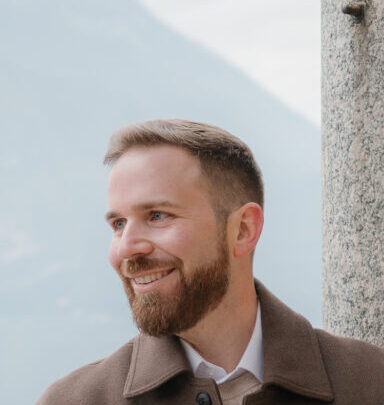
It doesn't care what you're delivering. DNA, mRNA, or full proteins - including functionally-active ones like the Cas9 enzyme behind CRISPR - go in and still work.
No virus as the courier. That sidesteps the cost, safety, and manufacturing headaches that come with viral vectors in cell and gene therapy.
The cell lives. It keeps its health and its function, which is the whole point when those cells are destined to become a therapy inside a patient.
Swoboda was a first-generation college student. He says that experience taught him the power of education and access to new technology - and it's not just a line for a bio page. In his spare time he runs science demonstrations for low-income students in his local community, the same kind of spark that might have set a young version of him on the path to Stanford.
It threads neatly back into the mission. NAVAN's stated aim isn't only a clever delivery tool; it's making cell and gene therapies more accessible and affordable. The man who believes in access for kids is building a platform that argues for access in the clinic.
He reached biology through materials science and nanoscience, not a life-sciences department.
His name is on the early NanoStraw patents his company was founded to commercialize.
He was NAVAN's NSF grant Principal Investigator before he was its CEO.
Deliver anything into any primary cell - and keep it alive.