He engineered a protein that sticks to metal and tells the body: grow bone here.
The founder, in focus. Twenty years in uniform, a doctorate in protein engineering, and one stubborn question he refused to put down.
Take a titanium spinal cage out of its sterile pouch and it is inert. Cold. It holds a shape and nothing more. Luis Alvarez looked at that same piece of hardware and saw an antenna waiting for a message. His company, Theradaptive, coats surgical materials with an engineered protein called AMP2 that grabs onto the surface and broadcasts a single instruction to the surrounding cells: build. Bone forms exactly where the surgeon placed the implant, and nowhere it shouldn't.
Theradaptive sits in Frederick, Maryland, inside the state's quietly expanding biohealth corridor. It is a clinical-stage company, which is the polite industry term for the stage where the science has to survive contact with actual patients. Alvarez leads it as founder and CEO, and the pitch is deceptively simple. Most regenerative products flood a wound with growth factors and hope enough of it lands in the right place. That approach can grow bone where you never wanted bone. Theradaptive's proteins are engineered to bind tightly to a specific material, so the healing signal stays put.
The lead product line grows out of AMP2, a variant of a well-known bone-inducing protein that Alvarez's team re-engineered to stick to implant surfaces and injectable carriers. The applications fan out from there: spinal fusion, orthopedic repair, dental implants, cartilage, soft tissue, and, further down the road, targeted delivery for oncology. The company has collected multiple FDA Breakthrough Device Designations, a regulatory fast-lane the agency reserves for technologies that could meaningfully beat the standard of care.
Money has followed. A $26 million Series A closed in 2023, paired with a $7.4 million Department of Defense clinical trial award to run early human studies. A Series B has since pushed total funding past $43 million. For a founder who spent two decades in government and uniform before ever pitching a venture capitalist, the fundraising fluency is its own kind of achievement.
The through-line is precision. Alvarez is not trying to invent healing; the body already knows how to do that. He is trying to aim it. That distinction - signal versus scaffold, guidance versus flooding - is the whole company in a sentence.
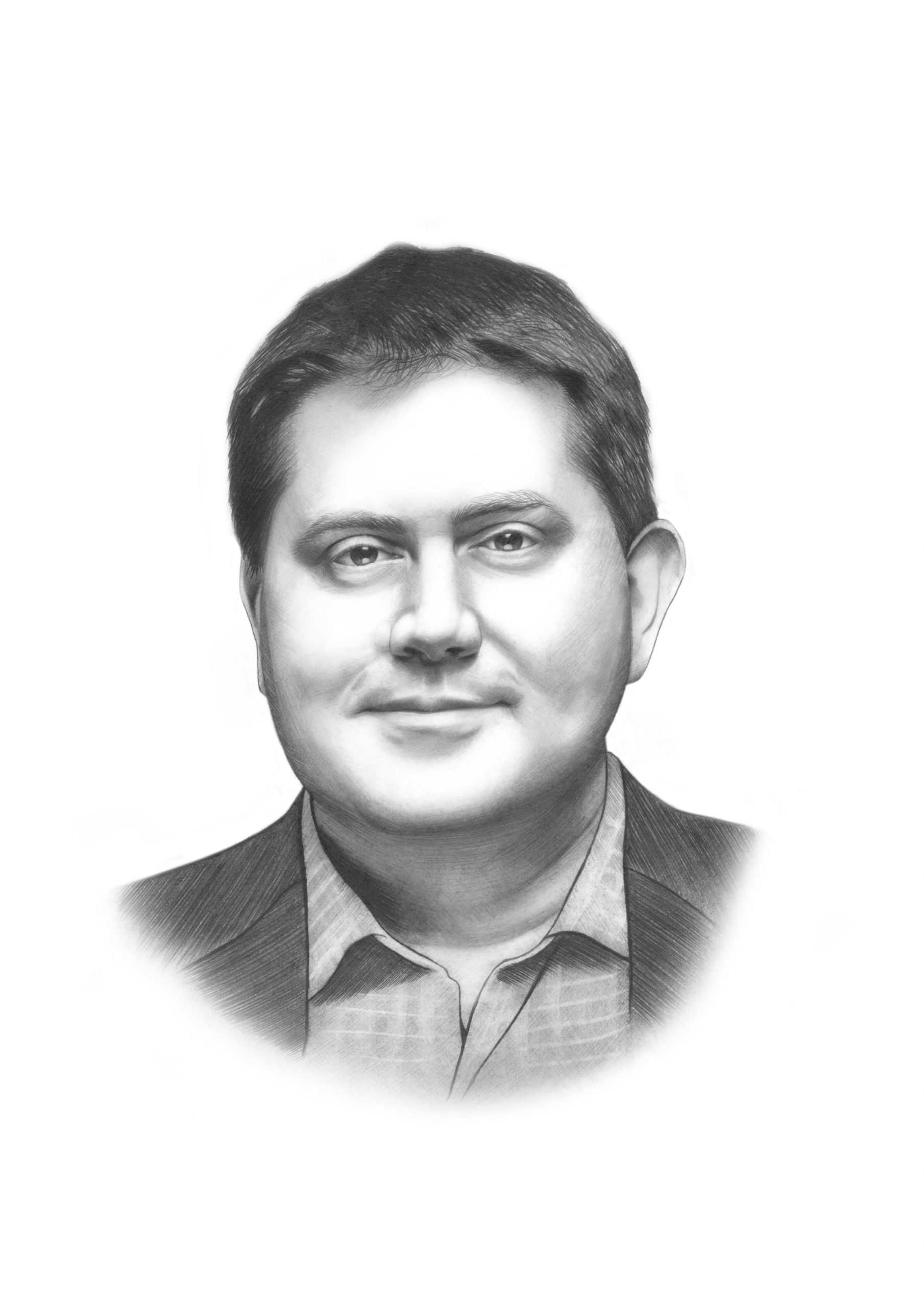
If you're the smartest person in the room, then you're in the wrong room.Luis Alvarez
A therapeutic protein is redesigned to carry a material-binding tag.
⟶The protein latches onto an implant, graft, or injectable carrier.
⟶A surgeon positions the material exactly where tissue is missing.
⟶Cells read the signal and rebuild bone or tissue right on target.
Some of his soldiers survived the blast, the evacuation, the first round of surgery - and then lost the limb anyway, weeks or months later. Delayed amputation. Alvarez kept turning the pattern over. Why did injuries that looked survivable so often end that way? The wound had healed on the surface, but the deeper reconstruction, the bone and tissue that were supposed to knit back together, never happened well enough.
That question is the seed of Theradaptive. It is also a very Alvarez way to start a company: not with a market analysis, but with a debt to the people he had led. He has said the mission is personal, that the team is "deeply committed to solving this important problem for service members who suffered traumatic injuries." The commercial opportunity in spine and orthopedics is enormous, but it grew out of a smaller, sharper obligation.
To chase the answer he went back to school - again. Alvarez had already earned a master's at MIT as a young officer. In 2006 he returned for a PhD in Biological Engineering, writing a thesis with the wonderfully un-marketable title "Modulating Cell Behavior with Engineered HER-Receptor Ligands." Translation: he learned, at the molecular level, how to make cells listen. Theradaptive is what happens when that skill meets that battlefield question.
We are deeply committed to solving this important problem for service members who suffered traumatic injuries.Luis Alvarez, on the mission behind Theradaptive
His whole management theory in one line: assemble a strong team, point it at a clear mission, and get out of the way.
Being the sharpest person in the room, he argues, is a sign you walked into the wrong one.
He treats vacation as production time for the brain - phone off, email closed - because hard science needs a rested mind.
Collect the evidence, consult the experts, then move. Deliberation without decision is just delay.
Two decades of military planning left him convinced that most heroics are just good preparation showing up on time.
The commercial upside is real, but the founding obligation - injured service members - is the compass.
Bone is the beachhead, not the destination. If a protein can be taught to bind a material and summon bone, the same logic extends to cartilage, skin, spinal fusion, dental repair, and eventually targeted delivery in oncology. The ambition is to hand surgeons a general-purpose way to place regeneration precisely where a body needs it - and to make delayed amputation, the thing that started all of this, a line in a history book.