contech
(43)
The VC That Bet the Cost Curve of a Building Can Bend
Two lifelong construction-tech investors raised $148 million, then handed their startups something rarer than money - a rolodex of the general contractors, builders, and design firms who become their first customers.

Ythalo Silva
Ythalo Silva is the co-founder and CEO of Vobi, a Y Combinator-backed (W22) project and construction management platform built for small construction businesses across Latin America. He turned a struggling home-renovation marketplace called HomeHero into a SaaS product that helps contractors, architects, and remodelers cut manual budgeting and procurement work in half. A serial founder out of the MAR Ventures venture builder, he previously co-founded Modiax, acquired by Foxbit in 2019.
FlowManual
FlowManual is an AI platform for the back office of construction contractors. It reads specs, contracts, quotes, and invoices and automatically marks up scope, prices, deadlines, and exclusions, then compares bids against signed contracts and invoices against locked buyout prices to flag every scope change and price drift by severity and dollar impact. Founded in 2026 by Harvard dropouts David Shijoon Bae and Michael Lin, the company is part of Y Combinator's Summer 2026 batch and aims to cut the repetitive manual work of pre-construction so contractors can bid more and deliver at a higher standard.

Scott Reynolds
Scott Reynolds is the co-founder and CEO of UpCodes, a construction-tech company that turned the tangled world of building codes into a searchable, AI-assisted platform used by hundreds of thousands of architects, engineers, and builders. A Syracuse-trained architect who worked at Hassell in Hong Kong and KPF in New York, he teamed with his software-engineer brother Garrett to make code compliance faster and access to the law free. He also led UpCodes through a multi-year copyright fight with the International Code Council, which ended in a fair-use ruling.
Novade Solutions
Novade Solutions is a Singapore-based construction technology company that builds smart field management software for the building and infrastructure industry. Its mobile-first platform digitizes and automates on-site processes - quality control, safety inspections, site diaries, progress reporting, defect management and equipment maintenance - so contractors, developers and owners can capture what happens in the field and turn it into data managers can act on. Founded in 2014 by former Autodesk executive Denis Branthonne, Novade is used across roughly 25 countries and more than 10,000 sites, serving general contractors, real estate developers, trade contractors, home builders and government departments.

PlanRadar
PlanRadar is a Vienna-based SaaS platform that digitizes construction and real estate project management. Its mobile and web apps let site teams pin defect and task tickets directly onto digital plans and BIM models, capture photos, video and voice notes, assign work, and generate reports - replacing paper checklists and scattered spreadsheets. Founded in 2013, it serves more than 170,000 users across 75+ countries.

WakeCap
WakeCap is a construction-technology company that puts a small IoT sensor into standard safety helmets to give project owners live, site-wide visibility into workforce, safety, productivity and progress. Founded in 2017 by Dr. Hassan Albalawi and Ishita Sood, the company runs a wireless mesh network that works without GPS, cellular or Wi-Fi and feeds field data into a single owner's dashboard. Its technology has been deployed across roughly $80 billion of active projects - including Aramco, NEOM, Qiddiya and King Salman Park - and has tracked more than 150 million labor hours. WakeCap raised a $28M Series A in 2025 and operates from Riyadh, Dubai and San Francisco.
OnsiteIQ
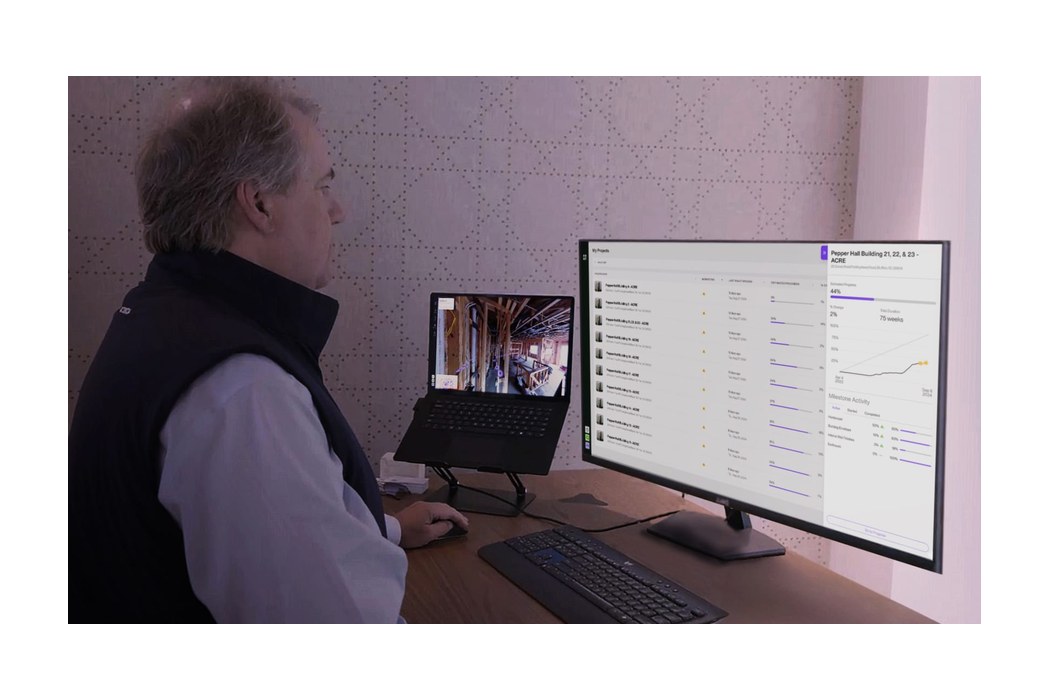
OnsiteIQ is a New York-based construction intelligence platform that combines 360-degree high-resolution site imagery with proprietary computer vision and AI to give real estate owners, developers, and lenders a verifiable view of what is happening on their job sites. Founded in 2017 by civil-engineering PhD Ardalan Khosrowpour, the company captures weekly imagery across thousands of active projects, maps it to floor plans and schedules, and turns it into progress, risk, and delay analytics so stakeholders can catch problems early and reduce costly disputes.

TestFit
TestFit is a Dallas-based real estate feasibility platform that uses configurator and generative-design algorithms to turn a raw parcel into a buildable site plan, unit mix, parking layout, cost estimate and pro forma in minutes instead of weeks. Founded in 2016 by Clifton Harness and Ryan Griege, it serves developers, architects, contractors, civil engineers and municipalities evaluating multifamily, industrial, retail and mixed-use projects, and has raised $22M including a $20M Series A in 2022.
TraceAir Technologies
TraceAir Technologies is a Seattle-based construction-technology company that turns drone and LiDAR data into a site-intelligence platform for land developers and homebuilders. Founded in 2015, its software captures ground surveys, runs cut-and-fill and earthwork analysis, generates stormwater and grading reports, and gives executives portfolio-wide visibility from land acquisition through vertical construction. The platform is used by many of the largest U.S. homebuilders, including D.R. Horton, Lennar, Howard Hughes and Meritage Homes, and raised a $25M Series B in 2024.
Veyor
Veyor is a cloud-based construction logistics platform - often called the 'Uber Eats of construction' - that digitizes how large building sites and facilities schedule deliveries, coordinate materials, manage loading docks and enforce site access and compliance. Founded in Sydney in 2017 and now expanding across the United States from Austin, Veyor connects contractors, suppliers, drivers and facility managers on a single live schedule to cut congestion, wait times and paperwork on complex projects.

Ivan Lvov
Ivan Lvov is the CEO of TraceAir Technologies, a Seattle-founded construction site intelligence platform that uses drone data and AI to help homebuilders and land developers measure, verify, and manage grading and earthwork from land acquisition through finished lots. He joined TraceAir in 2016 as Chief Strategy Officer and stepped into the CEO role in September 2025, succeeding co-founder Maria Khokhlova. Before TraceAir he spent years scaling a digital mapping and navigation franchise (2GIS) to 16 offices and 450 employees, and he holds an MSx degree from Stanford Graduate School of Business.

Clearstory
Clearstory is a cloud-based change order communication platform for commercial construction. It gives general contractors, specialty contractors and project owners a shared, real-time system to create, price, track and align on change orders and time-and-material (T&M) tags - the extra work that traditionally gets buried in email, PDFs and spreadsheets. Founded in 2018 as Extracker and rebranded to Clearstory in 2023, the company runs a business network where contractors exchange roughly $1B in change orders every month, and counts many of North America's largest general contractors as customers.
Richard Fifita
Richard Fifita is the co-founder and CEO of Veyor, a cloud-based logistics scheduling platform for construction and large-scale facilities. A former civil engineer and Lendlease superintendent who helped deliver the Barangaroo International Towers in Sydney, he started Veyor in 2018 to fix the chaos he saw on his own jobsites and has since relocated to the United States to lead the company through its Series A expansion.

Zachary Irwin
Zachary Irwin is the co-founder and CEO of Downstream, a Dallas-based marketplace that lets contractors book equipment rentals, dumpsters, portable toilets, and site services with a few taps - the way you might order a pizza. Started in 2022 as 'Trash Gurus' and rebuilt into an AI-driven procurement platform with 100,000+ listings, Downstream raised an $8M Series A in November 2025 co-led by Brick & Mortar Ventures and Moneta Ventures. Irwin came to construction's least glamorous corner from an unlikely place: years as a healthcare-software (Epic) consultant building oncology and pharmacy systems across 22 states.

Aecore
Aecore is a technology-enabled commercial general contractor based in San Jose, California, with a second office in Nashville, Tennessee. Founded by Casey Bell and Anthony Cirinelli and backed by Y Combinator (S17) and CEMEX Ventures, the company pairs an in-house team of designers, project managers, and software engineers with proprietary project-management software to deliver corporate interiors, life-sciences labs, retail buildouts, and building renovations. Its pitch is simple: run construction like a software company, with real-time schedules, transparent budgets, and weekly photo updates so clients always know where their project stands.

AlignOps
AlignOps is a Colorado-based construction operations software company that unifies tool and asset tracking, workforce time tracking, jobsite safety and compliance, and fleet/materials management into a single platform. Formed in 2024 by consolidating four established construction-tech brands - ToolWatch, busybusy, Safety Reports, and FleetWatcher - AlignOps helps thousands of contractors gain real-time visibility into where their tools, crews, equipment, and money are going across warehouses and jobsites.

Bundle
Bundle is an Oakland-based, AI-powered materials procurement platform built for design and construction teams. It lets builders and suppliers quote, buy, and manage construction materials from initial quote through delivery in a single system - offering a live catalog of 50,000+ products, multi-supplier quote comparison, delivery tracking, a reusable materials library, and automated reordering. Founded in 2021 by Stanford MBA classmates Janna Colucci and Edison Ding, Bundle targets the SMB residential and ADU segment, aiming to run purchasing 10x faster and cut material costs 10-20%.

Offsight
Offsight is a San Francisco software company building a project management and production platform for the offsite construction, modular and prefab industry. Its mobile-first software helps factories and specialty contractors track production, quality, materials and labor in real time - replacing the spreadsheets that engineered-to-order manufacturers have long relied on. Founded in 2014 by Vikas Murali and Andrew Xue, the company raised a $2.5M seed round and counts large builders like Performance Contracting Inc., McCarthy Building Companies and Z Modular among its customers.

Roger
Roger (legally Iris Technologies) is a Salt Lake City-based construction-tech startup building an AI-powered collaboration workspace for construction project managers. By syncing with email tools like Microsoft Outlook and Gmail and layering on task boards, material trackers, and submittal logs, Roger turns the chaos of coordinating 50+ stakeholders into structured, trackable work. Its AI drafts follow-up emails, chases vendors on long-lead items, updates logs, and keeps details from slipping through the cracks - aiming to make every project run like a team's best project.

Janna Colucci
Janna Colucci is the CEO and co-founder of Bundle, an Oakland-based software platform that drags construction materials procurement out of the paper-and-phone-call era. After watching a construction crew print out her emails and write responses by hand while building Delos' wellness-focused NYC headquarters, she teamed up with Stanford Business School classmate Edison Ding to build a digital buying platform for small and mid-sized residential builders that promises purchasing at 10x speed and 10-20% cost savings. A Dartmouth grad and Stanford MBA who cut her teeth in green building and co-created the mindfulMATERIALS sustainability standard, she raised a $4M seed round in 2023 and runs the company on a Lao Tzu leadership philosophy.

Jason Rudin
Jason Rudin is the founder and CEO of Clad, a Y Combinator-backed (W23) startup building what he calls the operating system for telecom construction. From a New York base, Clad unifies project operations and finance so utilities, internet companies, and their subcontractors can bid, manage, permit, and get paid for laying fiber and rebuilding power networks. Before founding Clad in 2022, Rudin spent four years as a product manager at Meta and Instagram, externed at Google[X], and worked as a business analyst at McKinsey after graduating from Penn's Wharton School and its Management & Technology program. A self-described builder fascinated by how physical things get made, he woodworks, makes art, and reads widely when he is not automating the unglamorous plumbing of American infrastructure.

Jay Martin
Jay Martin is the CEO of AlignOps, the Denver-based SaaS company building a single operations platform for the construction industry out of four acquired products: ToolWatch asset management, Safety Reports compliance, busybusy time tracking, and FleetWatcher fleet and materials management. A first-generation American who grew up working on his immigrant father's dairy farm in rural New York, Martin brings 25 years of technology leadership and more than a decade inside private-equity-backed companies, including COO roles at EagleView and Aquasana and earlier leadership at Sungard Availability Services and Dell. He is candid about rejecting corporate conformity, hiring for grit and intellectual curiosity, and his belief that continuously delivering customer value is the only durable moat.
Jon Sibley
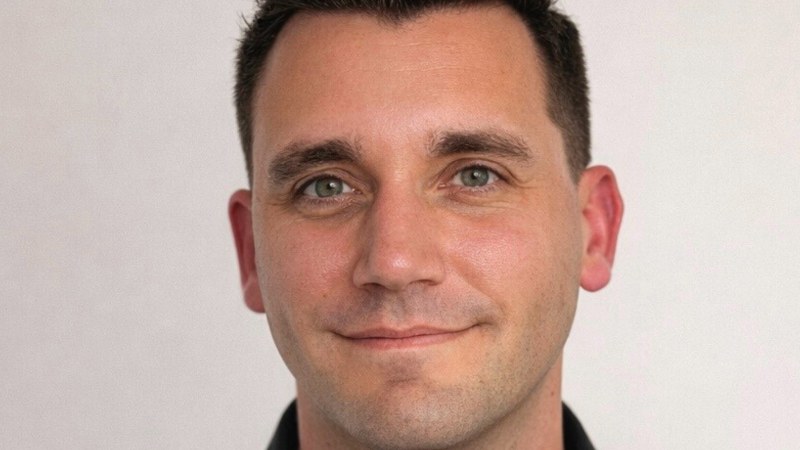
Jon Sibley is the Founder and CEO of TrueBuilt Software, an AI-native preconstruction platform headquartered in Huntington Beach, California. A former NCAA Division I water polo player at UC Berkeley and Team USA competitor, Sibley translated elite-sport discipline into enterprise software sales at Quid and Visa before founding TrueBuilt in July 2022. The company raised a $4 million seed round in 2023 led by Bienville Capital with participation from Fifth Wall, and in late 2025 acquired Capabuild — a mobile field documentation platform — driving a 124% revenue increase in three months post-close. TrueBuilt consolidates what was once a fragmented 6-8 tool preconstruction workflow into a single AI-powered platform serving general contractors and subcontractors.

Josh Whisenant
Josh Whisenant is the co-founder and CEO of Roger (tryroger.com), a Salt Lake City construction-tech startup building an AI workspace that helps project managers catch scope gaps in drawings, generate scopes, find subcontractors, and stay coordinated. A Stanford engineer turned construction operator turned founder, he raised a $3.2M seed in 2022 led by Resolute Ventures and has spent the years since publicly wrestling with how hard - and how necessary - it is to drag construction operations into the AI era.

Leise Sandeman
Leise Sandeman is the CEO and co-founder of Pathways, a climate-tech startup building the data layer for sustainable manufacturing. Pathways uses AI to automate the creation of Life Cycle Assessments (LCAs) and Environmental Product Declarations (EPDs) for building-material makers - concrete, steel, cement, glass - turning a months-long consultant slog into a process that takes weeks. A Copenhagen native and former McKinsey sustainability consultant who scaled a recycling venture before studying at Harvard and MIT, Leise co-founded Pathways in 2022 with Alex Cooper after meeting in an MIT entrepreneurship class. The company raised an oversubscribed $2.5M seed round in February 2024 and now serves manufacturers across hundreds of plants.
Amar Amte
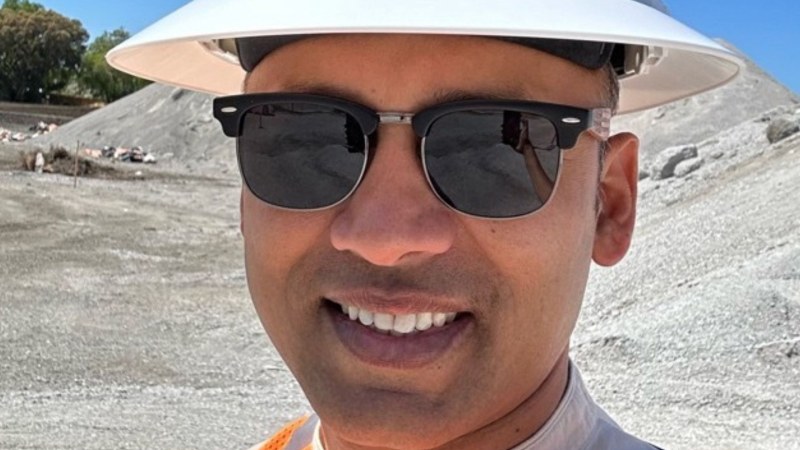
Amar Amte is the founder and CEO of Pegbo, a Menlo Park construction-tech company that helps general contractors and public agencies find, vet, and track small, local, and diverse trade partners. After roughly a decade at Google and five years at Yahoo in engineering and program-management roles, he left big tech in 2023 to attack one of construction's oldest headaches: the 'spray and pray' bid invitation. Pegbo runs a searchable directory of more than a million verified trade partners and automates outreach, bid coverage, and Good Faith Effort compliance reporting. The company raised $1.4 million in a 2024 pre-seed round led by Nirman Ventures and is a pre-qualified supplier to contractors including Skanska, Webcor, Swinerton, and Hathaway Dinwiddie.

Ari Baranian
Ari Baranian is the co-founder and CEO of Pirros (YC W23), a Los Angeles startup building a detail management platform for architects and structural engineers. A structural engineer turned software builder, he created Pirros to solve a problem he lived daily at his old firm: engineers constantly recreating the same construction details from scratch. Pirros integrates with Revit, automatically extracts and catalogs details with their metadata, and makes a firm's institutional knowledge searchable and reusable. The company is profitable, reached roughly $6M ARR with 300+ firms on the platform, and closed a Series A reported around $15-17M in 2025.
Casey Bell
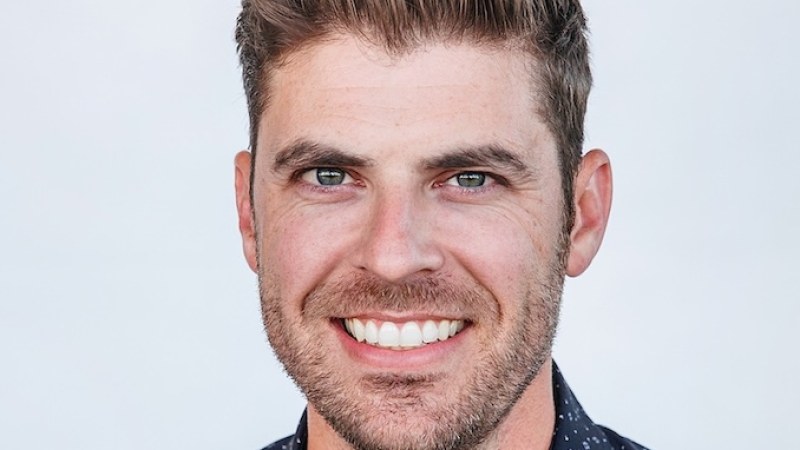
Casey Bell is the co-founder and CEO of Aecore, a technology-enabled commercial general contractor based in San Jose, California. A UC Berkeley graduate and former Turner Construction project manager, Bell took a payments startup called Net30 through Y Combinator's Summer 2017 batch, then pivoted the whole thing into a construction company built with software at its core. Aecore delivers office fit-outs, life sciences facilities, R&D centers, and retail buildouts while running its own proprietary tools for scheduling, photo documentation, and rapid pricing.

Cherryanne Angoy
Cherryanne Lee Angoy is the founder and CEO of AIMHI (AI Meets Human Intelligence), a women-led construction-tech startup based in Tagum City, Mindanao, Philippines. After 16 years in the US tech industry, including leadership roles at Verizon, she returned home and set out to fix construction's oldest headache - projects that run late, over budget, and below profit. AIMHI's AI-powered Builder Suite gives contractors real-time insights, cost tracking, and risk alerts, with an offline mode built for job sites where cell signal disappears. The company has raised grants from DOST-PCIEERD and Accenture and won the E3 Chairman Recognition Award in Kuala Lumpur.