BREAKING  Pathways closes oversubscribed $2.5M seed to track building-material emissions The built environment = 40% of global emissions EPDs in weeks, not months Practitioners spend 90% of time collecting data - Pathways flips it From Tata Steel, India to a New York founder's desk 10+ live customers across hundreds of plants BREAKING  Pathways closes oversubscribed $2.5M seed to track building-material emissions The built environment = 40% of global emissions EPDs in weeks, not months Practitioners spend 90% of time collecting data - Pathways flips it From Tata Steel, India to a New York founder's desk 10+ live customers across hundreds of plants
Founder Dossier // Climate Tech

Leise Sandeman

She started by reading utility bills nobody wanted to read. Now she's building the data layer for low-carbon concrete, steel and cement - and the people who pour them are paying attention.

CEO & Co-founder, Pathways Copenhagen → New York ex-McKinsey Harvard · MIT · UCL
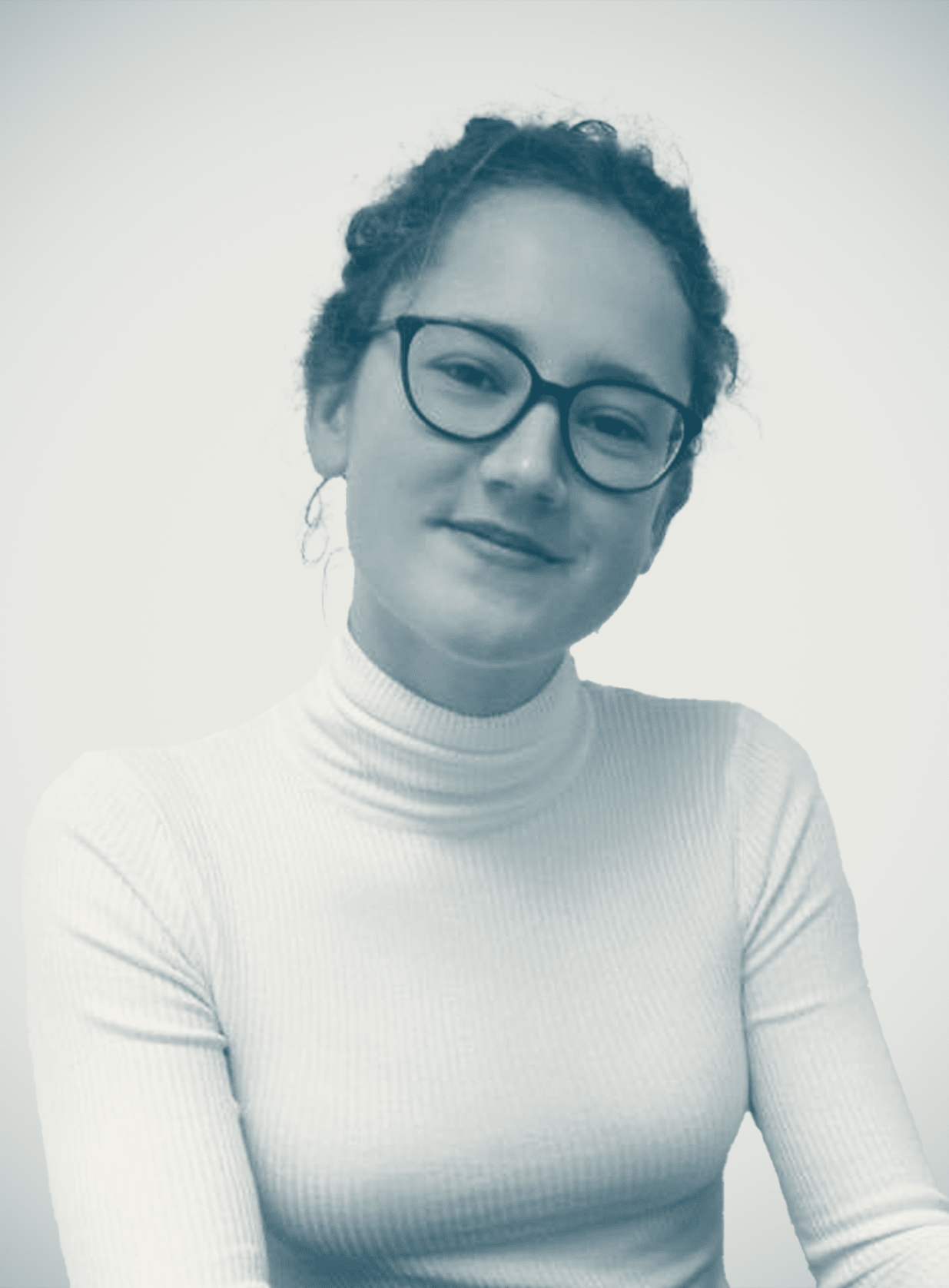
Leise Sandeman, CEO and co-founder of Pathways

Leise Sandeman. The daughter of a Copenhagen artist who decided the most creative thing she could build was a spreadsheet that saves the planet a little.

The Brief

She made embodied carbon legible.

Every ton of concrete, every beam of steel, every bag of cement carries an invisible receipt - the emissions it took to make it. For decades that receipt sat in a manufacturer's utility bills, ERP logs and meter readings, unread, because reading it meant hiring a consultant for twelve to eighteen months. Leise Sandeman looked at that mess and saw a product.

Pathways, the company she runs as CEO and co-founded in 2022, connects to a manufacturer's existing systems and uses AI to turn that operational sludge into something standardized and useful: Life Cycle Assessments and Environmental Product Declarations. The pitch is almost rude in its simplicity. EPDs in weeks, not months. Less consultant spend. Fewer of those thirty-plus hours an engineer wastes chasing a number that lives in a PDF somewhere.

The point was never the AI. "Customers do not care if we use AI," she has said. "They care about if we're solving their problem." The problem is enormous and boring at the same time, which is exactly why most people skipped it. The built environment drives roughly 40% of global emissions; materials alone account for about 11%. Sustainability teams, she likes to point out, spend 90% of their time collecting data and 10% acting on it. Her whole company is a wager that you can flip that ratio.

Where the carbon hides

// Built environment share of global emissions
Built environment, total~40%
Building materials alone~11%
Time teams spend collecting data90%

Pathways' bet: shrink the data-collection bar so the action bar can grow. Figures as cited by Sandeman in interviews.

$2.5M
Seed, oversubscribed
2022
Pathways founded
10+
Live customers, year one
100s
Plants in scope
No one gets excited about collecting utility bills, water bills, or tracking electricity by meter.
- Leise Sandeman, on the unglamorous job she turned into a company
The Point of No Return

A steel plant in Jamshedpur.

The story doesn't start at a whiteboard. It starts on a factory floor in India. At McKinsey, Sandeman was auditing whether a bank's loan book lined up with the Paris Agreement when the numbers kept dragging her toward one culprit: buildings and the supply chains that feed them. So she went to where the carbon actually lives. She spent time in mining operations and on the ground with Tata Steel in Jamshedpur.

She calls that her "point of no return" - the moment heavy industry stopped being a slide in a deck and became the thing she'd spend a decade on. "I always had the sustainability bug," she has said, "but I also thought it couldn't be as hard as people made it sound." It was harder. It was also, to her, irresistible.

Before that there was Delterra, where she scaled a materials-recycling venture and learned what waste transformation looks like in Indonesia rather than in theory. Then graduate school - a Master in Public Policy at Harvard Kennedy School, cross-registrations at HBS, the Graduate School of Design, and MIT - where she taught as a Teaching Fellow and, in Bill Aulet's Disciplined Entrepreneurship class, met a man named Alex Cooper.

Cooper had spent a decade scaling startups - Uber, Clutter, Two Chairs. Sandeman had the climate and the customers in her bones. "Building a company is a team sport," she says, and she means it as a hiring philosophy, not a slogan. They started Pathways in 2022 because their would-be customers kept describing the same hole. "The idea for Pathways really came from our customers."
The Road
COPENHAGEN
A self-described "nerdy child" of an artist father and psychologist mother, organizing games and inventing worlds.
LONDON / UCL
BSc in Politics, Philosophy & Economics. Moving abroad broke her fear of relocating.
McKINSEY
Sustainability consulting; the Tata Steel fieldwork that changed her trajectory.
DELTERRA
Scaled a materials-recycling venture; waste transformation in Indonesia.
HARVARD / MIT
MPP, Teaching Fellow; met co-founder Alex Cooper at MIT.
2022
Co-founded Pathways.
FEB 2024
Oversubscribed $2.5M seed led by Zacua Ventures & Pi Labs.
How The Thing Works

Less lecture. More clarity.

Pathways doesn't show up to tell a plant manager how to run their plant. "The best decarbonization ideas often already exist inside plants," Sandeman says. "Teams need clarity, not lectures." The software just makes the ideas visible.

01 / INGEST

Plug into the mess

Connect to existing ERP and operational systems and pull production data automatically - inputs, transport, processes - instead of a human chasing meter readings for thirty-plus hours.

02 / STANDARDIZE

AI does the boring part

Messy, inconsistent operational data gets cleaned and standardized so it can actually be compared. Not a marketing gimmick - a data-processing engine.

03 / DECLARE

EPDs in weeks

Generate verified Life Cycle Assessments and Environmental Product Declarations across product categories, turning a 12-18 month consultant slog into a repeatable workflow.

Understanding a building's footprint is like understanding every Lego brick that makes it. Make each brick legible, and the whole structure stops being a mystery.
- The metaphor Sandeman uses for "the data layer for sustainable manufacturing"
In Her Words

Seven sentences that explain her.

"Customers do not care if we use AI. They care about if we're solving their problem."ON PRODUCT
"The best decarbonization ideas often already exist inside plants - teams need clarity, not lectures."ON RESPECTING THE FLOOR
"I always had the sustainability bug, but I also thought it couldn't be as hard as people made it sound."ON NAIVETE, USEFULLY
"If it feels right, if you sense a calling or intuition, listen to it."ON HER MOTHER'S ADVICE
"Building a company is a team sport."ON CO-FOUNDING
"The idea for Pathways really came from our customers."ON WHERE IT STARTED
The Margins

Things that don't fit on a cap table.

She finished an Ironman triathlon with almost no prior background in distance running, swimming, or biking. The bias-to-action is not theoretical.

She runs McKinsey-style feedback sessions at Pathways every two to three weeks - structured, vulnerable, on the calendar.

She celebrates a small workplace win roughly the way she'd celebrate a major personal one. Momentum compounds.

She cross-registered across Harvard Kennedy School, HBS, the GSD, and MIT - and taught while she was at it.

The company was deliberately oversubscribed, and she picked investors who understood manufacturers and enterprise sales on purpose.

Her co-founder, Alex Cooper, scaled Uber, Clutter and Two Chairs before this. They met in a classroom.

The Long Game

A single planet society.

Ask her what success looks like and she won't reach for a valuation. She talks about flipping the ratio - a world where the people responsible for emissions spend their hours acting instead of collecting. She talks about "a single planet society," and about having "a bias to action." She talks about "doing my part," which from a founder this credentialed could sound modest, except she's pointed the part squarely at 40% of the world's emissions.

She describes founding as "the sensation of being at the playground" - the nerdy Copenhagen kid who built imaginary worlds, now building a real one out of ERP integrations and verified declarations. The vision is unglamorous on purpose: be the data layer underneath low-carbon construction, the thing nobody sees but everything depends on. The most creative move on the board, it turns out, was making the boring part disappear.

Pass It On

Share the dossier.

Go Deeper

Profile compiled from public interviews, podcasts and company sources. Quotes paraphrased from cited interviews where noted.