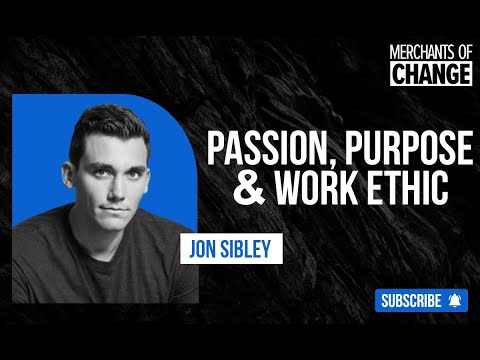
The estimators who use TrueBuilt are not thinking about AI. They are thinking about whether this week's steel quote from the supplier in Phoenix is going to blow their bid. Jon Sibley built an AI platform precisely so they don't have to think about the AI.
Sibley founded TrueBuilt in July 2022 with co-founder and CTO Julian Prokay, targeting the one corner of the construction software market that the big players had systematically ignored: preconstruction. Not project management. Not field documentation. The phase where someone sits down with a set of blueprints and figures out, before any contract is signed, what everything will cost.
"Pre-construction was the one workflow area really neglected by the software world," Sibley has said in multiple interviews. That observation is almost comically understated. In a trillion-dollar industry famous for low margins and razor-thin bid windows, estimators were stitching together six, seven, eight separate software platforms just to do their job. TrueBuilt collapsed the stack.
Pre-construction should be a competitive advantage for savvy general contractors and subcontractors. The better that we can estimate a job, the more we can plan it out earlier on, the less changeovers and risk we're going to have on site.
- Jon Sibley, Founder & CEO, TrueBuilt SoftwareWhere the Instinct Came From
Sibley's father was a trench plate subcontractor. That detail matters more than any MBA credential. It means he grew up watching someone manage a construction business from the inside - pricing jobs, chasing bids, absorbing the cost of a bad estimate. The problem he eventually decided to solve was not an abstraction he read about in a case study.
He went to UC Berkeley on a water polo scholarship, played Division I for the Cal Bears, and later competed for Team USA at the World Cup and World Finals. He studied Law and Economics - not engineering, not computer science. The construction software founder who would eventually build AI-powered blueprint analysis tools had never written a line of production code.
What Berkeley taught him was how to argue from evidence, and water polo taught him how to coordinate under pressure. Neither skill looks like "tech founder training," but both turn out to be exactly what you need when you are selling a category that doesn't exist yet to contractors who have never heard the term "AI-native preconstruction."
The Sales Career That Made Him
After Berkeley and Team USA, Sibley went into sales - AI software sales specifically, which in 2015 was a category that required explaining what "machine learning" meant to executives who thought it was science fiction. He spent time at Quid, a San Francisco-based NLP analytics company that was later acquired by NetBase, as Senior Director of Sales. Then came Visa, where he ran enterprise software sales for four years.
The Visa years are important. Enterprise software sales at a company like Visa is not a job you take if you want to stay comfortable. You are selling into large, risk-averse institutions with long buying cycles, multiple decision-makers, and a zero-tolerance culture for vendor promises that don't deliver. Sibley spent four years getting good at that.
He also got his MBA from USC Marshall during COVID - the same period when, sitting through case studies and Zoom seminars, he was looking at the construction industry and noticing something obvious to anyone who had grown up around job sites: the software had barely changed in twenty years.
There's tons of construction software out there. But construction has a productivity problem. What we have to do is make each person more productive.
- Jon SibleyBuilding TrueBuilt
TrueBuilt went to market with a specific thesis: that quantity takeoff and cost estimation - the core work of a preconstruction team - was ripe for AI, not because AI was trendy, but because the workflow was made of exactly the kinds of repetitive, rule-bound tasks that machine learning handles well. Reading blueprints. Identifying materials. Cross-referencing historical cost data. Flagging discrepancies.
Sibley coined the phrase "augmented intelligence" to describe how TrueBuilt approaches this. Not a robot that replaces an estimator. A co-pilot that handles the tedious parts - "the more annoying parts of the workflow," as he puts it - while the human expert focuses on judgment calls. The AI was, in his framing, trained on the work that estimators hate most.
The platform now covers the full preconstruction stack: AI-powered quantity takeoff, cost estimation, bid management, risk qualification, document management, and stakeholder collaboration. General contractors including Boldt, Marek, Branagh, Core Construction, West Broadway, and Gulf Building are live on the platform. Marek, one of the largest drywall and mechanical contractors in the United States, invested in TrueBuilt after becoming a customer - a detail that tells you something about conviction.
Seed Funding Round
CLOSED MAY 2023 · ANNOUNCED AUGUST 2023 · USE: TB ASSISTANT AI + CUSTOMER EXPANSION
The $4 million seed round closed in May 2023, led by Bienville Capital out of Manhattan with Fifth Wall - the largest dedicated PropTech venture fund in the United States - as a co-investor. For a company that had been operating for less than a year at close, landing Fifth Wall was meaningful validation. They don't invest in construction software for the novelty.
The Capabuild Acquisition
In November 2025, TrueBuilt acquired Capabuild - a mobile field documentation platform built for restoration and mitigation contractors, featuring LiDAR scanning and 360-degree site walkthroughs. The acquisition was announced publicly in March 2026, along with a number that got people's attention: 124% revenue growth in the three months following close.
TrueBuilt + Capabuild
Capabuild brought mobile field documentation, LiDAR reality capture, and 360-degree site walkthroughs into the TrueBuilt ecosystem. Jon Sibley became CEO of both companies. Capabuild continues as a standalone brand under the TrueBuilt umbrella.
"TrueBuilt was founded to eliminate friction in takeoff and estimation through AI. And acquiring Capabuild extends that mission onto the jobsite." - Jon Sibley
in 3 Months Post-Close
The strategic logic was direct: TrueBuilt was winning preconstruction. Capabuild was winning the jobsite documentation workflow for a specific contractor category. Together, they create a platform that follows a project from the first estimate to the last walkthrough. Sibley now runs both companies.
Augmented Intelligence, Not Artificial Intelligence
There is a version of this story where a founder raises venture capital, adds the word "AI" to everything, and waits for the market to figure it out. Sibley is not running that company. The "augmented intelligence" framing he uses consistently is not a PR rebrand - it reflects a specific product decision about where AI should be trusted and where humans should be in control.
Construction estimating is a domain where a confident mistake can kill a company. A general contractor who bids a hospital at $80 million and wins at $80 million, only to discover mid-project that the real cost is $95 million, doesn't just lose profit - they can go under. The AI in TrueBuilt is designed to catch the patterns a tired human will miss, not to make the calls a judgment requires.
TrueBuilt isn't about replacing human expertise; it's about augmenting it. AI isn't here to take jobs; it's here to make them more efficient, accurate, and impactful.
- Jon SibleyThe Team Culture: Championship Thinking
Sibley returns often to water polo when describing how he thinks about building a team. "How do we get everyone together working on the same page, functioning together, headed towards that common championship?" It is the kind of question that sounds like a motivational poster until you realize he spent years in a sport that requires seven people to execute simultaneously in three dimensions, reading each other's movements without the ability to speak.
TrueBuilt's engineering team includes members based in Brazil - a distributed structure that requires exactly that kind of coordination. With 18 employees and two companies to run, Sibley is not managing a large organization. He is managing a team where every person is playing a position that matters, and where the playbook has to be legible without a coach calling it from the sideline.
He has also said something that most founders avoid: "Selling isn't just for sales teams; it's an essential CEO skill." For a company selling into one of the most relationship-driven industries in America, that is not a philosophical statement. It is a job description.
"We have some customers who used six to eight software platforms; now they can do that all in one place."
"Pre-construction was the one workflow area really neglected by the software world."
"Selling isn't just for sales teams; it's an essential CEO skill."
"How do we get everyone together working on the same page, functioning together, headed towards that common championship?"