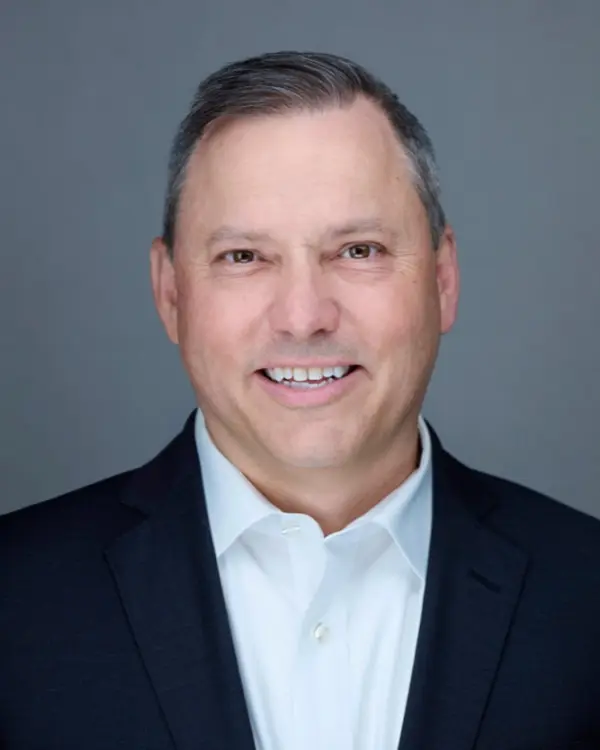
He took four separate contech products and asked one question: what if construction could see itself clearly? AlignOps is his answer.
Jay Martin runs AlignOps from Denver, and the company does something the construction industry had mostly given up asking for: it makes a jobsite legible. Tools, hours, trucks, safety inspections - the stuff that usually lives on clipboards, in trailers, and in someone's memory - gets pulled into a single operations platform. Martin's job is to convince contractors that visibility is worth more than habit.
AlignOps did not start as one thing. It became one. In 2024 the company formerly known as ToolWatch pulled four market-leading products under a single roof: ToolWatch for asset management, Safety Reports for mobile safety and compliance, busybusy for time tracking, and FleetWatcher for fleet and materials management. Four tools, one platform, one login. The pitch is operational transparency - optimize performance, minimize cost, deliver on time - and Martin is the one making it.
He is blunt about why construction is a hard place to build software. "Construction is hard," he says. "Try putting your desk, computer and phone outside in the elements for a week." It is a good line because it is also a design brief. The jobsite does not care about your product roadmap. It rains. Things get dropped, lost, stolen, driven off-site. Software that works in a clean office and fails in the mud is not software the industry needs.
Martin's answer is not a feature. It is a stance. "Continuously delivering value to our customers is the best possible moat, and a guarantor of continued growth." No lock-in strategy, no clever contract terms - just the belief that if the product keeps earning its keep, the customer keeps showing up. In an era of sticky enterprise software designed to be painful to leave, it is a refreshingly plain idea.
Construction is hard - try putting your desk, computer and phone outside in the elements for a week.- Jay Martin, on building for the jobsite
Asset management - the tools and equipment that vanish, wander, and cost money when nobody's counting.
Mobile safety and compliance, because a clean inspection record is not paperwork - it's protection.
Time tracking in the field, where the hours are real and the payroll math is unforgiving.
Fleet and materials management - trucks, loads, and the logistics of moving heavy things on time.
Before the C-suite, there was a barn. Martin is a first-generation American, and he grew up on a dairy farm in rural New York that his immigrant father built from nothing. "My immigrant dad built his dairy operation from the ground up and I was involved in working on the farm from an early age." The lesson landed early: work produces things, and almost anything is possible on the far side of enough of it.
That upbringing also rewired how he thinks about risk - a word thrown around loosely in startups. "Risk takes on a whole new meaning when you see what others before you put on the line to create a better life." When your father wagered everything on a farm and a country, a bad quarter looks like what it is: survivable.
The other inheritance was a refusal to perform. Early in his career, Martin tried to be what the org chart expected. It did not fit. "I thought that I had to conform to what was expected of someone in a given role, vs. be the best possible version of myself," he says - and he adds that it was exhausting. He stopped. He now leads as himself and, tellingly, builds teams where people are free to disagree with him and float a different plan.
Ask him who he'd seat at a dinner party and the answer is not a lineup of tech founders. It's Jean Moulin, Ferdinand de Lesseps, and Harriet Tubman - people who made hard calls under real pressure and did not flinch. It is a revealing guest list from someone who measures leaders by their nerve, not their slide decks.
Grit is the resume line he actually reads.
How you conduct yourself in private should mirror how you conduct yourself when the lights are shining brightly.
Luck is what happens when preparation meets opportunity - you need to allow for serendipity in your life.
I had to conform to what was expected of someone in a given role, vs. be the best possible version of myself.
Risk takes on a whole new meaning when you see what others before you put on the line to create a better life.
Continuously delivering value to our customers is the best possible moat.
My immigrant dad built his dairy operation from the ground up, and I was working on the farm from an early age.
Luck is what happens when preparation meets opportunity - you need to allow for serendipity in your life.- Jay Martin
Enterprise, consumer, data analytics, disaster recovery - the through-line isn't an industry. It's the operator's instinct to take a messy, high-growth business and make it run. Construction was next because construction is where the mess is biggest.