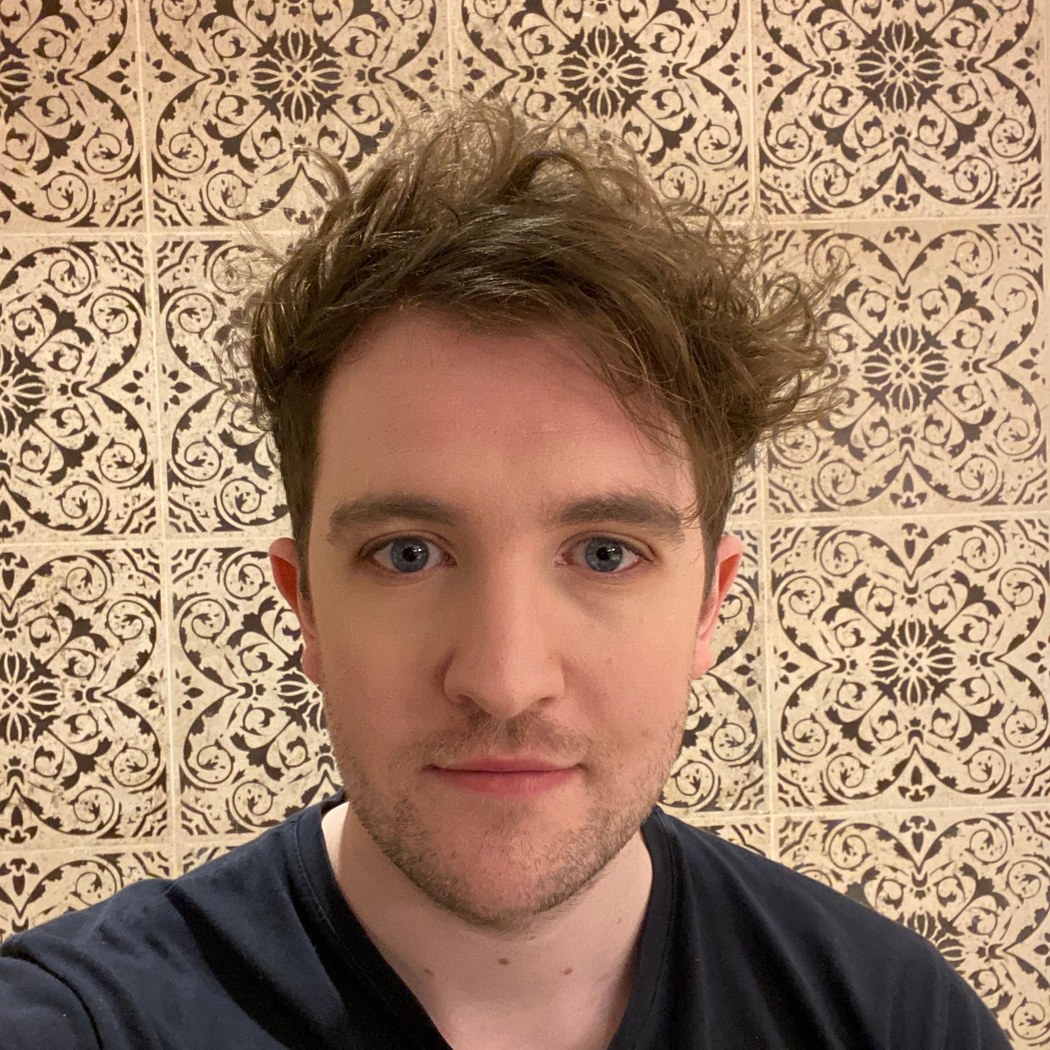
Ganesh Shankar is the co-founder and CEO of Responsive (formerly RFPIO), a strategic response management platform that helps companies answer RFPs, security questionnaires, and due diligence requests faster. He started the company in 2015 with two colleagues after growing frustrated that responding to proposals ate up nearly a third of his time as a product manager. Under his leadership the company grew to more than 550 employees and 2,000+ customers, including dozens of Fortune 100 firms, while raising only about $27 million.
CloudTask is a Miami Beach-based go-to-market marketplace and managed-services provider that helps B2B and SaaS companies hire vetted remote sales, customer success, and support talent - plus agencies and software - in as little as 48 hours. Founded in 2014 by Amir Reiter, the bootstrapped company sources pre-vetted, primarily Latin American SaaS professionals with video profiles and transparent pricing, and has expanded into a broader RevOps ecosystem covering SDR/BDR staffing, lead generation, conversational marketing, and the emerging category of GTM engineers.
Nithish Sairam is the co-founder and CEO of Illumine-i, a solar and power-engineering design firm he built after stints at Tesla and NextEra Energy. Under his leadership the bootstrapped firm expanded from a five-person team to roughly 240 engineers across offices in Fremont, Austin, and Chennai, and has been described as the largest independent digital design engineering firm in the residential PV solar sector.
Teddy Chan is the CEO and co-founder of AfterShip, the shipment-tracking and post-purchase platform he started in 2012 after building a package-tracking script for his own online toy store cut customer emails by more than half. A self-described software engineer who says he wants to write code forever, Chan grew AfterShip from a Startup Weekend Hong Kong hackathon win into a company handling billions of shipments a year for tens of thousands of merchants, profitable long before Tiger Global led a $66M Series B in 2021 that valued it above $1 billion.
Nimbus Data is a privately held, largely self-funded American flash storage company founded in 2003 by Thomas Isakovich. It designs all-flash arrays and solid state drives - most famously the ExaDrive DC100, the 100-terabyte SSD it introduced in 2018 that remained the world's largest for years. Rather than chase venture money, the company built a profitable business selling high-capacity, power-efficient storage to enterprises, cloud providers, and AI and edge workloads, backed by its HALO/AFX software and a flat-rate support model.
Sortly is a cloud-based, visual inventory and asset-tracking platform that lets businesses photograph, QR-code, and organize their stuff into searchable folders on any device. Built for the non-warehouse crowd - construction crews, medical offices, electricians, interior designers, schools, and retailers - it swaps clipboards and spreadsheets for a mobile app with barcode scanning, custom fields, low-stock alerts, and offline access. Founded in 2012 by Dhanush Balachandran and bootstrapped to profitability, Sortly now tracks millions of items for well over 15,000 paying businesses.

Ahmed Khattak is the founder and CEO of US Mobile, the only American carrier built natively on the public cloud that lets customers ride and switch between all three major networks (Verizon, AT&T, T-Mobile) on demand. A Pakistani immigrant who landed on an F1 student visa, he spent a decade clawing US Mobile to $100M in annual recurring revenue, then doubled it to $200M in nine months. Before that he co-founded GSM Nation, a $130M unlocked-phone marketplace that taught him how the carriers really make money.
Brian de Haaff is the co-founder and CEO of Aha!, the world's #1 product development software, which he built past $100 million in annual recurring revenue without taking a dollar of venture capital. Fully remote and profitable from the start, Aha! now serves more than a million product builders. A three-time software CEO, de Haaff is the author of Lovability and the originator of ideas like the Minimum Lovable Product and The Responsive Method. He writes prolifically for an audience of hundreds of thousands, arguing that great companies chase value, not valuation.

Jim Williams is a serial entrepreneur and CEO of MustHaveMenus, a Bend, Oregon-based platform serving 10,000+ restaurants, hotels, and food service businesses with cloud-based menu design, digital signage, and menu management tools. Before MustHaveMenus, he sold email-marketing startup MarketHome to ClickAction for $15 million in 1999, co-founded church-tech platform Sharefaith (acquired by Ministry Brands in 2018), and made an early angel investment in HotelTonight (acquired by Airbnb in 2019). An English major who started his first business at age 11, Williams embodies the accidental founder: perpetually optimistic, deeply curious about design, and committed to building software that solves genuinely unglamorous problems.
Julie Nguyen is the CEO and co-founder of Methodology, a Bay Area premium meal-delivery service that ships chef-cooked, ingredient-strict meals nationwide in reusable glass jars. A Stanford economics grad who jumped from J.P. Morgan to Lumosity to founder life, she bootstrapped the company in 2015 by emptying her 401(k) and has grown it to eight-figure annual revenue.
Kim Getgen is the founder and CEO of InnovationForce, an AI-powered innovation management platform born in Durham, North Carolina. She bootstrapped the company by moving in with her parents and selling her car, then watched it land on Fast Company's Top 10 Most Innovative Workplace Solutions list and bring 165+ utilities onto a single collaboration platform. Named one of Inc.'s Top 500 Female Founders of 2025, she has spent two-plus decades shoving legacy industries (energy, cybersecurity) toward the future before the future arrives without them.

Allen Hao is the founder and CEO of CL Global Academy, an international education company he co-founded in 2009 with Katrina Hao after the two met in Cambridge. From offices in the UK, Shanghai, and the US, the academy runs its 'OxCam Programmes' - short, project-based academic courses taught in Cambridge colleges by University-affiliated faculty. Hao has called himself an entrepreneur since age 16 and built the company without external funding into a profitable business serving over 1,500 students a year, with a claimed 24,000-plus alumni. Internally he goes by the title 'Chief Student-Centered Officer.' Born in Shanghai and splitting time between Cambridge and Madison, Wisconsin, he completed a Master's at the University of Cambridge from 2023 to 2025.
Ethan Aaron is the founder and CEO of Portable, a New York based ETL/ELT company that builds the data connectors nobody else wants to build. Where the rest of the data-pipeline industry chases the same handful of popular sources, Portable went after the long tail - thousands of niche, bespoke business applications - with no-code connectors and flat, no-volume pricing. A Penn-trained mechanical engineer and Wharton economist who passed through Goldman Sachs and LiveRamp before founding the company, Aaron is one of the data world's most prolific public voices, posting daily on LinkedIn and pushing a blunt thesis: data teams exist to make money, not to collect tools.
ngrok is developer infrastructure that puts any app, API, or AI model online with a single command. What began in 2013 as one engineer's weekend project to learn Go is now a unified ingress platform - reverse proxy, firewall, API gateway, and global load balancer rolled into one - used by more than 5 million developers and trusted by companies like GitHub, Twilio, Zoom, and HashiCorp.
Scry AI is a bootstrapped enterprise artificial intelligence company founded in 2014 by Dr. Alok Aggarwal and headquartered in San Jose, California. It builds AI products that turn messy enterprise data into intelligence - intelligent document processing, anomaly and fraud detection, IoT-based predictive maintenance, conversational AI, and data lineage mapping - for finance, insurance, energy, manufacturing, and government clients. Profitable without venture funding, it reports roughly $28.4M in revenue and has appeared on the Inc. 5000 list multiple years running.
SmugMug is a paid photo and video hosting platform that helps photographers showcase, share, protect, and sell their work. Founded in 2002 by father-and-son team Chris and Don MacAskill and bootstrapped without venture capital, it built a subscription business around customizable portfolio sites, password-protected client galleries, unlimited storage, and built-in print and digital sales. In 2018 SmugMug acquired Flickr, adding tens of millions of community photographers, and in 2022 the two brands launched the nonprofit Flickr Foundation to keep historically significant photos accessible for the next 100 years.
Israel L'Heureux is the founder and CEO of Touchpoint Restaurant Solutions (touchpoint.io), a bootstrapped Palo Alto company that unifies the messy technology stacks of large quick-service restaurant chains under one platform built around OmniFusion and OmniLoyalty. Before restaurants, he co-founded Redline Networks, a high-performance application-acceleration company acquired by Juniper Networks in 2005 for roughly $132 million. A Stanford-trained product design engineer, he has moved from kicking off BMW's X5 program to building load balancers used by hundreds of enterprises to figuring out why a drive-thru line moves slowly.
Jonathan Regev is the co-founder and CEO of The Farmer's Dog, the fresh, human-grade dog food company he started in 2015 with Brett Podolsky after the two met on a Birthright trip to Israel. A former Bain consultant and Rocket Internet entrepreneur-in-residence, Regev spent over a year planning the business before spending a dollar on infrastructure, building a subscription supply chain that ships pre-portioned, vet-formulated meals direct to dogs' doors. Under his leadership the company crossed more than $1 billion in annualized revenue, turned profitable, and won USA Today's Ad Meter with its 2023 Super Bowl debut.
Aha! is a bootstrapped, fully remote software company that makes the world's most widely used product development tools. Founded in 2013 by Brian de Haaff and Chris Waters, its suite - Roadmaps, Ideas, Whiteboards, Knowledge, Discovery, Teamwork, Develop, and the newer AI-driven Builder - helps product teams set strategy, gather customer feedback, prioritize features, and ship work people love. It reached profitability without venture capital and is used by more than one million product builders worldwide.
Rashad Hossain is the founder and CEO of RYZE Superfoods, the mushroom coffee brand he started in his mother's basement in March 2020 and grew into a multimillion-dollar direct-to-consumer company. A Harvard economics graduate who quit a brand-marketing job at Kraft Heinz to build a coffee he would actually want to drink, he blended six functional mushrooms with organic arabica into a product that has racked up more than 175,000 customer reviews. He earned a spot on the Forbes 30 Under 30 Food & Drink list in 2022. Before RYZE he founded Keepspace, a social journaling platform that won a $50K Harvard innovation award and later became the HOW I RYZE gratitude app.
Will Nitze is the founder and CEO of IQBAR, a brain-and-body nutrition brand he built from a Kickstarter campaign into a nine-figure CPG company selling plant-based protein bars, hydration mixes, and instant coffee in more than 10,000 retail doors. A Harvard psychology and neuroscience graduate who once sold software to oil-and-gas companies, he formulated his first products with no food-science background, scaled IQBAR past 100 million bars sold, and now hosts the founder podcast Eating Glass.
Curtis Herbert is an independent iOS developer and the solo founder behind Slopes, the Apple Design Award-winning app skiers and snowboarders use to track their days on the mountain. He spent nine years growing it from a $10,600 side project into a million-dollar business, documenting every revenue chart and hard lesson in public through his Slopes Diaries and Slopes Dev newsletter. He runs Breakpoint Studio out of Boulder, Colorado, and treats indie app development like a craft, taking cues from web businesses rather than other apps.
Justin Welsh is a writer and solopreneur who turned a 2019 burnout into one of the internet's most-studied one-person businesses. After scaling SaaS sales teams to nine figures, he walked away, moved to the Catskills, and started writing online daily. His business - powered by The Saturday Solopreneur newsletter, the LinkedIn Operating System, and a stack of self-serve digital products - has crossed roughly $10M+ in cumulative revenue at an ~89% margin with zero employees and zero ads.
Toptal is a fully remote talent marketplace that connects companies with freelance software developers, designers, finance experts, product managers, and project managers it claims represent the top 3% of applicants. Founded in 2010 and famously bootstrapped after a single seed round, Toptal built a profitable, distributed business around one promise: skip the resume pile and hire pre-vetted, elite talent in days rather than months.
ActiveCampaign is a Chicago-based marketing automation platform that helps over 180,000 businesses in 170+ countries connect with their customers through email marketing, CRM, SMS, and AI-powered automation. Founded in 2003 by Jason VandeBoom - who bootstrapped it solo for 13 years before raising $360M - the company reached a $3B valuation in 2021 and now generates $250M+ in annual recurring revenue. Its platform is particularly strong for small and mid-sized businesses that need sophisticated automation without enterprise-level complexity or cost.
Agile CRM is a Dallas-based, bootstrapped SaaS company founded in 2013 that offers an all-in-one CRM platform combining sales, marketing automation, and customer service tools. Targeting small and medium-sized businesses, it provides enterprise-grade features — contact management, email campaigns, helpdesk ticketing, lead scoring, and 50+ integrations — at a fraction of the cost of Salesforce or HubSpot. With a free plan supporting up to 10 users, paid tiers starting at $8.99/user/month, and 15,000+ customers worldwide, Agile CRM has grown to $2.7M in annual revenue entirely without external funding.
Close is a bootstrapped, profitable sales CRM built for small and mid-sized teams that want to spend less time on admin and more time actually selling. Founded in 2013 out of a San Francisco sales agency, it combines pipeline management, built-in calling, email, and SMS into one platform - no integrations required. With $17M+ ARR and a fully remote team across 40+ countries, Close has grown almost entirely without venture capital, making it one of the more unusual success stories in SaaS.
Alex Hormozi is an Iranian-American entrepreneur, investor, and author who built and exited seven companies without outside capital before founding Acquisition.com, a holding company with 16+ portfolio businesses generating $200M+ in annual revenue. His $100M book series has sold over 5 million copies, including $100M Money Models which broke the Guinness World Record for fastest-selling non-fiction book in August 2025. He co-runs Acquisition.com with his wife and CEO Leila Hormozi and is a co-owner of Skool.com.
Adrian Ridner is the CEO and Co-Founder of Study.com, one of the world's most visited online education platforms serving 34+ million monthly users. An Argentine-Jewish immigrant who navigated multiple countries before settling in California, Ridner built Study.com from a bootstrapped startup in 2002 into a 4,100-person company offering 20,000+ micro-video lessons and 200+ transferable college courses. His Working Scholars program has saved graduates $20 million in tuition and is particularly focused on first-generation college students and students of color. Ridner is a recipient of the ASU+GSV 2022 Innovator of Color Award and Silicon Valley Business Journal's 40 Under 40.
Ben Ho is the Singapore-based founder of Hex (hex.sg), a web design and development studio, and the creator of Sendy - a widely-used self-hosted email newsletter application powered by Amazon SES. A self-taught designer and programmer, Ben co-founded Hex with Melly Fong in 2007, building websites and web applications for major brands like Sony, Nokia, Levi's, Changi Airport, and Tiger Beer. His best-known product, Sendy, launched in August 2012 and transformed the email marketing economics for thousands of businesses by offering a one-time $69 fee to send newsletters at a fraction of the cost of platforms like Campaign Monitor - roughly $1 versus $150 per 10,000 emails via Amazon SES.