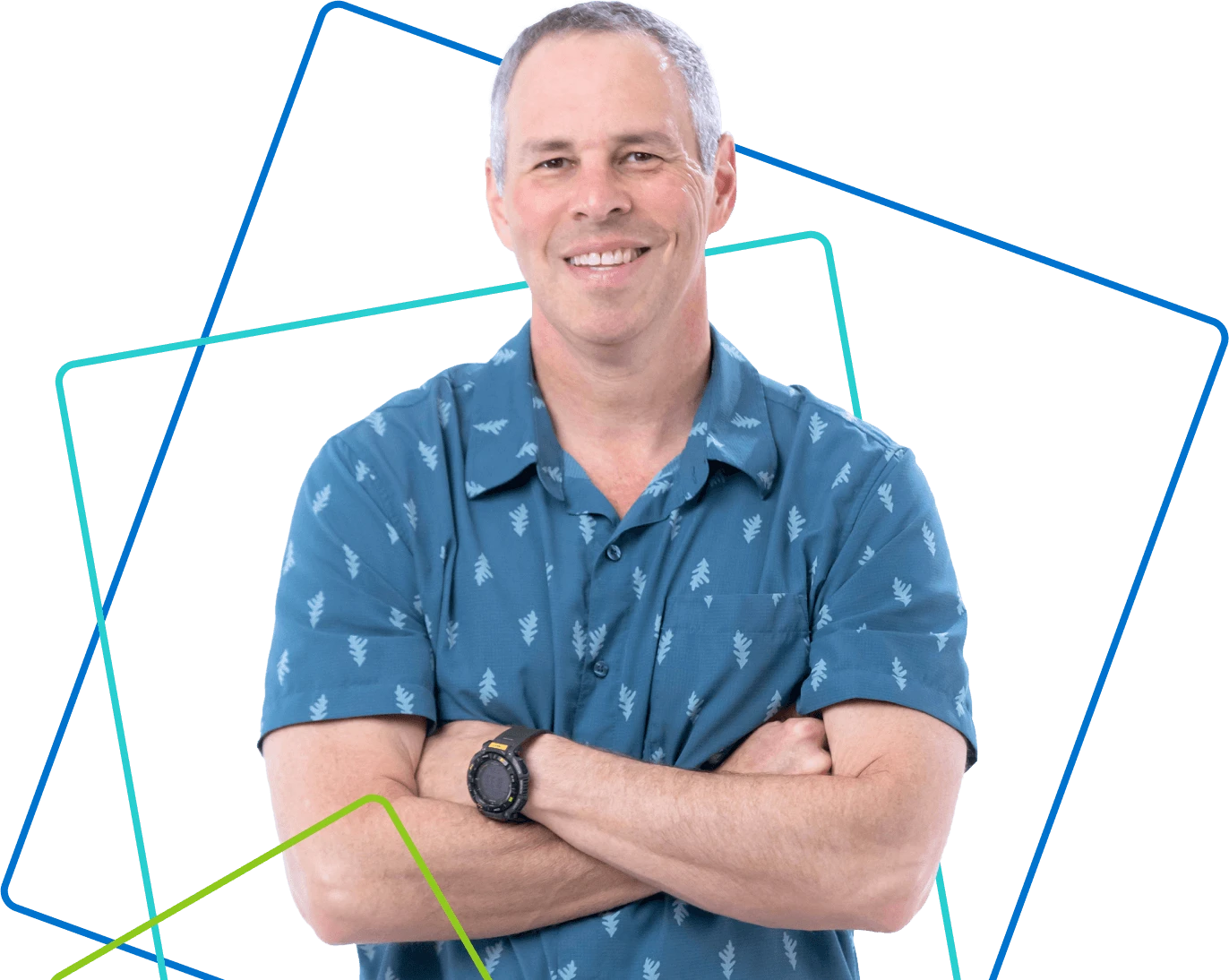
Ask most Silicon Valley founders where their company lives and they will name a building. Brian de Haaff cannot. Aha!, the product development software he co-founded in 2013, has never had a headquarters. Its people work from homes scattered across the country and the world, and gather in one room only twice a year for what the company calls onsites. The rest of the time, the whole thing runs on trust and a shared document or two.
That is the first surprising thing about de Haaff. The second is the ledger. Aha! passed $100 million in annual recurring revenue and did it without a single round of venture capital, no debt, no outside equity, nothing. In an industry that treats raising money as a milestone worth a press release, he treated not raising it as the whole point. More than a million product builders now use the software, and the company has been profitable since close to the beginning.
He is a three-time software CEO, so the discipline was earned rather than lucky. Before Aha! he co-founded Paglo, a search engine for IT that Citrix acquired and folded into GoToAssist, then stayed on at Citrix as a VP of Product Line. Further back sit a string of companies with names that show their era: Concentric Network, RouteScience, Netli, Network Chemistry. Five of the companies he founded or joined early were bought by public corporations. By the time he started Aha!, he had already learned what he did not want to build.
The purpose of a business is to create value - for customers, for colleagues, and for the community.
Brian de Haaff
The word he made stick
De Haaff has a habit of coining phrases that outrun him. The best known is the Minimum Lovable Product, a gentle rebellion against the industry's beloved Minimum Viable Product. Viable clears a bar. Lovable sets a higher one. The distinction sounds small until you watch a team argue over which one they are shipping, and the term has quietly worked its way into how product people talk. He also gave the industry the Complete Product Experience and The Responsive Method, his framework for handling customers and teammates with curiosity, transparency, and plain kindness.
Those are not slogans he keeps in a drawer. He runs the company on them. The Responsive Method is essentially an operating system for how people at Aha! treat each other and their customers: move quickly, help whoever needs it most urgently, ground every interaction in respect rather than leverage. It is the kind of thing that reads as soft until you notice the profit margin it produced.
A writer who happens to run a company
If you have encountered de Haaff online, it was probably through his writing. He has published close to a thousand posts on the Aha! blog, many of them arguing the unfashionable side of a debate, and he keeps a LinkedIn newsletter called The Startup Adventure that reaches a following in the hundreds of thousands. His subjects rarely change: value over valuation, the case for bootstrapping, why lovable beats viable, what happens to a team when you stop chasing the next round. He contributes to Inc., Entrepreneur, and other outlets, and in 2017 he collected the whole philosophy into a book with the almost defiant title Lovability.
The book is a business book about making people love what you build, which is a strange thing to write with a straight face and a stranger thing to then pull off. In it he lays out The Responsive Method and the engine behind Aha!'s growth, drawing on interviews with founders, product managers, and executives at hundreds of companies. Seven years and a hundred million dollars of revenue later, the thesis has aged well.
Two jobs now
Lately his attention has turned to what artificial intelligence does to the people who build software. He is not breathless about it, and he is not dismissive. In late 2025 he argued that AI is pushing product management into an era of role consolidation, where the neat boxes of the old org chart blur together. His own summary is characteristically dry.
Most of us now have two jobs. We have the job we used to have, and we have the job of trying to figure out how we use AI to do our old job more effectively.
On product management in the age of AI, 2025
That same year the American Business Awards named him Gold Stevie Thought Leader of the Year in the Business Products category. He kept writing anyway, and kept answering the comments.
Off the clock
He lives in Silicon Valley with his wife and three sons. When he is not shipping software or defending bootstrapping to a skeptical internet, he is a landscape photographer who works the trails of the Bay Area and the Sierra Nevada. There is a neat symmetry to it: a man who spends his working hours arguing that patience and craft beat speed and scale, then spends his free hours standing very still, waiting for the light to do what it is going to do.